Skip to content

Two Reasons to Love the University of Nebraska Press @UnivNebPress

Visitors to this site will know that I am involved in a range of projects relating to reform in the scholarly communication system. University presses are a key part of that system. They bring to the current moment a lot of durable skills, values, and useful practices and they have the potential to play a key role in innovating the future.

In this note, I want to put on my author hat and celebrate two modest practices–one a tradition and the other an innovation–in the work of the University of Nebraska Press, the press that I have historically worked most closely with.

Part One: Some Things Never Go Out of Style

As an editor of a small scholarly journal with a reviews program, I spend a lot of time with what used to be called (and sometimes still are called) tear sheets. The term’s origins are in commercial advertising, but it extends logically to journal-based publishing of things like book reviews. When a publisher sends a new book to a journal in the hopes that it will be reviewed, it asks (among other things) that a journal that actually does publish a review send a copy of the final published review to the press’ attention. In the older days (and, in some cases, still today) the obligation was to send two (sometimes more) paper copies of the review to the press’ attention. These days, this task is most often accomplished electronically by sending a PDF of the published review to the attention of the relevant press’ marketing staff. The old name tear sheet refers to actual sheets of paper (with advertisements to send to buyers or reviews to send to publishers) torn from the relevant print edition so that they could then be mailed. (BTW: Shame on those journals who do not live up to their end of this bargain.)

When the reviews get to the press, there are a number of things that can be done with them. It is common for them to be harvested for favorable quotes that get added to a book’s page on the press’ website. In more elaborate operations, such quotes get pushed out to sites like Amazon. A acquisitions editor can use the incoming reviews to guide the development of their “list.” In aggregate, reviews tell editors what kinds of works (and which authors) are being well received. Such intellectual indicators complement quantitative measures as sales numbers.

At the University of Nebraska Press a tradition that many other presses have abandoned is also maintained. It is one that promotes tremendous goodwill with authors and, by extension, furthers the press’ reputation among potential authors. Judging by my experience (I have never discussed the practice with UNP staff.), the UNP marketing staff forwards incoming reviews to authors for their interest and use. Even in an era of such things as Google Alerts, this is a tremendous help to authors. In the wake of the publication of Yuchi Ceremonial Life, copies of these reviews–neatly annotated by press staff with date and place of publication–were mailed to me as they came in. Today, via email, I got from the press a PDF copy of the Chronicle of Higher Education book note appearing in the wake of Yuchi Indian Histories Before the Removal Era. This is such a wonderful courtesy. If the new (edited) book is reviewed, I will really appreciate learning of this from the press. Even today, not all journals are richly woven into the digital infrastructure and thus the press will sometimes know of a review before I will. When I mention that UNP does this for authors, all my colleagues are jealous, as few of them have experienced such attention from the presses with which they work. This service is especially valuable to pre-tenure scholars for whom reviews are a crucial resource in route to their tenure cases.

In a time in which academic author have new choices, old courtesies like this can go a long way in maintaining strong relationships with authors.

Part Two: New Things Done the Right Way

Increasingly, university presses aim to promote awareness of their titles by making sample chapters available for free via their websites. This is an inevitable outgrowth of broader practices, such as the views inside books available on sites like Amazon. Typically university presses simply (and it is not exactly simple, of course) make this material available as a PDF download from inside the press’ website on the book’s page. This is a logical thing to do, but it is also a very temporary thing to do, as press websites (like most websites) are very unstable and ephemeral things. They are breeding grounds for link rot and they just do not measure up as preservation environments.

If a press is going to let a sample chapter loose into the digital world, it should do this in a way that advances all of the goals of scholarly communication. This means that if content is going to be freely available, it should be made freely available according to professional best practices. This means curated carefully in a digital environment with attention directed to preservation, metadata, stable URLs, etc.

Kudos and thanks, in this context, to the University of Nebraska Press for working with DigitalCommons @ University of Nebraska-Lincoln (the university’s institutional repository) to make such samples permanently and properly available (with a great cover sheet and good metadata) for the long haul.. I was happy to learn about this effort when I found the introduction to Yuchi Indian History Before the Removal Era deposited there. As such samples clearly generate sales, these practices are self-interested as well as in the interest of the public good.

In a word, thanks to everyone at the University of Nebraska Press for your work to preserve what is good about university presses while we discover new paths forward.
Web Resources for Museum Job Seekers

I am again (Spring 2018; Spring 2020) teaching Curatorship and have again checked and updated the job links below. General purpose sites such as Indeed and LinkedIn are places where museum jobs are posted. I have not taken account of the general job posting site phenomena here, but I do note that social media and other technologies have shifted the ways that news of job opening circulate. The social sharing of openings makes clear how important it is to find the most relevant networks in one’s part of the field.

For many years I have maintained a handout in which I list online venues of interest to those searching for museum positions. Every few years I check and update the links, usually in connection with my Curatorship course. I will be teaching that course again next spring and I am working with a number of students preparing for museum job searches. This motivated the latest update, which I am posting online here. Additions and corrections are welcome. Please use the comments section.

Updated most recently on 4/25/18 12/3/19.


On a Newly Published Book and a Forthcoming Paper

As noted previously here at Shreds and Patches, a paper of mine is forthcoming in the Journal of American Folklore. Today is one of those days that scholars dread: discovering–too late–the work of another scholar that deals exactly with the matters taken up in a work of their own that is now fixed in print, precluding acknowledgement of the newly discovered source. Here is the story.

Building upon an aside in my dissertation (Bloomington: Indiana University, 1997) and my book Yuchi Ceremonial Life (Lincoln: University of Nebraska Press, 2003), my forthcoming article (“The Story of Colonialism, or Rethinking the Ox-hide Purchase in Native North America and Beyond”) is based on a lecture composed for a conference–Colonization and Narrative Migrations: Legends of Occupation from the Mediterranean to the Americas–organized by the Center for Folklore Studies at the Ohio State University and held December 12, 2005. After being presented at the American Folklore Society meetings (October 19, 2006) and to the Department of Anthropology at the University of Oklahoma (January 26, 2007), the paper was revised and submitted to the Journal of American Folklore on May 27, 2011. Following peer-review and acceptance (July 10, 2011) by the journal’s editors, a final author’s version was submitted on July 30, 2011. At this time, a projected publication date was set for early 2013. On August 5, 2011, I posted (in accord with JAF author rights policies) a open access version of the paper here on my website.

I received the copy edited manuscript on August 13, 2012 and the page proofs on November 2, 2012. On Wednesday, November 21, 2012, I recieved, in my role as editor of Museum Anthropology Review, a review copy of Andrew Newman’s On Records: Delaware Indians, Colonists, and the Media of History and Memory (Lincoln: University of Nebraska Press, 2012). On seeing this volume for the first time, I noticed that it covered much of the same territory addressed in my article. Interested in learning more about the author and his work, I then consulted his professional webpage and learned that the specific section of the book overlapping with my article was also presented in his contribution (“Closing the Circle: Mapping a Native Account of Colonial Land Fraud”) to the volume Early American Cartographies edited by Martin Brückner (Chapel Hill: University of North Carolina Press, 2011). The University of North Carolina Press website shows this volume as having been published in December 2011 (after my paper was in press).

I regret not knowing that Andrew Newman was pursuing work on these materials and issues concurrently with me. Had I known of his work in time to do so, I would have certainly incorporated it into my final version. The case offers an interesting opportunity to consider what two scholars at work independently and contemporaneously can make of the same set of cultural materials.

Congratulations to Professor Newman (and the University of Nebraska Press) on the publication of his new book.

Candace Greene Wins Ames Prize; Summer Institute in Museum Anthropology Recognized

I learned great news today. My friend, colleague and collaborator Candace Greene (National Museum of Natural History) has been selected as this year’s recipient of the Michael M. Ames Prize for Innovative Museum Anthropology, awarded by the Council for Museum Anthropology.

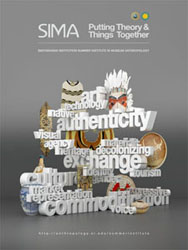
In a letter sent to Candace and quoted from in an announcement making the rounds, Alex Barker, CMA President, wrote: “The award recognizes your groundbreaking work in developing and implementing the Smithsonian Institution Summer Institute in Museum Anthropology, and particularly the transformational potential of the program. Museums are more than just collections of things, after all. They’re also collections of people, and the SIMA program provides crucial training and educational opportunities, enriching the discipline of museum anthropology and embodying the innovative spirit the award recognizes.”

I am not attending the American Anthropological Association meetings and will unfortunately miss it, but there will be a formal announcement and presentation during the current AAA meetings during the Council for Museum Anthropology’s reception on Saturday, November 17 in the San Francisco Hilton’s room Imperial A. The reception runs from 6:30 – 8:30 p.m.

I am super pleased with this wonderful news of recognition well-deserved. Candace has been a great leader in the museum anthropology community and her vision for the creation of SIMA, together with her hard work to make it a success, have been amazing. This is an important award, well-bestowed. Congratulations to Candace and to everyone involved in making SIMA a thriving endeavor.

Yuchi Indian Histories Before the Removal Era

There has been a real posting drought lately here at Shreds and Patches. In part this is due to a hyper abundance of matters worthy of posting about. So much has been going on that there has not been time to write about it all. With this note, I want to announce just one of these current events.

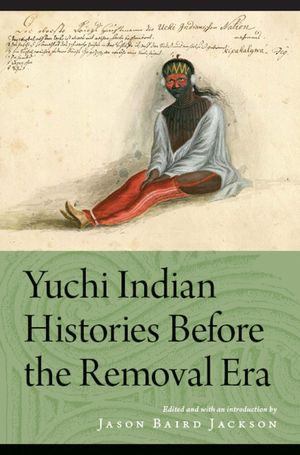
This month the University of Nebraska Press has published Yuchi Indian Histories Before the Removal Era. I am the editor of this book, but the real stars are (1) the remarkable Euchee/Yuchi people whose stories the book begins to uncover and (2) the nine talented, generous scholars who joined me in this undertaking. I want to thank them, the University of Nebraska Press, and the Euchee (Yuchi) Tribe of Indians for supporting this project and for being patient with me as I pushed it slowly along to publication. I have hope that the book will be useful scholars and students and, especially, to the Euchee/Yuchi community whose interests and goals prompted us to try to put it together.

One nice thing is that the press issued the book in paperback rather than in hardback, thus the price is more modest than is often the case with scholarly books. The book is also available from Amazon in a Kindle-friendly edition. (I have not checked this out myself yet.) If the book generates any royalties, all of these will be paid by the press directly to the Euchee (Yuchi) Tribe of Indians for its use in historical and cultural preservation work.

Thanks again to all of the participants in this project.

Director, Smithsonian Center for Folklife and Cultural Heritage

Having been asked to do so, I am happy to share news that the Smithsonian Institution is seeking applications for the position of Director of the Center for Folklife and Cultural Heritage. This is an important and exciting post. See the details below:

The Center for Folklife and Cultural Heritage, Smithsonian Institution, is accepting applications and nominations for a Director. The Center for Folklife and Cultural Heritage is responsible for planning, developing, and managing programs which have as their major objectives the research, documentation, presentation and conservation of living traditional and grassroots folk cultures of the United States and of other countries. The director is responsible for the administrative direction and management of all Center program activities including the Smithsonian Folklife Festival, Smithsonian Folkways Recordings, Ralph Rinzler Folklife Archives and Collections, exhibitions, symposia, scholarly research, cultural heritage policy, educational projects and all media, as well as the participation of other Smithsonian museums and programs in national celebration events and National Mall events. The Director represents, at national and international levels, Smithsonian concerns relating to the understanding of the cultural representation of living heritage, as well as public sector folklore, and policies related to them. The Director will have a proven track record of leadership, management and fundraising skills to run a unique multi-disciplinary cultural organization. The successful applicant must have a degree in a relevant field, management level experience in public programming, and have earned a presence in the scholarly and/or cultural community. The Smithsonian offers a competitive salary commensurate with experience and a comprehensive benefit plan including a lucrative, fully vested retirement program with TIAA- CREF. For detailed information on the position, qualifications and application instructions, go to http://www.sihr.si.edu/jobs.cfm and scroll to position announcement EX-13-01. We are only accepting online applications for this position. For questions or additional information, contact Tom Lawrence, 202-633-6319 or lawrencet@si.edu. The Smithsonian Institution is an Equal Opportunity Employer.

A First Rate Podcast: Artisan Ancestors Visits the Summer Institute in Museum Anthropology

A perfect example of how scholarly research in folklore and anthropology can be made accessible and interesting for a wider audience is the Artisan Ancestors podcast produced and hosted by my friend and colleague Jon Kay. (Jon is, among other roles, the Director of Traditional Arts Indiana.) If you have not yet encountered the Artisan Ancestors show, I urge you to check it out. As Jon describes it, the focus of the show is on strategies for “researching creative lives and handmade things.” Jon does interviews with people involved in such work with the goals of encouraging and guiding newcomers to such studies and of expanding the horizons of those already deeply involved. Long adept in the skills of the public folklorist, Jon has mastered the podcast genre. He is a great interviewer and he knows how to do in interview with the needs of his audience and the requirements of the medium in mind. The production values are high but it is clear that he has worked out a system that gets good results without endless, expensive work.

In his newest episode (#26) Jon interviews Dr. Candace Greene, another friend and the Director of the Summer Institute in Museum Anthropology (SIMA). The interview explores the purposes and goals of SIMA in a way that not only introduces this training program (for which I was a faculty member this past summer) but also encourages deeper understanding of the broader value of museum collections for research in social and cultural history. It is a great interview and listening to it will illustrate not only the value of the SIMA effort but also suggest the value of podcasting initiatives such as Artisan Ancestors. Kudos to Jon and Candace for their great job with this episode.

On “New Forms of Scholarly Communication”

Presented below are remarks prepared for a meeting of Indiana University Bloomington (IUB) Department Chairs and Academic Associate Deans hosted by the IUB Office of the Vice Provost for Faculty and Academic Affairs. The focus of the larger gathering was a campus-wide discussion of tenure and promotion issues, with a special emphasis on current draft revisions to campus-level tenure and promotion guidelines. The task assigned to me was to reflect on the place of new forms of scholarly communication in the tenure and promotion mix. Other speakers were recruited to address diversity, interdisciplinarity, and public scholarly engagement. Speakers were grouped into two person panels and allotted five (and only five) minutes for a statement. Ten minutes of discussion was scheduled on each theme following the two presentations.

Because it was a campus-wide event and because it was anticipated by the vice provost that my co-presenter Ruth Stone would speak about issues in the digital humanities, I endeavored to draw my examples from further afield. The brevity of the assignment precluded discussion of many of my favorite examples and many relevant issues (ex: the role of scholarly societies or issues of open access) were not raised at all. To help my listeners find their way to the conversations that I evoked, I offer my text here with the links that oral presentation could not facilitate.

There are countless resources available for the purpose of gaining an introduction to the subject of change in scholarly communication. One very reasonable and appropriate overview–inclusive of a call for wider discussion among researchers–is available in Karla L. Hahn’s (2008) “Talk About Talking About New Models of Scholarly Communication.”

My thanks go to Vice Provost Tom Gieryn for the opportunity to make this presentation.

. . .

While I will use a few examples, my task is to reinforce four general themes that you are probably already are carrying into discussions with your departmental and disciplinary colleagues—change, genres, processes, and metrics.

Change. As reflected in the draft guidelines, junior faculty are pursuing careers that bear less and less resemblance to those of their mentors. As with most forms of cultural change, there will be losses and gains attendant to these shifts. Regardless of our own hopes and fears, we have an obligation to engage with the shifts happening to us. A fringe benefit of moments of discontinuity is that they help us focus more intensively on our persistent core values. How we do peer-assessment and how impactfulness is achieved and assessed are very much in flux, but their centrality as values is not. Read more

Museum Anthropologists are Award Winners

I am presently batting my email box. One of the small rewards in this situation is discovering great news emails that slipped by. From the excellent news rediscovered department, I am happy to note two recent awards bestowed on friends from the museum anthropology community.

Dr. Nancy Parezo was awarded the 2011-2012 Graduate College Graduate and Professional Education Teaching and Mentoring Award at her home institution, the University of Arizona. Nancy is a member of the Department of American Indian Studies at UA and is a lead faculty member for the Summer Institute in Museum Anthropology held each year at the National Museum of Natural History, Smithsonian Institution. (I will be joining Nancy for part of this year’s SIMA).

The Association of Tribal Archives, Libraries, and Museums (ATALM) recently bestowed its 2012 Guardians of Culture and Lifeways International Awards. Winning for “Outstanding Project” was the
Plateau Peoples’ Web Portal, “an interactive, online digital archive that provides access to Plateau peoples’ cultural materials at Washington State University through tribal curation. The Portal provides a way for tribal communities to include their own knowledge and memories of digital materials for various collections.  This project is an inspiring model of how university repositories can successfully collaborate with tribal communities to curate and enhance collections with tribal voices and histories.” The project director for this effort is my friend and collaborator Kimberly Christen of Washington State University.

Belated congratulations to Nancy, Kim, and to the Plateau Peoples’ Web Portal team on these well deserved awards.

MLA and AAA Author Agreements Revisited (Plus Improvements to the AAA Agreement)

This note is an update to yesterday’s post regarding comments made comparing the author agreement used by the American Anthropological Association to the newly changed agreement announced by the Modern Language Association.

In a comment on the original AAA blog post, MLA Executive Director Rosemary Feal confirmed that under the new MLA agreement authors retain their original copyright and are not asked to transfer it to the association in order to be published in its journals.

In a later comment to that AAA blog post and in a follow up posting, Joslyn Osten of the AAA staff confirmed that the AAA author agreement does transfer copyright in accepted works from the author to the association

These confirmations indicate that my observation that the two agreements were distinctive (in a way that I judge to to significant) is accurate.

Along the way, I was pleased to discover something new (to me) about the AAA author agreement. As a former AAA editor, I spent a good bit of time with the author agreements in use during that period (2005-2009). The agreement in use during most of this period is the agreement that has been celebrated as SHERPA/RoMEO green. A key concern that I have had about that agreement was that it did not clarify for potential authors what form (post-print, publisher version, etc.) was allowed to circulate outside the official publications channels. In the new AAA blog post, a link is given to the current AAA author agreement and this document is different from earlier versions in this regard (the relevant language is quoted in the post itself, as well). Clarifying language has been added to item three under the heading “Author’s Rights.” The older version of the author agreement is presently available from the SHERPA/RoMEO website (look up American Anthropological Association to find it). Comparing the recent to the current agreement shows that what was previously called an “article” (in the contexts of retained author rights) is now described as either a “post-print” (a term of art now clearly defined in the agreement) or (quite generously) “uncorrected page proofs”. Allowing authors to circulate “uncorrected page proofs” along the green OA path represents a significant step above and beyond the minimum threshold required to qualify as a green OA publisher. (Post-print is the threshold for green OA. For further information, consult the SHERPA/RoMEO database, particularly its section on “RoMEO Colours.”

I commend the AAA on these improvements to its author agreement. As an observer of such things, I would have been satisfied with the clarification embodied in the move from “article” to “post-print”. That the association has agreed to allow uncorrected page proofs to circulate represents a noteworthy additional step. (I am sure that this shift to include “uncorrected page proofs” is not totally new, its just new to my awareness. It seems likely that it has happened in the past six months given that the change was not discussed at the time of the 2011 AAA meetings at which I spoke on the subject of green OA in the AAA. Allowing the circulation of uncorrected page proofs has its pros and (significant) cons, of course, but, be they what they may, this is what many AAA authors are doing anyway and this shift thus effectively “decriminalizes” a widespread practice among association members.