Skip to content

The Ethnic Costume Museum at the Beijing Institute of Fashion Technology (12/9)

In the previous post in this series, I described how my traveling companions and I visited Beijing’s 798 Art Zone. (For the series in order, see 1, 2, 3, and 4.) After that stop on December the 9th, we visited one more Beijing museum. This one was a new one for everyone. Carrie researched it and put it on our agenda—The Ethnic Costume Museum at the Beijing Institute of Fashion Technology (BIFT). We were uncertain what to expect, but we speculated that it would be a small university museum.

It won’t take many words to tell the story. We were extremely impressed. The museum is not richly contextualizing and interpretive in approach (as more and more university museums work to be) but its collections are outstanding and they are beautifully presented in large, comfortable galleries. For scholars interested in dress, adornment, and textile history in China, it is a definite must-see.

The museum is located on an upper floor of a multi-use academic building in the midst of the BIFT campus. Discovering this, one presumes further that the space will be small, as many similar university galleries in the United States often are. But on arrival up the stairs, this speculation is dispelled. The galleries go on and on. You can check out an English language web page for the museum here: http://english.bift.edu.cn/department/ethniccostumemuseum/index.htm It begins:

The Costume Museum at the Beijing Institute of Fashion Technology (BIFT), founded with the approval of Beijing Municipal Administration of Cultural Heritage, is the first museum specializing in ethnic costumes in China. The Museum is also a cultural research institute integrating collection, display, research, and teaching.

BIFT Costume Museum covers a floor space of 2,000 square meters, with several major exhibition halls: Han Nationality Costume Hall, Ethnic Minority Costume Hall, Miao Nationality Costume Hall, Metalworking Jewelry Hall, Brocade Embroidery and Wax-printing Hall, Olympic Uniform and Ceremony Costume Hall, Picture Hall, and Hands-on Workshop (for teaching and academic exchange).

As the top specialized costume museum in China, it has a fine collection of over 10,000 pieces of costume, accessories, fabric, wax printing, and embroidery. The collection is displayed in different categories, such as costumes of Miao nationality, metalworking jewelry, folk wax printing, and fabric. The museum also has a collection of nearly 1000 precious photographs taken during the 1920s and 1930s featuring the ethnic costumes of Yi, Zang, and Qiang nationalities.

That is all true. Here I share some of our photographs from the visit, which was the high point of our day and great preparation for the work we would begin in Guangxi the next day.

When we arrived, we noticed a sign that indicated that no photography was allowed. This left us crestfallen. We started taking in the exhibitions and noticed that all the other visitors were taking pictures and that the staff was completely aware of this. On investigation, it was flash photography that was prohibited. As a result of these factors, as well as the appropriately dark galleries (appropriate because textiles are being put on display for extended periods, raising the problem of light damage) our photographs are dark and rushed.

In honor of our generous hosts in Nandan County, I present the Baiku Yao men’s outfit on display at the museum before posting a sample of other images from the museum.

IMG_0209

The “Men’s attire of the white-pants Yao branch of the Yaozu people” at the Museum of Ethnic Costumes. December 9, 2017. Photograph by Jason Baird Jackson.

Beijing’s 798 Art Zone, Revisited, Again (12/9)

After visiting The Museum of Women and Children (See part 3 here), our group checked in with the Beijing arts neighborhood known as 798. (For background on 798, see wikipedia here, but know that the essay needs a refresh.) This area was the focus on an exhibition (just deinstalled last week) that I did last year at the MMWC with help from Luo Wenhong of the Yunnan Nationalities Museum. For Jon Kay, it was his first visit, but for Carrie Hertz, Marsha MacDowell, Kurt Dewhurst, and I it was a revisit. Jon already had a good sense of the place from our discussions (and from the exhibition photographs that he walked by almost every day at the MMWC since April). For the rest of us, it was our reaction that was new.

We know well—from Wenhong’s historical and ethnographic work there and from our own brief visits—that the neighborhood is an always changing place. But this visit caused us to believe that 798 has really now turned another corner. Of the group, I had visited 798 most recently. In May 2016, I captured over 700 images of the neighborhood trying to document its sidewalk visual culture for the exhibition. (“Beijing’s 798 Art Zone” was presented at the MMWC from April 6 to December 17, 2017.) Discussing such things as the gentrification and new high-rise construction that presses in on the neighborhood, the increased presence there of major corporations and their promotional imagery, and a transition from confrontational street art to fun, selfie-friendly graffiti and amusing sculpture, I tried to suggest the ways that 798 is changing. I also tried to evoke some of the factors that were making the neighborhood a different kind of destination, while also noting the slipping away of the artistic cutting edge that other observers have noted. As my efforts were in the spirit of visual and urban anthropology rather than an effort in contemporary art criticism, I did not take a particular stance on these changes, just tried to convey a sense of them.

All that to say that a contemporary arts district is not the kind of place that any of us would visit expecting to find cultural continuity. At the same time, our visit in 2017 did surprise us with how rapidly things can change. It is hard to sort out day-to-day, and season-to-season variations, but the contemporary-art-first version of 798 seemed defeated as judged by its street-level visual culture, as we experienced it last month. Some iconic graffiti and fiberglass sculpture remains. Some of the more robust galleries and retail shops are still there, but in the course of about nineteen months, a lot had disappeared or been degraded. Through its various earlier phases as an arts zone, a kind of playful-but-edgy aesthetics dominated the neighborhood’s visual culture. That aesthetic was haphazard in the sense that it was not centrally coordinated, but it was coherent in the sense that there was the kind of coherence that is the hallmark of many successful art colonies and artistic “schools.” The aesthetic last month had tipped over into the haphazardness of the flea market. (As folklorists, we love flea markets, but the change is noteworthy.) Unlike on recent visits, there was also a lot of empty real retail space.

In the 2017 MMWC exhibition, I showed the store front of the +86 Design Store’s 798 branch, using it as a way of talking about how a commercial culture of cute and of design had been progressively overtaking the oppositional style of the neighborhood. On the latest revisit, +86 had partitioned off the back of the store and seemed to be renting it out as office space, thus reducing significantly the amount of goods available for sale and giving the place an aura of decline. Similarly, suggesting how an exhibition such as the MMWC 798 show is almost immediately obsolete is the case of the Sony display space that I pictured in the exhibition. I used the Sony exhibition space (bright and fresh in 2017) to evoke the ways that corporations were colonizing the neighborhood as a way of connecting with the many visitors that stroll its streets but also as a way of capturing something of the neighborhood’s residual cool factor. On our revisit, the Sony exhibition space was gone and it appeared that a failed spa had already come and gone in its place. The space was not in use. (It is not clear if Sony’s space had always been intended to be short-lived. For an occasional visitor, it is sometimes hard to track the differences between temporary commercial/corporate/foreign government exposition/exhibition spaces and longer-term endeavors.)

Different parts of the neighborhood are faring differently and, despite it being winter, there were plenty of visitors out walking and exploring the neighborhood. It is still, as described in the exhibition, a destination for making selfies and for more professional photo shoots. But emblematic of the newest incarnation of 798 for us was the store called in English “Iran”. As the name suggests, the store offers Persian art and objects. There are familiar kinds of objects such as woven rugs, but then there are (many) less familiar (to me, at least) paintings (?) on black velvet. Iran was crowded with people and crowded with what cultural critics in the west would call  (perhaps misperceiving what they see) orientalist kitsch mixed with textiles, metalwork and other genres with less ambiguous roots in Iran. To see something what Iran in 798 looks like, check out this short YouTube video published soon after our visit. Iran seems to be part of a changing culture of exhibition in 798. As the edgy aura wears off, but as people continue to visit (but, it seems to me, to not spend very much money), the neighborhood becomes useful for quirky soft-power projects. Iran’s place in 798 casts a new light on the Israeli chamber of commerce’s presence in 798 (noted on my last visit) and its activities hosting expo-like events in the neighborhood. (Iran is almost across the street from the Israelis.) Along the same lines, 798 is similarly home to a branch of the Beijing Goethe Institut.

The shift to a more random retail footing can also be seen in other new businesses getting going in 798. An example is the “Custom Barrrl [yes, three Rs, no E] Scotch Whisky Exchange”. The most dramatic new architectural presence is a building marked in English “798 Art Auction Center.” I have not found information online about what is going on with it.

Unlike the rest of the neighborhood, UCCA (Ullens Centre for Contemporary Art) seemed to basically be as it had been on past visits. But a quick Google search shows that it too has been changing recently. For those interested in the state and fate of UCCA, check out this story in the South China Morning Post. The 2017-10-9 story begins with these headlines:

Beijing contemporary art space UCCA sold to Chinese investment group, securing future of 798 Art District landmark

Deal for Ullens Centre for Contemporary Art ends year of uncertainty, and director is hopeful its new status as a foundation will help it raise funds, improve its exhibitions and attract more visitors.

It actually isn’t true that UCCA seemed unchanged at street level. Reviewing our photographs, I recall the shock I felt in seeing that the museum was hosting a bamboo basketry class. Those who know my own enthusiasms can imagine that I see this as a change for the better. Probably so, and in my book this is a rather cutting-edge thing for them to be doing, but still it would have seemed preposterous that UCCA would have had such classes at the time of our first visits there.

Things seemed less promising for us at at the Enjoy Museum of Art, which appeared to us to have closed. (Let me know if you know otherwise.)

Other new developments: a decorate-your-own-ceramics place, more kid-oriented retail and amusements, lots of boutiques with sophisticated women’s wear, many street vendors selling the kind of foods one can get in Chinese city parks (candy glazed strawberries on a stick, for instance), and lots of card-tables-on-the-sidewalk retail of used and simple domestic goods (these in particular contribute to the flea-market vibe) and tchotchkes. As is true everywhere in Beijing now, rental bicycles are ubiquitous in 798 and they crowd at the entrances to the district.

Of course, a series of quick visits and walkabouts are not the same thing as sustained attention, historical, ethnographic, or otherwise. It is not possible to fully understand the state and fate of 798 without deep knowledge of the political economy and culture of Beijing, China, and the international worlds of art, culture, and discourse in which these intersect and entwine. I am glad that there are in-the-know scholars working on these larger contexts in which 798 has a place.

As we entered 798 on this visit and approached the visitor center, we noticed that the sculpture on the left had been replaced by the less unnerving one on the right…


The Museum of Women and Children | 中国妇女儿童博物馆 (12/9)

This is the third 2017 China trip post. As in the two (1, 2) previous posts, it reports on adventures in Beijing with Jon Kay (my MMWC colleague) and Carrie Hertz (of the Museum of International Folk Art). On the second day in Beijing, we were thrilled to be joined by our friends and colleagues from the Michigan State University Museum—Marsha MacDowell and C. Kurt Dewhurst.

Our goals for December 9th were pretty ambitious. In the morning we went to The Museum of Women and Children, China’s “first state-level museum focusing on women and children.” Because the museum previously hosted the U.S. exhibition The Sum of Many Parts: 25 Quiltmakers from 21st-Century America (here and here), it was well known to Marsha (who was central to the earlier traveling exhibition—a project that Jon was also involved in). Marsha and Kurt told us of the extensive and detailed textile exhibitions they saw previously at the museum (and that are still announced on the English website…). Sadly the museum was rather deserted on our arrival. It soon became clear why. Most of the exhibitions were recently taken down, leaving the galleries rather empty. We saw where the great textile exhibitions had been and we quickly saw the remaining history exhibitions and then we kept moving. Later in the trip—when we got to Nanning—we would see an exhibition that gave us hope for the Museum of Women and Children, but at this stage, we just departed the museum a bit disappointed and looking ahead to our next stop—Beijing’s 798 Art Zone.

The Temple of Heaven | 天壇 (12/8)

This briefer note is the second on our recent trip to China. The context for this travel will come (I hope) a few posts down the road. For now, perhaps you can just go with it. For the first post in the series, see The IU Gateway Office and Tsinghua University Art Museum (12/8).

After our group’s visit to the Tsinghua University Art Museum we ended the day with a visit to the Temple of Heaven (天壇). Wikipedia’s account (or whatever you can access) is probably sufficient for those who are curious about what the Temple of Heaven is about. In a nutshell, it is an impressive temple complex dating back to the early 1400s and was a key site for imperial sacrificial rituals. It is comprised numerous surviving buildings and beautiful grounds. For our interest as museum-types, it is a UNESCO World Heritage Site (number 881, to be exact). While it clearly attracts a significant number of visitors, visiting it (late in the day, in winter?) was certainly different from visiting the Forbidden City, where one typically becomes one tiny fish in a single vast, densely packed school of fish swimming straight through the complex from one end to another.

As earlier in the day, the companions were Jon Kay, Carrie Hertz, and Jason Jackson. At the Temple of Heaven we arrived too late in the day to enter any buildings, but we were able to stroll the grounds and see some of the buildings from the outside. Like so many monumental sites in China, one rarely has enough time to see the whole destination properly. Visiting when we did though, we really enjoyed the quiet contemplative nature of the experience. Many of those at the site were, like us, having a park visit experience as much or more than they were having a historical buildings experience. Of course, our state of reverie did not keep us from attending to the buildings, which were great. (A bit more text follows the images.)

Carrie and I, on an earlier trip’s visit to the Forbidden City, had noticed the English language signs pleading for no scratching. At the time, this had not made full sense to us, although we of course understood the impulse to protect these ancient monuments. At the Temple of Heaven, we were able wander without rushing or bumping into other people and thereby got a close look at the problem these signs work to prevent. You can see both the signs and some scratches in the images here.

We figured it out with some smart phone help, but one of the reasons that we were late in the day getting to the Temple of Heaven is that our taxi driver delivered us to the Temple of Heaven Holiday Inn (not yet a UNESCO World Heritage site), which it turns out is not exactly right by the Temple of Heaven itself. This meant that what we lost in terms of time spent at the site, we gained in terms of a walk through a not particularly touristy but elder-rich Beijing neighborhood. Posted here are some pictures for our families, friends, and other interested folks.

Thanks as always to my great travel companions. For deciding on the Temple of Heaven, thanks go especially to Carrie.

The IU Gateway Office and Tsinghua University Art Museum (12/8)

This post is about a portion of my recent trip to China. The main focus of this trip was collaborative ethnographic research in Guangxi Zhuang Autonomous Region, but other activities happened along the way. This post about the morning of December 8, 2017 and my companions for the day were two friends and colleagues–Dr. Carrie Hertz, Curator of Textiles and Dress at the Museum of International Folk Art and Dr. Jon Kay, Director of Traditional Arts Indiana and Curator of Folklife and Cultural Heritage at the Mathers Museum of World Cultures, Indiana University.

After traveling from the U.S. to Beijing, our first morning in China was devoted to a visit to the Indiana University China Gateway Office, which is adjacent to Tsinghua University in Beijing. There we met with China Gateway Director Steven Yin and IUPUI Recruitment Coordinator and Assistant Office Manager Peter Wen. We spent some time at the Gateway discussing China-related projects (including our own) and then Peter walked us across the Tsinghua campus for our visit to the remarkable Tsinghua University Art Museum (TAM), where Steven had arranged for us to meet with colleagues and see the museum.


At TAM we met with Ge Xiuzhi from the research department and Wang Ying from the education and external relations department. They were generous hosts with whom we shared tea and luxurious visits to the museum’s spacious and beautiful galleries. Our interests gravitated to some of our favorite topics–textiles and dress, architecture, and furniture. Here are some images from “Architecture China,” an exhibition that tells the story of a group of vernacular architecture researchers while also introducing architecture students (and everyone else) to the key techniques in the national architectural tradition.


A key exhibition at TAM at present is a large overview exhibition titled “Tsinghua Treasures: Exhibition of Tsinghua University Art Museum Collection.” It is very large and presents a rich sample of the museum core collection. As reflected in this sample of our images, we devoted a lot of time to the textile section, which is rich in items of dress and adornment.


We could have spent more than one day just studying the various sections of Tsinghua Treasures. We regretted neglecting some wonderful sections, including those devoted to ceramics, painting, and calligraphy.


We focused intently on the furniture gallery. As with the architecture exhibition, there were excellent hands-on educational stations in this gallery that helped one better understand the techniques and woods used in Chinese furniture.


Staff from the Tsinghua University Art Museum visited Indiana University during May 2017. On that visit I attended a presentation at the Eskenazi Museum of Art at which the Eskenazi staff (and I) were given a exciting overview of this new museum’s work and collections. It was wonderful to be able to follow up on this presentation and to see the TAM itself in the company of very generous hosts and my wonderful colleagues.

Our visit to the Tsinghua University Art Museum

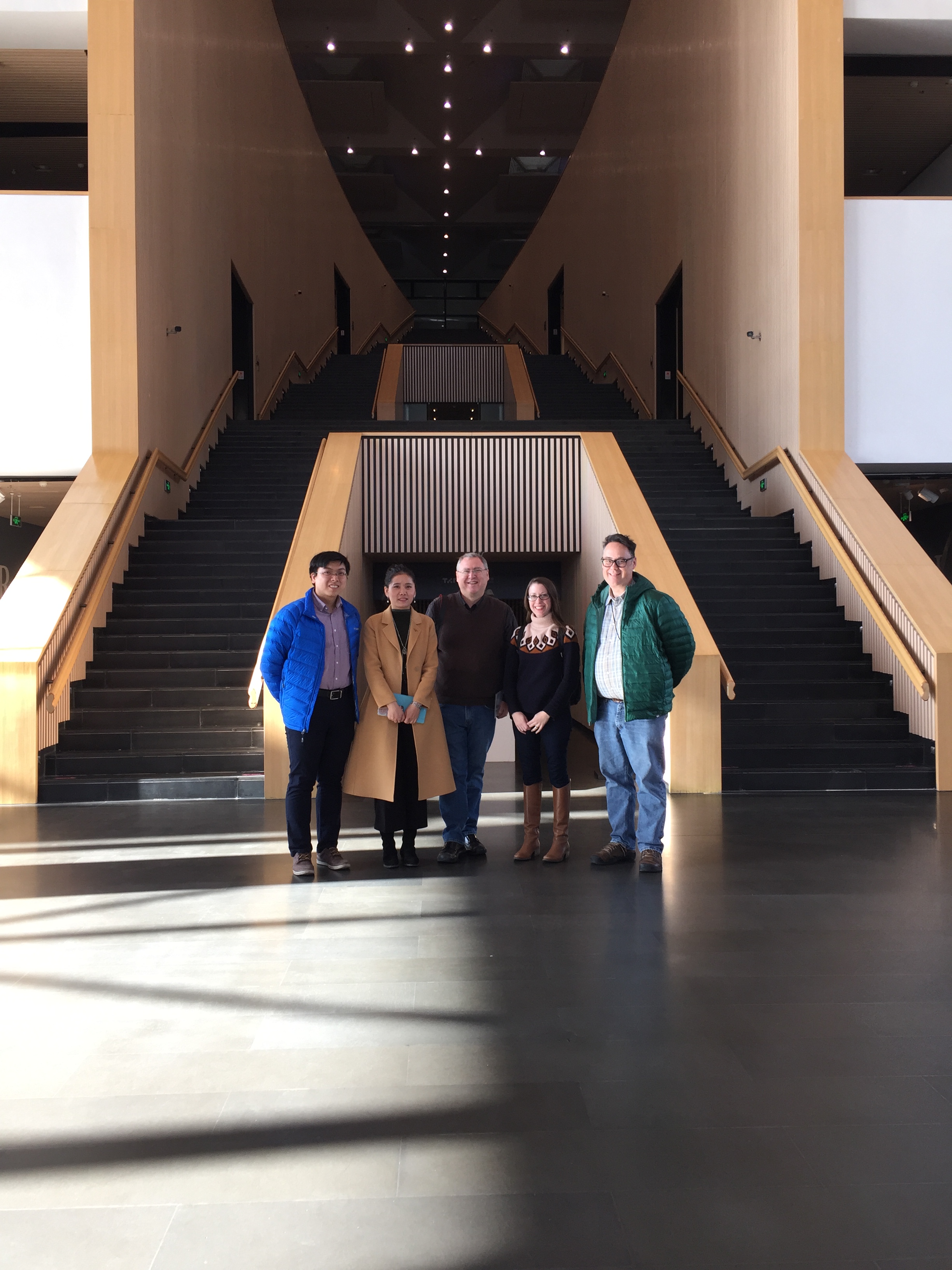
A view of our group and the grand staircase at the Tsinghua University Art Museum. (L-R) Peter Wen, Ge Xiuzhi, Jon Kay, Carrie Hertz, Jason Jackson. December 8, 2017. Photograph courtesy of Ge Xiuzhi.


Yes, it is surely a Oklahoma Cherokee basket; Or my captions, as written

Fellow basketry enthusiasts may have seen the traveling exhibition Rooted, Revived, and Reinvented: Basketry in America. Happily for our musuem the exhibition includes a Sea Island basket from the collections of the Mathers Museum of World Cultures. Finding its way into the world now is the exhibition’s catalogue. I saw it for the first time yesterday. Basketry people will certainly aspire to obtain a copy. It has fresh essays and beautifully printed color images. Do not let me note here discourage you if it is on your wish list. (I note in particular Jon Kay’s chapter on oak rod basketry from Brown County, Indiana which gets a lot of valuable information into print for the first time.)

The book has lots of merits, but, the production process was probably of the sort that is more common to commercial publishers and less common at university presses. I did not have a chance to review the page proofs for my chapter (“Native American Basketry from the Multicultural South: Craft, Labor, and Heritage”) and that usually has consequences. I do not propose to track the backstory on the text as a whole here, but I do want to share the text of my original image captions because they provide information that scholars and community basket makers will probably want and because in one case a significant error was introduced in the editing.

The error concerns Figure 8. The basket in this figure is a small buckbrush basket collected by William C. Sturteveant in Northeast Oklahoma. We do not know the maker for this basket, but it is certainly a basket made by a Cherokee person in the territory of the Cherokee Nation in present-day Oklahoma. In being simplified, my “Cherokee Nation” and “Eastern Oklahoma” was transformed into Eastern Band Cherokee, which is a misrepresentation.

Below is a picture of the basket in question along with the original text of my captions, which provide catalog numbers or temporary inventory numbers and collection details where available. The chapter in question is:

Jackson, Jason Baird. “Native American Basketry From the Multicultural South: Craft, Labor, and Heritage.” In Rooted, Revived, Reinvented: Basketry in America, edited by Kristin Schwain and Josephine M Stealey, 31–38. Atglen, PA: Schiffer, 2017.
A buckbrush basket from Eastern Oklahoma.

Figure 8, Basket, 20th Century, Unknown Craftsperson Cherokee Nation, Eastern Oklahoma, Buckbrush, National Museum of Natural History, WCS-528, William C. Sturtevant Collection

Figures

Figure 1
Double-woven Basket and Lid, ca. 1973
Rowena Bradley (1922-2003)
Eastern Band of Cherokee Indians
Qualla Boundary, North Carolina
River Cane
Mathers Museum of World Cultures 1973-19-0011

Figure 2
Single-woven Gathering Basket, ca. 1958
Unknown Craftsperson
Mississippi Band of Choctaw Indians
Philadelphia, Mississippi
River Cane
National Museum of Natural History WCS-580
William C. Sturtevant Collection Read more

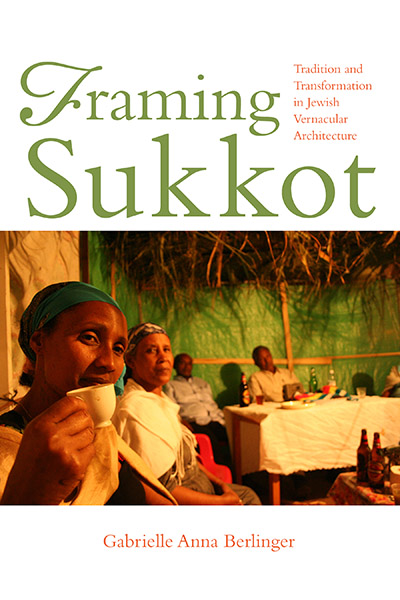
Framing Sukkot: Tradition and Transformation in Jewish Vernacular Architecture

Just in time for the holiday that is at its center, I am happy to trumpet the publication of Framing Sukkot: Tradition and Transformation in Jewish Vernacular Architecture by Gabrielle Berlinger. Framing Sukkot is the third title in the Material Vernaculars series and it is appearing in the world just as the Jewish holiday of Sukkot is about to begin for 2017/5778!

Here is how Indiana University Press introduces Professor Berlinger’s new book:

The sukkah, the symbolic ritual home built during the annual Jewish holiday of Sukkot, commemorates the temporary structures that sheltered the Israelites as they journeyed across the desert after the exodus from Egypt. Despite the simple Biblical prescription for its design, the remarkable variety of creative expression in the construction, decoration, and use of the sukkah, in both times of peace and national upheaval, reveals the cultural traditions, political convictions, philosophical ideals, and individual aspirations that the sukkah communicates for its builders and users today.

In this ethnography of contemporary Sukkot observance, Gabrielle Anna Berlinger examines the powerful role of ritual and vernacular architecture in the formation of self and society in three sharply contrasting Jewish communities: Bloomington, Indiana; South Tel Aviv, Israel; and Brooklyn, New York. Through vivid description and in-depth interviews, she demonstrates how constructing and decorating sukkah and performing the weeklong holiday’s rituals of hospitality provide unique circumstances for creative expression, social interaction, and political struggle. Through an exploration of the intersections between the rituals of Sukkot and contemporary issues, such as the global Occupy movement, Berlinger finds that the sukkah becomes a tangible expression of the need for housing and economic justice, as well as a symbol of the longing for home.

As I noted in discussing the edited collection Material Vernaculars: Objects, Images, and Their Social Worlds last fall, it is my hope that many readers will purchase a beautiful paper or hardback edition of Framing Sukkot, thereby helping support the work of a great university press. One of the things that makes IU Press great is its commitment to building strategies for free and open access to scholarly writings. The Material Vernaculars series, co-published with the Mathers Museum of World Cultures, is part of that commitment. So, first let me note that you can buy copies of the book from a range of online booksellers, including Amazon and the IU Press itself. Secondly, let me show you where the free digital edition of the book lives. Hopefully by the time Sukkot ends, people around the world will be reading this great new book.

To access the free PDF version, click on the image below or go to this URL https://scholarworks.iu.edu/dspace/handle/2022/21232

Once you are there, click on the “View/Open” link as shown in the image. Clicking should enable you to download a copy of the book.

Dr. Berlinger is an Assistant Professor of American Studies and Folklore at the University of North Carolina at Chapel Hill, where she is also the Babette S. and Bernard J. Tanenbaum Fellow in Jewish History and Culture within the Carolina Center for Jewish Studies. In addition to the new book, you can find a moving Sukkot-oriented post by Dr. Berlinger on the IU Press blog.

Check out Framing Sukkot!

Guest Post: An Encounter with Basket Traditions in Zanzibar City

I am very happy to here share a guest post by Kurt Dewhurst and Marsha MacDowell of the Michigan State University Museum, East Lansing, Michigan, USA.

Traditions of handmade, woven basketry is alive and well in communities around the world. After attending the launch of the Alliance for African Partnerships organized by Michigan State University with African partners in Dar es Salaam, Tanzania, in July 2017, we decided to journey to the island of Zanzibar where we stayed in Stone Town. Stone Town (the old portion of what is also known as Zanzibar City) was designated as a UNESCO World Heritage Site in 2010. It takes its name from the coral stone buildings of the 19th century that were constructed on the site of an old fishing village.

Unknown

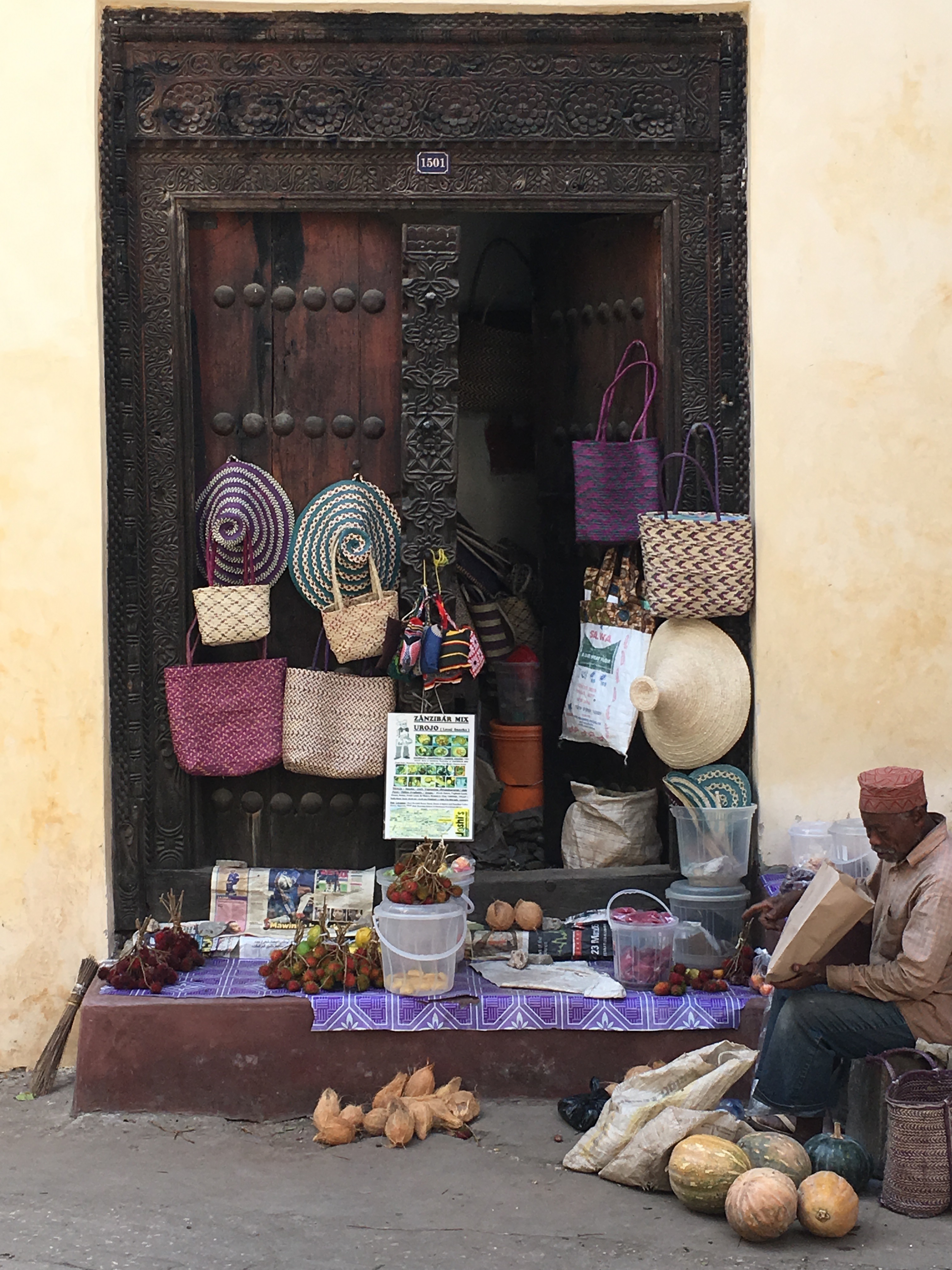
Figure 1: A Vendor selling baskets, vegetables, and other items next to Emerson Spice Guest House

Immediately after disembarking from the ferry from Dar es Salaam, we found ourselves in a truly mesmerizing environment. Stone Town, perhaps best known for its contested colonial past and a legacy of being a major site for the slave trade in East Africa, is replete with tall houses of Arabic and Victorian-era architecture, women garbed in beautiful kanga textiles, and maze-like thoroughfares so narrow that pedestrians, bicyclists, and moped riders all work hard to avoid collisions. The sounds of muezzin making calls to prayer five times daily from the over fifty mosques in Stone Town create a memorable soundscape. The sounds and visuals create a unique cultural space where the convergence of historical influences of Arab, Persian, Indian, and European cultures can be readily glimpsed.

Unknown-1

Figure 2: The Malcolm X shop selling baskets, fez, clothing, and food

We found ourselves exploring alleyways filled with small stalls and stores catering to the tourist trade that carries the Stone Town economy today. As folklorists with a passion for seeking out locally made material culture and with a deep interest in basket traditions, we found ourselves drawn to the presence of new and old baskets that were being used functionally for a variety of purposes as well as being sold along with other crafts, paintings, and clothing. In many displays of items for sale, baskets were often carefully arranged to aesthetically appeal to customers.

Unknown-2

Figure 3: The Moto Women’s Craft Cooperative

We were pleased to find traditional Zanzibar baskets being sold in several tourist-oriented shops, and were especially pleased to find one shop–Moto Cooperative–that represented many examples of baskets made by women in a craft cooperative. The stated goal of the Moto (Swahili for “heat”) Cooperative is to support the development of the rural economy. The project aims to recover and sustain high quality traditional weaving and to seek out new markets locally and internationally to support the weavers and weaving families. The cooperative stresses that they are “empowering women, reviving a cultural heritage, and building sustainability.” Currently Moto has nine villages and 19 cooperatives with over 200 women (and some men) engaged in this effort.

Unknown-3

Figure 4: Display of baskets, hats, and purses at Moto Women’s Craft Cooperative

The baskets made in this cooperative are produced in the centuries-old ukili weaving tradition. Relying on soft palm fibers from mkindu and mvumo palm trees, the weavers seek to revive the tradition in the face of the growing replacement of traditional baskets by plastic bags and mass produced forms. They do this not only through weaving in traditional techniques and patterns but also by planting palm trees for future materials for their baskets. They use mostly natural dyes and, in a quest for sustainable resources, incorporate solar cookers to prepare the dyes.

Unknown-4

Figure 5: “Pointy cone-style” baskets at the Moto Women’s Craft Cooperative

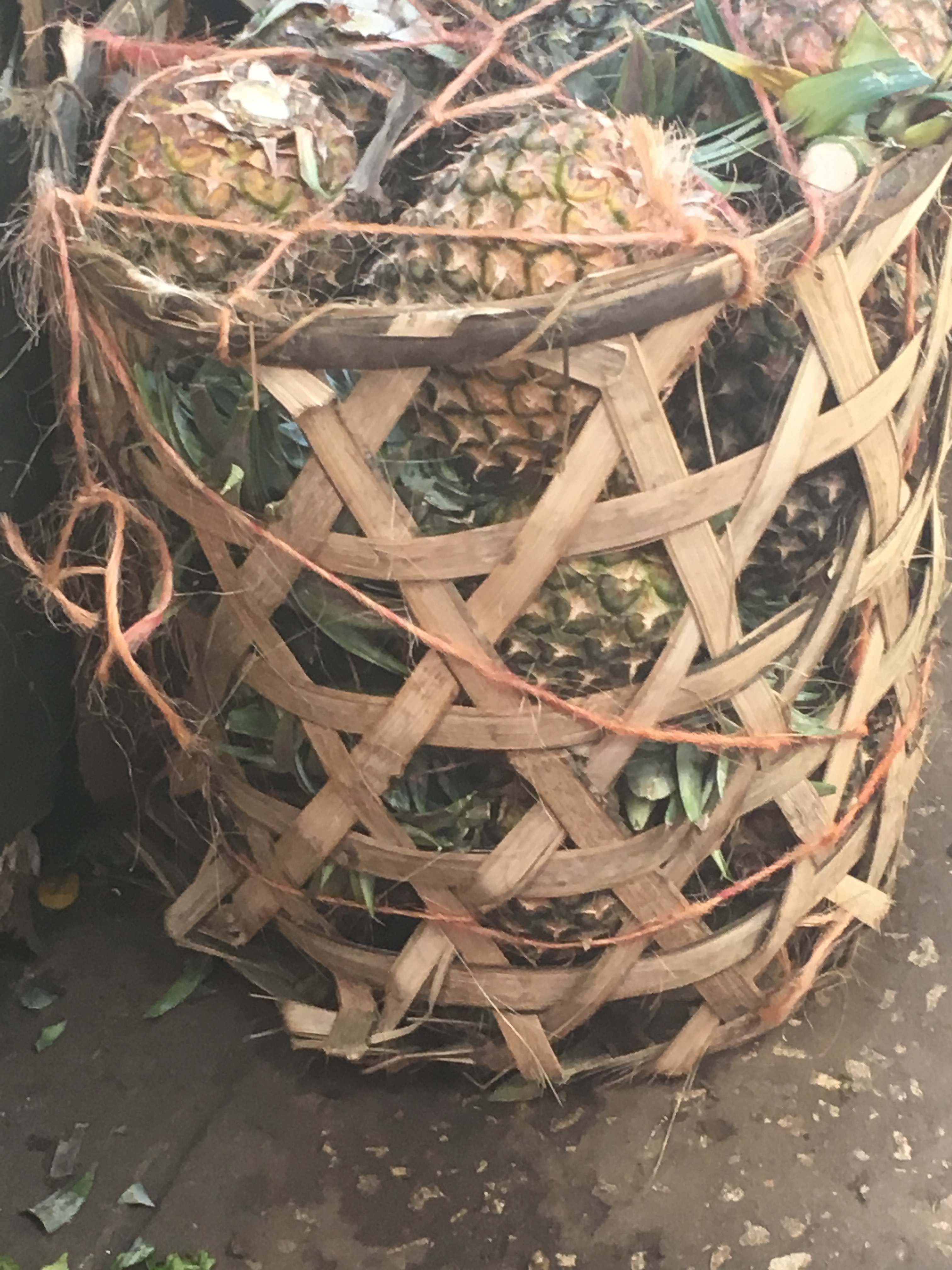
It was wonderful to see the prevalence of large, open-weave bamboo working baskets being used by vendors in the fruit, spice, vegetable, and fish markets. In fact, we saw these rough-hewn, large, durable baskets in many sizes and shapes being used by individuals to carry almost any item – by hand, bike, or truck. We had seen similar kinds of working baskets in China, but made there primarily of bamboo. These baskets seem to have been made by flexible wooden fibers from local trees and they were woven and then tied off with strands of wood fiber. We learned that there was a place on the edge of Stone Town where most of these baskets were made and sold for local vendors or workers. We look forward to investigating that on a future trip We came away inspired to learn more and share our experience in the hopes that we might connect with others who know much more about the basket making traditions of Zanzibar.

IMG_1102

Figure 6: A work basket at rest in Stone Town

IMG_1162

Figure 7: A bicycle basket in Stone Town

IMG_1166

Figure 8: A basket of pineapples in Stone Town

IMG_6849

Figure 9: A motorbike basket in Stone Town


A Southwest Central Indiana Collaboration: The Art with a Purpose Exhibition at the Brown County Art Gallery

This afternoon the Brown County Art Gallery in Nashville, opened the exhibition Art with a Purpose: Brown County Baskets. The exhibition is a homecoming, of sorts, because it is being staged in the community in which the baskets and basket makers who are the exhibition’s focus lived and worked. Oak rod baskets, while once made in other pockets in the Eastern United States, were unique within Indiana in a small region centered on Brown County. The exhibition is also a homecoming in another way. While the exhibition’s curator–Dr. Jon Kay–produces exhibitions that appear all around Indiana, and at the Mathers Museum of World Cultures‘ galleries in Bloomington, it is much less common for him to be able to present an exhibition in his own home town of Nashville. Thanks go to Lyn Letsinger-Miller, President of the Brown County Art Gallery, and to the Gallery’s other leaders, for hosting the exhibition and a very special kick-off event today.

The exhibition is also an exciting re-mix, as it is a new, edited, and updated version of Working Wood: Oak-Rod Baskets in Indiana, the 2015 exhibition that Jon curated for the Mathers Museum of World Cultures as part of the 2015 Themester @Work: The Nature of Labor on a Changing Planet (a program of the IU College of Arts and Sciences). As you can see from the photographs, the exhibition was adapted for the art gallery and includes two beautiful paintings related to the county’s unique basketry heritage executed in the Brown County Art Colony’s signature style. They are The Basket Weaver and The Basket Weaver’s Daughter, both by E. K. Williams.

In Jon’s talk this afternoon, he explained the history and practice of oak rod basketry and tracked the ways that these baskets went from being valuable tools for everyday living to being symbols of an old-fashioned way of life consumed by urban tourists visiting the county to disappearing when easier-to-make white oak splint baskets were imported to the county from basket making areas of Kentucky and Tennessee. These rustic splint baskets were good enough for tourists who did not know the local history of rod basketry and who were not collecting the works of named artisans.  The story of particular basket making families linked across time, in Jon’s account, to the broader history of tourism and the politics of culture in Brown County. These themes, in turn, reflected larger modern and anti-modern sensibilities in the U.S. as a whole during the twentieth century.

There was a big crowd out for the opening events. The attendance by descendants of the two key basket marking families–Hovis and Bohall–made today’s events extra special. Thanks go to the Brown County Art Gallery for its wonderful efforts bringing this exhibition to a new audience. Congratulations to Jon and to all of the Mathers Museum of World Cultures staff and students who worked on the project.

Some background…

Traditional Arts Indiana, the Mathers Museum of World Cultures program that Jon Kay directs, is a partnership between Indiana University and the Indiana Arts Commission. Its task is to document, interpret, and support the folk and traditional arts across all of Indiana. It does that in a myriad of ways, including through the production of exhibitions that circulate across the state and engage its people in deeper appreciation for Indiana’s diverse heritage.

While TAI has a statewide focus, as does Indiana University, Indiana University Bloomington is making a special effort to support, and positively impact, the eleven counties of the Southwest Central Indiana region in which our campus is located (Brown, Crawford, Daviess, Dubois, Greene, Lawrence, Martin, Monroe, Orange, Owen and Washington). Projects being pursued in this region are, like the Art with a Purpose: Brown County Baskets exhibition, intended to be partnerships between parts of the university (such as Traditional Arts Indiana/Mathers Museum of World Cutures) and local community organizations, such as the Brown County Art Gallery. In pursuing collaborations such as this one, we are happy to be advancing our campus’ goals while, we hope, also enhancing the quality of life and cultural richness in the region in which we live and work.

Jon Kay is Director of Traditional Arts Indiana and Curator of Folklife and Cultural Heritage at the Mathers Museum of World Cultures. At Indiana University, he is also a Professor of Practice in the Department of Folklore and Ethnomusicology. His most recent book is Folk Art and Aging: Life-Story Objects and their Makers (Bloomington: Indiana University Press, 2016). That book is a title in the Material Vernaculars series that the museum co-publishes with Indiana University Press. Jon’s studies of Brown County are reflected, for instance, in his article “A Picture of an Old Country Store“, published in Museum Anthropology Review.

Learn more about oak rod baskets in Annie Corrigan‘s 2015 radio story with Jon for WFIU (“Southern Indiana’s Lost Craft“).

MMWC Practicum Student Successes: Summer 2017

At the Mathers Museum of World Cultures, we are excited about the work that the museum’s first cohort of Allen Whitehill Clowes Charitable Foundation interns are doing. You can read about their experiences in this June 2017 news story that Nicole Roales authored:  IU students learn many skills during Mathers Museum internship.

The internship program is new, but as each semester ends, we also experience a pleasure that is longstanding. For decades, the museum has been the home base for practicum students engaging in hands-on learning experiences in museums. Like Director emeritus Geoff Conrad before me, I coordinate practicum courses that provide the framework for student work not only at the MMWC but in other institutions as well. As each semester ends, I get to hear the stories of the work done by these practicum students. For those who have worked at the MMWC I will have seen them at work with their mentors throughout the semester, but for those who go off campus to museums in Chicago, Indianapolis, etc., I get to hear the end of year stories, not only from the students but from their mentors at other museums, large and small. This is an inspiring part of what I get to do.

You can learn more about the practicum courses that I oversee and our museum’s practicum program overall in the practicum guide that we make available on the museum’s webpage. Go here and look for “practicum” to get it. I coordinate graduate and undergraduate museum practicum courses for the IU Department of Folklore and Ethnomusicology and the Department of Anthropology. Other practicum courses can be found in History, Information and Library Science, and other units.

building

Strengthening our Practicum program as well as launching our Internship program are goals articulated in the Museum’s strategic plan. These goals also relate to ambitions articulated in the campus’ strategic plan.