Skip to content

What is the current status of confidentiality and non-disclosure policies at HAU?

UPDATE 1: On Facebook (June 13, 2018) someone from the HAU social media team stated that no one now involved in HAU is bound by a confidentiality agreement (beyond norms of editorial confidentiality that are customary in scholarly publishing). (Update created early EST on June 13, 2018)

UPDATE 2: Anyone reading this as part of a larger effort to make sense of the much wider set of issues being discussed in the field should be aware that it was written prior to the release of additional documents (including the open letter of June 13) and great deal of public discussion. (Update created late EST on June 13, 2018)

UPDATE 3: Discussions of HAU have continued, with many relevant documents and position statements appearing and a lot of commentary on social media. I cannot account for all of this here. I hope that the unfolding of the discussion reveals more clearly the logic behind my querying the more general status of non-disclosure strategies at HAU. Even if this approach was only taken for a period (the period in which I was asked to join the advisory board) and only with the advisory board and not the various editorial boards or with various staff and volunteers, the existence of policies or practices related to confidentiality would be a major factor in the wider range of issues (of power and silencing) that are now being discussed. While I cannot provide coverage of all of the discussion, two essays from today speak rather directly to what I was getting at in the post below. These are the essay by former HAU treasurer Rodolfo Maggio and the essay by former HAU editorial team participant Ilana Gershon. (Update created afternoon EST on June 19, 2018)

What is the current status of confidentiality and non-disclosure policies at HAU? Why can’t the policies be published?

Those are my questions. This is my context.

Alex Golub has noted previously that I tend to bury my lede. Other stuff will follow, but here is my main note, first. My email records on the following matter are incomplete, but I possess one key message that lends certainty to my account. I was invited to serve on what was then (to be) called the External Advisory Board for the journal HAU sometime in spring of 2013. My understanding of this at the time was that the invitation was an outgrowth of my work prior to that point on scholarly communications in general and on open access issues in particular. While then new to the work of directing the Mathers Museum of World Cultures and at the time serving as Interim Editor of the Journal of Folklore Research as well as continuing as Editor of Museum Anthropology Review, I was earnest in considering this opportunity closely. With several substantive issues already published and numerous scholars joining the cause, it was already clear that HAU was emerging as a significant undertaking. Why did I not follow through and join the External Advisory Board? Whatever it was, why to do I bring it up now?

I bring it up now because in all of the conversation now underway (from a great many perspectives and points of view—the current HAU discussion is not a binary one), no one else has flagged it and it seems more germane to me now than it did then—and at the time it was a big deal for me. When I was asked to join the External Advisory Board, I was asked to agree to what in legal parlance is a non-disclosure agreement. In the English speaking world right now, these are very much in the news in a #MeToo context. In that context, they are seen by some as tools by which to silence victims and shield serial predators. None of that was on my mind at the time I was asked to help HAU. But I was bothered by the confidentiality language I was asked to embrace, understanding it at the time as the kind of language used in industry to try to protect trade secrets and business processes. Why did this bother me? I was being asked, as I understood it, to help with HAU because of my experience with open access and with publishing more broadly. In essence, I was being asked to bring knowledge gained from other publishing projects into the HAU context, but was being explicitly bared from taking knowledge gained in the HAU context into other publishing contexts and also being bared from reflecting in my scholarly writing and speaking (etc.) on that which I would learn as a HAU volunteer.

In the face of my concerns, there was an effort led by Sarah Green (Manchester) to weaken the confidentiality language in the HAU governing documents, but the basic approach remained in place and none of the others then serving, or being approached, to my knowledge, were particularly concerned about this issue. I said no, and HAU went on without me. In itself, that is o.k. I hardly needed more publishing endeavors in my life and I am not confident that I could have made an particularly important contributions to HAU. But, on this point, I will just say that, especially, in anthropological contexts, all open access projects (perhaps to too great a degree) have drawn upon our (probably over-extended) disciplinary concern with gift economies, Maussian exchange, communal labor, etc. From its name on down, from its first moment of existence, HAU struck this note at a greater volume and with greater frequency than any of the rest. It seemed ironic then and, with the hindsight that comes with more recent developments (they are out there, you can find them), it seems even more unbelievable that a (formerly) open access journal would play the gift economy card so vigorously while adopting, from the earliest possible moment, one of the most draconian tactics in the corporate tool box. My partners and friends in working on open access in folklore studies and in anthropology have generally spoken of our efforts as provisional, emergent, experimental, contingent, practical, cooperative…. When we figure out how to accomplish X or Y, we (as scholars and community members) try to share what we have learned and to help other efforts thrive. My involvement, such as it was, in helping Cultural Anthropology’s move towards open access had this character and the same is true for many other people who joined in that effort. In a campus context, the work of Museum Anthropology Review has provided lessons for the forty or so other open access journals that have followed it in the IUScholarWorks Journals program. The approach has also characterized the Open Folklore project and the move of numerous folklore studies journals to sustainable open access publishing frameworks. When open access advocates speak of sharing, they have generally really meant it and lived that value. Confidentiality and non-disclosure agreements, and the the values with which they so often co-occur, are incompatible with open access as a community-centered approach to scholarly publishing. (I am well aware of the alternative forms that open access has also taken–green, corporate, predatory, etc.)

I do not touch here on the accusations that have been made regarding the work of HAU. I have no special insight into that. But I do observe in a general way that a culture of confidentiality and the use of confidentiality-enforcing agreements is a proven breeding ground for a wide range of abuses and a partial explanation for why unhealthy relationships and structural arrangements so often go unaddressed until things are way out of hand (if then). I do not presume to know what has gone on behind the scenes in a journal that I have no role in, but I know with certainty that I was right in not agreeing to join any volunteer, scholarly effort that demanded a formalized, all-purpose pledge of confidentiality of me.

The non lede…. Am I hostile to HAU? No. I am stunned (in a good way) by the amount of first rate scholarly activity the HAU community has been able to assemble and share. Many colleagues whom I respect are active in HAU, have published in HAU, and have devoted great effort to the advancement of HAU. I think that I have only spoken or written about HAU positively in public contexts (Jackson and Anderson 2014 provides an example). (And yes, I am very much listening to the critiques of HAU that are about issues other than open access. More articulate voices than mine are saying important things on that front.)

Have I helped HAU in anyway despite my not joining the effort formally? I think so. Despite my private reservations, I advocated on HAU’s behalf with the leadership of the Indiana University Libraries, thereby positioning IU to become a HAU-N.E.T institution. This was an easy sell on a campus and with a library that is passionate about open access, but it was the quantity and quality of the work that HAU was publishing that made this a certain thing. The transformation of HAU into a non-OA publication certainly changes this dynamic on our campus.

It is another small thing (although it involves significant technical work by my IU Library colleagues), but I advocated for inclusion of HAU content in the Open Folklore project’s  search corpus.

I wanted HAU to succeed. I still want HAU to succeed.

Do I have any comment on David Graeber’s published apology of June 11, 2018 or the “new” HAU Trustee’s statement of June 12, 2018? No, with one exception. I appreciate part of what Graeber has indicated that he is trying to do. I am filled with dread reading so many social media posters linking HAU’s moment to failures (deemed by them) in open access. As Graeber notes, the story of HAU, whatever it is, is not the story of open access failing. Here is not the place to argue that point further, but open access is not the problem. Open access is hard, complex, partial, and human. Open access is also succeeding on a great many fronts. I could recount them all day and not be done. The move to Chicago was hardly the only future HAU could have had and the current controversies are surely not about open access, they surely are about humans and human relationships in a much more complex sense.

A Quick Trip to Beijing

Late last month, I was fortunate to have a chance to return quickly to Beijing as a member of an Indiana University delegation visiting the Chinese Academy of Social Sciences. Happily CASS is a scholarly powerhouse in general and it possesses special strengths in folklore studies/ethnology. It was a whirlwind visit during which I spoke four times in four days.

IMG_2239

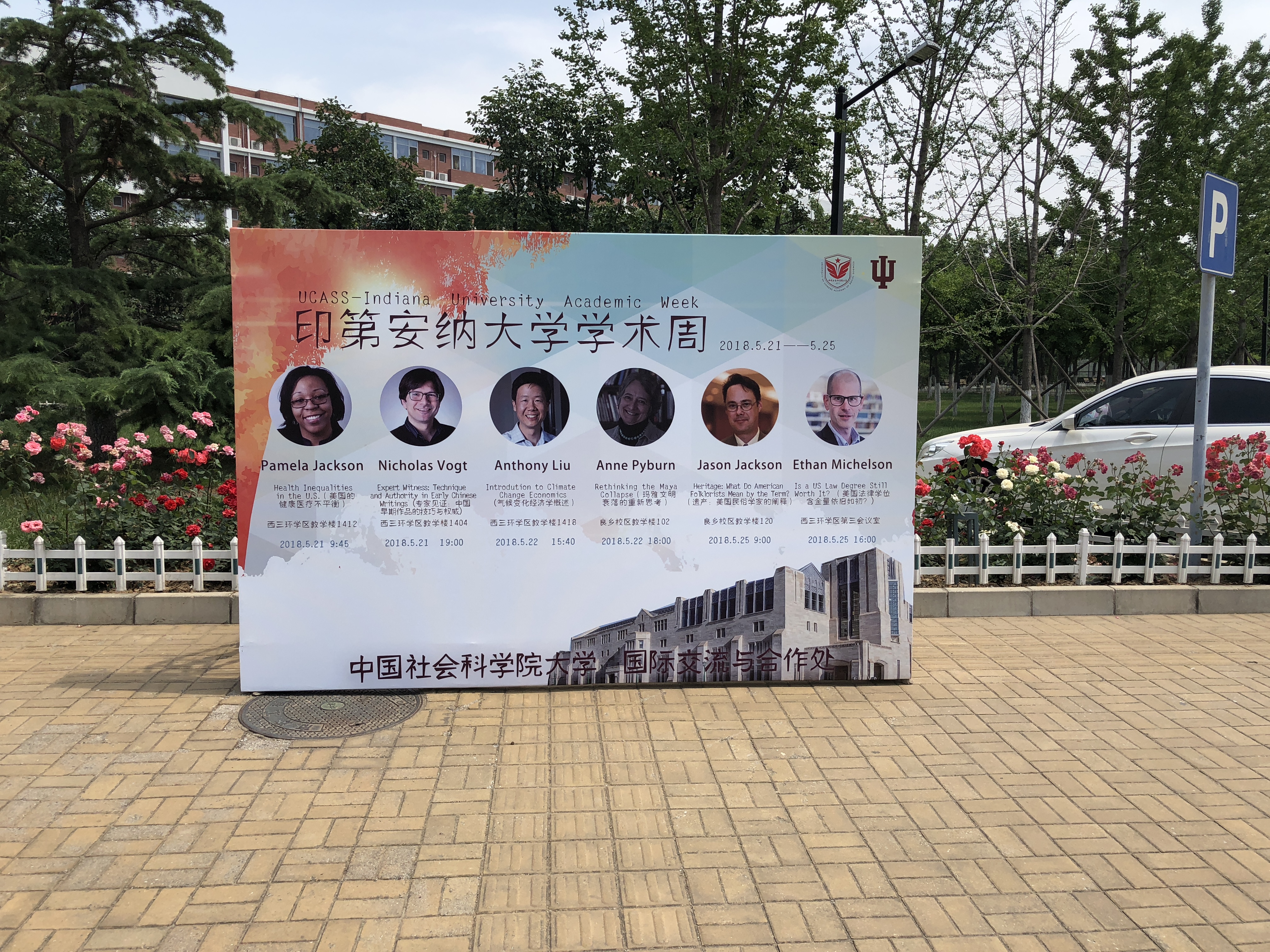
A promotional sign for UCASS-Indiana University Academic Week at the University of the Chinese Academy of Social Sciences in Beijing, May 2018.

My first engagement was not at CASS but with the world-renowned folklore program ( Institute of Folk Literature, formerly the Institute of Folklore and Cultural Anthropology) at Beijing Normal University. There my host was Professor YANG Lihui, a leading figure in international folklore studies and a key interpreter of the history and theory of the field. Professor YANG has helped explain developments in U.S. folklore studies to her colleagues in China and, reciprocally, worked to make the field as practiced in China more legible to non-Chinese scholars. (For example, see this article in Asian Ethnology with AN Deming.) My topic was the relationship between museums and folklore studies in the United States. My timing was auspicious, because in their coursework with Professor YANG, many of the graduate students had recently been reading and discussing just this topic (including work by by Barbara Kirshshenblatt-Gimblett, whose efforts were also touched on in my talk). The discussion that followed my presentation was rich and I greatly appreciated this chance to visit a leading program in our shared field. An account of my visit was kindly prepared by one of the participating students and published on the webpage of the School of Chinese Language and Literature.

On my second full day in Beijing, I was a participant in a rich conference during which CASS and IU scholars across the breadth of the social sciences shared background on their home departments and institutes, as well as brief glimpses of their own scholarly work. I spoke about the work of folklore studies in the Department of Folklore and Ethnomusicology, the cultural anthropology faculty and training in the Department of Anthropology, and the Mathers Museum of World Cultures. Each of the IU faculty participating were paired with a CASS colleague. I was thrilled to be matched with an outstanding folklore scholar who has deep knowledge not only of the field, but about its status at Indiana University. Like Professor YANG at Beijing Normal University, Professor AN Deming was a visiting scholar in the IU Folklore Institute and has maintained close ties with IU colleagues. Drawing on his background in folklore studies and his ties to IU, Professor AN’s warm remarks to the conference attendees really set the stage well for exploring possible initiatives that might link scholars at both institutions. We were the first pair of scholars to speak. In the presentations that followed, we learned a lot about CASS but also research expertise from an interesting range of scholars from across the full breadth of the social sciences, from the philological study of ancient scripts to the study of contemporary global economic shifts.

On my third day, I was the guest of the Institute for Literature, one of the homes for folklore studies at CASS. The folklore studies group in the Institute of Literature is led by Professor AN and his students and colleagues came out in significant numbers to attend my talk and to discuss it afterwards. My subject related to complementary theories of cultural heritage. I am very thankful for their generous welcome and the opportunity to discuss shared interests with them. Later in the day, I was able to meet with another key colleague at CASS. This is CHAO Gejin, the leader of the Institute for Ethnic Literature and also the President of the China Folklore Society. In the later role, Professor CHAO is at the heart of the important partnerships that link the CFS and the American Folklore Society for joint work. It was a pleasure to meet with Professor CHAO and learn more about the folklore studies work being done in his institute. (For background on folklore studies at CASS and the units in which it is housed, see the essay by AN Deming, SHI Aidong, YE Tao, and YIN Hubin included here.)

On my final day in Beijing, I addressed a large group of (mostly) graduate students enrolled in the University of the Chinese Academy of Social Sciences. My topic was again ways of thinking about the concept of cultural heritage. As reflected by the photograph I share above, the University went to great lengths to promote the talks that my colleagues and I delivered. They branded our week of campus visits as “UCASS Indiana University Academic Week” and were extremely generous hosts. I appreciated the chance to learn about the graduate and (new) undergraduate programs at CASS and to see their immaculate campus in the Beijing suburbs. With my colleagues C.T. and P.W., I enjoyed a wonderful bowl of noodles in the campus restaurant. How great it would be to have such noodles on one’s campus!

I close by recording my appreciation for all of my hosts, both those colleagues with whom I enjoyed rich disciplinary discussions and the staff of CASS, BNU, and the Indiana University Beijing Gateway who worked hard to make these undertakings a success. I also enjoyed traveling with a wonderful group of IU faculty colleagues. 谢谢


The Mallet: Making a Maul in a Baiku Yao Community

This guest post by Jon Kay, Curator of Folklife and Cultural Heritage at the Mathers Museum of World Cultures provides Jon with the opportunity to share the first of the documentary videos arising from work that he and colleagues pursued together in Nandan County, Guangxi Zhuang Autonomous Region in December, 2017. It is the final post in a eleven-part series relating to travel in China and specific work in Nandan County that began with a post on January 2, 2018 and continued most recently through post 9, a guest post by Carrie Hertz of the Museum of International Folk Art. These earlier posts are accessible here 1, 2, 3, 4, 5, 6, 7, 8, 9, 10.

IMG_0770

Lu Bingzhao uses a billhook to make a wooden mallet or maul. December 15, 2017. Photograph by Kurt Dewhurst.

I was in Southwest China as part of a joint team of researchers from the United States, the Anthropological Museum of Guangxi, and the Nandan Baiku Yao Eco-Museum who were documenting basket and textile traditions of the Baiku Yao people in Nandan County, in the Guangxi Zhuang Autonomous Region.

Our team visited a home in Manjiang village to inventory the baskets collected and used by a local family. As the fieldworkers worked photographing and measuring baskets, Mr. Lu Bingzhao came into the house and picked up a mallet, which he showed everyone and then went outside. I did not speak Mandarin or the local Baiku Yao dialect, but I felt he had something he wanted to show us. I went outside and saw him lay the mallet on the trunk of small felled tree in order to get a rough measurement; it was then that I realized he was going to make a mallet. I grabbed my camera and began shooting. I didn’t have a tripod with me, so I didn’t expect to shoot the entire process, but I became enthralled with how the elder worked. Two of his grandchildren played nearby, and they often stopped to watch him work and to interact with him.  Neighbors and family members stopped by to visit as they returned home from picking greens.  Mr. Bingzhao worked steadily as people came and went. He was skilled at using the billhook. With heavy chops, he used the hook to quickly remove the excess wood. Then he delicately shaved the mallet’s handle smooth, using a pulling motion. Finally at the end of the video, just as he completes the mallet, he gives it to his daughter-in-law. Tree became tool and gift in little more than an hour.

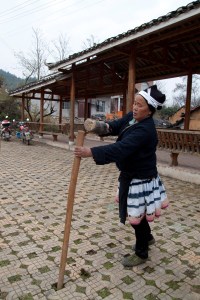
I was told that mallets, like the one made in this video, are commonly used to pound rice straw for sandals and to set the poles for warping a loom, the later activity I witnessed the next day when a group of weavers came to the Nandan Baiku Yao Eco-Museum office, where I was staying. I am sure the mallet probably has many other uses in the daily life of the community. For sure, the young woman would find utility in the gift. This video was totally unplanned, as the shaky recording and odd camera angles reveal, but I was compelled to edit this footage into this short portrait, to document the making of this tool. Reflecting reoccurring themes in my scholarship, it also demonstrates how craft can connect an elder to his family and community.”


Technical Note: The video was shot with a Canon 80D camera with a RØDE stereo microphone attached to the camera’s hot-shoe mount.

#IUDay at the Mathers Museum!

(We need your help!)

Its almost #IUDay! What is #IUDay? As the #IUDay organizers explain:

IU Day is a 24-hour, binge-watching, social-sharing, IU-wearing, online celebration of Indiana University and the people who make IU possible (that’s you). Maybe you’re a student getting your start. Maybe you’re an alumnus well on your way. Maybe you’re a parent, friend, or fan with a special place in your heart for “old IU.” In any case, these IU connections are cause for celebration.

#IUDay is happening tomorrow (April 18, 2018)!

The museum is participating in #IUDay in a number of ways. Some are surprises for tomorrow. Some will be accessible online, while others–such as our participation in the #IUDay scavenger hunt, will happen in the museum’s galleries. One item that is not a surprise is our inaugural crowdfunding campaign. I hope that you will check it out. You can help us meet our #IUDay goal by sharing the link via email or social media (there are buttons to help you with this). You can definitely also help us meet our goal by making a gift. With one day to go 43 donors have gotten us to 83% of our $2000 goal. Please help us get all the way there before #IUDay ends.

What is our crowdfunding campaign for? Great question. To find out, I hope that you will take a minute and twenty seconds and watch our brief campaign video and learn about the Indiana Heritage Awards program that–with your support–we will be launching later this year.

https://iufoundation.fundly.com/celebrating-folk-artists-of-indiana#gallery/2

Thanks to everyone who has already supported this exciting effort. If you have not given yet, please consider joining these generous supporter.

Fieldwork: Highlights from the Textile Group

This post in the recent series on December 2017 research and travel in Guangxi, China was written by Carrie Hertz, who also provided the photographs.

In this post, I complement Jason’s series of field reports (1, 2, 3, 4, 5, 6, 7, 8, 9) on our December 2017 trip to China with some highlights from the research team focused on Baiku (White Trouser) Yao textiles.

The textiles most visible in daily life are traditional baby carriers and women’s dress. December 15, 2017.

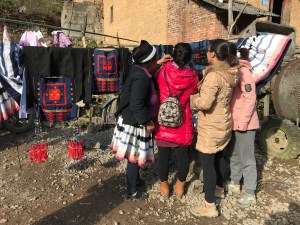
Textile making traditions are extraordinarily strong in Huaili village. In most households you can find a floor loom, an indigo dye pot, and a cache of tiny silkworm eggs. Because of the damp climate, most families hang their laundry out to dry. Strung out like banners across rooftops, balconies, pathways, and side yards, the clotheslines offer a visual inventory of typical wardrobes.

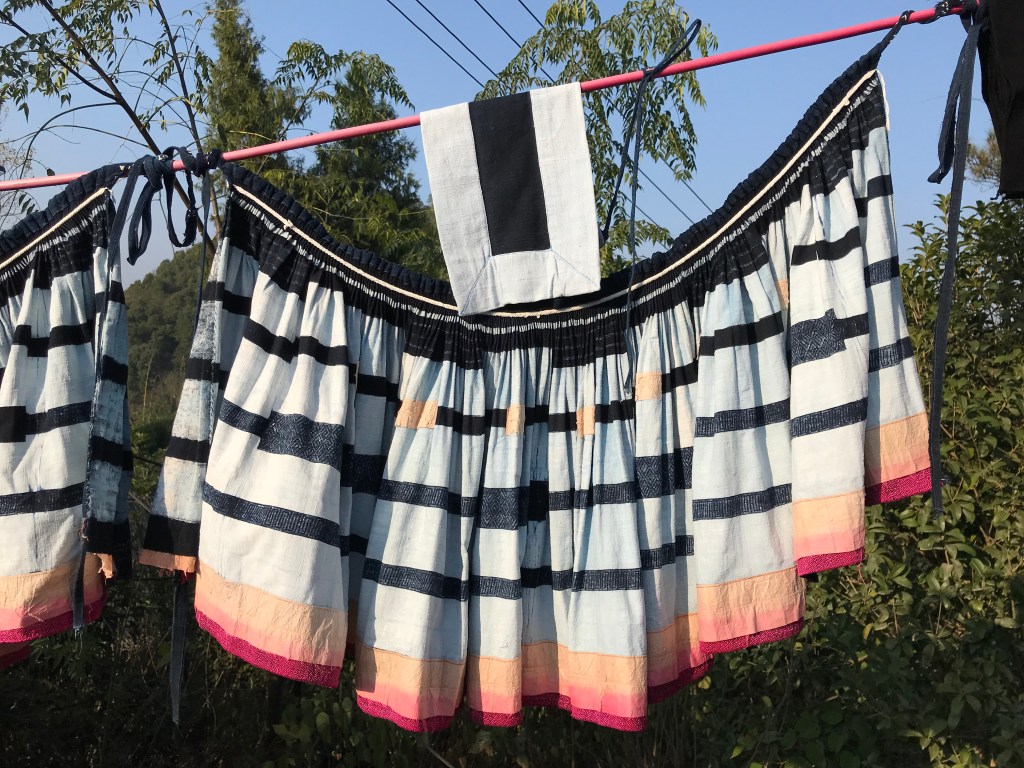
Daily dress combines traditionally made and mass-produced garments. Most women have several sets of indigo-dyed skirts, aprons, jackets, and tunics in regular rotation, the finest serving as festival dress when new, and as daily wear when faded. With age, the natural red dyes of embroidered skirt hems bleed, creating a beautiful ombre effect, and the appliqued silk felt disintegrates, taking on a feathery appearance.

A beautifully aged skirt hung out to dry. December 17, 2017.

Each garment represents countless hours of skilled labor, spread out throughout the year. Winter, while fields lie untended, is a busy time for textile production. Throughout the village, small groups of women huddle around fires on their front stoops, busy with embroidery or winding spools of cotton.

Lu Xiao Mei works on her embroidery while visiting with Li Xiu Ying and Wang Lian Mei holding her baby. December 15, 2017.

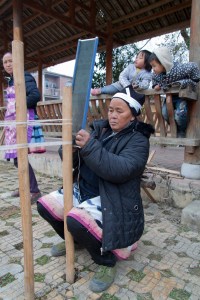
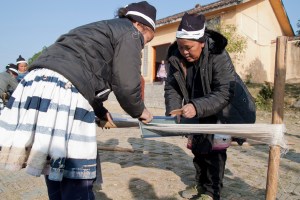
Winter is also a good time for warping looms. Women help each other, taking over the village courtyard. It takes the better part of a day to set up warp poles and wind the approximately 80 meters of thread in a spiral pattern around them.

The tree sap used to draw intricate resist patterns on clothing is harvested in winter. The bark is scarred and glistening where people have gouged it with their knife blades.

December 14, 2017.

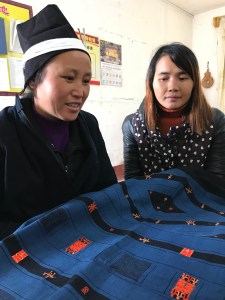
We had the great fortune to spend two days with a recognized master textile artist, He Jinxiu. She is considered the most skilled and knowledgeable needleworker in Huaili village and teaches embroidery and resist dyeing to all of the girls attending the local primary school. At her home, she brought out stacks of textiles that she was currently working on as part of a yearly cycle of production. Together we inventoried these materials, along with the tools, techniques, and terminology important to their creation. We diagrammed garment patterns. We filled notebooks with the local names for various motifs and their significance.

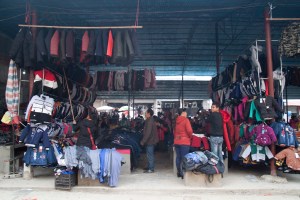
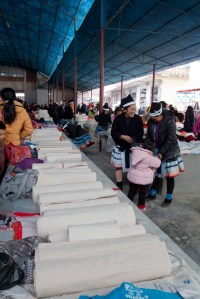
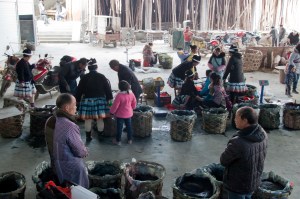
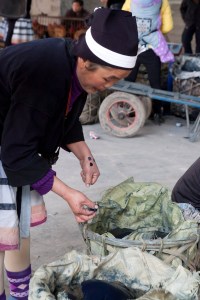
The home production of textiles is supplemented with supplies and finished goods purchased in the Lihu Town market. Alongside the many stalls stuffed with factory clothes and accessories, vendors sell silk embroidery thread, stylus for batik, and bolts of undecorated, hand woven cloth. A large area is devoted to selling indigo. One half kilogram costs about 6 RMB. In addition to being an important venue for textile sellers and makers, market days are for dressing up, for looking and being seen.


We also had opportunity to interview Li Xiu Ying, the primary textile producer in her family. For most of her life, her mother made her clothes, but now she makes clothes for her mother, using the skills her mother imparted.

Li Xiu Ying wears a handmade needle case hanging from her belt. Her nail beds are ringed with blue from indigo dye. December 15, 2017.

With Mrs. Li, the textile team examined a traditional burial cloth, part of the ecomuseum’s permanent collection. Every household hopes to always have a few of these on hand. When villagers die, the cloth is laid over the body and a series of smaller cloths, thirteen layers for men and fourteen for women, cover the face.

A woman’s burial face cloth made by He Jinxiu is now in the collections of the Museum of International Folk Art.


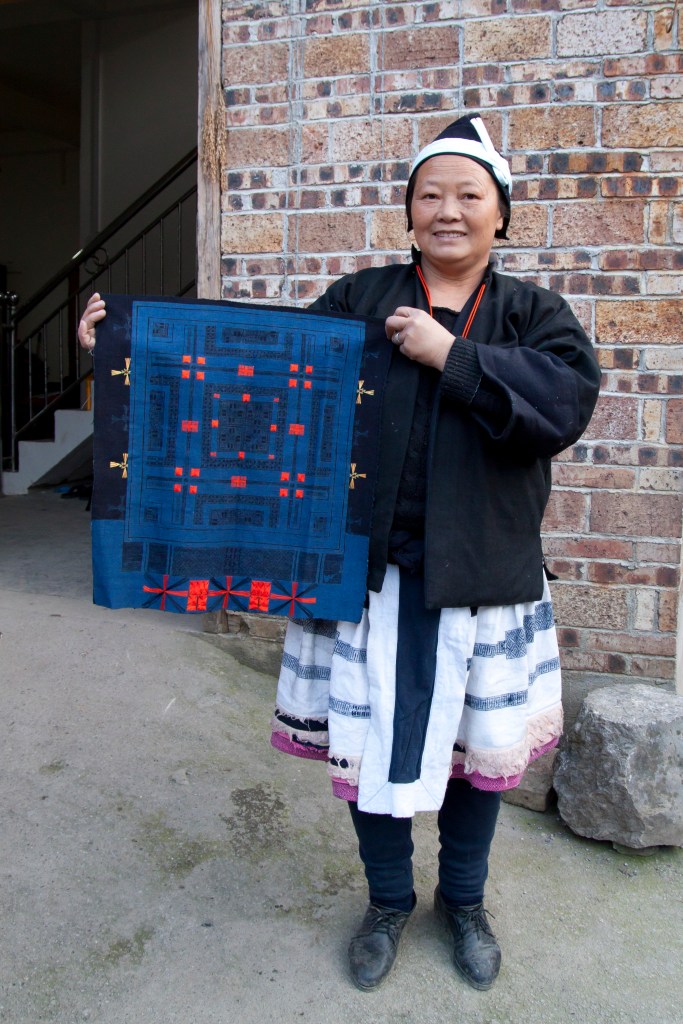
He Jinxiu holding up a woman’s burial face cloth that she made, now in the collections of the Museum of International Folk Art. December 17, 2017.

The textile research team feels incredibly grateful to those who shared their time and knowledge with us. These brief highlights merely touch upon what we learned and experienced during our visit.

Carrie Hertz is Curator of Textiles and Dress at the Museum of International Folk Art and a participant in the China-US Folklore and Intangible Cultural Heritage Project.

#AnthroDay with the Department of Anthropology at the Mathers Museum of World Cultures

button_2018

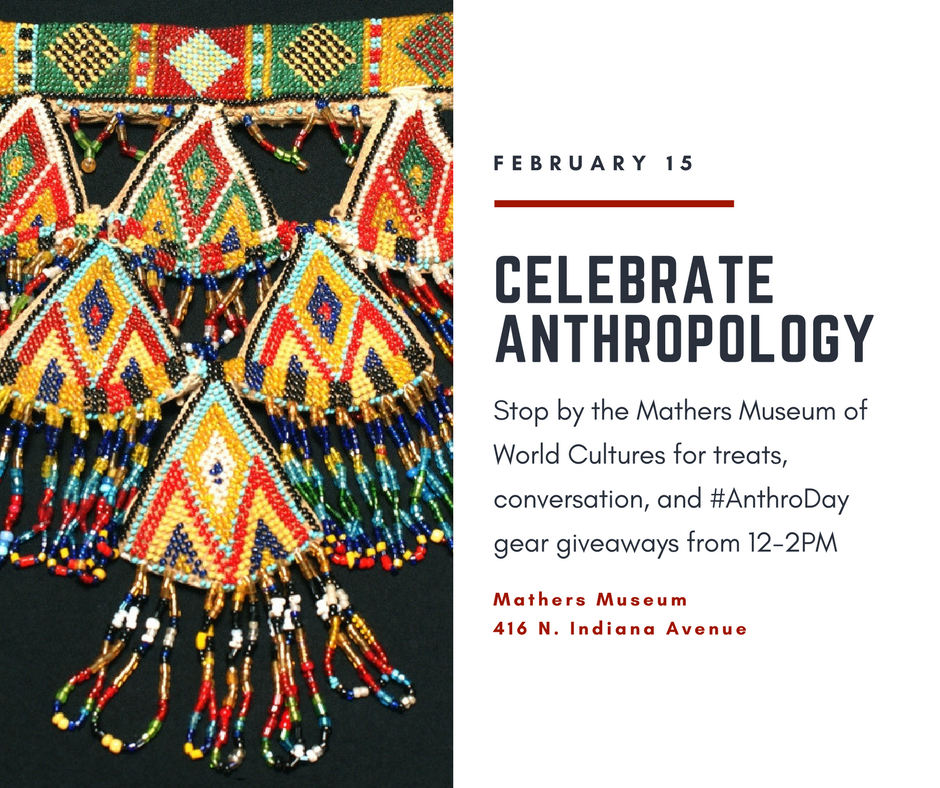
Please stop by the Mathers Museum of World Cultures during the 12-2 pm window tomorrow for our #AnthroDay celebration with the IU Department of Anthropology. We want to celebrate with you! Everyone is welcome. Treats! Anthropology! Swag! Bring your friends! Come alone and make a connection! See the exhibits! Discover a class! Impress a professor with your new gear!

27971863_1742349445810502_3393673071574349815_n.png

Fieldwork: Highlights from the Basketry and Architecture Group

I have been delayed in finishing up the series on the December 2017 trip to China that colleagues and I undertook. I am happy to return to the series here. Earlier posts described sites visited in Beijing (1, 2, 3, 4, 5), partnership activities in Nanning (6, 7) and the contexts of our fieldwork in Nandan County (8). In this post I quickly highlight some of the particularly exciting moments in the fieldwork of the research team that was focused on local Baiku (White Trouser) Yao basketry and vernacular architecture. (More on the textile group later.)

IMG_0608

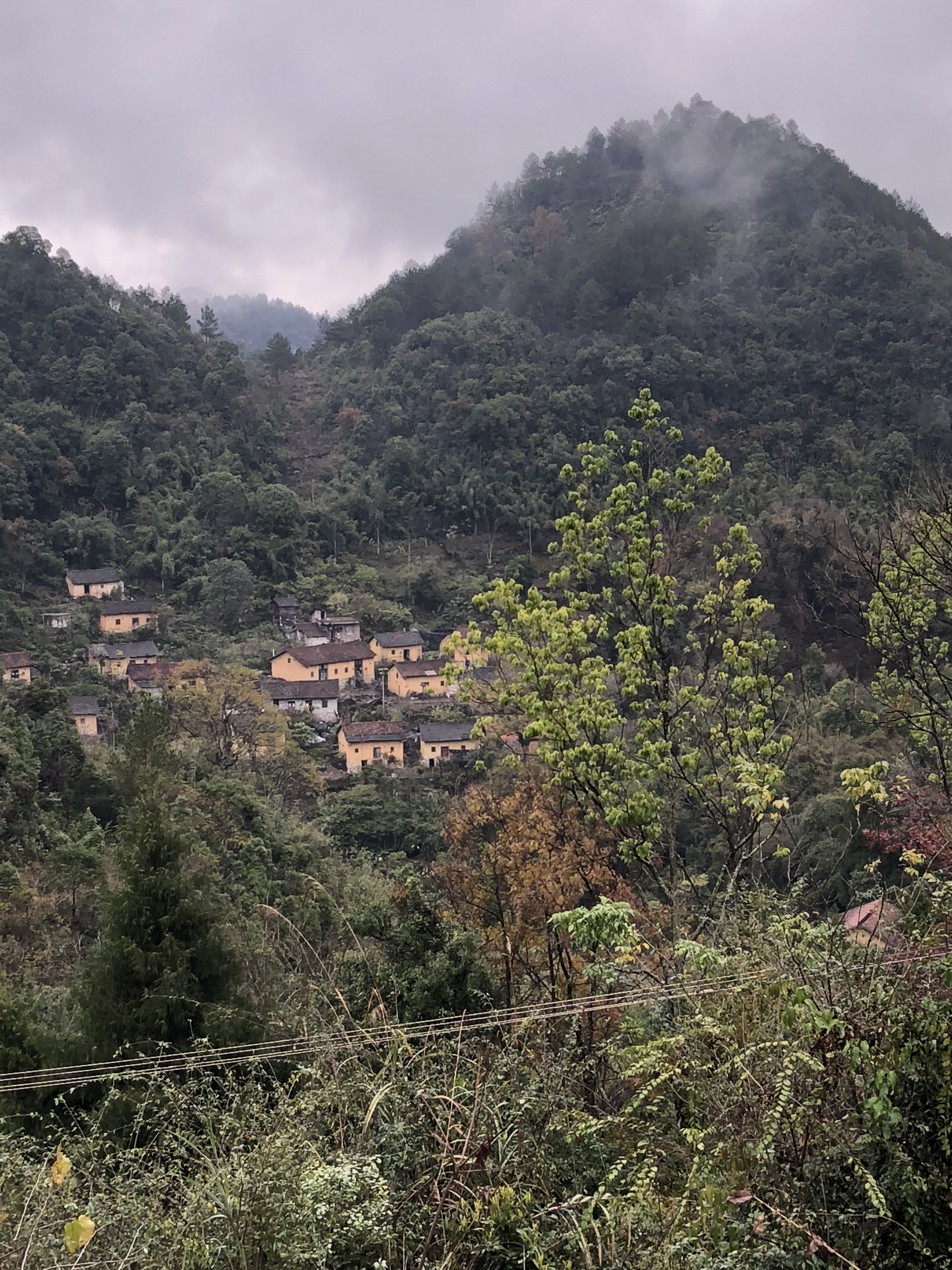
A portion of Manjiang village, a Baiku Yao community, viewed from above. December 14, 2017. Photograph by Jason Baird Jackson.

Undoubtedly, we will always remember our time with Li Guicai in Huaili village. We spent two days with him as he made an elaborate and beautiful bamboo basket for sticky rice. We video recorded nearly every moment of the making of this basket over the course of two work days in which Mr. Li worked nearly continuously. His skill and industriousness left of speechless. After the basket was complete, he offered us an rich interview on his life and the history of his work as a maker of baskets. Generously, he sold us the basket that we documented with him and it is now in the collections of the Mathers Museum of World Cultures. For my friends who know about the river cane basketry of the Southern United States, Mr. Li’s basket was made with the same basic double weave techniques found in the baskets of the Cherokee and other indigenous groups.

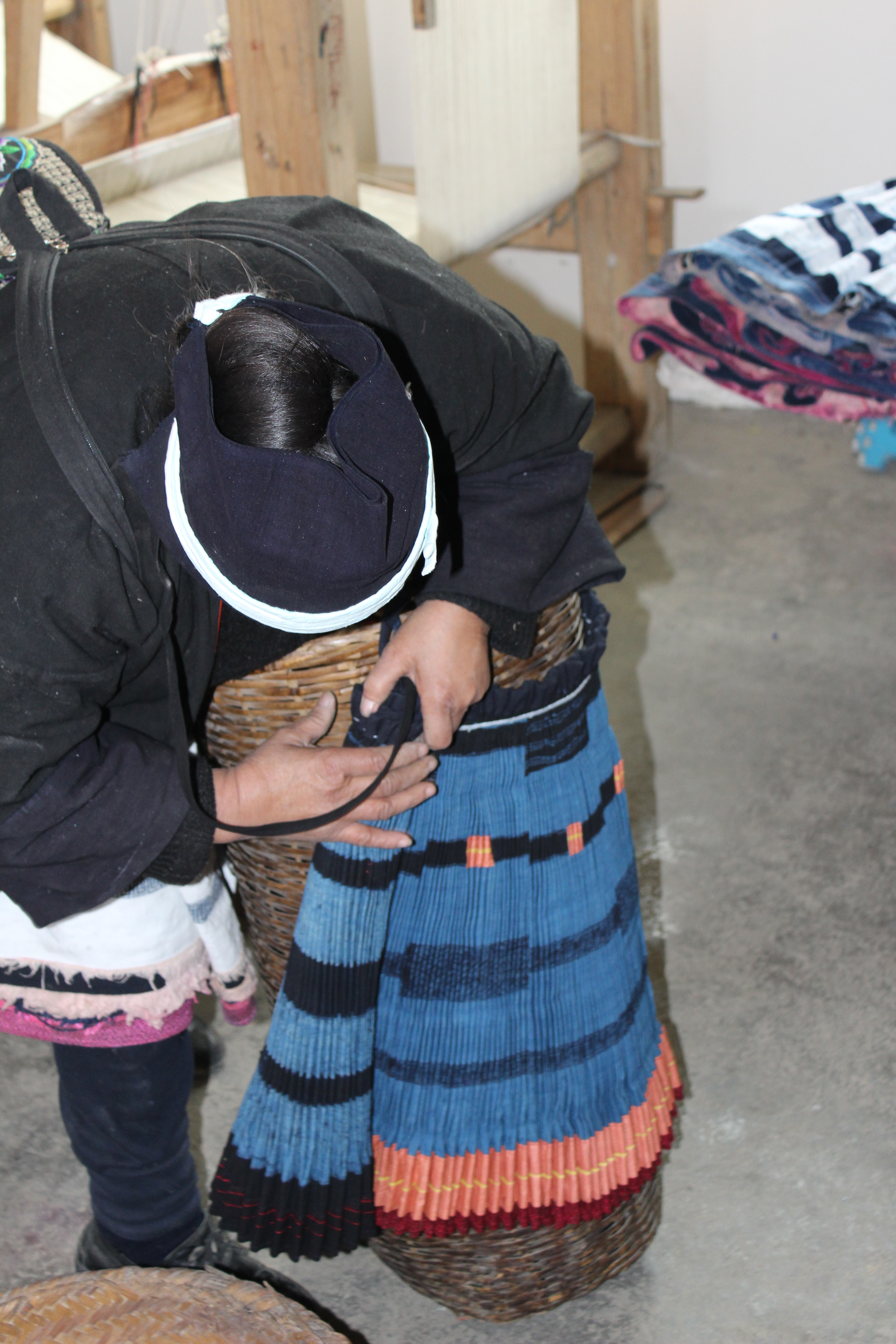
With Mr. Li, we began to learn about how baskets are made among the Baiku Yao. In the households of two of his neighbors, we learned something of how baskets are used. Two families permitted us to spend time in their homes and inventory all of the baskets owned and used in their households. Inventorying and photographing all of these baskets, we were then able to ask questions about the names of these basket types as well as learn the range of uses to which they were put. This process helped us learn about widely used basket types but also extremely specialized basket forms that we did not previously knew existed. For instance, we documented a type of basket used as a body form for pressing pleats into a newly made women’s skirt. The diversity of baskets in use in this community is remarkable and we are very appreciative of the families who generously welcomed us for this strange but instructive exercise.

IMG_0001

Removing the straps that have tied a new pleated skirt in Baiku Yao style around a bamboo pleating basket in a Huaili village household. December 17, 2017. Photograph by Jason Baird Jackson

IMG_0243

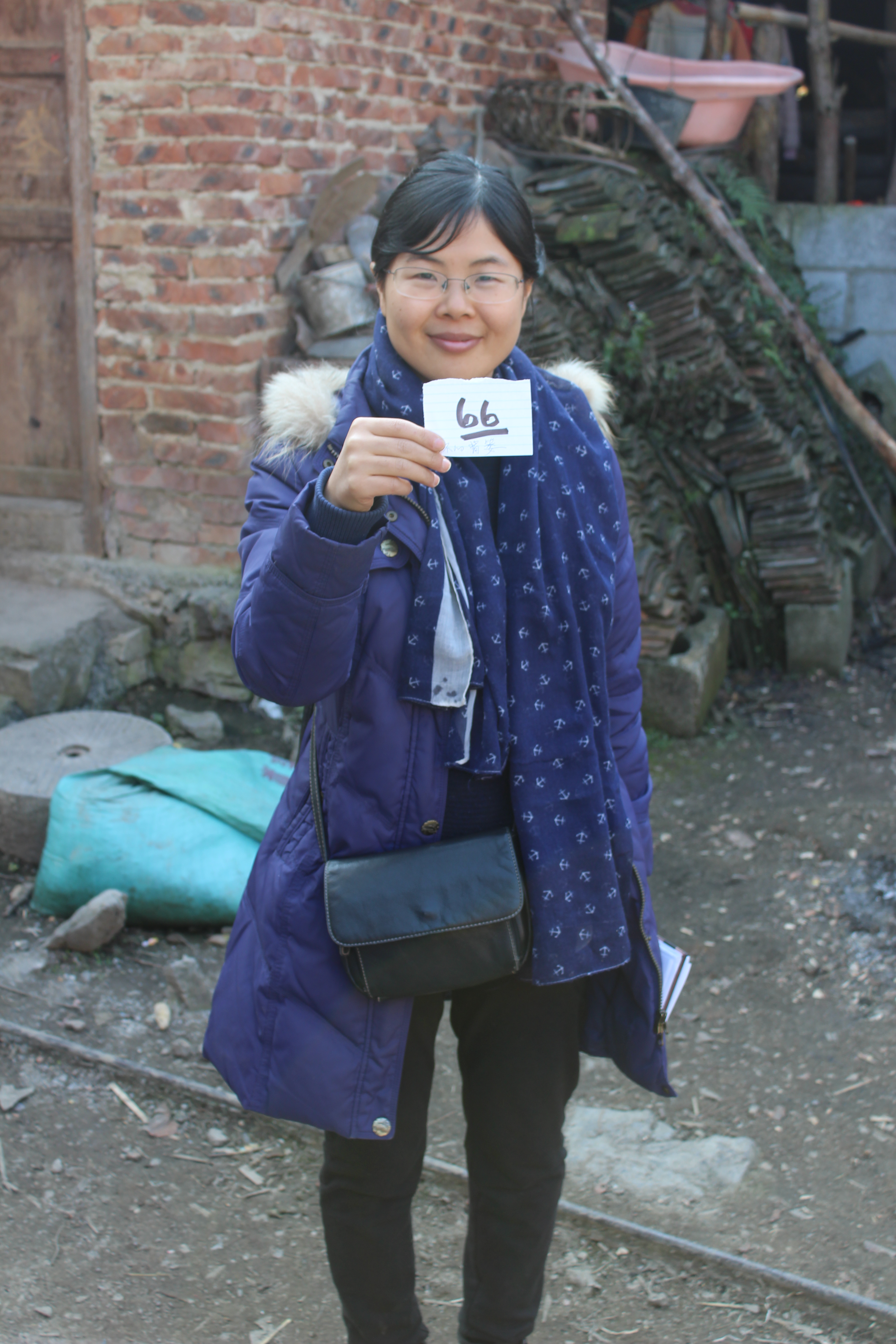
In course of a household basketry inventory, Lijun Zhang poses with the slip of paper used in photographs of the 66th basket documented. December 17, 2017. Photograph by Jason Baird Jackson

Having learned about basket making and basket use, we also sought to better understand the contemporary economics of basketry. A highlight of this inquiry was time spent with Mr. Li Guozhong. This younger Mr. Li is a basket trader from a family of Baiku Yao basket makers. While he buys and sells locally made baskets, most of those that he sells at his stall in the Lihu town market on market day are purchased instead from middlemen in Guizhou province and transported back across the provincial border by Mr. Li to Lihu for sale to Baiku Yao and other buyers in the local market. Despite our interfering with his sales, we were able to spend the morning on market day with him at his market stand. We inventoried every type he had on offer, recording the local name for the basket type, the price, its basic use, and its local or Guizhou origins. At the conclusion of our discussions with him, I purchased a full set of these baskets for the Mathers Museum of World Cultures. A full account of the collection will come in our research writings later, but for now I note a few of the particularly unusual types that we purchased. One such item is a bamboo basket woven around a ceramic pot that hot coals can be placed and carried in. Such a basket is used as a brazier to keep an individual or small group warm while seated around it. We saw just such a basket in use elsewhere in the Lihu market. Similarly noteworthy are a pair of baskets used by a weaver to hold a shuttle (on one side of the loom) and spent spools (on the other side) while weaving. Such baskets are attached to the loom on both sides of the weaver’s seat. We saw such baskets on the household looms encountered throughout the Baiku Yao villages.

On the architecture front we documented basketry woven gates, house screens, and two types of above ground (on stilts) granaries used by Baiku Yao people. One of these—round in shape—features heavy bamboo basketry walls.

These highlights evoke just a portion of the rich experiences that the basketry and architecture team had during our time among the Baiku Yao people. My colleagues and I feel tremendous appreciation for everyone who hosted and helped us during our visit. Our admiration for the Baiku Yao people and their way of life is very heartfelt.

IMG_1287

The sticky rice basket made by Mr. Li Guicai, documented by the research team, and added to the collections of the Mathers Museum of World Cultures. December 16, 2017. Photograph by Jason Baird Jackson.

Fieldwork: Introduction (12/13-18)

Skip ahead six paragraphs (bypass those marked with an hash mark #) if you want to go straight to the start of the fieldwork stories. If you would like to know why my colleagues and I were in China doing fieldwork, start here at the beginning. (After this post, I will do one or two more with some fieldwork highlights.)

IMG_0608

Manjiang village, a community within the Nandan Baiku Yao Ecomuseum. December 14, 2017. Photograph by Jason Baird Jackson.

# The China-US Folklore and Intangible Cultural Heritage Project is a binational collaboration linking the China Folklore Society and the American Folklore Society. It has been underway formally since 2007 and has included multiple project phases and, in these phases, various sub-projects. A wide range of funders have supported the project and its work and a great number of Chinese and American scholars and practitioners have participated in its activities. Among U.S. participants, special attention is often given to the Henry Luce Foundation, which has been particularly generous in supporting several phases of the project (Lloyd 2017).

# Two sub-projects occurring in two different phases of the project have a specific museum focus. Between 2013 and 2016, a sub-project titled “Intangible Cultural Heritage and Ethnographic Museum Practice” brought together six museums of ethnography—three from the United States and three from Southwest China. These museum partners organized two “Forum on China-US Folklore and Intangible Cultural Heritage” events, pursued professional exchanges of staff members, traveled together to visit local communities in the home regions of each museum, and undertook a joint exhibition and catalogue project. The resulting exhibition—Quilts of Southwest China has been touring the United States. The bilingual catalogue is distributed in the United States by Indiana University Press. These are just the formal highlights of the project. A wide range of spin-off projects and collaborative relationships also arose from this joint work (Dewhurst 2017; Du 2017; Indiana University 2013; Lloyd 2017; MacDowell 2017; MacDowell and Zhang 2016; Zhang 2017).

# A new phase of the larger project began in 2017 and it also includes a museum-focused sub-project. The new project builds on relationships and experiences arising in the preceding effort. Between 2017 and 2019, the “Collaborative Work in Museum Folklore and Heritage Studies” sub-project is bringing together researchers from the three U.S. museums (Mathers Museum of World Cultures, Michigan State University Museum, Museum of International Folk Art) with colleagues affiliated with the Anthropological Museum of Guangxi (AMGX), as well as that museum’s partners in two local ecomuseums: the Nandan Baiku (White Trousers) Yao Ecomuseum and the Sanjiang Dong Ecomuseum.

# The workshop (discussed in posts 6 and 7) was another formal part of the project, but the most crucial activity is ethnographic fieldwork in two communities—those associated with the two ecomuseums in Nandan and Sanjiang counties in Northern Guangxi. The December 2017 trip was for the first of four fieldwork efforts. On this trip, our local hosts and partners were the staff at the Nandan Baiku Yao Ecomuseum.

IMG_0846

A pet bird in a basketry cage in Huaili village. December 14, 2017. Photograph by Jason Baird Jackson.

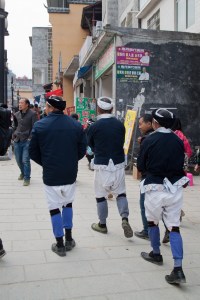
# In a Chinese context, an ecomuseum is a local museum framework that encompasses a community or group of communities, often associated with a single ethnic group or “nationality.” In Nandan County, the Nandan Baiku Yao Ecomuseum is embraces three contiguous villages near the town of Lihu. These three villages are situated within a wider area where “White Trouser Yao” people reside. White Trouser Yao is a designation for a particular group of Yao people distinguished by the white knicker-style pants worn as part of local men’s dress. Ecomuseums are somewhat hard to explain in a North American context because they are not limited to a fixed museum building (although they often include gallery spaces and other buildings used for museum functions). In formal terms at least, an ecomuseum is a way of characterizing an entire community or group of communities. The ecomuseum framework then becomes a organizational strategy for cultural heritage activities, including documentary work, cultural preservation activities, and perhaps also cultural tourism. The closest analog in the U.S. would be the situation found in some Native American communities where a “tribal museum” may have a museum building but may also facilitate a range of cultural preservation activities throughout the community. Wikipedia characterizes ecomuseums as follows:

An ecomuseum is a museum focused on the identity of a place, largely based on local participation and aiming to enhance the welfare and development of local communities. Ecomuseums originated in France, the concept being developed by Georges Henri Rivière and Hugues de Varine, who coined the term ‘ecomusée’ in 1971.[1] The term “éco” is a shortened form for “écologie”, but it refers especially to a new idea of holistic interpretation of cultural heritage, in opposition to the focus on specific items and objects, performed by traditional museums.

The nature and potential of ecomuseums is a key research concern of our partners at the Anthropological Museum of Guangxi (more on that later).

In a few final post or two, I will offer some highlights of our fieldwork experience. Here I explain our topic and circumstances.

While in Nandan County, the project participants stayed in rooms connected to the offices of the Nandan Baiku Yao Ecomuseum. This offered our group the opportunity to reside in the village cluster where the museum is centered without necessitating staying spread among various host families. The simple guest rooms at the museum were created with this sort of visiting research use in mind. The arrangement meant that visitors and locals could interact meaningfully from early in the morning to late in the evening without being a burden to local families nor introducing the disruption and social separation that would have accompanied staying in a hotel distant from the communities at the center of the research. He Jinxiu, a Baiku Yao woman who is active in the work of the museum, a civic leader in the community, and a noted textile artist, was engaged to cook for the visitors with the help of a younger woman in her family and another younger woman Li Xiuying who is also a noted local textile artist. This arrangement was very appropriate to local norms and was generously arranged for by the local museum staff and supported by the AMGX. I know that the other American participants join me in expressing deep appreciation for the generous hospitality extended to us by all of our partners in the project and by the members of the contiguous villages of Huatu, Manjiang, and Huaili in which the ethnographic investigations were undertaken.

Over the course of the research visit, the participants broke into three teams. Two of these teams focused on the nexus of textile arts and cultural heritage practices that are at the center of the project. These two research teams were made up of researchers from the American museums, from the AMGX, and from the Baiku Yao ecomuseum. Work by these teams was pursued in a mixture of English, provincial Mandarin, and the local Baiku Yao language.

One of these two teams focused on fabric arts; the other focused on bamboo basketry and the related practice of incorporating woven bamboo into architectural structures such as wall screens, fences, and basketry-walled granaries. The fabric arts group documented weaving practices, indigo dying, embroidery, the making and use of clothing, and silk production. The basketry group was able to document the making of an elaborate basket from start to finish (in photographs, video, notes, interviews), inventory baskets found in two households, and document over fifty basketry types in active use. This group also interviewed a basket trader, recording the full range of types in his inventory with names, prices, uses, and other data.

IMG_9353 copy

Bamboo harvested and stored for use in basket making at the home of Li Guicai in Huaili village. December 14, 2017. Photograph by Jason Baird Jackson.

The third project team, comprised of members of the AMGX staff with assistance from the Baiku Yao ecomuseum staff focused on documenting the work of the project as a whole, with the goal of being in a position to produce articles and documentary video chronicling the work of the international partnership. The three American museums also each made collections during the course of this work.

Much was learned and many questions for future research have been identified. The research concluded with travel to Nanning and, for the Americans, home to the US beginning on the 18th. In final post(s) I will share a richer glimpse of Baiku Yao cultural life and the people whom we we met.

IMG_9367 copy

Jon Kay (R) and Li Guicai (L) at Mr. Li’s home in Huaili village. December 14, 2017. Photograph by Jason Baird Jackson.

References Cited

Dewhurst, C. Kurt. 2017. “Building Connectivity: China-US Folklife Collaborations.” In Metafolklore: Stories of Sino-US Folkloristic Communication, edited by Juwen Zhang and Junhua Song, 189-98. Guangzhou: Sun Yat-sen University Press.

Du, Yunhong. 2017. “Ten Years: China-US Museum Collaborations in Retrospect.” In Metafolklore: Stories of Sino-US Folkloristic Communication, edited by Juwen Zhang and Junhua Song, 214-18. Guangzhou: Sun Yat-sen University Press.

Indiana University. 2013. “IU’s Mathers Museum One of Three U.S. Institutions to Collaborate with Chinese Museums.” Accessed January 16. 2018. http://archive.news.indiana.edu/releases/iu/2013/11/mathers-museum-collaboration.shtml

Lloyd, Tim. 2017. “The Inside Story of the AFS China-US Project.” AFS News. June 12, 2017. http://www.afsnet.org/news/349609/The-Inside-Story-of-the-AFS-China-US-Project.htm

MacDowell, Marsha. 2017. “Reflections on Collaborations: The Quilts of Southwest China Project.” In Metafolklore: Stories of Sino-US Folkloristic Communication, edited by Juwen Zhang and Junhua Song, 199-207. Guangzhou: Sun Yat-sen University Press.

——— and Lijun Zhang, eds.The Quilts of Southwest China. Nanning: Guangxi Museum of Nationalities and Bloomington: Indiana University Press.

Xie, Mohua. 2017. “My Two Stories.” In Metafolklore: Stories of Sino-US Folkloristic Communication, edited by Juwen Zhang and Junhua Song, 208-13. Guangzhou: Sun Yat-sen University Press.

Zhang, Lijun. 2017. “My Involvement in the Museum Exchange Projects.” In Metafolklore: Stories of Sino-US Folkloristic Communication, edited by Juwen Zhang and Junhua Song, 221-27. Guangzhou: Sun Yat-sen University Press.

After the Workshop, Before the Fieldwork (12/12)

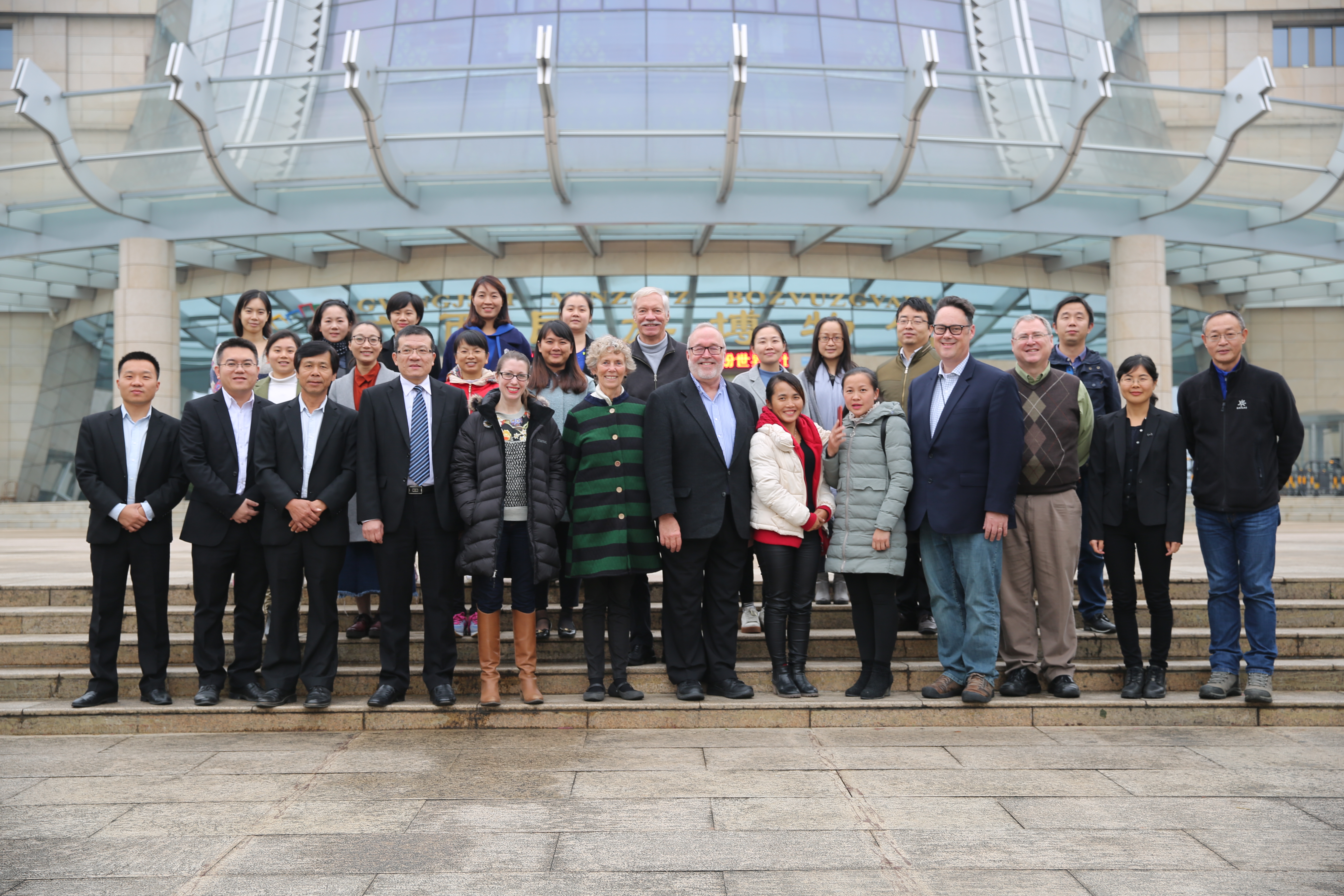
HK1A8497

A photograph of the project team and special guests on the steps of the Anthropological Museum of Guangxi in Nanning. December 12, 2017. Photograph courtesy of the Anthropological Museum of Guangxi.

This is the seventh in my series of posts reporting on collaborative work and travel in China during December 2017. The first five posts (1, 2, 3, 4, 5) dealt with preliminary activities in Beijing, while the last (6) post focused on the Workshop on Ethnographic Methods in Museum Folklore and Ethnology held in Nanning at the Anthropological Museum of Guangxi (AMGX) on December 11-12, 2017.

As I noted previously, the workshop together with fieldwork (discussion forthcoming) in Nandan County, were the primary activities for this trip. When the workshop concluded, two small events took place before our departure for Nandan the next day. As I noted previously, the research team met in a smaller group format to discuss plans for the work. Those discussions involved participants from the AMGX, the Mathers Museum of World Cultures, the Museum of International Folk Art, the Michigan State University Museum and most-importantly, from our hosts in Nandan County, the Baiku Yao Eco-Museum.

Prior to these practical discussions, a small ceremony featuring remarks by Director Wang Wei of the AMGX and by American Folklore Society Executive Director Tim Lloyd (whose own trip intersected for the afternoon with ours). At this gathering, successful past projects were evoked and enthusiasm for the new projects that we were then beginning was conveyed. The three U.S. museums also bestowed gifts of handmade objects from New Mexico, Michigan, and Indiana upon the AMGX and received wonderful Zhuang brocade textiles from Guangxi to add to their own collections. The exchange of such gifts has become a meaningful moment in each gathering linking the American and Chinese partner museums since 2013.

As is also customary, a group photograph was taken. For the wider contexts for our work in China within the American Folklore Society and the China Folklore Society, see this overview story on the AFS website.

Workshop on Ethnographic Methods in Museum Folklore and Ethnology

This post is the next in my series of reports on the trip to China that American museum colleagues and I took in December 2017. The Beijing posts (1, 2, 3, 4, 5) were about the time that we spent in transit to Nanning, where the core of our work on the trip would begin. This is the first post to share a bit of what the trip was about, explaining what we were up to in Guangxi.

Central to the story of our time in the Guangxi Zhuang Autonomous Region is our friend and colleague Zhang Lijun. Lijun is researcher on the staff of the Anthropological Museum of Guangxi (广西民族博物馆) and she is also a research associate of the Mathers Museum of World Cultures. She is essential to the museum ethnography sub-project within the China-US Folklore and Intangible Cultural Heritage Project that has linked the China Folklore Society and the American Folklore Society for over ten years of exchanges and joint projects. As she notes in her recent contribution to Metafolklore: Stories of Sino-US Folkloristic Cooperation | 文化对话:中美非物质文化遗产论坛. (Guangzhou: Sun Yat-sen University Press, 2017), she served as a translator for the founding discussions between AFS and CFS while a masters student at Beijing Normal University. A decade later, and with a Ph.D. from Indiana behind her, she is now helping lead a key project in this flourishing partnership. (For an overview of these broader efforts, see this essay by AFS Executive Director Tim Lloyd.)

Our work in Guangxi is the reason for the trip and Lijun was crucial to the planning and the doing of both parts of that work. As called for in our proposal to the Henry Luce Foundation and planned for in our partnership discussions with the Anthropological Museum of Guangxi, this trip (the first of four during the current phase of our work) had two parts–a training workshop at the museum in Nanning and then a period of jointly pursued fieldwork in Nandan County among the Baiku (White Trouser) Yao people. This post is about the training workshop, an event for which Lijun’s bilingual skills and bi-national scholarly background were essential ingredients.

IMG_0311

Zhang Lijun facilitating discussion during the first day of the Workshop on Ethnographic Methods in Museum Folklore and Ethnology held at the Anthropological Museum of Guangxi, Nanning. December 11, 2017. Photograph by Jason Baird Jackson.

Wang Wei, the Director of the Anthropological Museum of Guangxi, is an leading scholar in paleoarchaeology with a deep history of participating in high-level international research collaborations and a strong record of publishing in international science journals. This experience has shaped his goals for the museum’s research staff. He is eager for them to also have international research experiences and opportunities to work jointly on publication as well as exhibition projects. Those goals are part of what we are up to in the current phase of cooperative research. They also motivate his providing generous support for our joint work. Those of us connected to the American museums share these aspirations.

Because the entire research and collections staff of the Anthropological Museum of Guangxi is too large to participate in the fieldwork phase of the project, the December 2017 workshop was developed as a means of broadening the professional development opportunities that the larger project offers. The workshop was held on December 11-12 and its focus was “Ethnographic Methods in Museum Folklore and Ethnology.”

During this event, American and Chinese participants, drawn from the partner museums, gave bilingual presentations on fieldwork methods as these pertain to work of museums of ethnography. About sixty attendees attended the workshop. Some were students affiliated with universities in the city of Nanning and, as initially anticipated, quite a few were members of the Anthropological Museum of Guangxi’s research and collections staff. There were also working ethnographers from various agencies in the city. A fourth group of attendees were staff members drawn from the ten local eco-museums with which the Anthropological Museum of Guangxi partners in its 1+10 eco-museum collaboration. These eco-museum representatives are members of the local minority groups that their institutions serve and they are active with impressive cultural documentation work in their home communities. The workshop sessions, which all took place at the museum, were well-attended and well-received.

The workshop program was comprised of seven presentations interspersed with questions and discussion. All were illustrated with bilingual slides and all were translated into the language (English or Mandarin) not spoken by the presenter. I presented an overview of ethnographic methods in the contexts of research design and the goals of museum work. My presentation introduced and connected the topics to be addressed by the other presentations. I was followed by Marsha MacDowell (Michigan State University Museum), whose presentation focused on interview methods. Jon Kay (Mathers Museum of World Cultures) focused on survey methods as well as on video documentation techniques. Carrie Hertz (Museum of International Folk Art) explored the uses of still photography in research, exhibitions, publication, and other museum activities. Kurt Dewhurst (Michigan State University Museum) presented on the use of existing collections in new field research and on the role that new ethnographic work can play in re-contextualizing such collections. Gong Shiyang (Anthropological Museum of Guangxi) presented on the role of eco-museums as research centers and on the partnership linking AMGX and its 10 partners in Guangxi. Fan Miao Miao (Anthropological Museum of Guangxi) presented on strategies for ethnographic research on dress and adornment practices.

At the conclusion of the workshop on December 12, research participants from the three U.S. partner museums, from the AMGX and from the Baiku Yao Eco-Museum in Nandan met to discuss the research plan for the joint fieldwork that would follow.

Here are some pictures from the first day of the workshop.

Here are some images from the second day of the workshop.

One of the temporary exhibitions on display at the museum is an exhibition produced in partnership with the Museum of Women and Children in Beijing (the museum we visited earlier in our trip). This exhibition is interesting because it deals with a classic ethnographic topic (“Brocade Made by Minority Nationalities in China”) in a kid-friendly way. Here are some pictures.