Skip to content

Posts from the ‘Interlocutors’ Category

Two Reviews

Congratulations to Suzanne Ingalsbe and Teri Klassen for each publishing book reviews this week. Suzanne reviewed Yard Art and Handmade Places: Extraordinary Expressions of Home (Austin: University of Texas Press, 2008) by Jill Nokes with Pat Jasper in JFR Reviews. This review is available open access online here.

Teri reviewed Quilts in a Material World: Selections from the Winterthur Collection by Linda Eaton (New York: Abrams, 2007) for the July 2008 issue of Textile: The Journal of Cloth and Culture 6(2):205-207. Textile, published by Berg, is a commercial journal and the review is only available online in a toll access format. ($29.99 in pay per view!) Some libraries may provide electronic access at this point. The means by which the IU Bloomington libraries provide IU folks will electronic access can not yet get us to the latest issue (there is a 6 month delay for electronic access at IUB).

Congratulations to both reviewers. The hassle of getting to Teri’s review and the ease with which we can all read Suzanne’s reveals again the virtues of open access publishing in folklore, ethnomusicology and anthropology. Lets show JFRR some love!

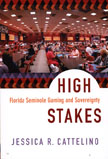
Cattelino’s High Stakes: Florida Seminole Gaming and Sovereignty

Just a quick note to sing the praises of my friend Jessica Cattelino’s new book High Stakes: Florida Seminole Gaming and Sovereignty. It is an excellent ethnography examining the ramifications and impacts of gaming on Seminole life and cultural reproduction in the context of my own topsy turvey home country, South Florida. It is a wonderful work that is poised to contribute much to the fields of anthropology and Native American studies.  Jessica has just joined the faculty at UCLA. Learn more about her book from this UCLA press release and in this posting on antropologi.info. Congratulations Jessica!

Korean Shaman: Possession by the Spirit of Changun

I wanted to share a short film produced by my friends Liora and Shai Sarfati. It derives from Liora’s doctoral work on the material culture of Korean Shamanism. Liora is a student in East Asian Languages and Cultures and in Folklore at Indiana University.

Sarah Quick Published in Ethnologies

Congratulations to Sarah Quick on the recent publication of her essay the “Social Poetics of the Red River Jib in Alberta and Beyond: Meaningful Heritage and Emerging Performance” in the journal Ethnologies. Learn more here.

Anthropology of/in Circulation: Join the Conversation

I want to call attention to a new project in which I played a part. “Played a part” fits especially because the document at the project’s center looks and acts a bit like a play script. The journal Cultural Anthropology has just published (volume 23, issue 3, 2008) a contribution titled “Anthropology of/in Circulation: The Future of Open Access and Scholarly Societies.” The article-length document was co-created by Christopher Kelty, Michael M. J. Fisher, Alex Golub, Kimberly Christen, Michael F. Brown, Tom Boellstorff and myself. In it, we use an interview/group discussion format to discuss changes in scholarly communication, professional societies, digital technologies, and the broader social contexts that are impacting the work of anthropology and neighboring fields (such as folklore and ethnomusicology, in which I work).

While the piece has the appearance of a transcribed discussion, it is actually a co-authored work in which we each contributed, in varying degrees, to the authoring of the whole. In other words, we “play” ourselves in the text (with relatively high fidelity to our “true” selves). It was written online using Google Docs over the course of about a month last spring. While much of what is attributed to any one participant is, or at least began as, “their own words” participants were able to make changes throughout the text as a whole. In the end, no one was pressured to “say” things that they were not comfortable saying, but the process, I think, tightened and enlivened the language as well as sharpened arguements and weeded out misunderstandings. While it lacks the halmarks, and perhaps some of the strengths, of a single authored work, I think that it is a lively and interesting piece in which the generic experiment is in keeping with the emergent topics about which we conversed. (Those who find value in the work of the Bahktin Circle and in contemporary linguistic anthropological work on voice, authorship, and participant roles should at least find the idea of this piece of interest.)

More important than the way that we put it together are the issues that we are seeking to explore. Here is the abstract:

In a conversation format, seven anthropologists with extensive expertise in new digital technologies, intellectual property, and journal publishing discuss issues related to open access, the anthropology of information circulation, and the future of scholarly societies. Among the topics discussed are current anthropological research on open source and open access; the effects of open access on traditional anthropological topics; the creation of community archives and new networking tools; potentially transformative uses of field notes and materials in new digital ecologies; the American Anthropological Association’s recent history with these issues, from the development of AnthroSource to its new publishing arrangement with Wiley-Blackwell; and the political economies of knowledge circulation more generally.

The best part is that you can now join the conversation. While it appears online conventionally in two toll access services (see  here for AnthroSource and here for Wiley InterScience), it is also available, for those who lack access to these resources, in article form in IUScholarWorks Repository  here. Most importantly for my purposes, it has been published in a full accessible CommentPress version in which readers can comment on, question, critique, and discuss the text as a whole or in a paragraph-by-paragraph function. I am a huge fan of CommentPress and I hope that this project will introduce new folks to this very useful software tool. Please visit the CommentPress version here (http://blog.culanth.org/incirculation/) and join the conversation. Tell your friends, tell your colleagues, tell your professors, tell your students.

For the record, these reuses were made possible because we utilized a SPARC author addendum. This is a valuable resource everyone should know about. See here and here and in the video here.

For my part, I really appreciated having the the opportunity to participate in this project. I want to thank the other contributors for their efforts and to acknowledge Kim and Mike Fortun the visionary co-editors of Cultural Anthropology who encouraged this project and saw it into existance.

Reasonable (and unreasonable) differences of opinion exist regarding the future of open access in anthropology and beyond. The other contributors and I share a hope that this project will help advance the conversation in a useful way. See you on the CommentPress site.
NSF, Wenner-Gren Funding for Michael P. Jordan

I have been waiting for his official paperwork to be completed, but I have been really looking forward to the chance to congratulate my friend Michael P. Jordan on his receipt of doctoral dissertation research grants from the Cultural Anthropology program of the National Science Foundation and from the Wenner-Gren Foundation for Anthropological Research. These two grants are the gold standard for anthropologists (folklorists, ethnomusicologists, linguists, etc.) seeking to undertake major ethnographic research projects worldwide. Getting one is a big deal, being awarded both is extraordinary. A doctoral student at the University of Oklahoma and a researcher at the Sam Noble Oklahoma Museum of Natural History, Michael has developed an important project in which he will be continuing his long-term collaborative work among the Kiowa people of Southwestern Oklahoma. His particular focus for this project is an examination of formal descendants’ organizations (groups organized by lineal descendants to commemorate their nineteenth century ancestors) and their emergent role in Kiowa social life. His project engages with larger debates concerned with kinship, historical consciousness, intellectual property, material culture, cultural performance, and ethnonationalism and his methods will include formal interview techniques, collaborative ethnography, and the analysis of artifacts, public discourses, social networks, and cultural performance events.

Congratulations to Michael and to his adviser (and my OCDI collaborator) Daniel C. Swan. They have done done a great job crafting a project that has proven compelling to so many peer-reviewers and program officers.

See an earlier post here for a post on two other awards supporting Michael’s project.

Jon Kay in JFRR

Drawing upon his own experience as a public folklorist and material culture scholar, Jon Kay has just published a review of In Good Keeping: Virginia’s Folklife Apprenticeships (Charlottesville: University of Virgina Press, 2008 in JFRR (Journal of Folklore Research Reviews), the web- or email-based review service produced here in the Department of Folklore and Ethnomusicology at Indiana.  Check our Jon’s review here and, while you are at the JFRR site, sign up for the email service. Its free and really valuable. Good work Jon.

Plateau Peoples Web Portal

Check out the informational website for the new Plateau Peoples Web Portal project being undertaken at Washington State University by my friend and collaborator Kimberly Christen. It is an awesome new project that builds on the work that she and colleagues have been doing developing open source community cultural archive tools. Learn more about the broader effort on her website, on the site for the Mukurtu project, and at the new Plateau Peoples Web Portal project site. Congratuations to the whole project team.

Contemplating YouTube and the Work of Folklore and Ethnology

Just a moment ago, I watched a short video produced by my colleague Jon Kay and his collaborators at Traditional Arts Indiana, the public folklore research and programming unit associated with the IU Department of Folklore and Ethnomusicology in which we both work. The film is a very nice introduction to John Schoolman, an (almost 100 year old) carver of walking sticks. It is a worthy token of a larger ethnographic project. What I want to observe out loud is the fact that my viewing of the clip was the 2699th. As open access advocates and research librarians could quickly note, very few scholarly works published in print-only or toll access venues every achieve such audiences. Congratulations to Jon and his team for making the valuable work of TAI available in a way that is clearly being valued by many stakeholders

Interdisciplinary Research Group on Cultural Property

I am pleased to share news of a major interdisciplinary research effort related to cultural property issues. Centered at the Georg-August-Universität in Göttingen, Regina Bendix (a distinguished alumnus of the folklore program at Indiana) is among the research group’s leaders. The project has just launched its website, which is available in both German and English. Congratulations to Regina and to her colleagues at the Universities of Göttingen and Hamburg.