Skip to content

Posts from the ‘Good News’ Category

Cracking the Vault: A Celebration of Daniel Swan

Below find the first of a series of guest posts offered in celebration on the occasion of our colleague and friend Daniel C. Swan’s retirement from the University of Oklahoma, where he has served with distinction as a Professor of Anthropology, Curator of Ethnology, and Interim Director of the Sam Noble Oklahoma Museum of Natural History. First to reflect on an aspect of Dan’s work and his personal impact is Jessica W. Blanchard. Jessica is a Research Scientist at the University of Oklahoma’s Center for Applied Social Research. This series of guest posts has been organized in partnership with Michael Paul Jordan. –Jason Baird Jackson

Cracking the Vault: A Celebration of Daniel Swan

By Jessica W. Blanchard

Reflecting on the years I have known Dr. Daniel Swan brings to mind so many wonderful stories. Dan joined as a member of my doctoral committee just as I was rounding third base of the dissertation, and so it was really during the years following the completion of my degree that I came to enjoy Dan as a friend, a colleague, and of course, a ceaseless mentor. He has imparted years of stories and lessons from the field–and from life–and yet, I am unable to share most of these with you here. For you see, any really good story by, or about Dan Swan, inevitably begins and ends with the shared reassurance, “This stays in the vault.” I remember the first time I heard about said “vault” and wondered what in the world kinds of secrets of the academy I was about to learn. I listened with eager anticipation, feeling sure that I was about to be privy to something none of my peers yet knew. As it turns out, for those peers who never had a mentor like Dan Swan, I was indeed privy to a piece of the academy that made it bearable, possible, and simply better.

I entered graduate school, as many do, with a fair dose of naïve optimism and self-centered drive, and was fortunate early to have the mentorship of Dr. Jason Jackson to nurture and guide my focus away from priorities of self toward priorities of communities. His departure to a new institution left a giant hole in my committee and left me wondering how to navigate out of this tunnel known as the dissertation. Enter: Dan Swan. Upon Jason’s recommendation, I asked Dan to join my committee. Right away, Dan asked to read my work. Right away, Dan set up a lunch appointment and gave me feedback. I am not sure if he knows how much it meant to have him jump on board right away. He invested time in understanding the communities with whom I worked so that his feedback was informed and meaningful. He joined me on trips to the field, made all the better by his willingness to indulge in local all-you-can-eat catfish diners. He listened to my stories about the tiniest of Oklahoma towns, and was happy to venture there to meet the community members with whom I had grown close over the years. I watched as he did the same for other students, uplifting them any chance he got and mostly in ways that they were unaware. This, in no uncertain terms, is precisely the kind of support that makes academia bearable, possible, and simply better.

Dan’s advice to me during my time as a graduate student was decisive and clear: just do it. Get finished. Be confident in the hard work you have done. We eventually became departmental colleagues for a time, and Dan’s advice to me was again decisive and clear: worry less about those who do not deserve worry (summarizing here) and work on your face (verbatim). Apparently, I needed to learn how to express less with my face in professional situations. I still hear Dan’s voice saying “work on your face” at just the right times. I see now that Dan’s plain-spoken candor is simply part of what it means to “keep it in the vault.” The vault is simply a blueprint for how to build a circle of supportive colleagues and friends: be selective yet forgiving, invest in one another, support one another, learn from one another, defend each other when needed, hold each other accountable, and always celebrate the wins.

I referred earlier to the dissertation process as a tunnel. The thing about a tunnel is that there is always light on both sides of it. Navigating the tunnel is easier to do with encouragement and good guidance from those who have done it before. Dan helped me find the focus and grit–the tunnel vision, so to speak–I needed to get through it. Tunnel vision is a good thing when it means you are focused and productive, but it is also impossible to sustain and can limit what we can see around us. We eventually come out on the other side of the tunnel and we begin to understand that it was merely a place to gather new tools, perspective and purpose. Thank goodness for those who support our journey into the tunnel, those who cheer and pick us up as we navigate our way through, and most assuredly for those who celebrate as we emerge on the other side.

Today, I celebrate the career and mentorship of my friend, Dr. Daniel Swan. I celebrate his tireless devotion to students. I celebrate his achievements in building an approach to ethnography and curation grounded in community and relationships. I celebrate what is yet to come for him and his family! Dan, if you ever find yourself reflecting on the impact you may have had on others, let me crack the vault a bit to tell you that it was tremendous. Cheers to you!

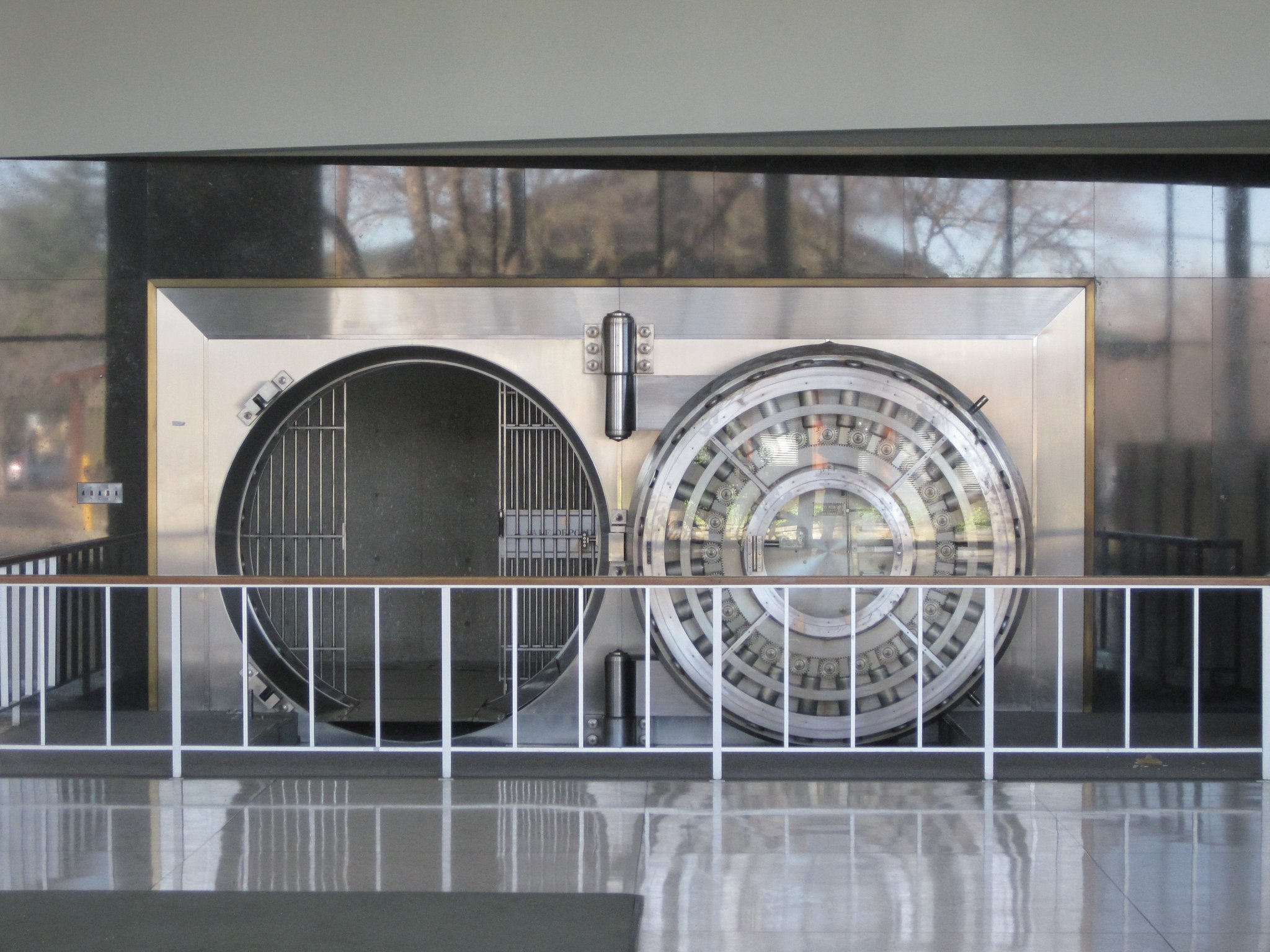
Bank_of_the_West_Los_Altos_branch_vault

(Former) Bank of the West vault in downtown Los Altos, California via WikiMedia Commons (CC0 1.0 Universal Public Domain Dedication)


The Free-to-Readers Version of Wedding Clothes and the Osage Community: A Giving Heritage

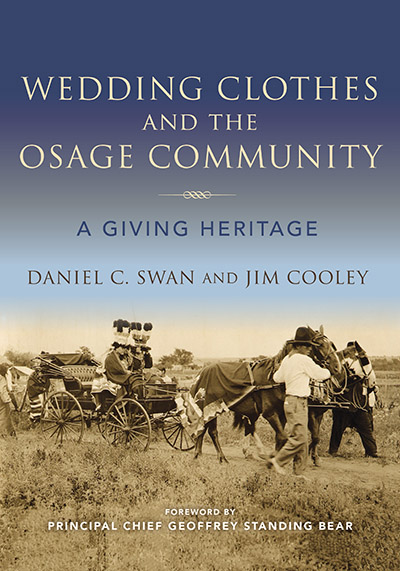
Many readers of this blog already know about the fifth title in Indiana University Press‘ Material Vernaculars book series–Wedding Clothes and the Osage Community: A Giving Heritage by Daniel C. Swan and Jim Cooley. It was released last fall and it is a beautiful, engaging, monumental work. The scholarship is great and the press produced the printed volume lavishly and with great care. The book is richly illustrated with wonderful community photographs and images of extraordinary objects of Osage artistry and craftspersonship. The book itself is a remarkable object. For all of these reasons, I hope that you will purchase a copy and thereby also support the work of Indiana University Press

But… fans of the Material Vernaculars series also know that making series titles free to readers who would otherwise lack access to them is also a key goal of the series. In this connection, I am very happy to note that the free-to-readers edition is now accessible from the IUScholarWorks Repository. To find it, use the following link:

https://scholarworks.iu.edu/dspace/handle/2022/22292

Warm thanks to the Indiana University Press and to the Indiana University Libraries for helping make this title, and the other MV series titles*, much more accessible to interested readers, particularly to readers in the communities about which series authors are writing. In this connection, thanks also go to series authors for forsaking any author royalties so that all proceeds from book sales can go to supporting the free-to-readers editions.

9780253043023_lrg

*Material Vernaculars

Forthcoming

The Michiana Potters: Art, Community, and Collaboration in the Midwest by Meredith A. E. McGriff (fall 2020)

Published

Wedding Clothes and the Osage Community: A Giving Heritage by Daniel C. Swan and Jim Cooley (2019)
The Expressive Lives of Elders: Folklore, Art, and Aging
 edited by Jon Kay (2018)
Framing Sukkot: Tradition and Transformation in Jewish Vernacular Architecture by Gabrielle Anna Berlinger (2017)
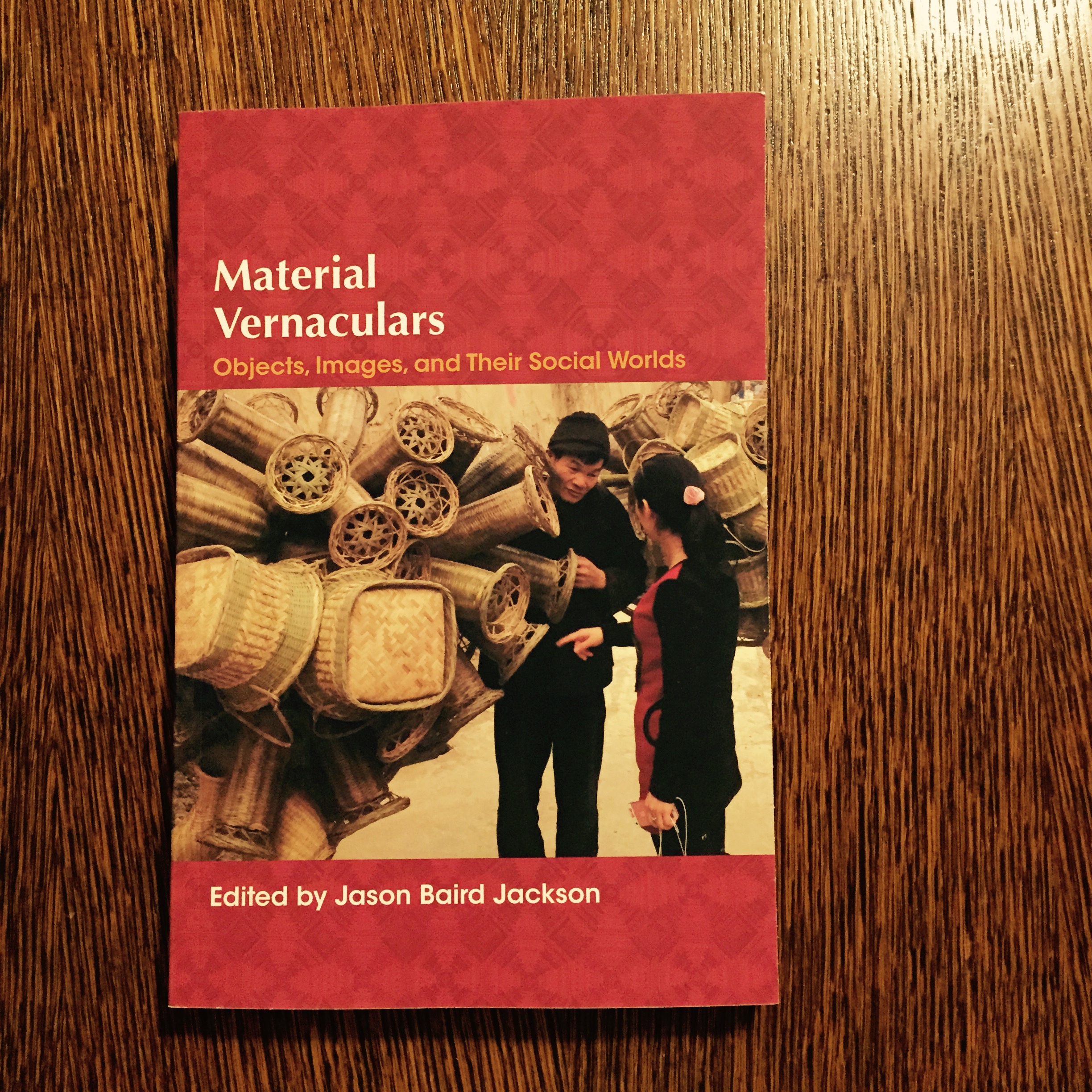
Material Vernaculars: Objects, Images, and Their Social Worlds edited by Jason Baird Jackson (2016)
Folk Art and Aging: Life-Story Objects and Their Makers by Jon Kay (2016)

Help! Really. The Mathers Museum of World Cultures Needs You!

An Indiana University event known as #IUDay is nearly here. Scheduled for Wednesday, April 10, 2019, #IUDay is a celebration of Indiana University. It is a day of special events, of sharing stories of the university, and for gathering together friends and supporters to work together to achieve special goals. Last year, in the days right before, and on, #IUDay, sixty-one friends donated to the Mathers Museum’s first #IUDay crowdfunding campaign. Working together, they contributed funds to enable us to launch Traditional Arts Indiana’s Indiana Heritage Fellowship program. Ours was a successful first effort. It was so successful that the Indiana University Foundation encouraged us to take on two campaigns this year, a fact that means that we are seeking to raise more than double the level of funding we received last year. This is an exciting prospect, but it is also daunting. I hope that everyone who reads this post can help us meet our goals. They are good goals. Let me describe them.

Building on the success of last year’s effort launching the Indiana Heritage Fellowship program, we are this year seeking support for its companion program, also new. This is the TAI Master-Apprentice program. The goal here is $2500 and, as of the moment that I am writing this, we have raised $567 from 11 generous donors. With two days to go, we really need your help. Please consider making a gift large or small. Last year 61 donors supported our efforts and we are eager to (=need to) increase this number this year. The good news is that, when successful, this effort will do great work across Indiana communities, providing resources and support for diverse tradition bearers to transmit their skills and knowledge to eager apprentices. This work benefits Indiana communities, the state and ultimately the whole country. If you would like to learn about the first class of TAI masters and apprentices, check out this year’s booklet and learn about the beadwork artists, netmakers, drummakers, ironsmiths, and ballet folklórico performers working together this year.

To learn more and to, if you chose, make a contribution, you can find this campaign site here: https://iufoundation.fundly.com/support-the-next-great-folk-artists

Our other campaign aims to fund K-12 field trips to visit the Mathers Museum on campus in Bloomington. Field trips are an impactful highlight for most school students, but they have become increasingly rare for most students, as budget cuts continue to take their toll. Visits to the Mathers Museum introduce students to cultural diversity worldwide and in Indiana and the US. Museum visits also introduce students to the commonalities of the human experience and to the disciplines–folklore studies, anthropology, ethnomusicology, history, etc.–that build up our understandings of human existence, past and present. As of the time of this writing, this campaign has gathered $1220 from 18 friends of the museum. Here too our goal is $2500, thus we need your help in this effort also. (This funding will enable us to provide the funds that schools need in order to come to the museum and engage with our programs and exhibitions.

To learn more and to, if you chose, make a contribution, you can find this campaign site here: https://iufoundation.fundly.com/mathers-museum-of-world-cultures

Thanks to all who have given so far. Thanks to all who will consider giving. Whether you give or do not give, please, please share these links online and urge others to support the museum’s work. When an #IUDay link is shared online it results in an average of $97 dollars in support, so even if you cannot give $10 or more dollars now, you can help the museum and these worthy projects by spreading the word.

ihfa

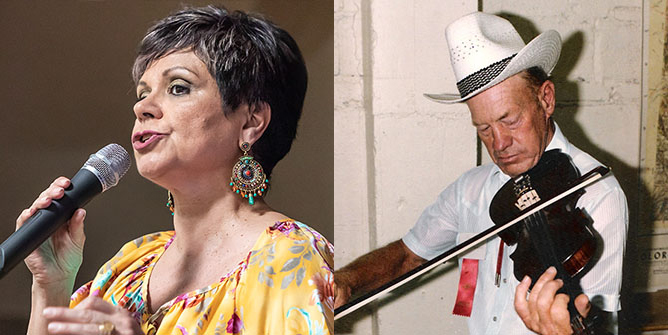
Debra Bolaños (left), a ballet folklórico dancer and instructor in East Chicago, Indiana, and Harold Klosterkemper (right), a fiddle player from Decatur County, Indiana, will soon be honored for their lifetime achievement as Indiana traditional artists. They will be recognized as Indiana Heritage Fellows in a special ceremony on April 27, 2019. Learn more about the event here.


The University of Tartu, Appreciated

#fulbrightspecialist #fulbright #exchangeourworld

I recently spent an extended time in Tartu, Estonia. I had the wonderful opportunity to be a Fulbright Specialist visiting the Departments of: (1) Estonian and Comparative Folklore, (2) Ethnology, and (3) Estonian Native Craft at the University of Tartu. My visit also provided rich opportunities to learn about the work of the Estonian National Museum, with which these departments collaborate closely. Visiting Estonia was a transformational experience for me and I am very grateful for my generous hosts in Estonia and for the continued work of the [U.S. Department of State’s] Fulbright Program. Here I reflect briefly on the work of my fields at the University of Tartu. In a later post, I will evoke the courses that I taught and the students I met while in Tartu. In a final post, I will touch on the Estonian National Museum and the rich International Committee for Museums and Collections of Ethnography (ICME) conference that it recently hosted.

IMG_5457

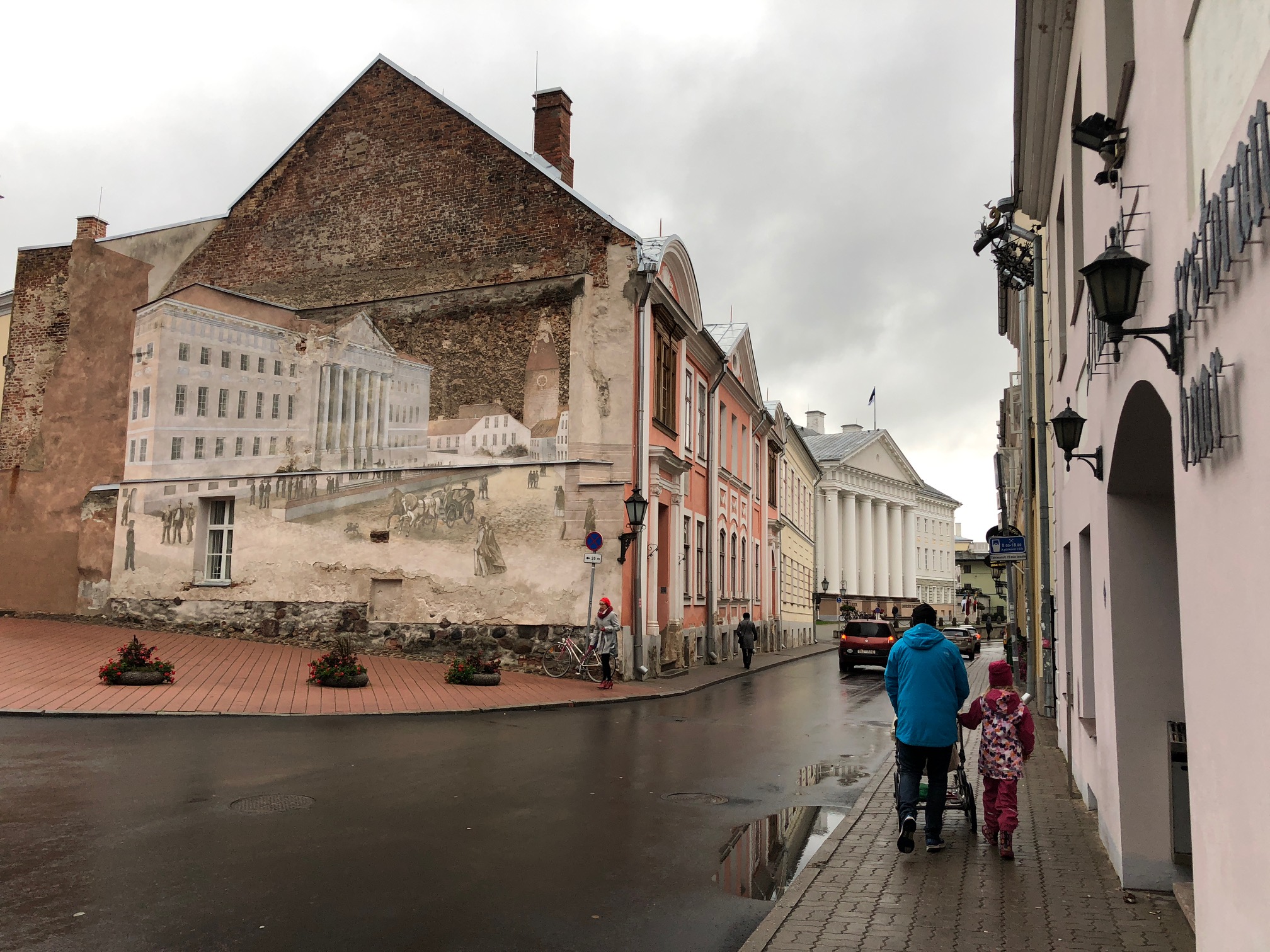
On the left, with the mural on its end, is Ülikooli 16 in Tartu on the University of Tartu campus. It is today home to the Institute for Cultural Research, which includes the Departments of Ethnology and of Estonian and Comparative Folklore.

The twinned disciplines in which I work–folkloristics (folklore studies) and ethnology–have a deep and important history in Estonia. So too do the practice of, and the study of, the nation’s rich craft traditions. For my interests, it would really be difficult to think of a richer and more rewarding place to make an in-depth, scholarly visit. The University of Tartu is almost two centuries older than Indiana University where I work. It was founded in 1632 under the auspices of King Gustavus Adolphus of Sweden. Through Swedish, Russian, and Soviet rule as well as in independent Estonia, the University of Tartu has been a major world academic center. This is reflected in the fame and impact of its academic programs and in the scholars and students who continue to gather there from around the world. (For those interested in Indiana University connections, the university is strong not only in folklore studies and ethnology, but in the neighboring field of semiotics, another field of special interest to Indiana University scholars. Semiotician and IU Distinguished Professor Thomas Sebeok’s library can be found there (See: Thomas A. Sebeok Memorial Library. As noted here, Sebeok was a Fellow of the IU Folklore Institute and a Professor of Anthropology among his many IU roles.)

The Departments that hosted me have longstanding and strong undergraduate and graduate programs, but a new joint MA program was one catalyst for my visit. Having just welcomed its second cohort of students, the Folkloristics and Applied Heritage Studies program is an English-language masters degree program attracting strong students from around the world (including the United States). It is taught and managed in partnership between these units.

I taught two short-term courses while visiting campus (see later post) and met with colleagues and students both in Tartu and in the city of Viljandi, where the Department of Estonian Native Craft is based. It and other arts programs are located in the Viljandi Culture Academy. Viljandi–about an hour east of Tartu–is a strong hub for the arts in general and for Estonian vernacular and folk arts in particular. For example, near Viljandi is a great satellite museum of the Estonian National Museum that is focused on handicraft and rural life (Heimtali Museum of Domestic Life) and Viljandi is home to the major Viljandi Folk Music Festival.

Both in Viljandi and in Tartu, UT faculty were very generous and taught me much about their work and its contexts. As someone who teaches the history (and present status) of folklore studies, anthropology, and ethnology, it was extremely valuable to have a close encounter with the past and present of these fields in a national context that is inflected in both Northern European ways and in the Russian, Soviet, Post-Soviet ways. As throughout the region, issues of nationalism and national identity are a central theme, but colonialisms and their afterlives are also woven throughout the disciplinary histories. Estonia offers much to think about.

This is not just a historical matter, as changes and innovations in Estonia society also offer many lessons. For instance, life at the University of Tartu is now heavily impacted by programs and initiatives of the European Union and technological mediation is a constantly present dynamic in the university’s educational work. While I am quite accustomed now with online and distance education, I was struck by the extensive role that these techniques play not only word-heavy curriculums such as in ethnology and folklore studies, but in the university’s native craft curriculum. Most students in this later department are older students (older, that is, than recent high school graduates) and they are learning advanced textile, metalwork, and building techniques as well as heritage studies methods and theories through a combination of intense-but-brief in-person work on campus and online education activities.

IMG_5437

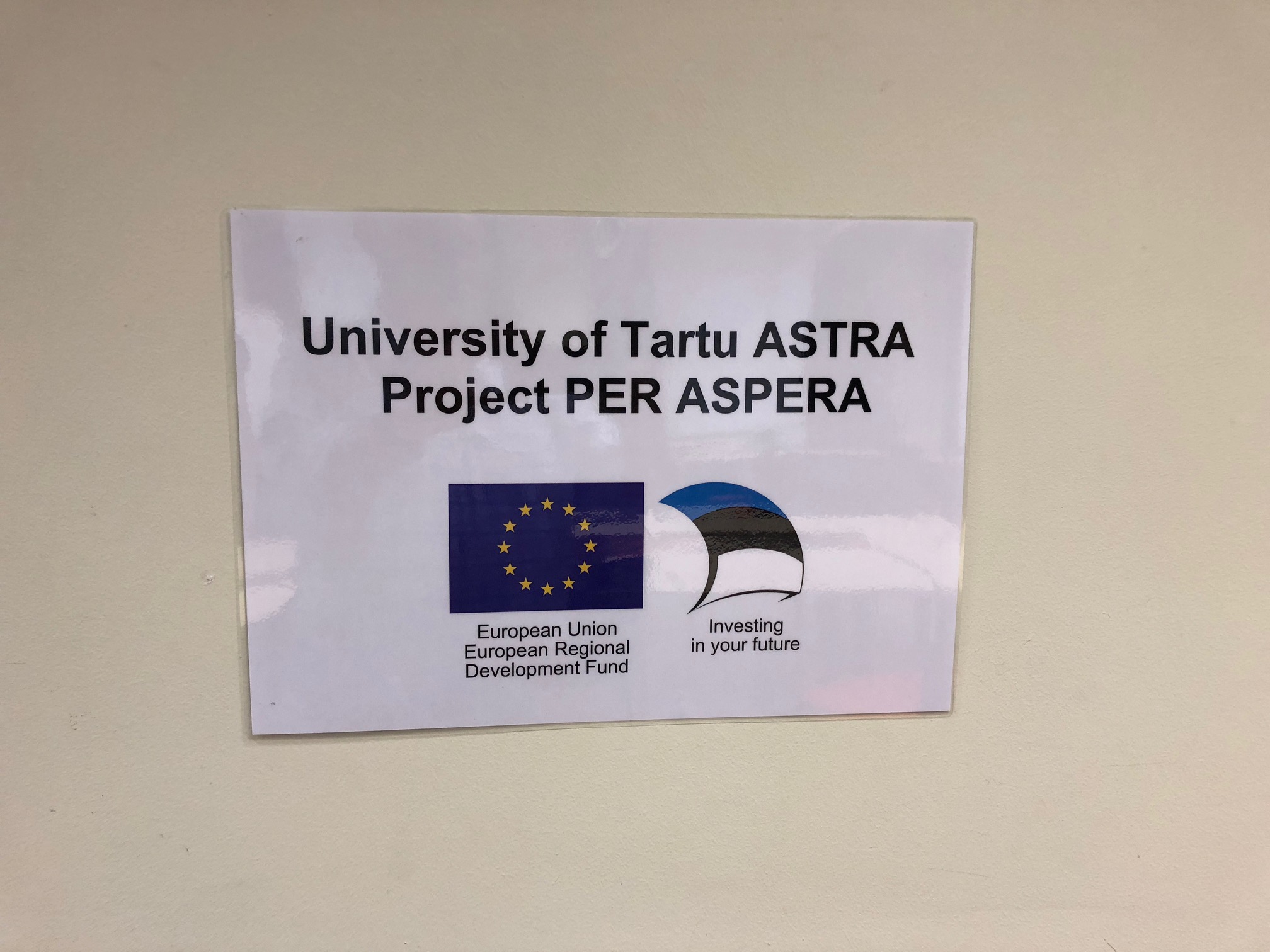
My course on “Getting the Most Out of Peer-Review” was generously supported by the European Union, thus this sign was posted during class sessions.

From colleagues in these departments, I also gained a deeper understanding of their impressive publishing work. Highlights include the Journal of Ethnology and Folkloristics (which I have long admired) and Studia Vernacula and a great diversity of monographs and edited volumes. Publication work in my fields is very advanced in the UT departments. The well-researched and beautiful books being produced related to Estonian craft techniques and histories are a marvel–little work of this quality is found in the United States.

I could continue at near endless length, but this is enough for now. I close for the moment with warm appreciation for all of the staff, faculty, and students who worked hard to make my visit possible and who shared so much of their work and passion with me. Thanks also go to the Fulbright Specialist Program and to the European Union, the University of Tartu, and other funding agencies that supported my activities.

IMG_5448

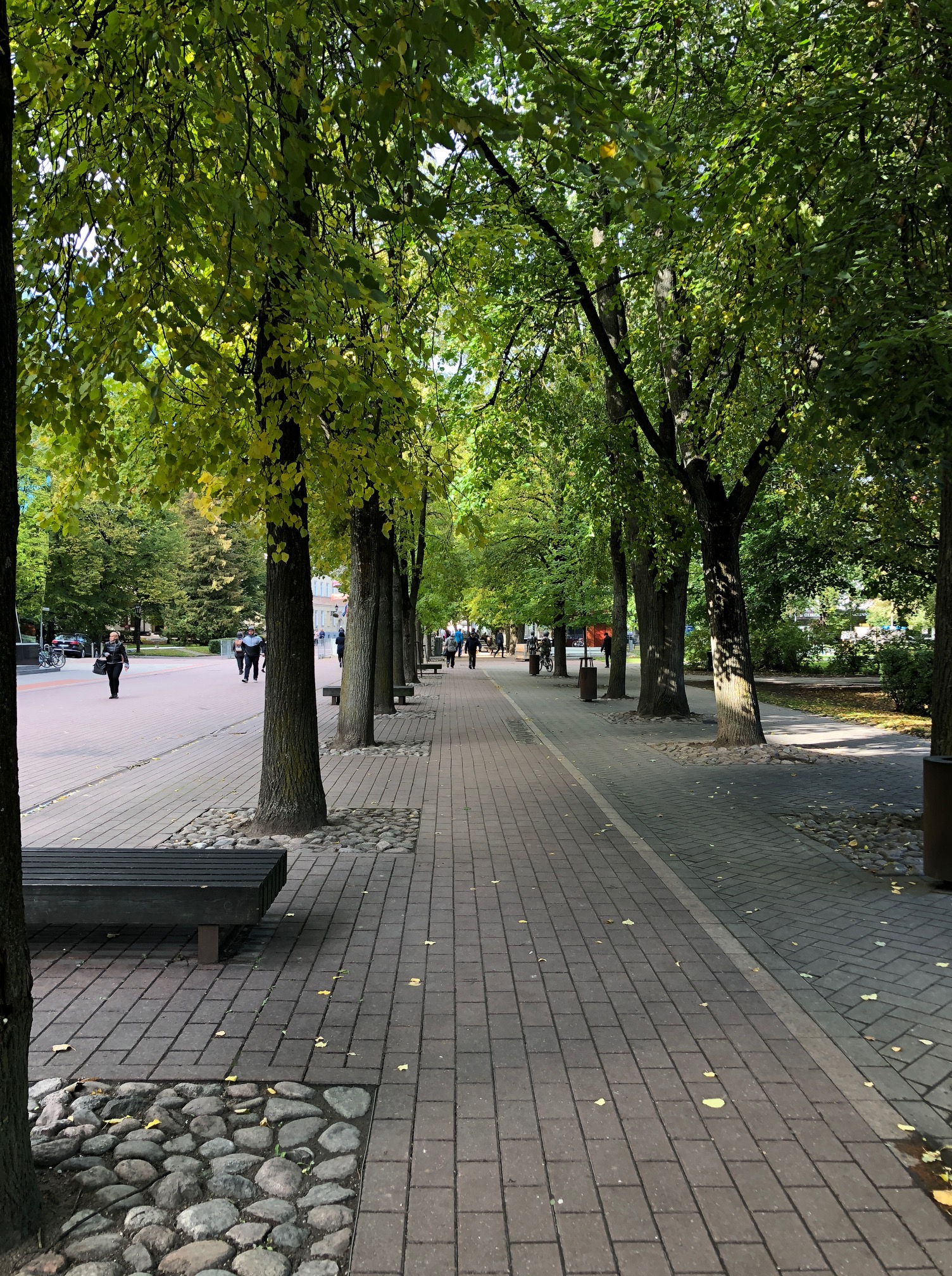
In downtown Tartu.

Looking Ahead: University Anthropology Museums Matter

With notices going out from the Program Committee this week, the American Anthropological Association’s annual meeting (November 29-December 3, 2017) is coming into focus. Notes that I am seeing on Facebook and Twitter suggest that the program will feature a lot to like. I am pleased to note that a Executive Session that colleagues and I have organized has been accepted and scheduled. If you are interested in museum anthropology or the future of university museums, I invite you to hold the day and time. We would love to see you there. Here are the details.

Looking Ahead: University Anthropology Museums Matter
Friday, December 1, 2017
8:00 AM – 9:45 AM

Session Abstract: University-based museums of anthropology, including campus museums of natural history, history, and art with anthropological programs, play a vital role not just as hubs for the work of museum anthropology but for the research, teaching, professional training, and public outreach agendas of the field as a whole. While the historical contributions of university-based museum anthropology are decisive and worthy of continued investigation, this panel aims to characterize present work viewed in institutional terms and to anticipate new developments and emerging needs in the field more broadly. Numerous campus anthropology museums have experienced leadership changes in recent years. This collective shift, as well as dramatic changes happening in the publics with which campus museums engage, suggests that now is a particularly good moment to undertake an environmental scan and in which to consider a collective agenda that is cognizant of the vexing challenges—from anthropogenic climate change to rising inequality; from resurgent xenophobia to the transformation of higher education—that anthropology museums are positioned to address. As the leaders of six key university anthropology museums, the speakers will characterize the present work and emerging goals of their institutions. Considering the changing contexts—intellectual, economic, political, technological, educational, ethical—within which museum anthropology, and anthropology more generally, is being pursued, they will also propose topics and tactics for collective work in the period ahead. While rooting their reflections in the work of their institutions, the presenters will directly address the conference theme Anthropology Matters from the distinctive vantage point of campus anthropology museums in the United States, Canada, and the United Kingdom.

Thanks go to all who supported or endorsed the session proposal, including our sponsor, the Council for Museum Anthropology. See you in Washington.

cma-logo

An Interview with Jessica Richardson Smith, Museum Anthropologist and Research Services Librarian at the Historical Society of Washington, D.C.

Jessica Richardson Smith is the Research Services Librarian at the Historical Society of Washington, D.C. She pursued three majors—Anthropology, Latin and Greek, and Geology for her Indiana University BA degree from the College of Arts and Sciences. While at Indiana, she used the museum practicum course in the Department of Anthropology to gain a range of experiences working in the Midwest Archaeological Laboratory. That work resulted in a published paper—Tools of the Trade: Chipped Lithic Assemblages from the Hovey Lake (12Po10) and Ries-Hasting (12Po590) Archaeological Sites, Posey County, Indiana (with Cheryl Ann Munson, Meredith B. McCabe and Dean J. Reed). She earned a master’s degree from the Department of Anthropology at the George Washington University and leads the Wymer’s DC project.

Jason Baird Jackson (JJ): Before we circle back and discuss your experiences at Indiana University and George Washington University, I’d love to begin by finding out about the mission of the Historical Society of Washington and your role there. What are your core responsibilities as a Research Service Librarian?

Jessica Richardson Smith (JRS): Sure! The Historical Society of Washington, D.C. is a 122-year old educational and research institution that collects and shares the history of Washington, D.C., emphasizing the local community over the federal city. We are a team of seven who strive to produce diverse public programming and exhibitions, as well as public access to our collections. That’s where I come in as the Research Services Librarian. The core of the Historical Society is our research library which houses over 100,000 photographs, over 800 manuscript collections, and hundreds of maps, prints, and objects—all on D.C. history.

My day-to-day duties consist of working with researchers in our library to help them find the information they need. Whether they are writing a scholarly article or just bought a house and want to learn about its history and their new neighborhood, my job is to help facilitate their needs with what our library can offer. Another facet of my job is to know what the other repositories in the city have. If the Historical Society doesn’t have some piece of information, I want to know where I can direct them.

I love my job—I never do the same thing twice and each day I am learning more and more about this city, our collections, and our members. On any given day, I may meet members of our community and learn about their projects and passions, research a topic in our collection for a researcher working remotely, or help troubleshoot a long-shot research query that someone submits based on a decades-old memory. Every day is something new and every day is something interesting. The best part is when I can apply what I learn one day to a question we get the following week. That’s great. It makes you feel like you are making real headway into learning the complex history of a city like D.C.

Also, because we are a small institution with a big mission, my colleagues and I are expected to wear many hats. In addition to my librarian duties, I also participate in shaping our public programming and exhibitions; I conduct photo research for our publications; I digitize material and tackle rights assessment questions; and I track our library statistics. Each of these things are being juggled on a day-to-day basis, which can be demanding but also very fulfilling.

The Historical Society of Washington, D.C. is located in Washington's historic Carnegie Library, dedicated in 1903.

The Historical Society of Washington, D.C. is located in Washington’s historic Carnegie Library, dedicated in 1903.

JJ: It sounds like you are in a sweet-spot in terms of scale. Your institution is big enough to be doing important, interesting work but small enough that you have not gotten trapped in a specialist silo in which you do only one task over and over again.

Washington is such an incredible place for museums, libraries, and archives. What is it like to work in a small-but-old museum/library in a city of large-but-old museums/libraries? Do you feel connected with GLAM (Gallery, Library, Archives, and Museums) professionals around the city or, like many of our colleagues elsewhere, do the day-to-day demands of the job keep you from connecting to colleagues around the city?

JRS: I can’t speak for what it is like at other institutions, but I think we do a good job of collaborating with our fellow institutions in the city, particularly those with a local focus. The D.C. Public Library, National Archives, Library of Congress, National Building Museum, the newest Smithsonian, the National Museum of African American History and Culture—these are all institutions we work alongside and collaborate with in order to forward our mission of preserving local D.C. history.

As the Research Services Librarian, my daily duties are often intra-institution focused but I regularly refer our library patrons to other institutions around the city when we don’t have particular resources. While this means I don’t personally interact on a daily basis with my GLAM colleagues, there is mutual awareness of our work through referrals. At the Historical Society, our main collaboration with our GLAM colleagues is through joint public programming, from conference plenaries to archival fairs, workshops, exhibitions, etc.

JJ: I am especially glad to hear that you have not only pathways to connect with colleagues, but that your institution is well-situated enough to support, and to see the value in, outreach, research dissemination, and professional development activities like those you have just mentioned. One of my reasons for being interested in your connectedness to the cultural institutions of DC is that you were trained at the MA level there, at George Washington University. That institution has a unique advantage in that it trains students in a city with so many public collections and so many collections-oriented professionals. Before we turn to your undergraduate experiences at Indiana, could you describe your graduate studies? What did you study? What role did hands-on work play in your career? Read more

The Free-to-Readers Edition of Material Vernaculars: Objects, Images, and Their Social Worlds

As I discussed in a previous post, works in the Material Vernaculars series are being made available in a free-to-readers PDF edition via IUScholarWorks. The eponymous edited collection Material Vernaculars: Objects, Images, and Their Social Worlds was posted today and you can find it here: http://hdl.handle.net/2022/20925

If you think that high quality open and/or free access editions of scholarly monographs are a good thing, and if you have the means to do so, I urge you to purchase copies of the companion print or ebook editions as a way of supporting the cause and subsidizing the access of others, including those who cannot otherwise afford to obtain the book. If you really want to make a difference, consider donating to the not-for-profit publishers and libraries behind such efforts. In our case, you can contribute to the Indiana University Press (co-publisher of the Material Vernaculars series with the Mathers Museum of World Cultures) here: http://www.iupress.indiana.edu/pages.php?CDpath=12

Here is a screen shot showing you where to click to download Material Vernaculars. The image should link to the page in IUScholarWorks where the book is found. (The link is given above as well.)

slide1Happy reading!

Material Vernaculars: Objects, Images, and Their Social Worlds (is out now)

I am happy to share this note to report that the edited collection Material Vernaculars: Objects, Images, and Their Social Worlds has now been published. I am the editor of this volume, which includes contributions to material culture studies from Dan Swan and Jim Cooley, Jon Kay, Michael Paul Jordan, Danille Elise Christensen, and Gabrielle Berlinger. I love the work that my colleagues contributed to the book. In addition to sharing their scholarship, the volume serves to launch the Material Vernaculars book series of which it is a part. Also appearing in the new series, is Jon Kay’s Folk Art and Aging: Life-Story Objects and Their Makers (it was published last month).

The new series is published by the Indiana University Press in cooperation with the Mathers Museum of World Cultures. IU Press is to be commended for its hard work bringing Material Vernaculars to press. Most of the papers in the volume were presented last fall at the 2015 Annual Meetings of the American Folklore Society. The papers were presented, revised, peer-reviewed, revised again, copy edited, typeset, proof-read, corrected and processed for final publication (etc.) in less than a year, a scenario that is simply unprecedented in the world of academic book publishing. And the results are great–a well-designed, well-edited book that is rich with color images. Its all first rate.

IU Press has a big sale going through tomorrow (October 30). Its a perfect time to check out their list and perhaps purchase this new title. Paperback and Hardback editions are now available. Electronic editions are on their way. (More on that asap.)

fullsizerender19

Get Oriented to Themester 2016: Beauty

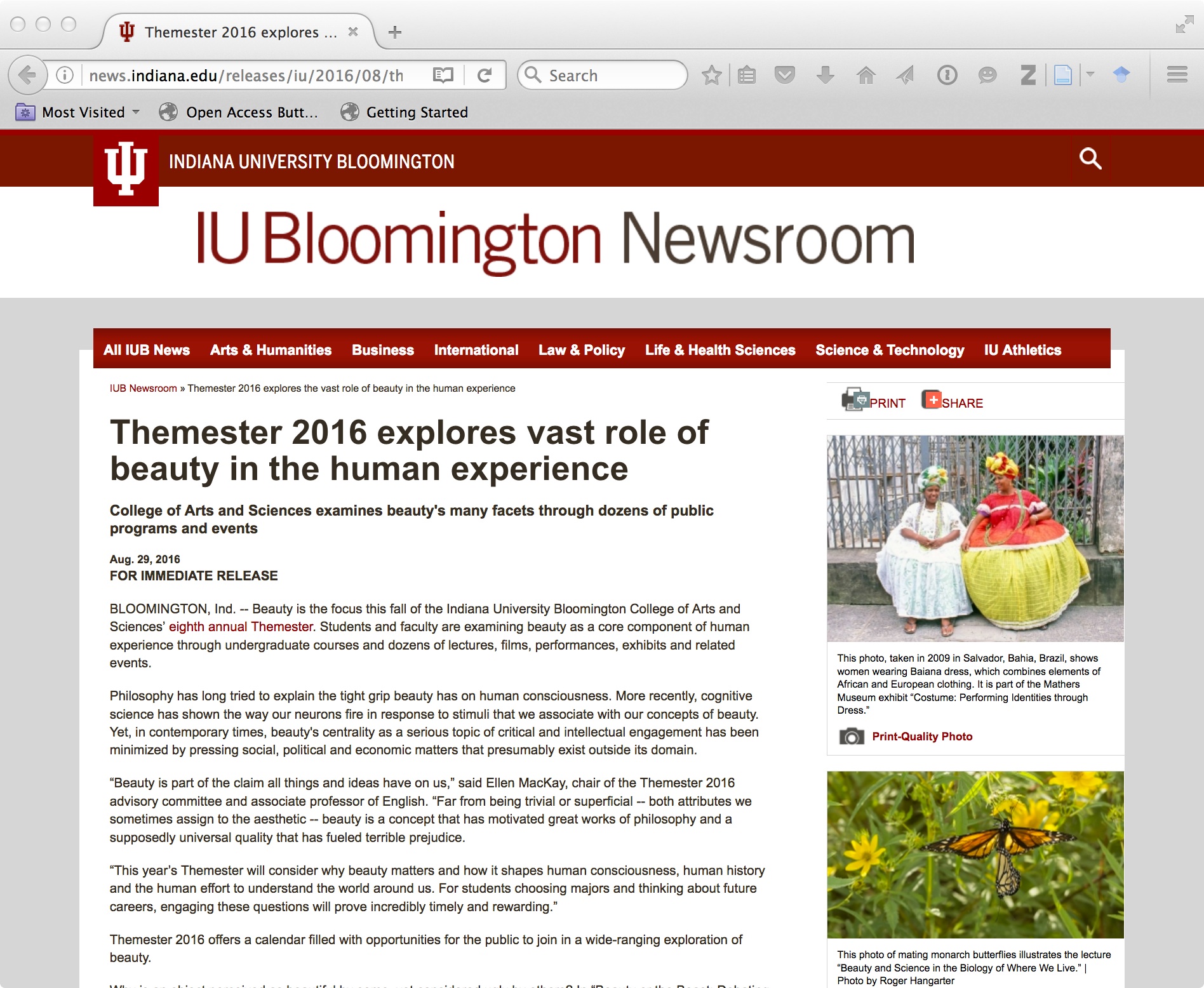
Reviewing the Mathers Museum of World Cultures events and exhibitions pages is probably the only way to get a full sense of all that we are doing for 2016 Themester, but for an overview of Themester as a whole and its focus on Beauty, I recommend checking out yesterday’s kickoff press release (Figure 1). In addition to the MMWC pages, it would also be great to see the Themester website. For MMWC, Themester boils down to three great classes [A400, E460, F360] taught at the museum, three great beauty-focused exhibitions [Costume, Hózhó, Siyazama], plus a lot of programming, including folk artists residencies throughout the semester, as well as films, lectures, and hands-on activities. Check out the full list here. Thanks go to the College of Arts and Sciences for including the museum in an impressive roster of Themester activities. Thanks too go to the students who are helping us organize our Themester activities and to the artists and tradition bearers whose work we are highlighting. Please join it this remarkable exploration of beauty around the world.

Themester.jpg
Figure 1: The Themester 2016 press release, which leads off with a photography b MMWC Consulting Curator Pravina Shukla, from her exhibition Costume.

Plethora of Patrons and Programs Prompts Parking Progress

(Sorry about that headline. I could not control myself.) This fall there will be an extraordinary number of programs at the Mathers Museum of World Cultures. We hope to see you here for many of them. The wave begins in the week ahead. Before we get there, I want to reach out especially to Bloomington and Indiana friends who do not work at Indiana University and who sometimes find visiting the museum difficult for lack of close-to-the-museum parking. This is especially a concern for those with mobility issues. The museum has consistently advocated for increased near-museum visitor parking and I am happy to note that–with quite engaged support from the relevant university offices–we have recently made some solid progress forward.

IMG_2186

Until recently, the museum and the Glenn A. Black Laboratory of Archaeology shared five visitors spaces on the west side of the lab and museum, on the circular drive that is entered northbound on Indiana Avenue (and that one exits westbound on 9th Street). There were five IU staff spaces also located on this drive. Those staff spaces have been moved a bit north to the McCalla School lot (between 9th and 10th, off Indiana) and converted to five more Museum/Lab visitor spaces. In addition to doubling the near-museum parking, happily all of the metered visitor spaces at the McCalla School lot remain in service.

The number of events that we are hosting–especially since the move of Traditional Arts Indiana–to the museum and the increased numbers of people who are joining us (or who express a desire to join us, if they could just park more easily)–is a key factor in the addition of these spaces, but I note quickly here that work is underway to make the museum building more accessible and that the increased parking is part of a larger effort in that realm. More on that asap.

Of course, we would love for you to walk, bus, bike, skateboard, etc. to the museum. That is great for the earth and great for you and for the museum too. When you take a scooter to the museum instead of driving, you are freeing up one of those spaces for a person who can only get here by car. Even if they do not know to appreciate your effort, I appreciate it on their behalf. Carpooling helps too for the same reason. And if you are an IU person with an IU parking pass, you can help as well by parking in staff spaces around the museum rather than taking one of the visitor spots.

We are going to continue working to make the museum easier to visit. You can help us by spreading the word. It is sad when people say to me that they have never come to the museum because they just don’t want to fool with the parking issues. If you know someone who says such things, tell them the good news and encourage them to make their first visit. We’ll be glad to see them–and you.