Skip to content

Posts from the ‘TAI’ Category

State Fairs: Growing American Craft: Four Questions for Exhibition Contributing Curator Jon Kay

Jon Kay with Jason Baird Jackson
Indiana University Bloomington

Jon Kay is Director of Traditional Arts Indiana and an Associate Professor of Folklore at Indiana University Bloomington. In this exchange I pose questions to him about the new Smithsonian exhibition and catalogue State Fairs: Growing American Craft. Find details about the exhibition at the end of the interview.

Jason Baird Jackson (JBJ):  Jon, you have just returned from a trip to Washington, DC for the opening of the exhibition State Fairs: Growing American Craft, which will run through September 7, 2026 at the Smithsonian American Art Museum’s Renwick Gallery. The Renwick is the part of the Smithsonian devoted to craft. Before I ask you about your role in the exhibition and the associated catalogue (Mary Savig, ed., State Fairs: Growing American Craft. Smithsonian Books, 2025), can you tell me about the opening? What did you see? What did you do? Who went with you? What was most memorable?

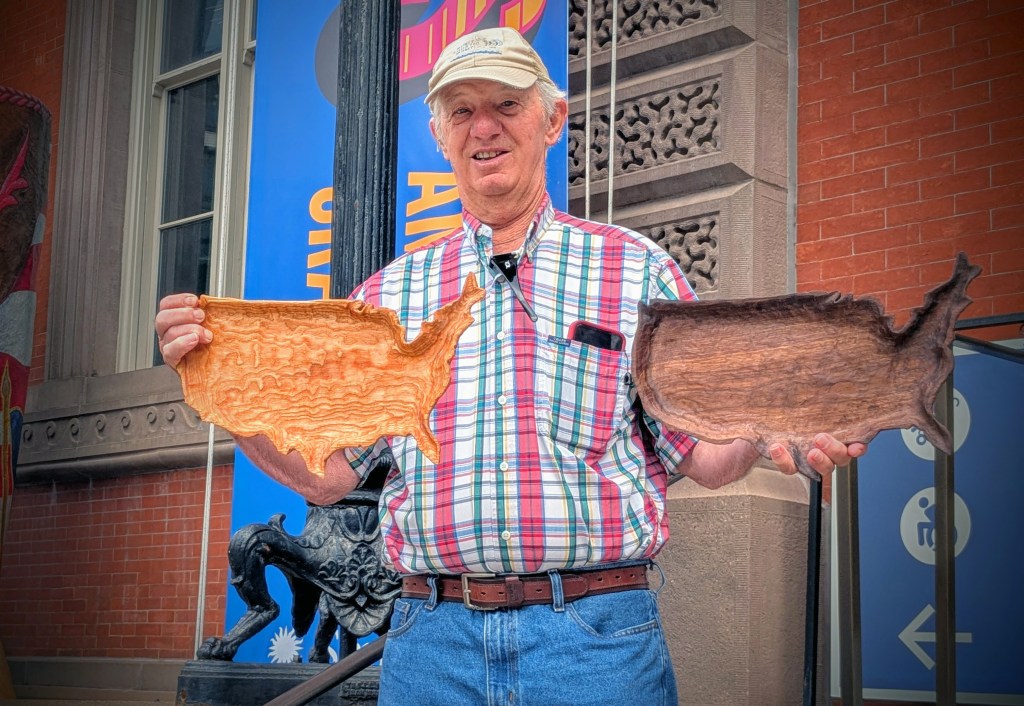
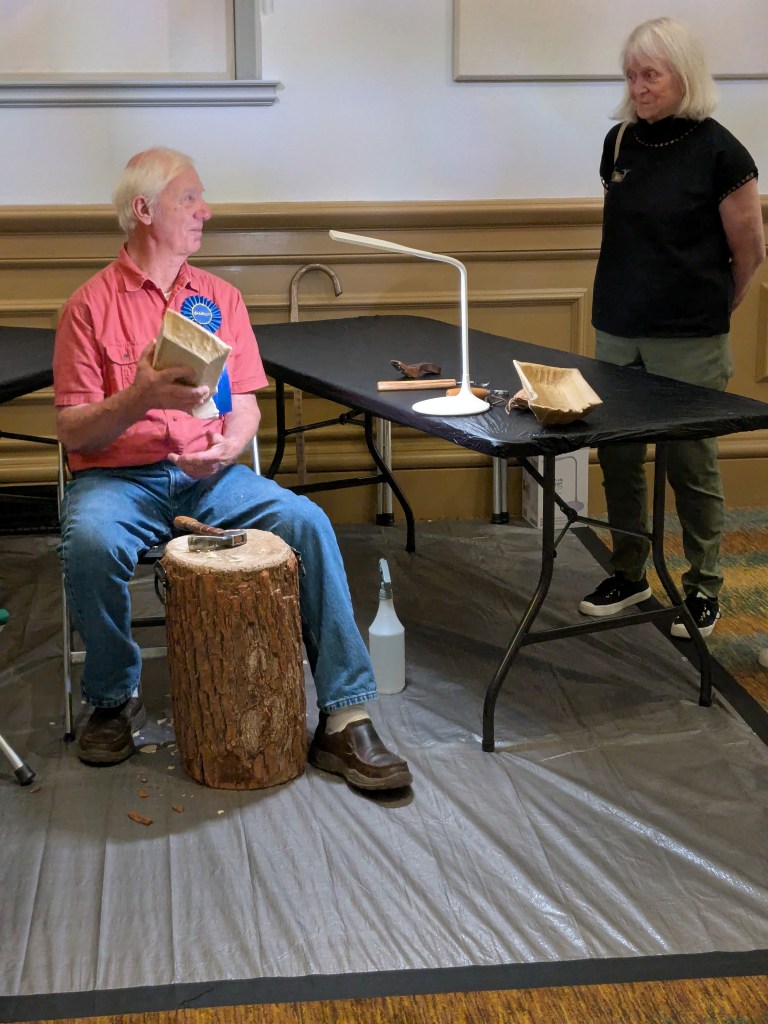
Jon Kay (JK): Thank you for the opportunity to reflect on my recent trip to Washington, DC, where I attended the Smithsonian American Art Museum (SAAM)’s after-hours celebration of the exhibition State Fairs: Growing American Craft at the Renwick Gallery. I participated in the event with Keith Ruble, a bowl hewer and longtime demonstrator in the Indiana State Fair’s Pioneer Village (Figure 1). Keith was named a State Fair Master in 2001—well before I became director of Traditional Arts Indiana (TAI)—a testament to the longstanding recognition of his work.

From 2001 to 2021, TAI partnered with the Indiana State Fair to honor its veteran participants through the State Fair Masters program. Each honoree was selected for their skill, excellence, and deep knowledge in their discipline, as well as for their commitment to passing on that knowledge within their communities. The program emerged in the years following the untimely death of Bill Day, an early Pioneer Village demonstrator and Keith Ruble’s bowl-hewing mentor. It was fitting, then, that both Keith’s and Bill’s bowls were featured in the Renwick’s exhibition (Figure 2).

Keith had been invited to demonstrate at the exhibition, but initially declined—he and his wife, Susie, don’t fly, and he didn’t feel up to driving to DC. When he told me this, I offered to take him. He agreed. So, the day before the celebration, Keith, Susie, my wife Mandy, and I made the twelve-hour trip to the Renwick.

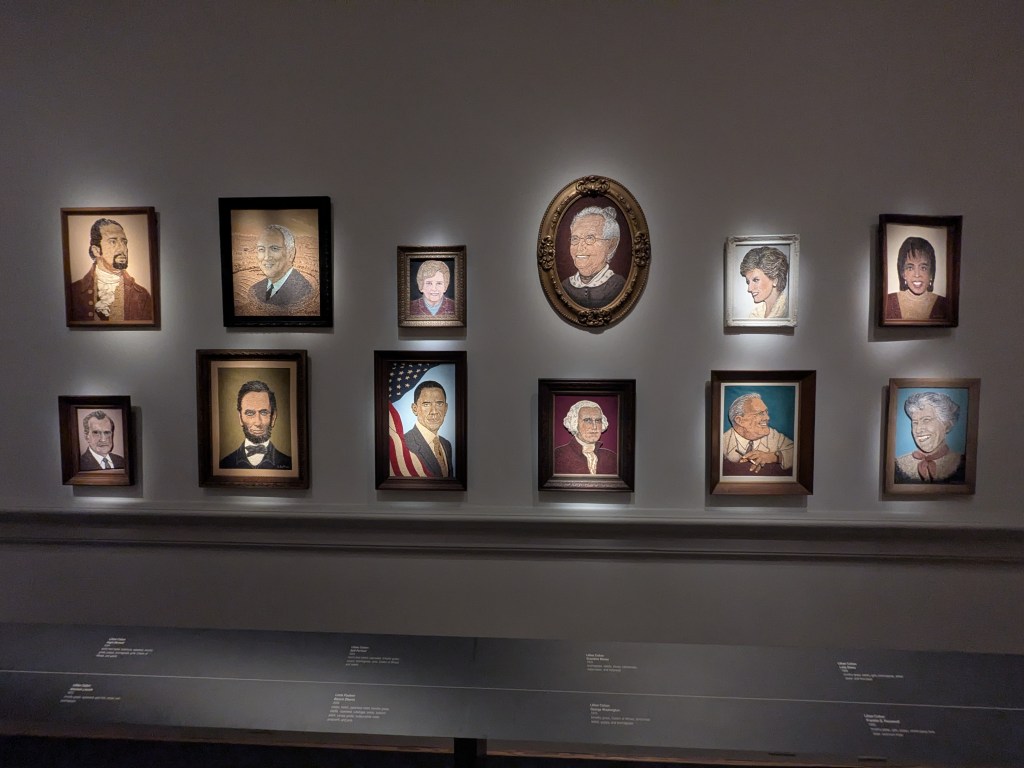
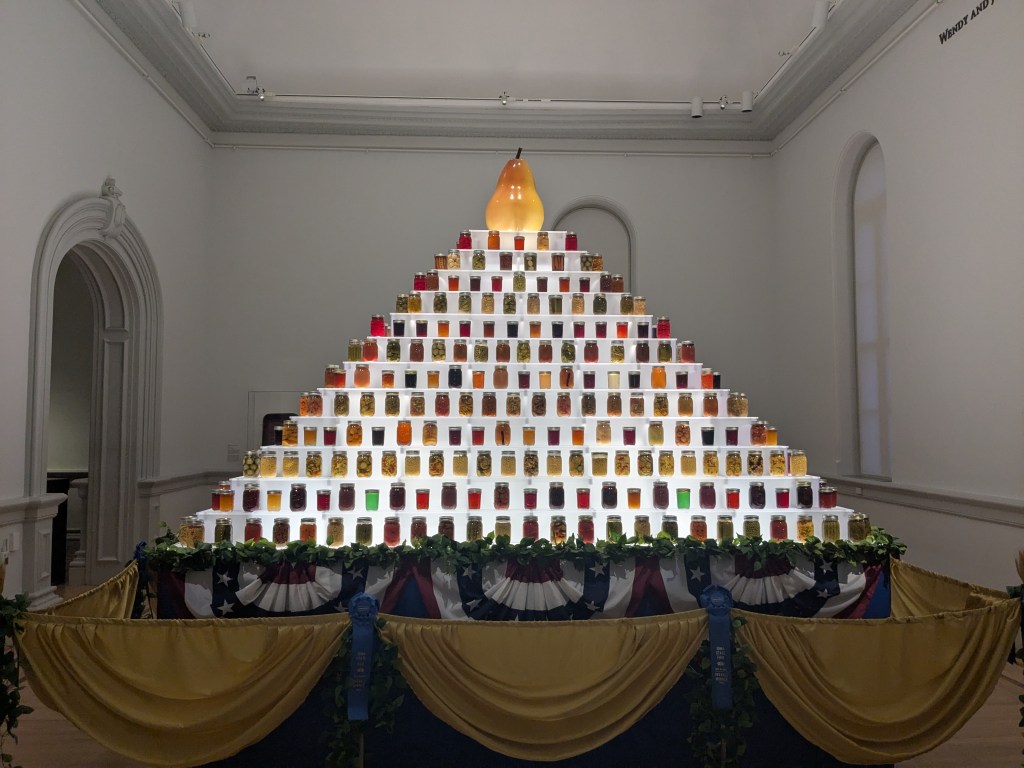
On our first morning in DC, we walked to the Renwick Gallery to view the exhibition and deliver several hand-hewn bowls that Keith had made for the museum’s gift shop (Figures 3 and 4). I imagine your future questions will explore the exhibition’s content in more detail, but for now, I’ll say it was a remarkable showcase of crafts by artists who have exhibited, competed, and demonstrated at state fairs—past and present. From pottery and crop art to canned goods and quilts, the exhibition underscored the central role of craft in state fairs since their inception in 1841 (Figures 5, 6, 7, and 8).

The celebration brought together many of the featured artists and their families, including saddle maker Bob Klenda from Kimball, Nebraska; canner Rod Zeitler from Coralville, Iowa; and basket maker Polly Adams Sutton from Seattle, Washington (Figures 9, 10, 11). While the artists enjoyed seeing their work on display, the event also created a meaningful space for state fair craftspeople from across the country to connect and share stories. The atmosphere was one of mutual appreciation. In a culinary nod to fair traditions, the Renwick served corndogs, cornbread, corn pudding, and other fair staples. It was a festive and memorable evening.

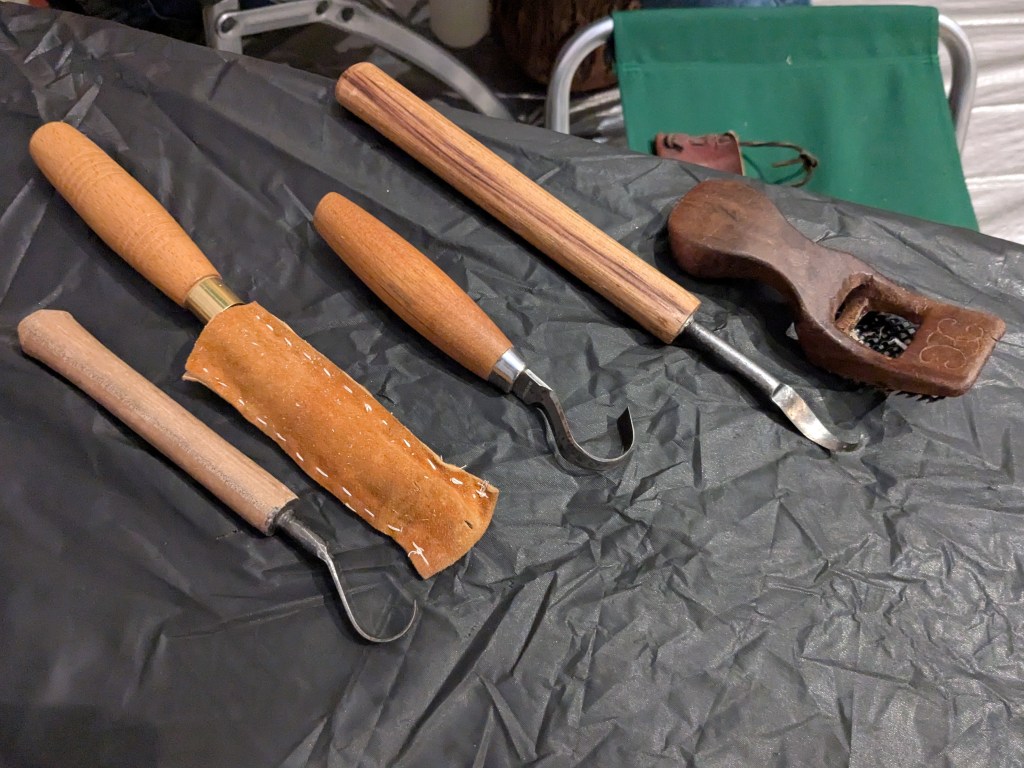
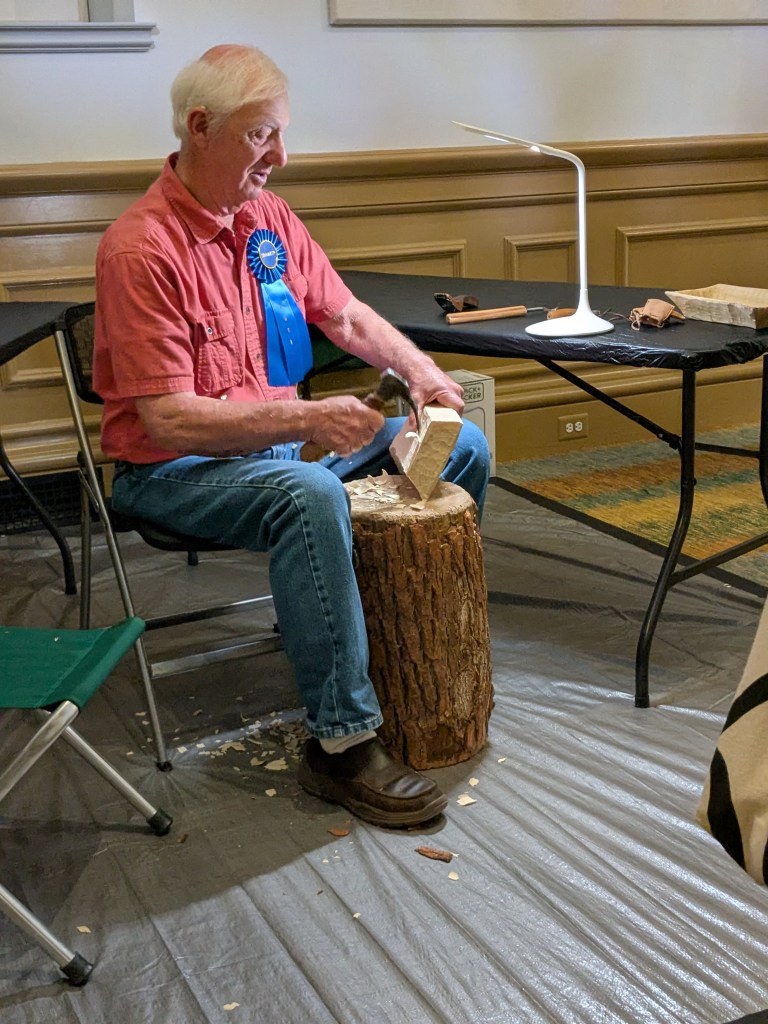
The following day, Keith demonstrated his craft at the Renwick. Concerned about wood chips, the events team taped down tarps and provided tables and chairs. Keith’s setup was minimal—just a few tools: a bowl adze fashioned from a ball-peen hammer, a bent gouge, a couple of spoon knives, and a hand-rasp scraper (Figure 12). But what really caught people’s attention was his sassafras stump with luggage handles, which he uses as a chopping block (Figure 13).

Throughout the day, Keith worked on an Indiana-shaped bowl, answered questions, and shared stories. He spoke about his mentor, Bill Day; his wife’s tolerance for him chopping in the living room; and his “mother-in-law” bowls—his name for the ones that crack (Figure 14).

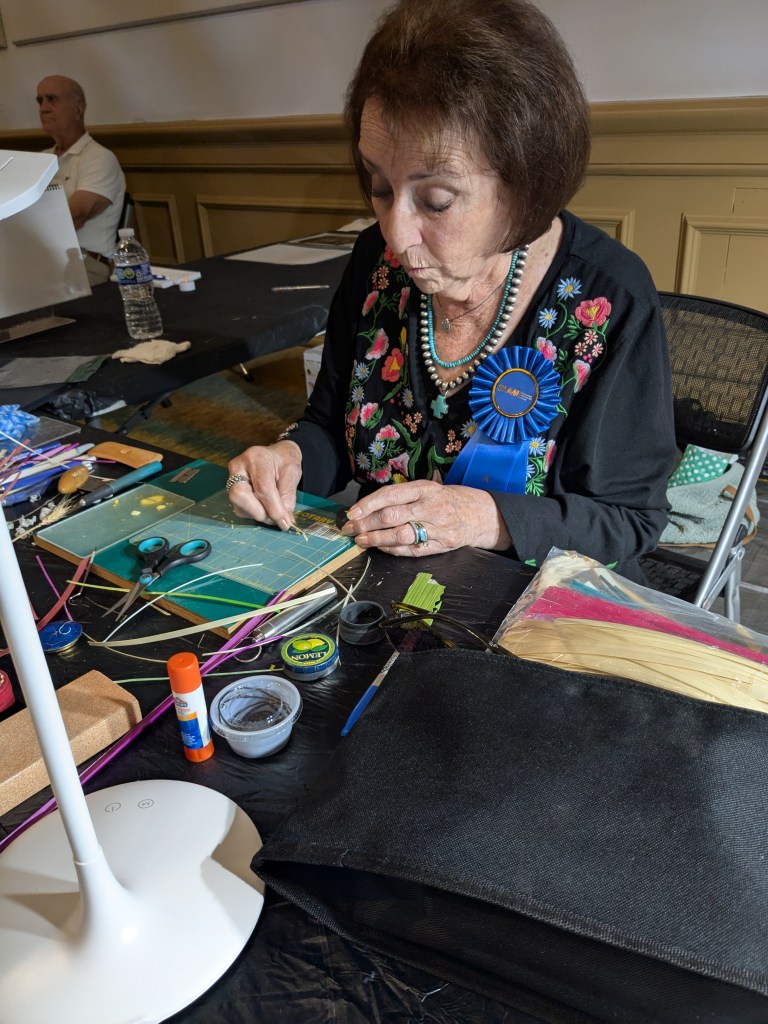
Alongside Keith were two other demonstrators: Martha Varoz Ewing from Santa Fe, New Mexico, who practices traditional straw appliqué, and Samuel Barsky from Baltimore, Maryland, known for knitting custom sweaters of his own design (Figure 15 and 16).

Soon after Keith began, the rhythmic chop, chop, chop of his adze echoed through the gallery, drawing visitors to the demonstration area. From 10 a.m. to 2 p.m., the artists worked and engaged with the public. Keith noted that he didn’t even finish the bowl he brought to work on. I assured him that the Smithsonian didn’t mind. There was a steady stream of visitors throughout the day, and the exhibition, as a whole, was very well attended.

JBJ:  I am glad that you and Mandy, Keith and Susie had a great time at the exhibition and its opening events! With the scene set now, can you tell me about your role as one of the “contributing curators” working with lead curator Mary Savig?

JK: From 2004 to 2022, I coordinated the Indiana State Fair Masters Program as part of my work directing Traditional Arts Indiana. For this program, I conducted oral history interviews, created exhibition panels, and produced documentary films.* My friend Betty Belanus, a retired curator at the Smithsonian Institution’s Center for Folklife and Cultural Heritage and Indiana’s first state folklorist in the 1980s, was aware of my long-standing work with the Indiana State Fair. When Mary Savig, Chief Curator of the Renwick Gallery, began planning the exhibition State Fairs: Growing American Craft, Betty suggested that she reach out to me to help identify potential Indiana craftspeople to feature.

Mary and I met at the 2023 Indiana State Fair, where I gave her a tour of the fairgrounds. The State Fair Masters program, as I mentioned earlier, celebrated the work of longtime fair participants—from apple growers and hog breeders to pie bakers and weavers—highlighting the artistry embedded in fair traditions. While many of these practices have aesthetic dimensions, the Renwick is a craft gallery, so performance-based traditions, such as baton twirling, clogging, and washboard playing, were outside the scope. I joked that while I could make a case for seedstock swine breeding or miniature donkey husbandry as art forms, jars of jelly and pickles were probably as close as the exhibition would get to these more ephemeral crafts.

As we walked the fairgrounds, Mary and I discussed her vision for the exhibition and my nearly two decades of work with the Indiana State Fair. The State Fair Masters program had ended in 2023, so I was especially reflective during our visit.

Our first stop was the Indiana Arts Building, formerly known as the Home and Family Arts Building. In the basement, baked goods and canned items were exhibited; the main floor featured quilts, needlepoint, weaving, crochet, and knitting. The building also featured paintings, photographs, and other artworks that had been entered in various fair competitions. I introduced Mary to longtime building coordinator Nancy Leonard, and then we talked with Mary Schwartz, a 2013 State Fair Master who was recognized for her needlepoint artistry.

Next, we visited the Pioneer Village, located across the fairgrounds and surrounded by antique tractors and historic farm implements. The Village showcases farming practices, music, and crafts from Indiana’s Depression Era and earlier. I introduced Mary to the wheelwrights and blacksmiths, and Charlie Carson who trains oxen and makes yokes. In the Pioneer Village Building, Mary talked with quilters, weavers, and broom makers—but what truly captured her interest was the bowl hewing.

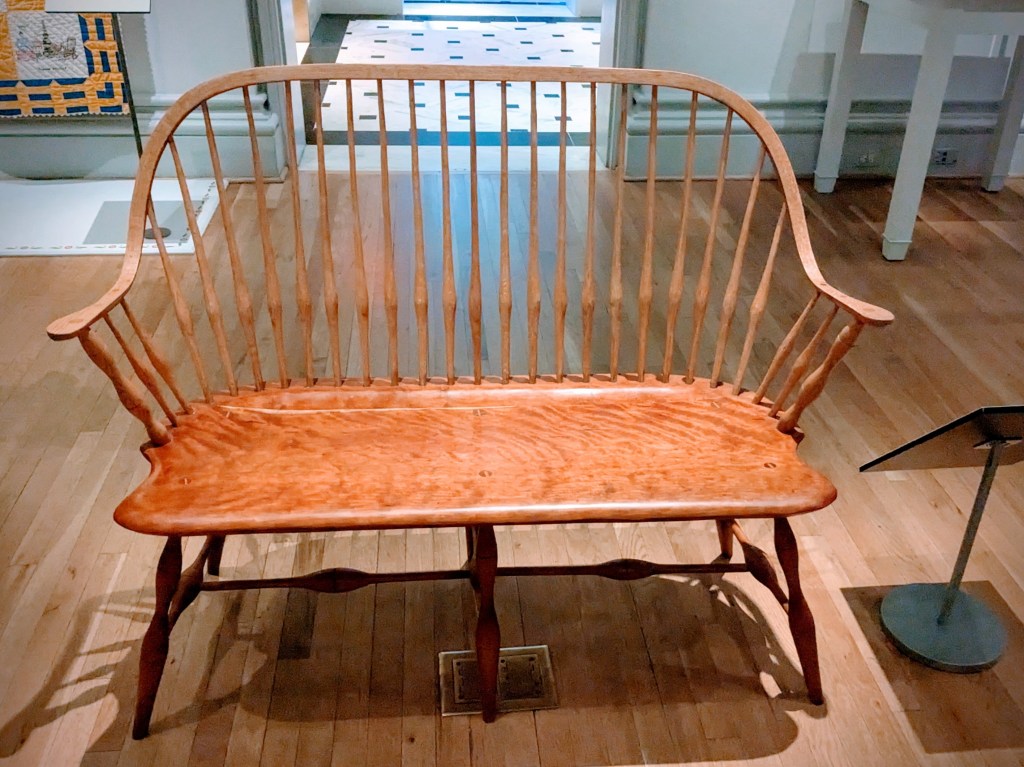
I had recently curated an exhibition at the Swope Art Museum in Terre Haute, Indiana that featured several bowl makers who demonstrated at the fair. I introduced Mary to Keith Ruble and Blaine Berry, both of whom would later be featured in the Renwick exhibition. I also secured a large sassafras bowl made by Bill Day for the exhibition. I loaned the gallery a tulip poplar bowl shaped like Indiana, which Keith had made for me for the 2016 Bicentennial of Indiana Statehood. In addition to recommending artists, I shared ideas for potential craft inclusions. Mary ultimately acquired a settee and two Windsor chairs from Blaine, which the Smithsonian purchased (Figure 17).

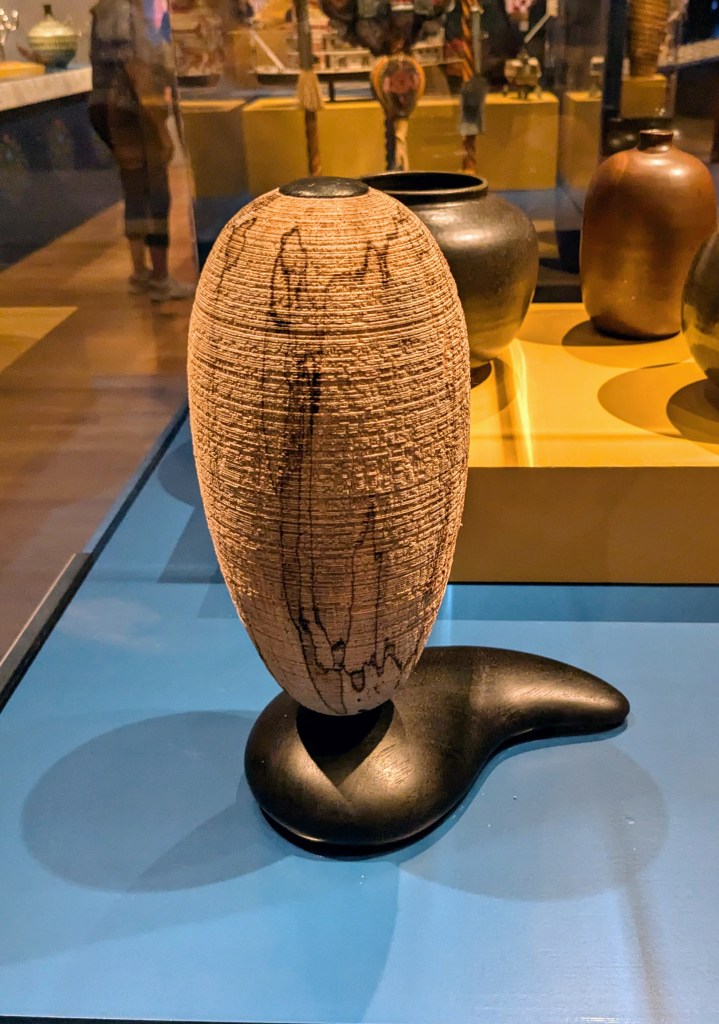
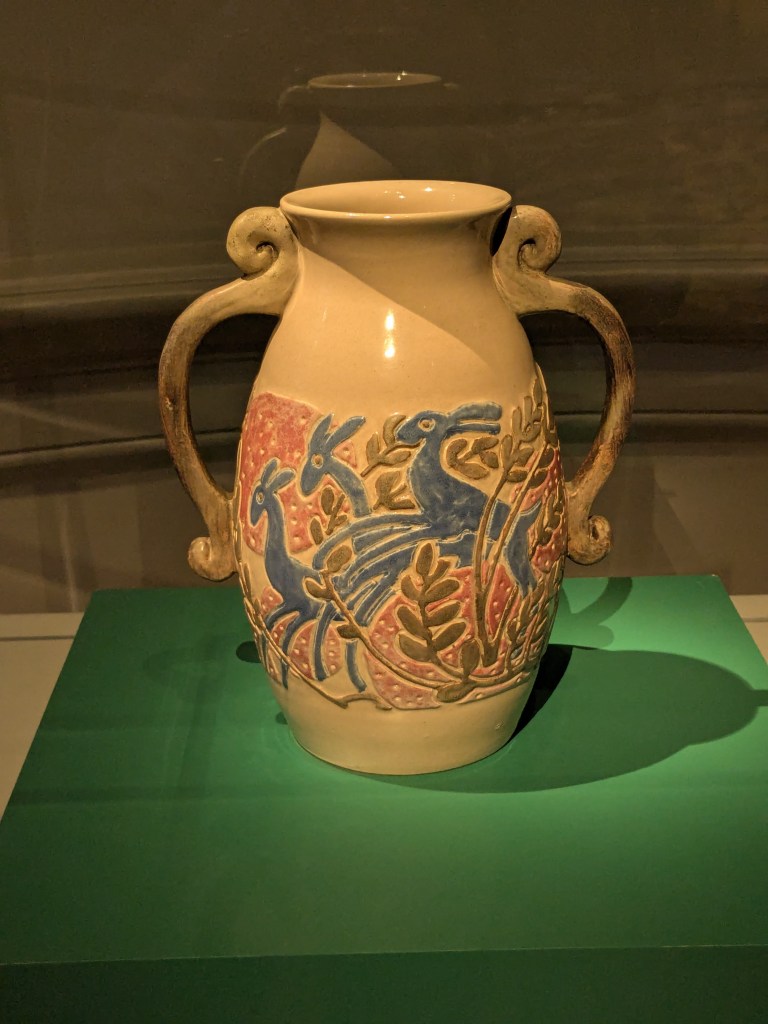
By the end of our visit, Mary had identified about ten potential Indiana artists for the exhibition. A few months later, she told me that she needed to pare down the list, because the exhibit included more craftspeople from Indiana than any other state. The final roster included bowl maker Keith Ruble, chairmaker Blaine Berry, basket weaver Viki Graber, woodturner Betty J. Scarpino, and potter Kelly Bohnenkamp, who loaned her whimsical “corndog vase” (Figures 18-20). The exhibition also included works by two historical Indiana craftspeople: a vase by Mary Overbeck (1878–1955) and the large bowl made by Bill Day (1915-1999) (Figure 21).

JBJ:  I am glad that you could help the craftspeople of Indiana gain recognition from this major exhibition at a key world museum devoted to craft. I mentioned the catalogue for the exhibition at the start. Can you tell readers what they will find in that catalogue and what your contribution to it is?

JK: The exhibition catalog, State Fairs: Growing American Crafts, is a companion book published by Smithsonian Press (Savig 2025). It connects the narrative threads of the exhibition, as outlined by editor Mary Savig in the introduction. The chapters then highlight key themes, including “4-H and Youth Participation,” “Creative Arts Competitions and Women’s Collectivity,” “Indigenous Fashion Shows,” and “Studio Craft Competitions.” My chapter ended up being more focused than the others, centering on the Pioneer Village at the Indiana State Fair.

Mary and I initially discussed framing the essay around creative aging in heritage events, but ultimately, she felt a tighter focus on the Pioneer Village would serve the book better. For my chapter, I drew on decades of interviews with participants in the Pioneer Village. In fact, I had to work hard to stay within the word count. I hadn’t realized at the time that mine would be the only chapter focused on a specific event. While the other essays explore broader themes across multiple fairs, mine is grounded in my long-term work at the Indiana State Fair—and especially in the Pioneer Village.

I feel fortunate to have served as a contributing curator for the exhibition. Much of my role involved sharing nearly two decades of research into craft traditions at the Indiana State Fair. I’ll be returning to the Renwick Gallery this winter to participate in a panel discussion, where I’ll speak about my work in arts and aging, drawing on experiences with longtime fair participants, including those in the Indiana Arts Building and across the fairgrounds.

JBJ: The new exhibition, book and public program series at the Renwick Gallery is one of scores of projects that you have pursued related to craft and craftspeople in Indiana, in the United States, and overseas. Looking ahead, what is your next big project related to craft all about?

JK: As you know, I tend to keep several projects going at once, so questions like this always make my head spin a bit. I recently submitted a manuscript for a book on Indiana basketry, which is currently under review at the press. It examines the social function of craft in everyday life and the cultural changes that have undermined it.

In addition, I co-authored a new, public-facing book, Lifelong Arts: A Creative Aging Handbook, for the Indiana Arts Commission. The Indiana Arts Commission will publish it. I wrote it with Stephanie Haines and Anna Ross, and it explores creative aging practices. The book is based on a series of public workshops and trainings that we conducted across the state in 2022-23. Lifelong Arts will be my third public-facing creative aging guide. This one is a more general guide to arts and aging. In contrast, my other two projects were regional and based on traditional arts and everyday creative practices: Memory, Art & Aging (Kay 2020) and Everyday Arts in Later Life (Kay, Jackson, and Islam 2024).

So, I am in the starting phase of two larger projects. One explores bowl hewing in Indiana, which connects to Keith Ruble, Bill Day, and the State Fair. While this tradition is deeply rooted in Indiana, I’ve also discovered that bowl hewing is part of a broader international network of green woodworkers, toolmakers, and heritage events. Many of these makers speak about how the craft supports their emotional, physical, and social well-being, which aligns with my ongoing interest in craft and wellness. The second project, which may eventually merge with the bowl hewing project, is a scholarly study on “Folklife and Creative Aging” (Figure 22).

Of course, my academic research runs in parallel with (and within) my work directing Traditional Arts Indiana at Indiana University. TAI continues to operate the TAI Apprenticeship and the Indiana Heritage Fellowships. I am also exploring the development of an online version of TAI’s Community Scholar Training. It’s a lot to think about and seeing it all laid out like this feels a bit daunting.

In closing, Jason, thanks for your ongoing interest in craft, museums, and folklore. It was great to reflect on this moment and to think about my years at the fair and the exhibition at the Renwick. I know that the exhibition has helped me approach the fair with fresh eyes and to see the many crafts and communities that the fair has helped cultivate.

JBJ: Thanks Jon for sharing these valuable reflections and thanks for all that you do for Indiana and its peoples.

Learn more about the exhibition State Fairs: Growing American Craft online at: https://americanart.si.edu/exhibitions/state-fairs 

A version of this post will be preserved in the Published Work and White Papers collection of the Material Culture and Heritage Studies Laboratory community in IUScholarWorks. [Update: See https://hdl.handle.net/2022/33755 for the archival version.]

Notes
*Twenty documentary videos profiling State Fair Masters are accessible via Indiana University’s Media Collections Online. See the “Traditional Arts Indiana’s State Fair Master Documentaries” collection via https://media.dlib.indiana.edu/.  

References Cited

Kay, Jon, ed. 2020. Memory, Art, and Aging: A Resource and Activity Guide. Traditional Arts Indiana. https://hdl.handle.net/2022/33323

Kay, Jon, Joelle Jackson, and Touhidul Islam. 2024. Everyday Arts in Later Life. Traditional Arts Indiana. https://hdl.handle.net/2022/33322

Savig, Marty, ed. 2025. State Fairs: Growing American Craft. Smithsonian Books.


“A Culture Carried: Chin Basketry in Central Indiana”: Five Questions for Exhibition Curator Jon Kay

Jon Kay is Director of Traditional Arts Indiana, an Associate Professor of Folklore, and Interim Executive Director of Arts and Humanities, all at Indiana University Bloomington. In this exchange, I pose questions to him about his new exhibition A Culture Carried: Chin Basketry in Central Indiana. Find details about the exhibition and associated opening program at the end of the interview.

Jason Baird Jackson (JBJ): Thanks for taking time to field a few questions about the upcoming exhibition “A Culture Carried: Chin Basketry in Central Indiana.” For Shreds and Patches readers, I’ll share all the practical details about the show and the opening celebration below. Here, let’s jump right to an initial question about this exhibition and the work on which it is built. 

Who are the basket makers whose work centers the upcoming exhibition at the Cook Center for Public Arts and Humanities in Bloomington?

Jon Kay (JK): The exhibition features the work of Pu Ngai Chum and Reverend Ceu Hlei, lifelong friends from Chin State, Myanmar. Both are Zophei basket makers who now reside in Southport, Indiana, a suburb of Indianapolis with a large Chin refugee community. Pu Ngai Chum has lived in Indiana for over ten years, while Reverend Ceu Hlei came to visit his daughter in 2020 just before the pandemic began and ended up staying due to the ongoing turmoil in Myanmar. Following the military coup, civil unrest, and persistent violence against the Chin, he decided to remain in the United States with his family.

Pu Ngai Chum started making baskets for his Chin community after his children encouraged him to leave his job during the pandemic. Similarly, Reverend Ceu Hlei, feeling bored and depressed as a newcomer to Indiana and unable to leave the house, was encouraged by his son-in-law to start basket making. His son-in-law suggested he try using recycled polypropylene packing ribbon from local warehouses, just as Pu Ngai Chum was doing.

I met Pu Ngai Chum and Reverend Ceu Hlei about a year later while conducting a folklife survey on arts and aging in Central Indiana, funded by the Allen Whitehill Clowes Charitable Foundation. Since then, I have worked with them to coordinate basket classes, workshops, and demonstrations. All the while, I was buying baskets and documenting their craft, which led to this exhibition. 

JBJ: I know that visitors will enjoy seeing their work presented in the new exhibition. Hopefully there will be a good turnout for the opening event where they will be demonstrating their skills publicly. That will be a great opportunity.

It seems to me that many people take baskets for granted. They are a kind of thing that one sees readily available in a store like Target. We rarely know where such baskets came from or who the people were who made them. When discussing your work with talented basket makers in Indiana, how do you find ways to shake people out of this passive relationship to this venerable craft?

JK: Other than the molded plastic laundry baskets and hampers sold by big box retailers—which arguably are not baskets— every basket is handmade. Today, their making may include special jigs, tools and machinery, but to some degree all baskets require some handwork and specialized knowledge. In the United States, some discount stores sell inexpensive baskets that are made in distant places where labor costs are low and manual skill is high. So, it is easy to speculate why baskets are met with apathy or even disdain. 

When people want to invoke the idea that something is outmoded or simple, they may compare it to “underwater basket weaving” or call it “Basketmaking 101.” This position assumes that anyone can do it. While it is true that almost anyone could learn to weave basic baskets, few do.  But if you look deeper into these woven vessels you begin to see they hold so much more. The sheer diversity of materials, patterns, aesthetics, and uses is staggering. From carrying eggs and catching fish, storing grain or serving food, holding babies to burying the dead, baskets for millennia have held our most precious possessions. 

Moreover, the work that baskets and basketmaking does in the world is still needed. In many places baskets remain a part of everyday life. They are the perfect thing to carry to the market—no need for plastic bags. The feel of the twisted handle in my hand as I work in my garden each summer reminds me of how this old technology is perfectly designed for the work that baskets do in the world. But, more than the physical nature of baskets, basket making is needed now more than ever. In my arts and aging research, I see the value and power of creative pursuit in later life; something you can devote your time and attention to, a practice that gives you satisfaction and purposes, an activity that coaxes you into a state of flow. All of which support our wellbeing in later life…or for that matter throughout the life cycle.  Too many young folks and elders in the United States, for example, are struggling with feelings of depression, boredom, and loneliness. Many find it difficult to forge meaningful relationships. Some are perpetual distracted with social media and portable technologies, and struggle with the basic human skill of human interaction with the world around us. Basket making is just one craft that requires mind and hand to work in concert. In addition, basket making can connect generations. Makers learn when they are young, often from grandparents or nearby elders then, when they grow old, they return to the craft to fill their lives with purpose in meaning. Moreover, when an elder teaches a younger person to focus and make a basket, they are also demonstrating them how to age well. In this light, I think we need more baskets, and for sure we need more people making baskets. 

A glimpse of the exhibition, “A Culture Carried: Chin Basketry in Central Indiana”.

JBJ:  Well said! And I think that your arguments about making and meaning also help us understand the remarkable transformations underway now at the intersection of craft and making activities and social media, particularly how-to videos for would-be craftspeople and makers, but also making-videos-as-entertainment, especially very short format videos of the kind visible on platforms like TikToc and Instagram. We can explore those themes another time but, building on them, could you say something about how you yourself use video and photography as part of your studies with basket makers such as Pu Ngai Chum and Reverend Ceu Hlei?

JK: Yes, you are exactly right. I have witnessed over and over how the documentary impulse is one of the ways that intergenerational bonds are strengthened. We could talk for hours about that, for sure. In the exhibition I include two documentaries that my research assistant Touhidul Islam and I made featuring the work of the two makers. They are great ways for exhibition goers to see how a basket comes together. Both videos compress a half day of work into a few minutes.  And while I made them to share in the exhibition and online, that was just one of the reasons that I undertook those video making projects. First, the making of the video gave me a reason for engagement with the artists. I could tell them about my work, show them my publications, and visit with them, but when we collaborate in the making of the video, we learn about each other, and our trust grows. I have done five basket-making video projects all for the same reason. The first was with Viki Graber a Mennonite willow bask maker from Goshen, Indiana. The next was with Li Guicai a Baiku Yao basket maker who makes bamboo rice baskets in Southwest China. In addition to the two basket videos with the basket makers in the current exhibition, I recently produced a video that follows Myaamia artisan Dani Tippmann through the making of an elm bark basket. Each of these making projects (both the making of the basket and the making of the video) allowed the maker and the me to deepen our research relationship.  It gave us a reason to work together. It was valuable to the maker, but also to me as video producer. Whether it is hosting a craft workshop, curating an exhibition, or making a video, my public-facing folklore work is more than just doing public programs, each activity creates a context for deep learning with my interlocutors.

I focus on process-centered documentaries. When I began this approach, it was less common for an ethnographic video to concentrate on a creative process. Instead, films would use footage of making as a backdrop for telling the maker’s story. However, in recent years process-centered videos have become popular. My social media feed is full of them. These videos are also very popular in the home communities where these tradition bearers are from.

I prefer making process-centered videos in part because the researcher and maker roles are even— the maker makes, and the documentarian shoots and edits. While we are working together; the maker knows what I am doing and what they need to do for it to be successful. As we work together, the maker tries to make the best basket possible, and I try to capture the best footage I can.*

JBJ: It is great to gain this sense of your process and your priorities in the work. That the videos will have multiple uses, both now and in the future, is a key factor. A classic gallery exhibition is a unique and wonderful thing—I have devoted my life to making them—but they cannot reach all audiences and they are very time and place limited. Your videos will do varied work around the world and in the Indiana Chin community itself. I look forward to watching them!

Can you say something about how this project and exhibition intersects specifically with Indiana University Bloomington, above and beyond its relevance to the Chin community, to Indiana as a state, and to TAI as the state public folklore program? Put another way, what connections already exist between IU Bloomington and the Chin people in Indianapolis and around the state? This is not the first time IU is engaging with Chin people, is it?

Yes, exhibitions have a limited reach, but they can signal to a community or group that we see them and that their work and culture is valuable both in their community and beyond. I have successfully used campus venues to prototype exhibitions, that I later expand and tour to venues nearer to the makers’ home communities. I did this with an exhibition about oak-rod basketry that was at Indiana University’s Mathers Museum of World Cultures but that was later installed at the Historic Brown County Art Gallery in Nashville, Indiana. Similarly, I did a small proof of concept exhibition on bowl hewing in Indiana at the Herman B Wells Library’s Scholar’s Commons that then was expanded to tour to the Swope Museum of Art. Just as video making is a process for fostering creative collaborations with the artists that I work with, so are exhibitions. Developing an exhibition, growing the exhibition, touring and programming the exhibition—all contribute to my greater understanding of the art form and the makers with whom I collaborate. 

Back to your real question though… Back in 2010, Traditional Arts Indiana did its first project with the Chin community in Indiana. My graduate assistant at the time, Anna Mulé took the lead on that project, and we created a community exhibition and festival about Chin culture. Back then there were just a few thousand Chin living in Central Indiana. Today there are more than 30,000. I wish I could tell you that we continued to work with the Chin through the years, but we didn’t. In 2021, I received a grant to do work in Central Indiana focused on how everyday arts support elder wellbeing.  It was then that I met my collaborator Kelly Berkson, an IU linguistics professor and the director of the Chin Languages Research Project (CLRP). It was in working with her that I learned about how much larger the Chin Population had grown. CLRP is doing amazing work documenting the diverse languages being spoken by the Chin peoples living in Indiana. Through Kelly and CLRP, I discovered that there were dozens of Chin students studying at Indiana University. Kelly had enlisted a strong team of Chin students to support her linguistic research and to understand what Chin languages are being spoken in Indiana. After meeting Kelly and her team, we decided TAI and CLRP needed to work together. Kelly and I received campus funds to support a summer collaborative project, the Chin Folklife Survey.  The Chin students, Kelly, and Chin linguist Kenneth Van Bik, and I conducted interviews with elders in the Chin community. By recording their life stories, we developed a robust collection ethnographic interviews and linguistic data. The students loved the project. After that summer project, I began working one of Kelly’s students, Em Em, who graduated from IU with a degree in Public Health. She helped pilot a series of creative aging programs for Chin elders at the Chin Center of Indiana. From there, Em and community scholar Anna Biak helped start the Winding Wednesday group, a weekly gathering of Chin back-strap weavers living in Central Indiana. Pi Nah Sung has emerged as the lead teacher of that group. I say all of this to make clear that there is a network of students, community scholars, nonprofits, and university partners working with the greater Chin community in Indiana. 

This exhibition would not exist if it was not for that constellation of collaborators. Kelly and her students introduced me to the community, students assisted me with translations and helped me understand the significance of basketry in their community. Em organized and facilitated basket workshops with the two makers, and her insights and knowledge supported this exhibition throughout its creation. This exhibition is not an expression of my “great curatorial understanding of Chin basketry,” rather it is a humble offering of respect and appreciation to the Chin community in general and to Pu Ngai Chum and Reverend Ceu Hlei specifically. It is my scholarly way of thanking them for their time and talent. I also hope the exhibit captures the interest of Chin students and that they might be inspired to learn more about the traditional arts of their community.

 JBJ: It is super to get the wider Indiana University and Chin community contexts for the exhibition and for the larger project. That background really brings to life what is meant when we describe a research project as being a community collaboration.

You have been very patient with my questions at a busy time. You are not only finishing the exhibition and starting a new semester at Indiana University, but you are also working as Interim Executive Director for Arts and Humanities on the Bloomington campus. Take off your hat as Director of Traditional Arts Indiana and put on the A&H director’s hat. From the perspective of your new role, how does an exhibition like this one articulate with the larger body of work that faculty, staff and students at Indiana University Bloomington are now pursuing?

JK: The Arts and Humanities have long been one of Indiana University’s strengths. I feel very fortunate to be serving in this new role at this critical time.  While I have been on the faculty at IU for twenty years, I have always identified as a public folklorist/humanist. My work has always aimed to serve the state, communities, and tradition bearers with whom I collaborate. Our university has undertaken of a seven-year initiative called the IU 2030 plan, which has three priorities. “Student Success & Opportunity,” “Transformational Research and Creativity,” and “Service to Our State and Beyond.”  In some ways, this is just a rearticulation of the existing areas of review for university faculty: teaching, research, and service.  The exhibition and the work that surrounds it delivers on the IU 2030 promise. I outline this below, not as a way of championing IU’s initiative or my work but rather to present how public humanities can work in a university context.

Student Success and Opportunity

Students were involved on all levels with the research, curation, and programs associated with the Chin basket exhibition. Chin students helped identify the basket makers and served as translators and fieldwork assistants. They worked with the Chin Folklife Survey, and gained insight into the fieldwork process, oral history skills, and how to translate field research into accessible content for their community. Folklore students worked alongside me in drafting the exhibition script, editing fieldwork video to be shown in the gallery, and selecting photographs to be included. These “real-world” experiences foster community pride and help develop important professional skills. In addition, they develop a portfolio of career-ready competencies to add to their resume before they leave the academy.

Transformational Research and Creativity

The exhibition also is an example of transformative arts and humanities research. While much of IU’s emphasis is in the biomedical and technology sector, one of the priorities of the 2030 plan is to “Improve the health and well-being of older adults through expansion of IU’s nationally recognized programs in aging research.” Since 2013, Traditional Arts Indiana has worked to research and present the ways that older adults employ traditional arts to resist feelings of isolation, boredom, and helplessness that beset so many older adults.**

The exhibition tells the story of older Chin who make baskets to give their lives purpose and meaning. Through baskets, and by extension all traditional arts, the exhibition shows how community-based arts work to connect elders to their community, fill them with a sense of satisfaction and mastery, and offers them a positive and culturally validating way to devote their time and attention.  Over and over, my ethnographic projects focused on the expressive lives of elders reveal how traditional arts support elder wellbeing. Since “creative aging” is culturally situated and individually experienced, however, there needs to more research with and for the diverse communities we serve.

Service to Our State and Beyond

With recent changes at the National Endowment for the Arts, each U.S. state and territory is required to have a plan for supporting the folk and traditional arts practiced in their jurisdiction. In Indiana, Traditional Arts Indiana has done this work since 1998. This is one way that we serve the state. We host apprenticeships, award Heritage Fellowships, and produce exhibitions, recordings, and scholarship-based, public-facing works. The new exhibition is one of the ways Traditional Arts Indiana is serving our state. In addition to the service that our work provides to the state and for the Indiana Arts Commission, the state arts agency, the work that we do related to traditional arts and creative aging has helped shape arts and aging policies and programs across the United States. Moreover, our primary effort is always to serve the people of Indiana, including the Chin community in Central Indiana.

 I should say that these are the way that I am framing my work given the current priorities of our University, but as a public humanist, I really have not done anything different than what I have done in the dozens of exhibitions, videos, publications, and projects that I have undertaken in since joining the faculty—I research, I teach, I serve.

JBJ:  Jon, thank you so much for your time and for all that you do to support so many different communities and constituencies! As promised, I will now share the exhibition details. I look forward to seeing you at the opening events!

* Readers can learn more about Jon Kay’s approach to ethnographic video production with makers in his contribution to Asian Ethnology. See:

  • Kay, Jon. 2022. “Craft and Fieldwork: Making Baskets, Mallets, and Videos in Upland Southwest China.” Asian Ethnology 81 (1–2): 273–78.

** In addition to major lectures in venues such as the Library of Congress, sources related to Jon Kay’s work on creative aging include the following two books:

  • Kay, Jon. 2016. Folk Art and Aging: Life-Story Objects and Their Makers. Bloomington: Indiana University Press.
  • Kay, Jon, ed. 2018. The Expressive Lives of Elders: Folklore, Art, and Aging. Material Vernaculars. Bloomington: Indiana University Press.

Help! Really. The Mathers Museum of World Cultures Needs You!

An Indiana University event known as #IUDay is nearly here. Scheduled for Wednesday, April 10, 2019, #IUDay is a celebration of Indiana University. It is a day of special events, of sharing stories of the university, and for gathering together friends and supporters to work together to achieve special goals. Last year, in the days right before, and on, #IUDay, sixty-one friends donated to the Mathers Museum’s first #IUDay crowdfunding campaign. Working together, they contributed funds to enable us to launch Traditional Arts Indiana’s Indiana Heritage Fellowship program. Ours was a successful first effort. It was so successful that the Indiana University Foundation encouraged us to take on two campaigns this year, a fact that means that we are seeking to raise more than double the level of funding we received last year. This is an exciting prospect, but it is also daunting. I hope that everyone who reads this post can help us meet our goals. They are good goals. Let me describe them.

Building on the success of last year’s effort launching the Indiana Heritage Fellowship program, we are this year seeking support for its companion program, also new. This is the TAI Master-Apprentice program. The goal here is $2500 and, as of the moment that I am writing this, we have raised $567 from 11 generous donors. With two days to go, we really need your help. Please consider making a gift large or small. Last year 61 donors supported our efforts and we are eager to (=need to) increase this number this year. The good news is that, when successful, this effort will do great work across Indiana communities, providing resources and support for diverse tradition bearers to transmit their skills and knowledge to eager apprentices. This work benefits Indiana communities, the state and ultimately the whole country. If you would like to learn about the first class of TAI masters and apprentices, check out this year’s booklet and learn about the beadwork artists, netmakers, drummakers, ironsmiths, and ballet folklórico performers working together this year.

To learn more and to, if you chose, make a contribution, you can find this campaign site here: https://iufoundation.fundly.com/support-the-next-great-folk-artists

Our other campaign aims to fund K-12 field trips to visit the Mathers Museum on campus in Bloomington. Field trips are an impactful highlight for most school students, but they have become increasingly rare for most students, as budget cuts continue to take their toll. Visits to the Mathers Museum introduce students to cultural diversity worldwide and in Indiana and the US. Museum visits also introduce students to the commonalities of the human experience and to the disciplines–folklore studies, anthropology, ethnomusicology, history, etc.–that build up our understandings of human existence, past and present. As of the time of this writing, this campaign has gathered $1220 from 18 friends of the museum. Here too our goal is $2500, thus we need your help in this effort also. (This funding will enable us to provide the funds that schools need in order to come to the museum and engage with our programs and exhibitions.

To learn more and to, if you chose, make a contribution, you can find this campaign site here: https://iufoundation.fundly.com/mathers-museum-of-world-cultures

Thanks to all who have given so far. Thanks to all who will consider giving. Whether you give or do not give, please, please share these links online and urge others to support the museum’s work. When an #IUDay link is shared online it results in an average of $97 dollars in support, so even if you cannot give $10 or more dollars now, you can help the museum and these worthy projects by spreading the word.

ihfa

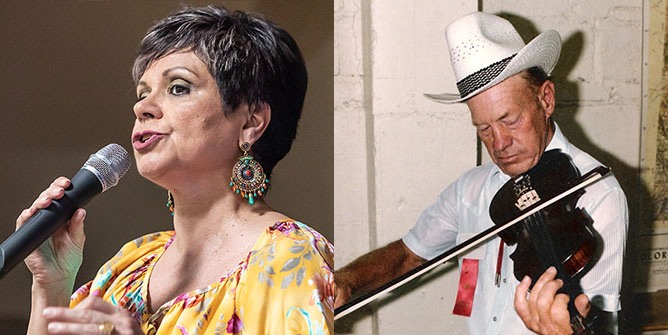
Debra Bolaños (left), a ballet folklórico dancer and instructor in East Chicago, Indiana, and Harold Klosterkemper (right), a fiddle player from Decatur County, Indiana, will soon be honored for their lifetime achievement as Indiana traditional artists. They will be recognized as Indiana Heritage Fellows in a special ceremony on April 27, 2019. Learn more about the event here.


Really Really Getting Up to Speed for Tomorrow, Fall

This week the Mathers Museum of World Cultures has been part of a larger Indiana University effort to get the word out about an interlocking set of events and initiatives. As readers here will have noted, these include the campus’ first First Thursday Festival (happening tomorrow), the Siyazama exhibition opening at MMWC (happening tomorrow after the First Thursday Festival concludes), and the College of Arts + Sciences’ Themester, which focuses on Beauty and includes a raft of MMWC activities–both tomorrow and throughout the semester. Here I want to post one last time before our big day tomorrow. My purposes are two. To lay out specifically what MMWC activities are happening and to provide a round up of the various communications and news stories that have appeared in connection with these events. Getting the word out is normal, but when some events are new (as First Thursdays is) it pays to really get it out. Here is a round up of coverage and a chance to get the whole picture, so as to not miss out.

First the MMWC part:

Tomorrow at the museum we host four visiting artists for demonstrations (10:30 to 11:30) and a narrative stage hosted by Jon Kay (11:45-12:30). [This will be the first use of our brand new stage!) Here is how we explained this part:

The Beauty of Indiana Folk Arts: Visiting Folk Artists Series–Viki Graber (Basketmaking), John Bundy (Decoy Carving), John Bennett (Blacksmithing), and Greg Adams (Willow Furniture)

Thursday, September 1; 10:30 to 11:30 a.m. (Demonstrations), 11:45 a.m. to 12:30 p.m. (Narrative Stage)

Drop by and meet some of Indiana’s master folk artists while they make and create–Viki Graber (Basketmaking), John Bundy (Decoy Carving), John Bennett (Blacksmithing), and Greg Adams (Willow Furniture) will share their work and their art with you. The demonstrations and narrative stage will be free and open to the public, and are sponsored by Themester 2016: Beauty, an initiative of the IU College of Arts and Sciences.

Our artists guests have a break before they join the museum at First Thursdays for outdoor demonstrations and narrative stage presentations in the Culture Tent adjacent to Woodburn Hall. The Bicentennial Exhibition will be on display outdoors, providing engaging context.  Here is how we explained this:

First Thursdays–Indiana Folk Arts: 200 Years of Tradition and Innovation
Thursday, September 1, 5 to 7:30 p.m.

For more than 200 years Indiana has been home to a wide variety of folk arts. In celebration of the state’s Bicentennial, a special traveling exhibit has been developed by Traditional Arts Indiana, a program at IU’s Mathers Museum of World Cultures, with accompanying demonstrations by Indiana folk artists. Drop by and meet some of Indiana’s master folk artists while they make and create–Viki Graber (Basketmaking), John Bundy (Decoy Carving), John Bennett (Blacksmithing), and Greg Adams (Willow Furniture) will share their work and their art with you. Their presentations will be free and open to the public, and are sponsored by Themester 2016: Beauty, an initiative of the IU College of Arts and Sciences.

As First Thursdays concludes, we will open the Siyazama exhibition (as well as our two other Themester exhibitions–Costume: Beauty, Meaning, and Identity in Dress and Hózhó: Navajo Beauty, Navajo Weavings. Here is our overview of the opening event.

Mathers After Hours–Siyazama: Traditional Arts, Education, and AIDS in South Africa
Thursday, September 1; 7 to 9 p.m.

Join us for the opening of a special traveling exhibition–Siyazama: Traditional Arts, Education, and AIDS in South Africa–that explores how traditional arts, knowledge, and skills are used to address AIDS. The exhibition also showcases the Siyazama (Zulu for “we are trying”) Project, an arts education project based in KwaZulu-Natal, which uses traditional crafts to raise awareness about AIDS. The exhibition grew out of the South African National Cultural Heritage Project, a bi-national project led, in part, by Michigan State University Museum and MATRIX: Center for Humane Arts, Letters, and Social Sciences Online. The exhibition opening will be free and open to the public, and is sponsored by Themester 2016: Beauty, an initiative of the IU College of Arts and Sciences, and the IU School of Public Health-Bloomington.

I note that we also have a great performance and great food lined up for the opening! (see Figure 1 for a piece from Siyazama)

We hope to see you at all or some of this tomorrow. Now for the published stories and releases.

Sanya Ali wrote a nice piece for the Indiana Daily Student (“Mathers plans variety of programming for beginning of September“)

T. J. Jaeger wrote a nice article about First Thursdays, including its Mathers angles, for the Limestone Post. (“IU to Showcase Artists with Massive Monthly Festival“)

On the Art at IU blog, Karen Land posted a nice account of First Thursdays, including its Mathers parts, (“New First Thursdays festival puts the focus on IU’s arts and humanities, food and fun“)

In a message to IU students, staff, and faculty, Provost Lauren Robel invited the campus community to First Thursdays, including the Siyazama opening and other associated events. (“Inaugural First Thursdays Festival“)

First Thursday’s lead organizer, Ed Comentale, Associate Vice Provost for Arts and Humanities, authored a overview of First Thursdays for Inside IU Bloomington. (“First Thursdays Festival will showcase creativity on campus“)

There is a pay-walled story about First Thursdays in the Bloomington Herald-Times by Michael Reschke. Check it out if you have a subscription, just don’t feed the trolls. (“IU ‘First Thursday’ showcases art and humanities“).

In addition, there are press releases for Siyazama and Themester.

Hopefully that is enough information for everyone to really know what the deal is. I look forward to seeing you at our artists events, at First Thursdays, at the MMWC exhibition opening, and at all the great programs lined up for fall. Thanks to all who have worked to bring these events to fruition.

ga9umoxofl_actual
Figure 1: “Let’s Work Together to Fight AIDS” cloth by Johanna Sebaya, Mapula embroidery project, Winterveldt, North West Province, South Africa, 2005. | Photo by Pearl Yee Wong, courtesy of the Michigan State University Museum

Get Oriented to Themester 2016: Beauty

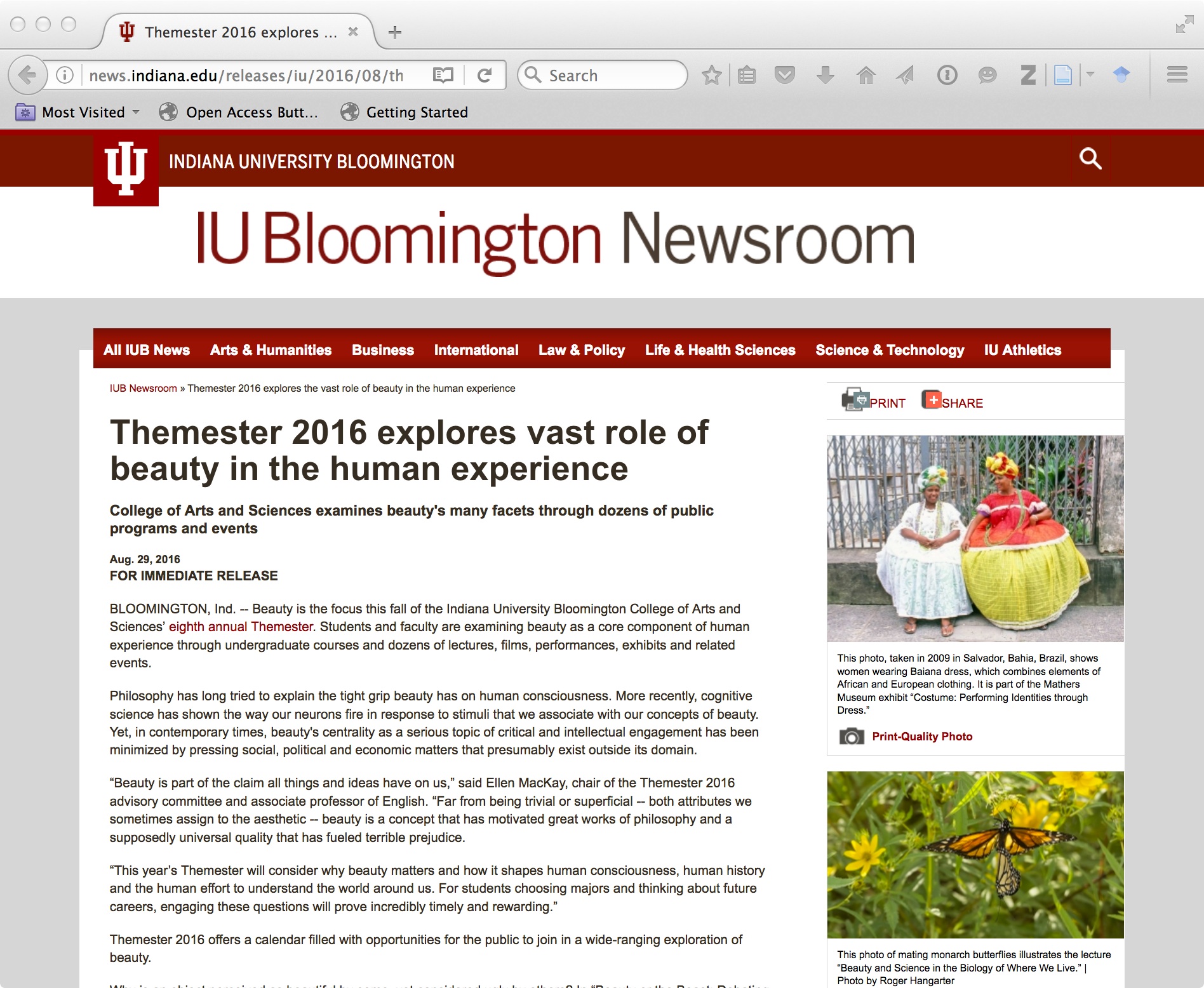
Reviewing the Mathers Museum of World Cultures events and exhibitions pages is probably the only way to get a full sense of all that we are doing for 2016 Themester, but for an overview of Themester as a whole and its focus on Beauty, I recommend checking out yesterday’s kickoff press release (Figure 1). In addition to the MMWC pages, it would also be great to see the Themester website. For MMWC, Themester boils down to three great classes [A400, E460, F360] taught at the museum, three great beauty-focused exhibitions [Costume, Hózhó, Siyazama], plus a lot of programming, including folk artists residencies throughout the semester, as well as films, lectures, and hands-on activities. Check out the full list here. Thanks go to the College of Arts and Sciences for including the museum in an impressive roster of Themester activities. Thanks too go to the students who are helping us organize our Themester activities and to the artists and tradition bearers whose work we are highlighting. Please join it this remarkable exploration of beauty around the world.

Themester.jpg
Figure 1: The Themester 2016 press release, which leads off with a photography b MMWC Consulting Curator Pravina Shukla, from her exhibition Costume.

Material Vernaculars: Institutional Role, Review, Authors, and Genres

The new Material Vernaculars series is co-published by the Mathers Museum of World Cultures with a huge amount of heavy lifting from our partner, the Indiana University Press. The first two volumes in the series are Folk Art and Aging by Jon Kay and the eponymous edited volume Material Vernaculars: Objects, Images, and Their Social Worlds. Jon Kay is the author of the first of these and I am the editor of the second. Jon and I are both on the IU faculty (in the Department of Folklore and Ethnomusicology) and in the MMWC, where Jon is Director of Traditional Arts Indiana and Curator of Folklife and Cultural Heritage and I am the museum’s director. As the new series becomes known, it is reasonable to ask—is it just a publishing venue for the museum and its associates and partners?

MW Website

The answer here is no, but as you might guess, the series is intended to be the go to place when the museum does have its own publishing projects. This answer prompts then a couple of more points needing to be made. Peer-review for the series is fully managed by the IU Press and editorial review is a joint matter, thus it is quite conceivable that a museum project might be passed on by the press either at the early editorial review stage or at the peer-review stage. (I note that the press has already passed on one possible project, to illustrate this point tangibly.) Thus the series will hopefully be the home for additional MMWC authors and projects, but this is not guaranteed—and should not be.

The other side of this is that the series will hopefully come to publish authors without ties to museum, including colleagues not yet known to me. As the series homepage presently notes, “Potential authors interested in the Material Vernaculars series should contact the series editor Jason Baird Jackson via mvseries [at] indiana.edu and Aquisitions Editor Janice Frisch at frischj [at] indiana.edu.” That phrase, and the series overview, are available here.

As noted there, a new series also poses genre questions. Here, my intentions as editor are broad. “The series accommodates a diversity of types of work, including catalogues and collections studies, monographs, edited volumes, and multimedia works.” To me, these are the key genres of relevance for research museum practice in ethnography, ethnology, and cultural history (our museum’s fields), but it could be that new, as yet not fully recognized genres could also find a home in the series. While the forthcoming edited volume is something of a sampler, future edited volumes will likely have a strong thematic focus. Stand alone essays will continue to find a home in the museum’s journal, Museum Anthropology Review.

I hope to hear from potential authors and editors interested in learning more about the series. Thanks to all who have supported this new effort.


Plethora of Patrons and Programs Prompts Parking Progress

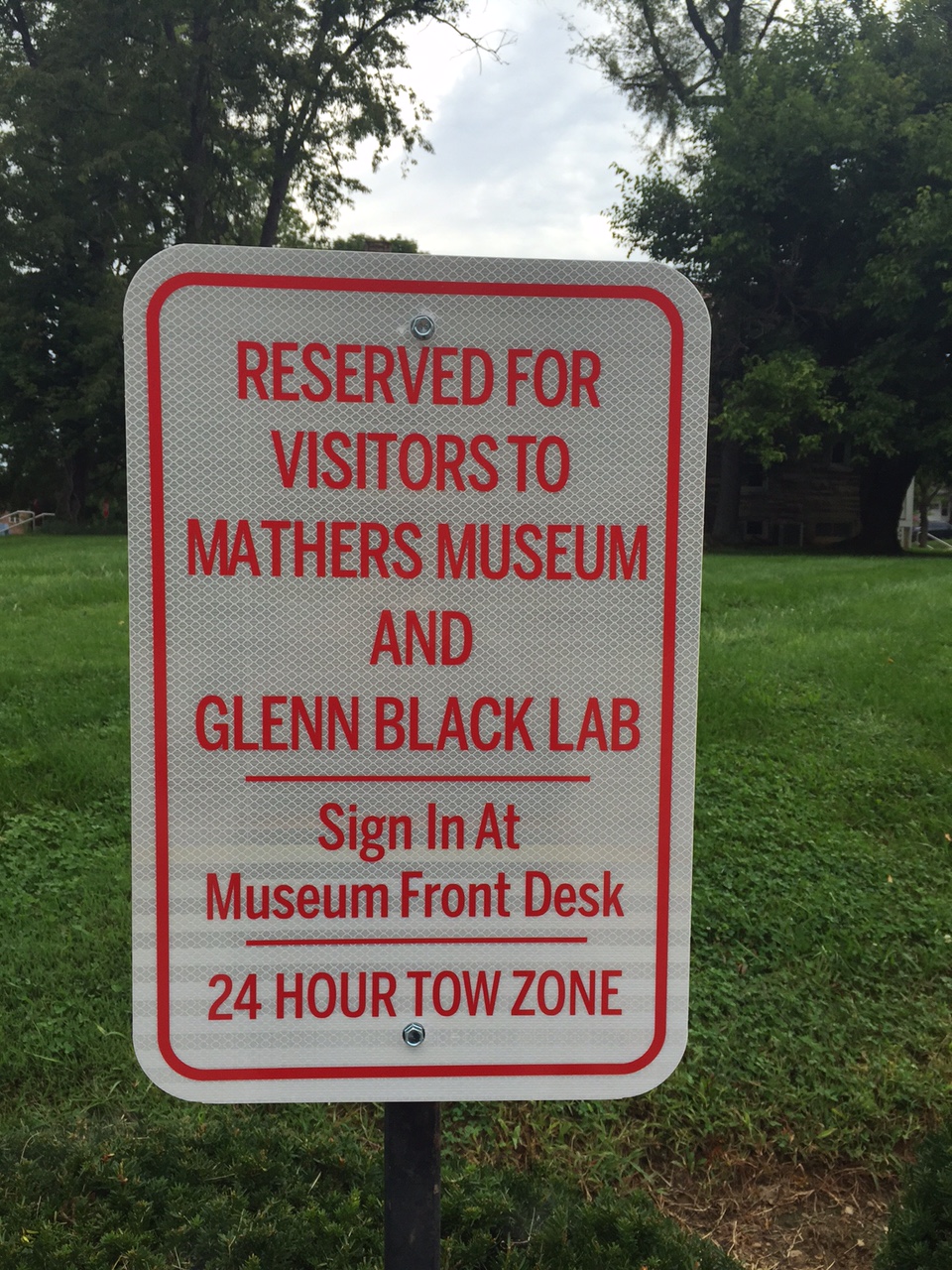
(Sorry about that headline. I could not control myself.) This fall there will be an extraordinary number of programs at the Mathers Museum of World Cultures. We hope to see you here for many of them. The wave begins in the week ahead. Before we get there, I want to reach out especially to Bloomington and Indiana friends who do not work at Indiana University and who sometimes find visiting the museum difficult for lack of close-to-the-museum parking. This is especially a concern for those with mobility issues. The museum has consistently advocated for increased near-museum visitor parking and I am happy to note that–with quite engaged support from the relevant university offices–we have recently made some solid progress forward.

IMG_2186

Until recently, the museum and the Glenn A. Black Laboratory of Archaeology shared five visitors spaces on the west side of the lab and museum, on the circular drive that is entered northbound on Indiana Avenue (and that one exits westbound on 9th Street). There were five IU staff spaces also located on this drive. Those staff spaces have been moved a bit north to the McCalla School lot (between 9th and 10th, off Indiana) and converted to five more Museum/Lab visitor spaces. In addition to doubling the near-museum parking, happily all of the metered visitor spaces at the McCalla School lot remain in service.

The number of events that we are hosting–especially since the move of Traditional Arts Indiana–to the museum and the increased numbers of people who are joining us (or who express a desire to join us, if they could just park more easily)–is a key factor in the addition of these spaces, but I note quickly here that work is underway to make the museum building more accessible and that the increased parking is part of a larger effort in that realm. More on that asap.

Of course, we would love for you to walk, bus, bike, skateboard, etc. to the museum. That is great for the earth and great for you and for the museum too. When you take a scooter to the museum instead of driving, you are freeing up one of those spaces for a person who can only get here by car. Even if they do not know to appreciate your effort, I appreciate it on their behalf. Carpooling helps too for the same reason. And if you are an IU person with an IU parking pass, you can help as well by parking in staff spaces around the museum rather than taking one of the visitor spots.

We are going to continue working to make the museum easier to visit. You can help us by spreading the word. It is sad when people say to me that they have never come to the museum because they just don’t want to fool with the parking issues. If you know someone who says such things, tell them the good news and encourage them to make their first visit. We’ll be glad to see them–and you.

Material Vernaculars Series Launches with Jon Kay’s Folk Art and Aging

This fall I will be talking a lot about the new book series that the Indiana University Press and the Mathers Museum of World Cultures are jointly publishing. I am the series’ editor and my friend and colleague Jon Kay is its first author. I will frame the series here, before I conclude this post, but I do not want to bury the lead, which is that there is a great new book in the world and you should buy and learn from it.

Jon Kay is Director of Traditional Arts Indiana, Curator of Folklife and Cultural Heritage at the Mathers Museum of World Cultures, and Professor of Practice in the Department of Folklore and Ethnomusicology, Indiana University. His book is Folk Art and Aging: Life-Story Objects and Their Makers. (Jon’s content rich book website is here.) It is the fruit of many years of work exploring the creative lives of older adults in Indiana and in other parts of the United States. Jon has much to say about the ways that material culture and narrative come together in social encounters and in unfolding lives, as well as about about the ways that more attentive scholarship on the verbal and material life, as well as the memory, work, of elders can shape more humane and sensible approaches to what is increasingly referred to as creative aging, as well as to social gerontology more generally. The book is a folklorist’s book, but it also speaks very generatively to a range of neighboring disciplines. Written in a very clear and engaging style, it is the kind of book that lots of people (not just scholars) can read and both enjoy and learn from. At its center are profiles of five incredibly interesting creators of objects, stories, and lives. Jon helps share their stories and their creations in a really engaging way. The book has many beautiful color images and at 133 pages, it never gets bogged down.

9780253022165_lrg

The hardback, paperback, and ebook editions are beautiful and they can be purchased from the Indiana University Press, from Amazon, from Google, and from many other retailers. I’ll tell you next time where to get the free PDF edition, but here I want to urge everyone who can to purchase one of the paper or ebook editions. Why? Paradoxically, because I believe in open access. If those who can do so purchase the modestly priced print or e-book editions, the IU Press will secure the revenue that it needs to produce more books such as Folk Art and Aging and to make them freely available to those who otherwise could not afford to purchase them. More on such questions next time.

Having introduced Folk Art and Aging to you, let me introduce the series quickly. The series précis reads:

The Material Vernaculars series presents ethnographic, historical, and comparative accounts of material and visual culture manifest in both the everyday and extraordinary lives of individuals and communities, nations and networks. While advancing a venerable scholarly tradition focused on the makers and users of hand-made objects, the series also addresses contemporary practices of mediation, refashioning, recycling, assemblage, and collecting in global and local contexts. Indiana University Press publishes the Material Vernaculars series in partnership with the Mathers Museum of World Cultures at Indiana University. The series accommodates a diversity of types of work, including catalogues and collections studies, monographs, edited volumes, and multimedia works. The series will pursue innovative publishing strategies intended to maximize access to published titles and will advance works that take fullest advantage of the affordances provided by digital technologies.

The series second title is an eponymous edited volume—Material Vernaculars: Objects, Images, and Their Social Worlds. That collection is due out in a few days (September 5, 2016). In its introduction, I characterize in more detail the goals of the series as well as situate its disciplinary (cultural anthropology, folklore studies, ethnology, culture history) engagements as well as its place in the larger research work of the MMWC. I look forward to sharing it with you.

Congratulations to Jon Kay on his second book of the summer (see Indiana Folk Art) and to all of our friends at the Indiana University Press.

An Interview with Hannah Davis, Regional Folklife Survey and Program Development Consultant for the New York Folklore Society and the New York State Council on the Arts

Hannah Davis earned her MA in Folk Studies from Western Kentucky University and a BA in Folklore and Ethnomusicology from Indiana University. While at Indiana, she served for four years as a Program Coordinator with Traditional Arts Indiana, Indiana’s statewide folk and traditional arts agency—now a constituent program of the Mathers Museum of World Cultures. Throughout her MA training at WKU, she worked as a Graduate Assistant for the Kentucky Folklife Program. In June 2016, she began work in a public folklore position based within the New York Folklore Society with funding from the New York State Council on the Arts. While a student, she gained additional internship experience working with the Smithsonian Institution’s Center for Folklife and Cultural Heritage and the American Folklore Society.

Jason Jackson (JJ): Hannah—I am so happy to be doing this interview with you, especially just as you are getting settled into your new role as a public folklorist in upstate New York. Could you describe your new position?

Hannah Davis (HD): Since June 1, I’ve been working as a contractor for the New York Folklore Society and New York State Council on the Arts. I’ve been tasked with doing a folklife survey of nine counties (six in the Finger Lakes and three in the southwestern corner of the state). I’m also responsible for coordinating a few public programs with smaller regional arts organizations and acting as a consultant in the planning of future folklife-based programming. The state of New York is unique in that it has an organized network of folklorists working in many different capacities. This position was created as a way to serve counties that are not otherwise served by folklorists.

JJ: For those who are reading about such work for the first time, what goes into doing a multi-county folklife survey? How will your findings translate into further research and eventually presentations, publications,  or other outcomes?

HD:  Surveys involve, in many ways, all the fun parts of working as a folklorist. Between now and the end of my contract, I will have conducted dozens of interviews with all kinds of artists, musicians, and other informants, and crisscrossed the state documenting fairs and festivals. I’ll record, photograph, and film as much as possible.

Especially when a survey includes so many unique communities, it’s important to stay organized and keep your eyes on the big picture. There’s only one of me, and so many hours in a day. This is not intended to be a comprehensive survey of all the traditional arts and culture that one may find in each of my nine counties. Rather, my goal is to be able to paint a picture for our partner organizations of the kinds of traditions that exist in their service areas, and the ways in which they may continue to do folklife programming in the future.

It’s important to me to respond directly to the needs of these organizations. The Auburn Public Theater, for example, is interested in doing a narrative stage, during which informants will engage in a conversation with each other about a specific topic, and their audience will be able to interact and ask questions. As I’m conducting fieldwork in their service area, then, I will make note of informants who seem to particularly enjoy discussing their life and work. Towards the end of my contract, I’ll work on organizing photos and recordings, transferring files to others, and drafting my programming recommendations. It’s possible that parts of this project will turn into more long-term work for NYFS. I’ll also publish a few articles discussing my work in NYFS’s journal, Voices: The Journal of New York Folklore.

JJ: It does sound like it will be a lot of fun. You know you will meet great people but you do not yet know who they all are or what they are passionate about. How did your work in Indiana and Kentucky prepare you for your new work in New York state?

HD: Exactly! A big part of my job at TAI [Traditional Arts Indiana] was transcribing, logging, and organizing materials collected by fieldworkers. I’m grateful to Jon Kay, the organization’s director, for introducing me to basic ethnographic methods through this kind of work, and allowing me to participate (even as a college freshman!) in collaborative projects like the one I’m tackling now. Certainly, entering my grad program already comfortable with convening meetings, drafting grant applications, and planning public programs allowed me to work more independently at the Kentucky Folklife Program. My time in Indiana and Kentucky really equipped me to take a “big picture” approach to my work here in New York—I didn’t just learn how to do fieldwork, I learned what to do with fieldwork.

JJ: That is good. As we continue working with students in TAI and at the museum as a whole, your experience will be a source of encouragement. On the flip side, what kinds of experiences do you wish you could have had while at IU and WKU? What are you surprised by as you get going in New York?

HD: I certainly wish I had been able to take some [undergraduate] public folklore classes to complement my work at TAI. I didn’t really understand the origins of the field I was working in until I began graduate-level classes at Western. Once I got to Western, though, I really missed being able to take advantage of the diverse programs offered at IU. Pursuing my interests in digital media, for example, became a lot more difficult. There’s only so much you can study and prepare for, though! There’s a lot to be said for just diving in.

This might be a silly answer, but honestly, I’ve been most surprised by how smoothly things have gone. I don’t mean this to be self-congratulatory at all—the people here have just been so kind, and so happy to share their work with me. When you’re learning how to do fieldwork, you hear a lot of horror stories. I don’t have any yet!

JJ: Building up undergraduate course opportunities for public and applied folklore work is on the agenda at IU, as are opportunities for public humanities involvements more generally. Your reflection contributes to the making of the case for such efforts. I am glad that you have no horror stories and I hope that things continue in that vein.

HD: That’s great to hear.

vikingship
Hannah photographs a recreation of a Viking ship at the Scandinavian Folk Festival in Jamestown, NY.

JJ: What are you learning about public folklore infrastructure in New York state? Things seem really strong there and this seems to be a longstanding pattern

HD: The infrastructure here is part of the reason I was so excited to take the job. There are capable and accomplished folklorists, including a few IU students and grads, working across the state. Many are within arts organizations, some work more independently, but they are all part of a collaborative network loosely bound together by Ellen McHale at NYFS and Robert Baron at NYSCA, who both work hard to support what we do (financially and otherwise). Their leadership has been crucial to the longstanding pattern you’ve noticed.

JJ: What is one cool cultural discovery that you have already made as you begin to learn your way around your part of the state?

HD: Word on the street is that there’s a game called “roque” played in the western part of the state. I hadn’t heard of it until a few days ago! An annual tournament is held in Angelica, a village in Allegany County, during the community’s Heritage Day celebration. It resembles croquet, but has entirely different rules. Readers might be interested in this 2010 ESPN article.

JJ: I knew you’d have something great to share and just like that you serve up roque. Hopefully we’ll all be playing it soon, or at least watching your documentary!

Here’s two to go out on. If you could share a word of counsel with an IU sophomore with an interest in a humanities career, what would you say? As an alumna, what would you share in conversation with our Provost or President about your training at IU.

It’s scary to think about how recently I was an IU sophomore. Feels like it’s been ages! Here’s what I’d say: “It will be okay. There are jobs.” Sincere commitment to an interest goes a long way at IU, especially in the Department of Folklore and Ethnomusicology. I knew as a freshman that I wanted to graduate as a folklore major, and it was entirely because of a pep talk from a grad student who saw some potential in me and sent me to talk to Jon [Kay]. With the guidance of wonderful professors like you, Jason, and some very honest graduate students, I became a success story. And there are so many others. I’m proud to be an IU alumna, and to be part of the community that the department has fostered. A degree in the humanities is not a death wish.

To the provost and president, I’d say this: “My training at IU made me the professional that I am today.” I’ve been thinking a lot about my time at IU since yesterday’s announcement about the department’s move to the Classroom Office Building. I met some of my nearest and dearest friends and mentors in the TAI office. Our buildings were run-down. They were not accessible to members of the community with different physical capabilities. That’s a terrible thing. But they were home, and I’m sad that I won’t be able to go back there. The department is a whole lot more than a cluster of neglected brick buildings, though. It’s an incubator, it’s a community, and it’s a wonderful thing to be a part of. I couldn’t have learned the things I learned there anywhere else.*

JJ: Thank you Hannah for sharing your experiences with me and with our readers. Keep us posted on your adventures and come back soon and teach your Bloomington friends how to play roque!

*In her closing remarks, Hannah is referring to the offices of the IU Department of Folklore and Ethnomusicology from which she earned her BA and in which I serve as a Professor. The department’s offices and seminar rooms in a cluster of four historic brick houses located adjacent to one another on N. Fess Ave. and N. Park Ave in Bloomington have, for alumni, staff, and faculty, become icons of the department over the course of many decades. In July 2016 it was announced that the Department would be moved to new more modern and accessible quarters in a university building known as the Classroom Office Building on 3rd Street, across from the campus’ historic “Old Crescent” area. The department looks forward to showing off its new home to returning alumni very soon. (JJ)

Open Access Book: Indiana Folk Arts

IFA CoverThis year is a big year for the Mathers Museum of World Cultures in a number of respects. Two of these weave together. Its the state bicentennial for Indiana and we are engaging with it in a big way through the exhibition Indiana Folk Arts: 200 Years of Tradition and Innovation. That exhibition is now traveling across Indiana along with with a deep roster of presenting artists and craftspeople. The exhibition and associated in-person demonstrations are happening at state parks and festivals around Indiana and the exhibition will also be presented at the Indiana State Fair, later this summer. The exhibition brings together more than a decade of research by Traditional Arts Indiana and was also an project worked on by the Laboratory in Public Folklore graduate course taught in the IU College of Arts and Sciences’ Department of Folklore and Ethnomusicology. Working with TAI Director and MMWC Curator of Folklife and Cultural Heritage Jon Kay, a large number of students have been involved in all aspects of the exhibition and associated programs, products, and events.

2016 is also slated to be a big year for book publishing at MMWC. We have a number of books in the cue for fall. The first to become available is the catalogue for Indiana Folk Arts. Edited by Jon Kay with chapters authored by a large and talented group of graduate students, the volume enriches the exhibition while also standing alone as a contribution to scholarship on Indiana craft and art. At exhibition events and here at the MMWC, the book is being distributed for free in a beautiful full-color print edition. In keeping with our institutional commitment to increased and open access to scholarship, the volume is also available electronically and permanently via the IUScholarWorks Respository. Licensed under a CC-BY license, it can be found online here: https://scholarworks.iu.edu/dspace/handle/2022/20893. Its the first MMWC publication for which we obtained an ISBN number (two actually, one for the print edition and one for the PDF edition), which is also pretty neat.IFA Front Page

Congratulations to Jon Kay, the volume’s editor, to all of its contributors, and to the talented artists, craftspeople, and tradition bearers featured in the book. Welcome readers–72 beautiful pages await you, wherever in the world you live. If you like the book and support the work behind it, spread it widely. Tell your friends and colleagues so that they can enjoy it too.