Cracking the Vault: A Celebration of Daniel Swan
Below find the first of a series of guest posts offered in celebration on the occasion of our colleague and friend Daniel C. Swan’s retirement from the University of Oklahoma, where he has served with distinction as a Professor of Anthropology, Curator of Ethnology, and Interim Director of the Sam Noble Oklahoma Museum of Natural History. First to reflect on an aspect of Dan’s work and his personal impact is Jessica W. Blanchard. Jessica is a Research Scientist at the University of Oklahoma’s Center for Applied Social Research. This series of guest posts has been organized in partnership with Michael Paul Jordan. –Jason Baird Jackson
Cracking the Vault: A Celebration of Daniel Swan
By Jessica W. Blanchard
Reflecting on the years I have known Dr. Daniel Swan brings to mind so many wonderful stories. Dan joined as a member of my doctoral committee just as I was rounding third base of the dissertation, and so it was really during the years following the completion of my degree that I came to enjoy Dan as a friend, a colleague, and of course, a ceaseless mentor. He has imparted years of stories and lessons from the field–and from life–and yet, I am unable to share most of these with you here. For you see, any really good story by, or about Dan Swan, inevitably begins and ends with the shared reassurance, “This stays in the vault.” I remember the first time I heard about said “vault” and wondered what in the world kinds of secrets of the academy I was about to learn. I listened with eager anticipation, feeling sure that I was about to be privy to something none of my peers yet knew. As it turns out, for those peers who never had a mentor like Dan Swan, I was indeed privy to a piece of the academy that made it bearable, possible, and simply better.
I entered graduate school, as many do, with a fair dose of naïve optimism and self-centered drive, and was fortunate early to have the mentorship of Dr. Jason Jackson to nurture and guide my focus away from priorities of self toward priorities of communities. His departure to a new institution left a giant hole in my committee and left me wondering how to navigate out of this tunnel known as the dissertation. Enter: Dan Swan. Upon Jason’s recommendation, I asked Dan to join my committee. Right away, Dan asked to read my work. Right away, Dan set up a lunch appointment and gave me feedback. I am not sure if he knows how much it meant to have him jump on board right away. He invested time in understanding the communities with whom I worked so that his feedback was informed and meaningful. He joined me on trips to the field, made all the better by his willingness to indulge in local all-you-can-eat catfish diners. He listened to my stories about the tiniest of Oklahoma towns, and was happy to venture there to meet the community members with whom I had grown close over the years. I watched as he did the same for other students, uplifting them any chance he got and mostly in ways that they were unaware. This, in no uncertain terms, is precisely the kind of support that makes academia bearable, possible, and simply better.
Dan’s advice to me during my time as a graduate student was decisive and clear: just do it. Get finished. Be confident in the hard work you have done. We eventually became departmental colleagues for a time, and Dan’s advice to me was again decisive and clear: worry less about those who do not deserve worry (summarizing here) and work on your face (verbatim). Apparently, I needed to learn how to express less with my face in professional situations. I still hear Dan’s voice saying “work on your face” at just the right times. I see now that Dan’s plain-spoken candor is simply part of what it means to “keep it in the vault.” The vault is simply a blueprint for how to build a circle of supportive colleagues and friends: be selective yet forgiving, invest in one another, support one another, learn from one another, defend each other when needed, hold each other accountable, and always celebrate the wins.
I referred earlier to the dissertation process as a tunnel. The thing about a tunnel is that there is always light on both sides of it. Navigating the tunnel is easier to do with encouragement and good guidance from those who have done it before. Dan helped me find the focus and grit–the tunnel vision, so to speak–I needed to get through it. Tunnel vision is a good thing when it means you are focused and productive, but it is also impossible to sustain and can limit what we can see around us. We eventually come out on the other side of the tunnel and we begin to understand that it was merely a place to gather new tools, perspective and purpose. Thank goodness for those who support our journey into the tunnel, those who cheer and pick us up as we navigate our way through, and most assuredly for those who celebrate as we emerge on the other side.
Today, I celebrate the career and mentorship of my friend, Dr. Daniel Swan. I celebrate his tireless devotion to students. I celebrate his achievements in building an approach to ethnography and curation grounded in community and relationships. I celebrate what is yet to come for him and his family! Dan, if you ever find yourself reflecting on the impact you may have had on others, let me crack the vault a bit to tell you that it was tremendous. Cheers to you!
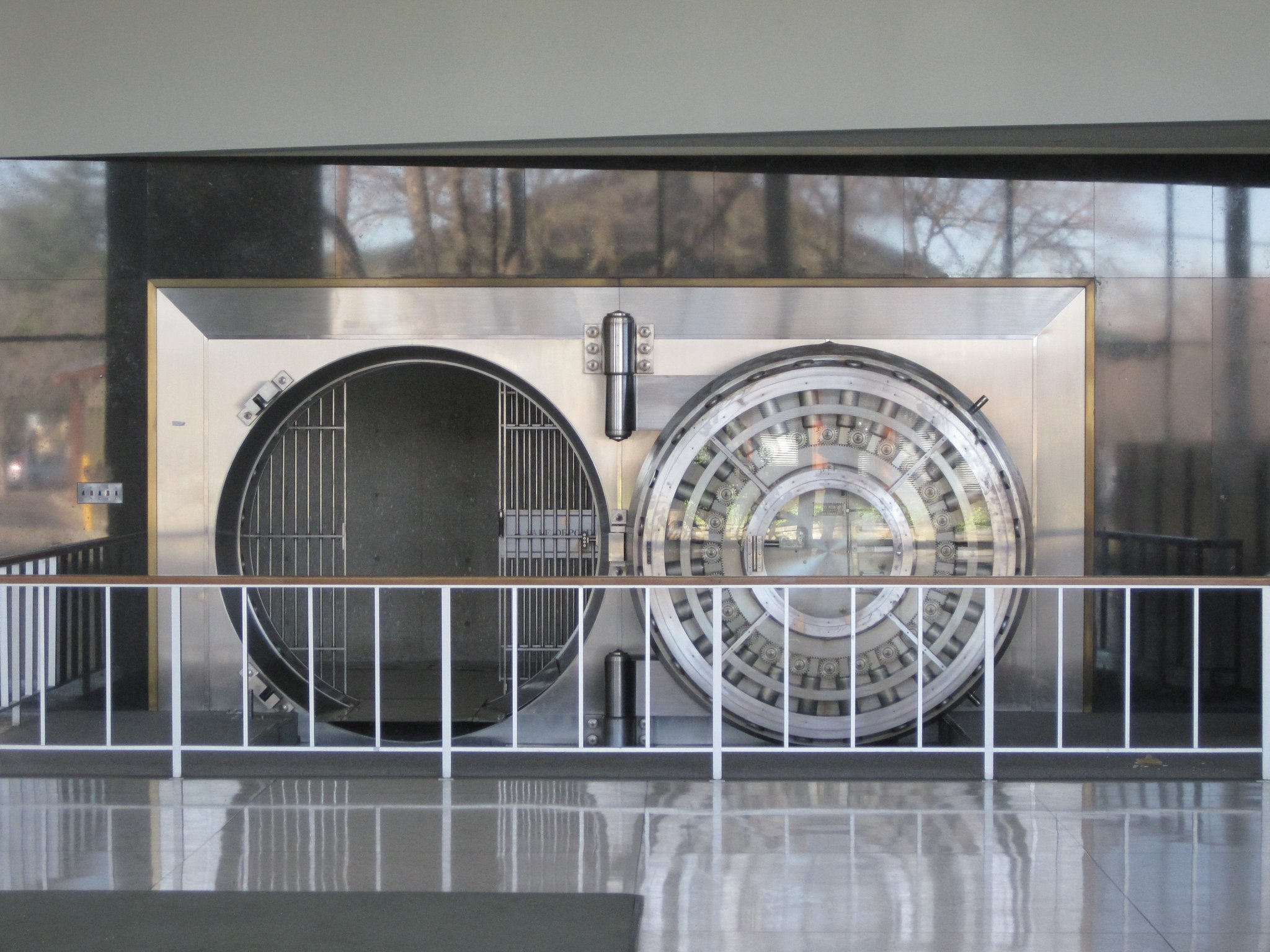
(Former) Bank of the West vault in downtown Los Altos, California via WikiMedia Commons (CC0 1.0 Universal Public Domain Dedication)



 Shreds and Patches