Skip to content

Posts from the ‘Native American and Indigenous Studies’ Category

Native American and First Nations Studies at the American Folklore Society Meetings During the 1950s

Update: The post below has been updated to include the previously missing 1951 program. I use strikeout and underline to show the changes. Special thanks to Tim Lloyd for both finding a 1951 program and for his earlier labors getting the corpus of programs into IUScholarWorks. [Later in the day of the original post, October 16, 2020]

I anticipate doing a series of posts on the topic of Native American and First Nations studies within the field of folklore studies. The American Folklore Society is currently meeting (virtually) and I became interested in probing my assumptions about when, within the history of the field (in so-called, North America) began to lose participants involved in studies of Native American-related topics. To begin to get at this with more than preconceptions, I started by looking at the programs from the annual meetings of the AFS. For the period before 1949, we have meeting reports published in the Journal of American Folklore. For most years, 1949 to present, we have printed programs that are available in IUScholarWorks.

Reports, https://scholarworks.iu.edu/dspace/handle/2022/13514
Programs, https://scholarworks.iu.edu/dspace/handle/2022/13071

Here is a picture of Native American studies works presented during the 1950s. No presenters during this decade are known to me to have been themselves members of Native American Nations from the colonized territories presently known as the United States or from First Nations of present-day Canada. [Please correct me if you know that I am wrong about this.]

The program for 1951 is not present in IUScholarWorks and thus data for that year is presently lacking.

YearPresentations on Non-Native American TopicsPresentations on Native American TopicsPercentage on Native American Topics
19502100%
1951? 15? 0? 0%
195227310%
195311215%
19542500%
19552100%
19561616%
195711321%
19582714%
195912214%
Totals171 186127% 6%
Presentations on Non-Native American- and Native American-Related Topics at the Annual Meetings of the American Folklore Society During the 1950s

During this period, the AFS regularly met jointly with other organizations, but this was not always the case. Oral history of the matter suggests that the AFS used to meet in alternation between the Modern Language Association and American Anthropological Association, but the actual pattern in the 1950s is more complicated. [The meeting for 1951, for which I did not have a program when I first wrote this post, was joint with the MLA.] Unless it happened in 1951, the AFS did not meet with the MLA in this period. It did meet more than once with a coterie of anthropological (and one sociological) societies, including the AAA, during this decade, but joint meetings were also held with the Texas Folklore Society (in Texas), with the New York Folklore Society (in New York), and the Folklore (Summer) Institute (at Indiana University). The Society for Ethnomusicology was part of a joint meeting that included AAA and other anthropology groups in 1957. Thankfully, it was possible during this decade to identify the AFS panels papers within the larger mix of papers given at the joint meetings with anthropology societies. In the case of joint meetings with the folklore studies groups, there was no differentiation and such meetings are treated here as AFS meetings organized in partnership with the local societies and institute.

The data for 1951 is missing, but if we set that year aside, the average for the decade was 7% of the presented papers being on Native American and First Nations. [With the 1951 data, the decade average is 6%.] If the categorization related to Indigenous studies more broadly, the percentage would be somewhat higher depending on how one might include or not-include various peoples outside the continent presently known as North America. At three meetings (perhaps four in the case of 1951) [At four meetings] there were no presentations related to Native American or First Nations studies.

This surprised me to a degree, as I had perceived that an older, pre-WWII, pattern of involvement by Americanist anthropological folklorists had persisted more strongly into the 1950s. I had anticipated this because I had, wrongly, I think, associated their departure from active AFS participation with the rise of autonomous folklore studies (and programs) in the Richard Dorson-mode, but the 1950s programs show that the trend was already present prior to Dorson’s consolidation. I also read too much, I think, into William Fenton’s role in AFS during the 1950s, serving then as an officer and then as president (1959-1960). The meeting programs suggest that by the 1950s, his involvement was a survival of the older norm no longer widely practiced. He did what his mentors–Frank G. Speck (AFS President in 1921-1922), Edward Sapir (AFS President in 1929-1930), and John Swanton (AFS President in 1909)–did, but by the time that he did it, he was really an outlier enacting a practice from another age in the life of the society.

I note in this regard that my earlier perceptions were shaped also by the role of Erminie Wheeler-Voegelin, who was AFS President in 1948. In multiple ways, I am a lesser heir to Wheeler-Voegelin’s legacy as an anthropological folklorist and ethnohistorian working on Native North American topics on the faculty at Indiana University. The programs from the 1950s do not show her remaining particularly involved in the annual meetings of AFS. Her work, after her AFS presidency, closely relates, in my view, to the further sundering of Native American and First Nations Studies from the scholarly community gathered within the American Folklore Society. In the 1950s, she was the key person in the rise of the field of ethnohistory, She had edited the Journal of American Folklore between 1941 and 1946 but in the 1950s, she founded the American Society for Ethnohistory and started its journal, Ethnohistory, which she edited into the 1960s. In these years, the American Society for Ethnohistory became a key hub for interdisciplinary work in Native American and First Nations studies. She carried her folklore studies background into that new realm, but, like Dorson, she was an institution builder and the things that she created reshaped the landscape in which the American Folklore Society, and folklore studies on Turtle Island, operated.

Non-Native Studies (Blue) and Native Studies (Orange) Presentations at the AFS Meetings During the 1950s

Editors of scholarly journals published by societies are well aware of the gap that is common between the community gathered in the meetings of their society and that represented in the pages of the society’s journal. Review of JAF content during the 1950s will likely add nuance to the pictures presented by the meeting programs. To be continued….
New Project Pages

Here on Shreds and Patches, there is a new menu item for Projects. The Projects landing page gives a quick overview of, and links to, some of key projects that I am involved in and the menu can also lead visitors directly to project pages. Right now there are project pages for the “Museum Ethnography in the Native South” project (2020-present) and two sub-projects of the larger “China-US Folklore and Intangible Cultural Heritage Project” of the American Folklore Society and the China Folklore Society. These are the “Collaborative Work in Museum Folklore and Heritage Studies” (2017-present) and “Intangible Cultural Heritage and Ethnographic Museum Practice” (2013-2016).

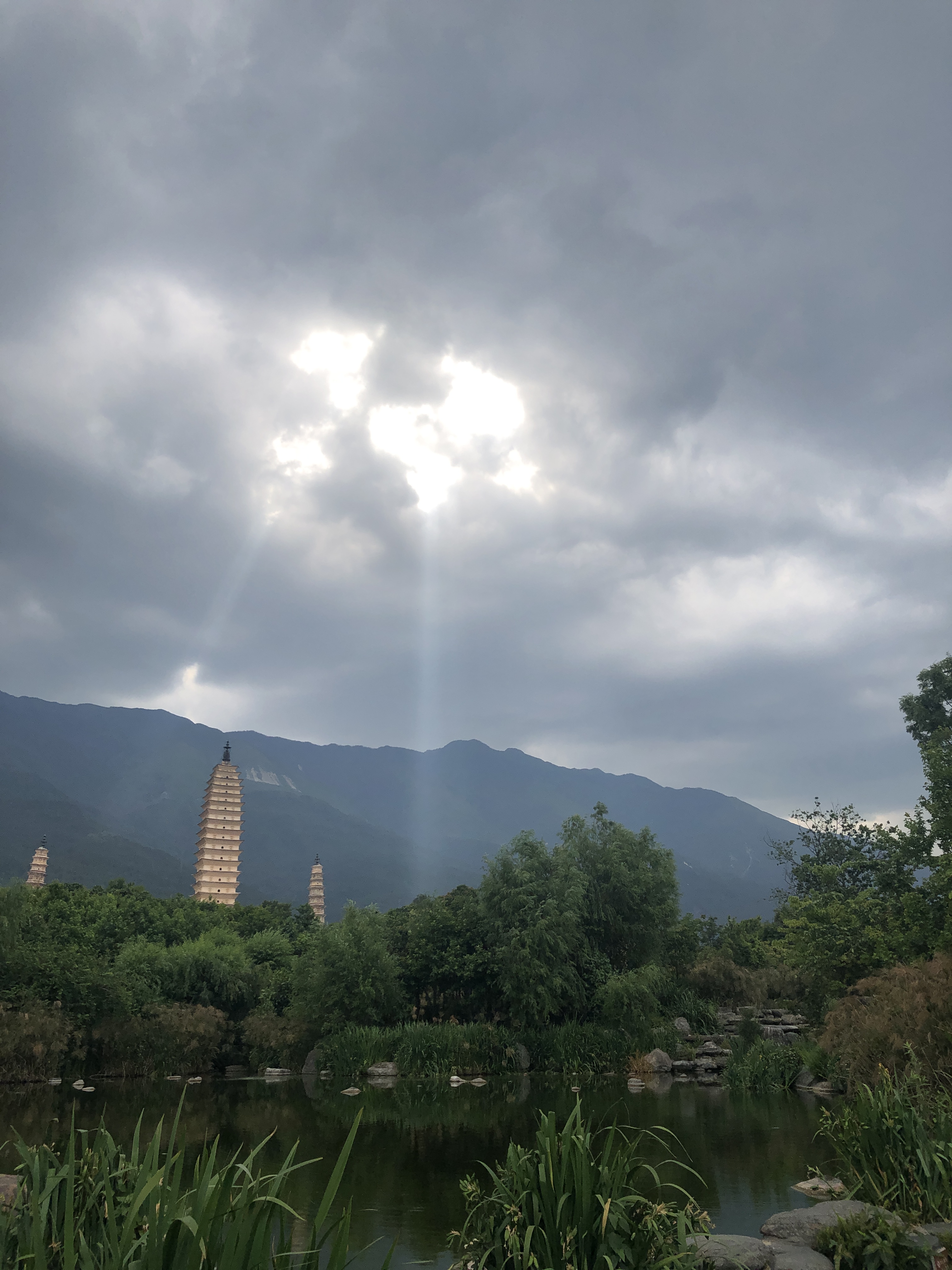
IMG_7750

Near Old Dali, Dali Bai Autonomous Prefecture, Yunnan, China, May 2019.

Exhibitions Week: Echoes of the Rainforest: The Visual Arts of the Shipibo Indians

The MMWC has a huge amount of exhibition-related news. This week I devote a series of posts to highlighting some of these developments.

I sure wish I could have taken an anthropology course while in high school! Even better would have been an anthropology course that offered my classmates and I the chance to translate our studies into a public museum exhibition. Thankfully such a course is offered at the International School in Indianapolis, where a group of students have worked closely with faculty members Frédéric and Bernadette Allamel not only to develop their anthropological knowledge but to pursue specific studies of the culture and arts of the Shipibo people of the Peruvian Amazon. One culmination of these studies is the exhibition Echoes of the Rainforest: The Visual Arts of the Shipibo Indians. The exhibition opened to the public today (March 19, 2019) and will be on view at the Mathers Museum of World Cultures through December 22, 2019. The exhibition features ceramics, textiles and other remarkable objects and works of art reflective of Shipibo culture, history, and aesthetics. These works are contextualized with ethnographic photographs drawn from Bernadette and Frédéric’s fieldwork and a well-crafted exhibition script. The exhibition and the objects and images that it contains are visually stunning and the exhibition offers visitors a great deal of knowledge and insight.

IMG_6911[5] copy

Echoes of the Rainforest: The Visual Arts of the Shipibo Indians on opening day.

I hope that everyone in Bloomington and Southern Indiana will come out for this exhibition. My quick iPhone images do not do the exhibition justice. It is a knock-out. Come see it and marvel at the work that this group of young museum anthropologists has accomplished.

Special thanks to Frédéric and Bernadette Allame and their wonderful students.


Shreds and Patches in 2018

Which Shreds and Patches posts were most popular in 2018? These were:

  1. What is the current status of confidentiality and non-disclosure policies at HAU?
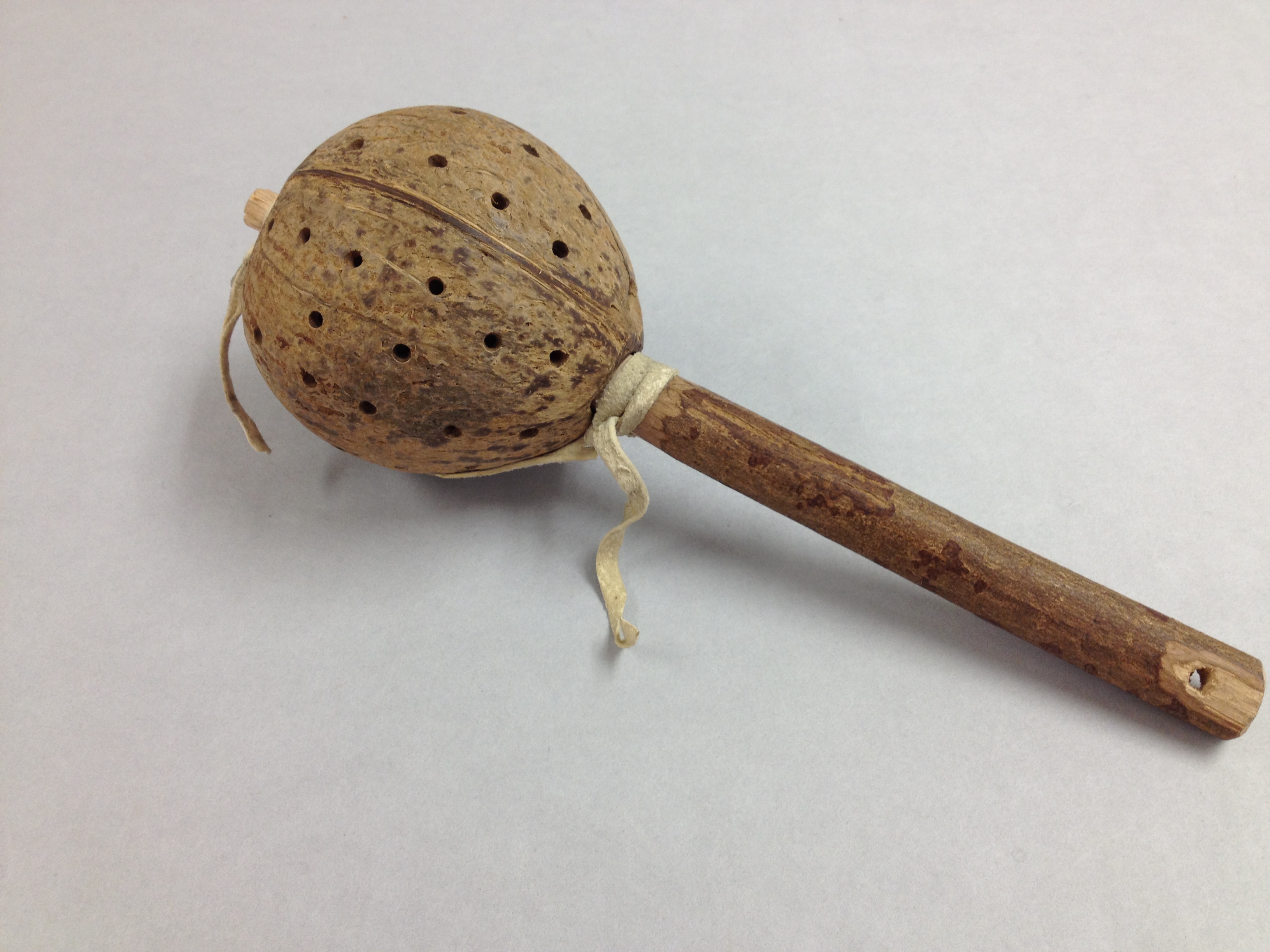
  2. Coconut Rattles in Florida and Oklahoma
  3. What is the Museum Anthropology Review Business (Labor) Model?
  4. The IU Gateway Office and Tsinghua University Art Museum (12/8)
  5. The University of Tartu, Appreciated
  6. The Mallet: Making a Maul in a Baiku Yao Community
  7. Beijing’s 798 Art Zone, Revisited, Again (12/9)
  8. The Ethnic Costume Museum at the Beijing Institute of Fashion Technology (12/9)
  9. Workshop on Ethnographic Methods in Museum Folklore and Ethnology
  10. Pot Holders, Or William C. Sturtevant Collections Research, Day 1

Numbers 1 and 3 arose in the context of the systemic problems with Hau that became widely known and discussed beginning last summer. Numbers 4, 6, 7, 8, and 9 relate to collaborative work in China. Numbers 2 and 10 are retro posts that I wrote back in 2012 and relate to studies of the William C. Sturtevant Collection at the National Museum of Natural History. Number 5 is a post related to my 2019 travels in Estonia.

Shreds and Patches has featured 580 posts spread over about 4123 days since my first post, The site software reports 101,258 views from 30,545 visitors. The peak week for 2018 was June 11-17, when the Hau inspired posts appeared. That week saw 2076 views from 1675 visitors. Peak wordiness came in 2011 with 41,403 words. This year saw 22,681 words (prior to this post).

Thanks to everyone who reads and appreciates the posts and special appreciation goes to the those who wrote guest posts during 2018. Happy new year everyone.

IMG_4386

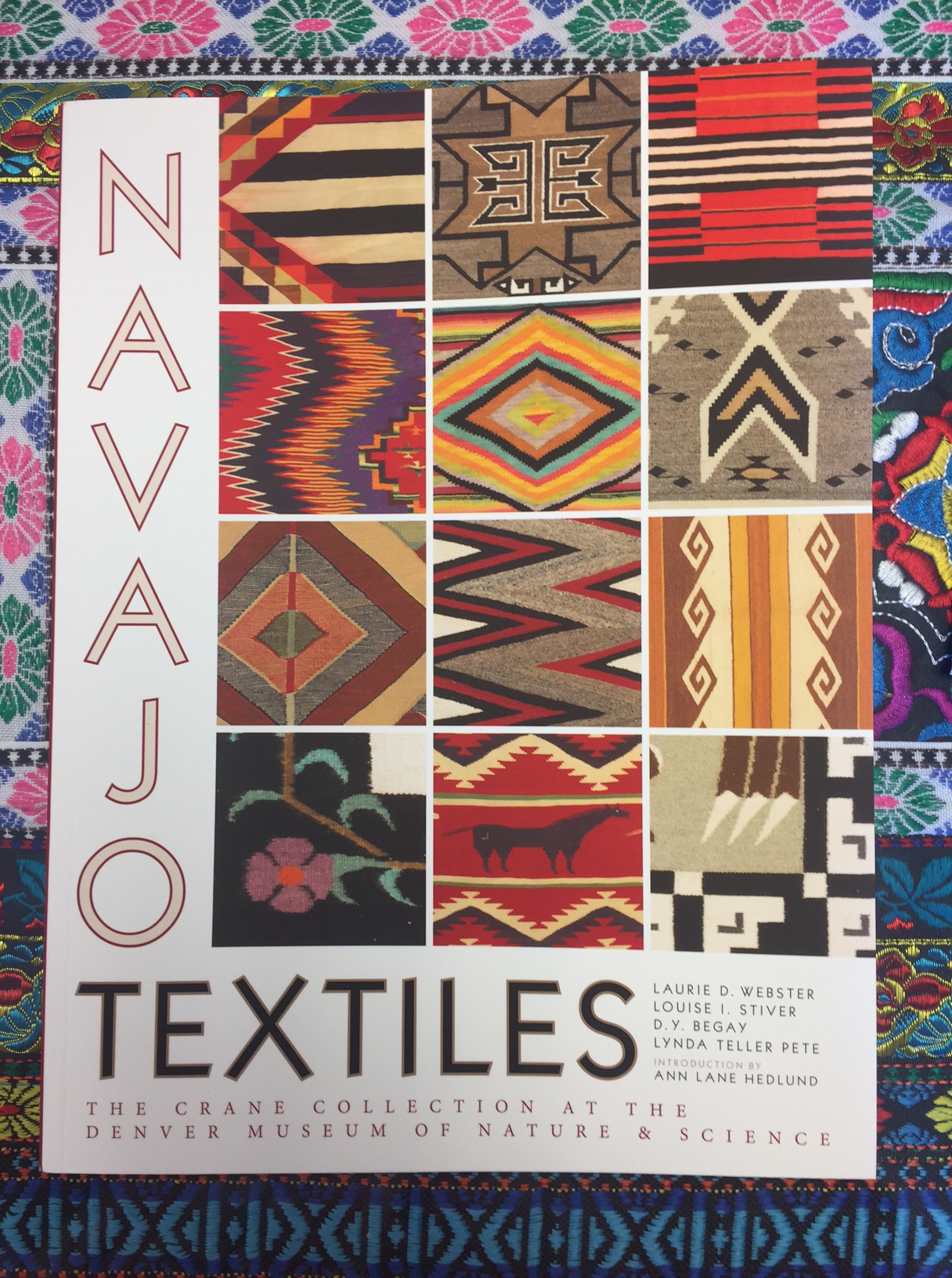
Congratulations to the Denver Museum of Nature and Science on the Publication of Navajo Textiles Volume

Congratulations our colleagues at in the Department of Anthropology at the the Denver Museum of Nature and Science on the publication of the new volume Navajo Textiles: The Crane Collection at the Denver Museum of Nature and Science (Denver: Denver Museum of Nature and Science; Boulder: University Press of Colorado, 2017). It is a beautiful volume contextualizing a beautiful collection of Navajo textiles. Kudos especially to the contributing authors, photographers, and everyone else who brought the project to life.

IMG_5972

The Free-to-Readers Edition of Material Vernaculars: Objects, Images, and Their Social Worlds

As I discussed in a previous post, works in the Material Vernaculars series are being made available in a free-to-readers PDF edition via IUScholarWorks. The eponymous edited collection Material Vernaculars: Objects, Images, and Their Social Worlds was posted today and you can find it here: http://hdl.handle.net/2022/20925

If you think that high quality open and/or free access editions of scholarly monographs are a good thing, and if you have the means to do so, I urge you to purchase copies of the companion print or ebook editions as a way of supporting the cause and subsidizing the access of others, including those who cannot otherwise afford to obtain the book. If you really want to make a difference, consider donating to the not-for-profit publishers and libraries behind such efforts. In our case, you can contribute to the Indiana University Press (co-publisher of the Material Vernaculars series with the Mathers Museum of World Cultures) here: http://www.iupress.indiana.edu/pages.php?CDpath=12

Here is a screen shot showing you where to click to download Material Vernaculars. The image should link to the page in IUScholarWorks where the book is found. (The link is given above as well.)

slide1Happy reading!

Material Vernaculars: Objects, Images, and Their Social Worlds (is out now)

I am happy to share this note to report that the edited collection Material Vernaculars: Objects, Images, and Their Social Worlds has now been published. I am the editor of this volume, which includes contributions to material culture studies from Dan Swan and Jim Cooley, Jon Kay, Michael Paul Jordan, Danille Elise Christensen, and Gabrielle Berlinger. I love the work that my colleagues contributed to the book. In addition to sharing their scholarship, the volume serves to launch the Material Vernaculars book series of which it is a part. Also appearing in the new series, is Jon Kay’s Folk Art and Aging: Life-Story Objects and Their Makers (it was published last month).

The new series is published by the Indiana University Press in cooperation with the Mathers Museum of World Cultures. IU Press is to be commended for its hard work bringing Material Vernaculars to press. Most of the papers in the volume were presented last fall at the 2015 Annual Meetings of the American Folklore Society. The papers were presented, revised, peer-reviewed, revised again, copy edited, typeset, proof-read, corrected and processed for final publication (etc.) in less than a year, a scenario that is simply unprecedented in the world of academic book publishing. And the results are great–a well-designed, well-edited book that is rich with color images. Its all first rate.

IU Press has a big sale going through tomorrow (October 30). Its a perfect time to check out their list and perhaps purchase this new title. Paperback and Hardback editions are now available. Electronic editions are on their way. (More on that asap.)

fullsizerender19

Instruments of Prayer: Musical Instruments in the Expressive Cultures of the Native American Church

Flyer promoting a lecture by Daniel Swan at the Mathers Museum of World Cultures.

Notes on an Eastern Cherokee Gathering Basket

For me, new light was just cast on a basket in the William C. Sturtevant Collection in the Department of Anthropology, National Museum of Natural History, Smithsonian Institution. In the mail, I just received a slew of basketry books. This is a topic on which I need to get caught up for a number of interconnected purposes, including for the analysis and publication of the Mathers Museum of World Cultures basketry collections (especially the Eastern Cherokee baskets, which will be the focus of an exhibition that I will co-curate).

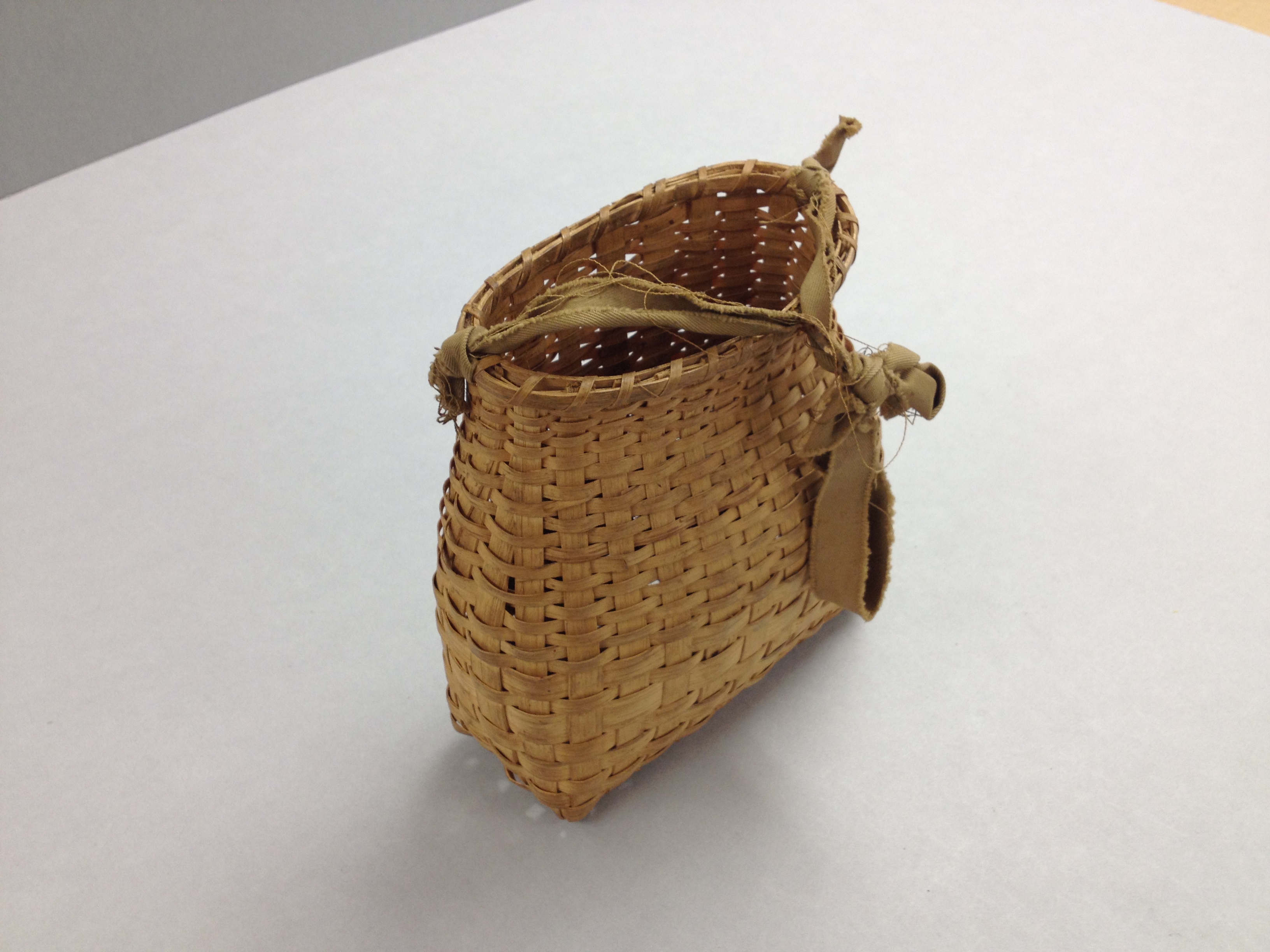
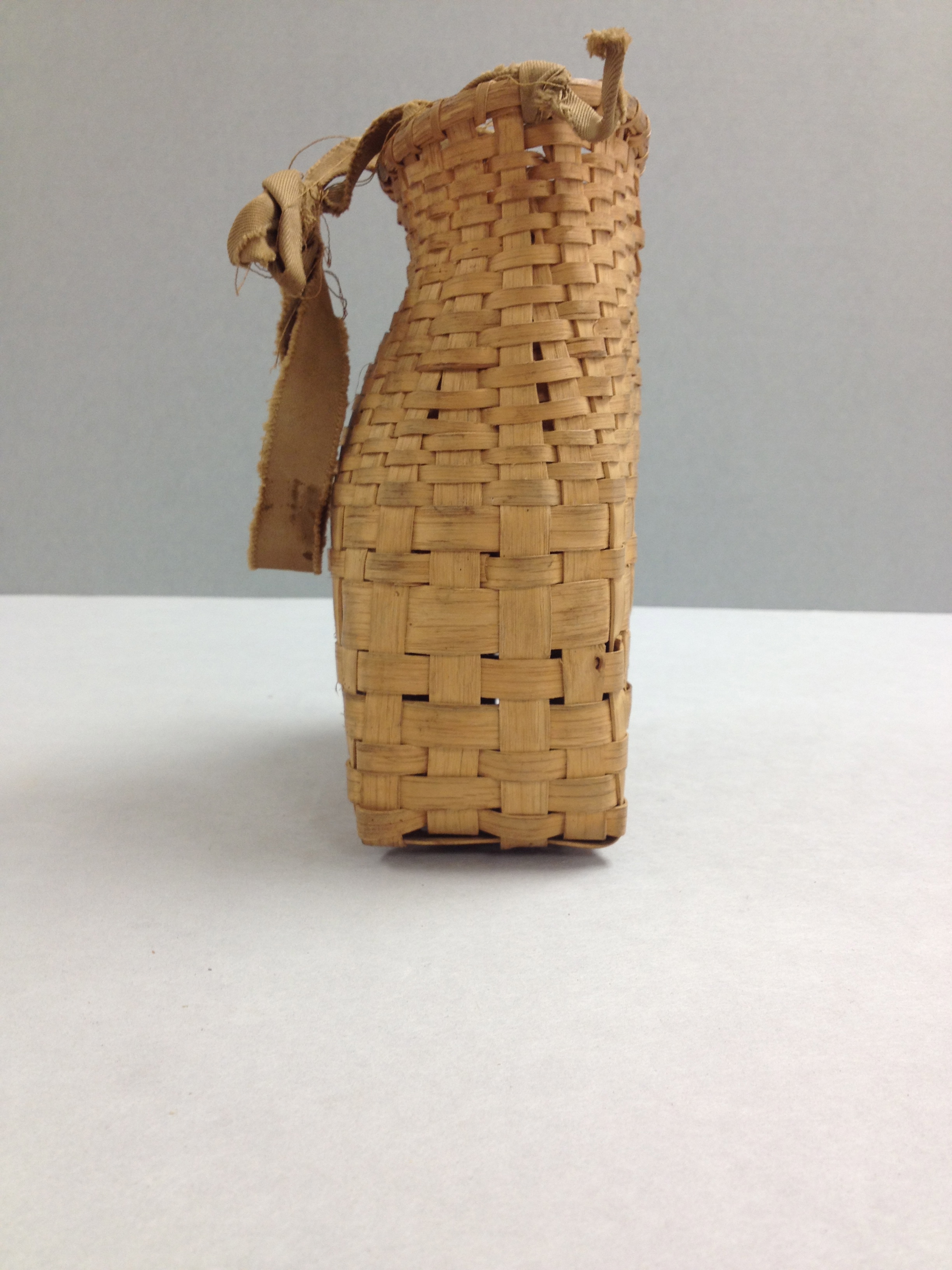
Among the used books that I just received is Baskets and Basket Makers in Southern Appalachia by John Rice Irwin (Exton, PA: Schiffer Publishing, 1982). In a chapter devoted to “The Indian Influence on Southern Appalachian Mountain Baskets” the author describes a relatively unfamiliar (to me, at this stage, at least) basket form on the basis of an example believed (to the author, at least) to be Cherokee and collected in Buncombe County, NC (p. 157). The basket discussed by Irwin is similarly shaped and similarly sized to a basket that I studied a few summers ago in the Sturtevant collection at NMNH. The splint basket that Sturtevant collected among the Eastern Cherokee is pictured here:

Eastern Cherokee Basket

Eastern Cherokee Basket, NMNH, Temporary Number WCS 322

Eastern Cherokee Gathering Basket

Eastern Cherokee Basket, NMNH, Temporary Number WCS 322

IMG_4760

Eastern Cherokee Basket, NMNH, Temporary Number WCS 322

It shares the same, flat on one side, curved on the other, shape as the basket pictured by Irwin. In a photo on p. 157, Irwin photographed a older boy holding the basket under his right arm, thereby illustrating how the shape of both baskets facilitates the collecting of berries, nuts, etc. with both hands. Prior to getting direct information from a Cherokee consultant who has made or used such a basket, this (that is, Irwin’s) is a much better account of this shape and its use that I had been speculating about.


On the New Volume of Museum Anthropology Review

Museum Anthropology Review (MAR) has just published a new double issue—its first themed collection. Volume 7, number 1-2 of MAR collects papers originally presented at a January 2012 workshop titled “After the Return: Digital Repatriation and the Circulation of Indigenous Knowledge.” Hosted by the National Museum of Natural History, Smithsonian Institution and funded by the (U.S.) National Science Foundation and the Understanding the American Experience and World Cultures Consortia of the Smithsonian Institution, the workshop was organized by Kimberly Christen (Washington State University), Joshua Bell (Smithsonian Institution), and Mark Turin (Yale University). The workshop brought together scholars from indigenous communities, cultural anthropology, folklore studies, ethnomusicology, linguistics, and collecting institutions to document best practices and case studies of digital repatriation in order to theorize the broad impacts of such processes in relation to: linguistic revitalization of endangered languages, cultural revitalization of traditional practices, and the creation of new knowledge stemming from the return of digitized material culture. Like the workshop itself, the peer-reviewed and revised papers collected in MAR ask how, and if, marginalized communities can reinvigorate their local knowledge practices, languages, and cultural products through the reuse of digitally repatriated materials and distributed technologies. The authors of the collected papers all have expertise in applied digital repatriation projects and share theoretical concerns that locate knowledge creation within both culturally specific dynamics and technological applications.

Find this special issue of MAR online at: http://scholarworks.iu.edu/journals/index.php/mar/issue/view/233

As it has always been, MAR is an open access, peer-reviewed journal free to all readers. With volume 8, to be published in 2014, MAR is becoming the journal of the Mathers Museum of World Cultures. It will continue to be published in partnership with the Indiana University Libraries with assistance from the IU Department of Folklore and Ethnomusicology and other partners.

2014 will bring new enhancements to MAR. To keep up with the journal, please sign up as a reader, follow it on Twitter @museanthrev, and/or like it on Facebook.