Skip to content

Posts from the ‘Museums’ Category

The University of Tartu, Appreciated

#fulbrightspecialist #fulbright #exchangeourworld

I recently spent an extended time in Tartu, Estonia. I had the wonderful opportunity to be a Fulbright Specialist visiting the Departments of: (1) Estonian and Comparative Folklore, (2) Ethnology, and (3) Estonian Native Craft at the University of Tartu. My visit also provided rich opportunities to learn about the work of the Estonian National Museum, with which these departments collaborate closely. Visiting Estonia was a transformational experience for me and I am very grateful for my generous hosts in Estonia and for the continued work of the [U.S. Department of State’s] Fulbright Program. Here I reflect briefly on the work of my fields at the University of Tartu. In a later post, I will evoke the courses that I taught and the students I met while in Tartu. In a final post, I will touch on the Estonian National Museum and the rich International Committee for Museums and Collections of Ethnography (ICME) conference that it recently hosted.
IMG_5457

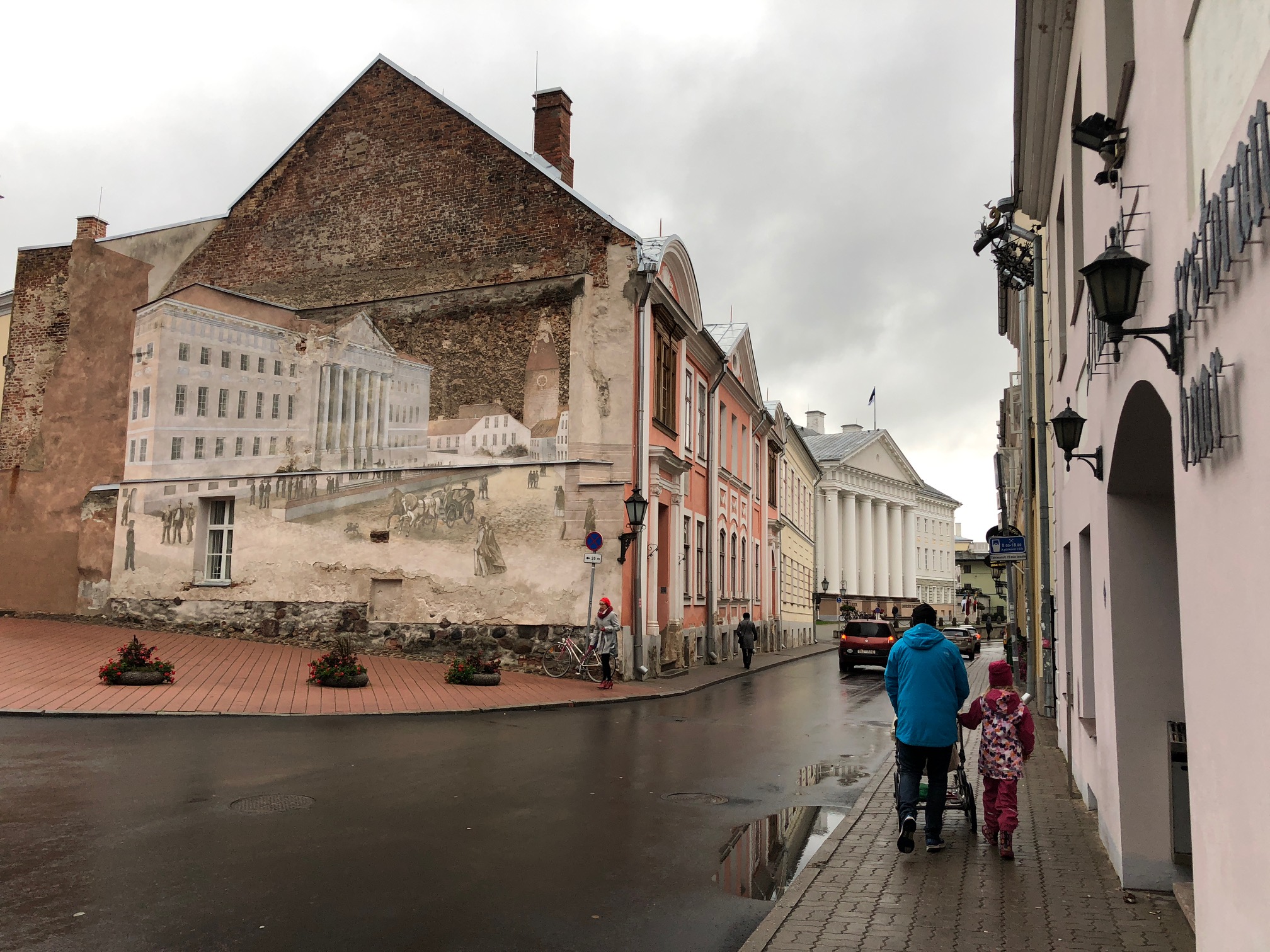
On the left, with the mural on its end, is Ülikooli 16 in Tartu on the University of Tartu campus. It is today home to the Institute for Cultural Research, which includes the Departments of Ethnology and of Estonian and Comparative Folklore.

The twinned disciplines in which I work–folkloristics (folklore studies) and ethnology–have a deep and important history in Estonia. So too do the practice of, and the study of, the nation’s rich craft traditions. For my interests, it would really be difficult to think of a richer and more rewarding place to make an in-depth, scholarly visit. The University of Tartu is almost two centuries older than Indiana University where I work. It was founded in 1632 under the auspices of King Gustavus Adolphus of Sweden. Through Swedish, Russian, and Soviet rule as well as in independent Estonia, the University of Tartu has been a major world academic center. This is reflected in the fame and impact of its academic programs and in the scholars and students who continue to gather there from around the world. (For those interested in Indiana University connections, the university is strong not only in folklore studies and ethnology, but in the neighboring field of semiotics, another field of special interest to Indiana University scholars. Semiotician and IU Distinguished Professor Thomas Sebeok’s library can be found there (See: Thomas A. Sebeok Memorial Library. As noted here, Sebeok was a Fellow of the IU Folklore Institute and a Professor of Anthropology among his many IU roles.)

The Departments that hosted me have longstanding and strong undergraduate and graduate programs, but a new joint MA program was one catalyst for my visit. Having just welcomed its second cohort of students, the Folkloristics and Applied Heritage Studies program is an English-language masters degree program attracting strong students from around the world (including the United States). It is taught and managed in partnership between these units.

I taught two short-term courses while visiting campus (see later post) and met with colleagues and students both in Tartu and in the city of Viljandi, where the Department of Estonian Native Craft is based. It and other arts programs are located in the Viljandi Culture Academy. Viljandi–about an hour east of Tartu–is a strong hub for the arts in general and for Estonian vernacular and folk arts in particular. For example, near Viljandi is a great satellite museum of the Estonian National Museum that is focused on handicraft and rural life (Heimtali Museum of Domestic Life) and Viljandi is home to the major Viljandi Folk Music Festival.

Both in Viljandi and in Tartu, UT faculty were very generous and taught me much about their work and its contexts. As someone who teaches the history (and present status) of folklore studies, anthropology, and ethnology, it was extremely valuable to have a close encounter with the past and present of these fields in a national context that is inflected in both Northern European ways and in the Russian, Soviet, Post-Soviet ways. As throughout the region, issues of nationalism and national identity are a central theme, but colonialisms and their afterlives are also woven throughout the disciplinary histories. Estonia offers much to think about.

This is not just a historical matter, as changes and innovations in Estonia society also offer many lessons. For instance, life at the University of Tartu is now heavily impacted by programs and initiatives of the European Union and technological mediation is a constantly present dynamic in the university’s educational work. While I am quite accustomed now with online and distance education, I was struck by the extensive role that these techniques play not only word-heavy curriculums such as in ethnology and folklore studies, but in the university’s native craft curriculum. Most students in this later department are older students (older, that is, than recent high school graduates) and they are learning advanced textile, metalwork, and building techniques as well as heritage studies methods and theories through a combination of intense-but-brief in-person work on campus and online education activities.
IMG_5437

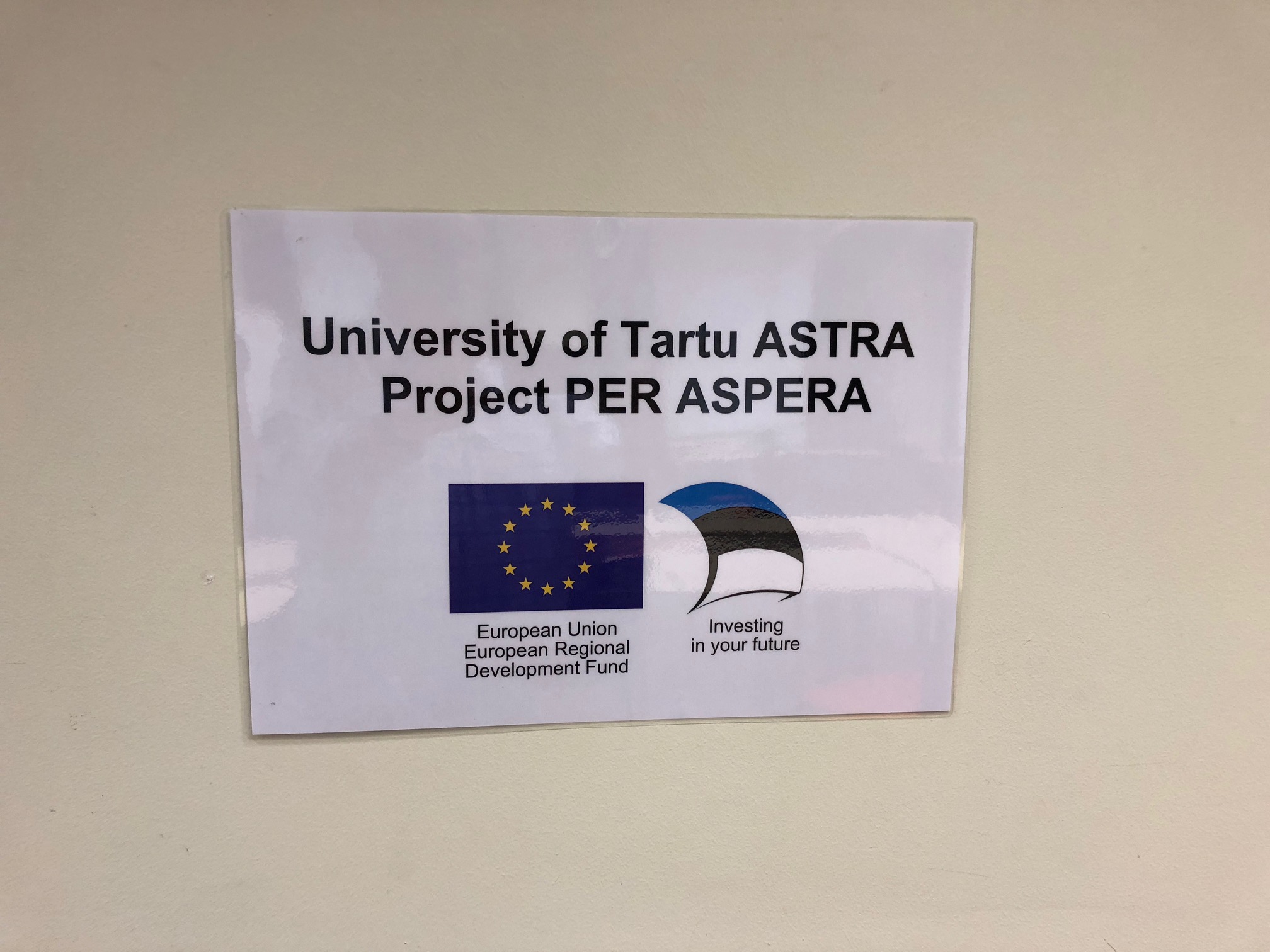
My course on “Getting the Most Out of Peer-Review” was generously supported by the European Union, thus this sign was posted during class sessions.

From colleagues in these departments, I also gained a deeper understanding of their impressive publishing work. Highlights include the Journal of Ethnology and Folkloristics (which I have long admired) and Studia Vernacula and a great diversity of monographs and edited volumes. Publication work in my fields is very advanced in the UT departments. The well-researched and beautiful books being produced related to Estonian craft techniques and histories are a marvel–little work of this quality is found in the United States.

I could continue at near endless length, but this is enough for now. I close for the moment with warm appreciation for all of the staff, faculty, and students who worked hard to make my visit possible and who shared so much of their work and passion with me. Thanks also go to the Fulbright Specialist Program and to the European Union, the University of Tartu, and other funding agencies that supported my activities.
IMG_5448

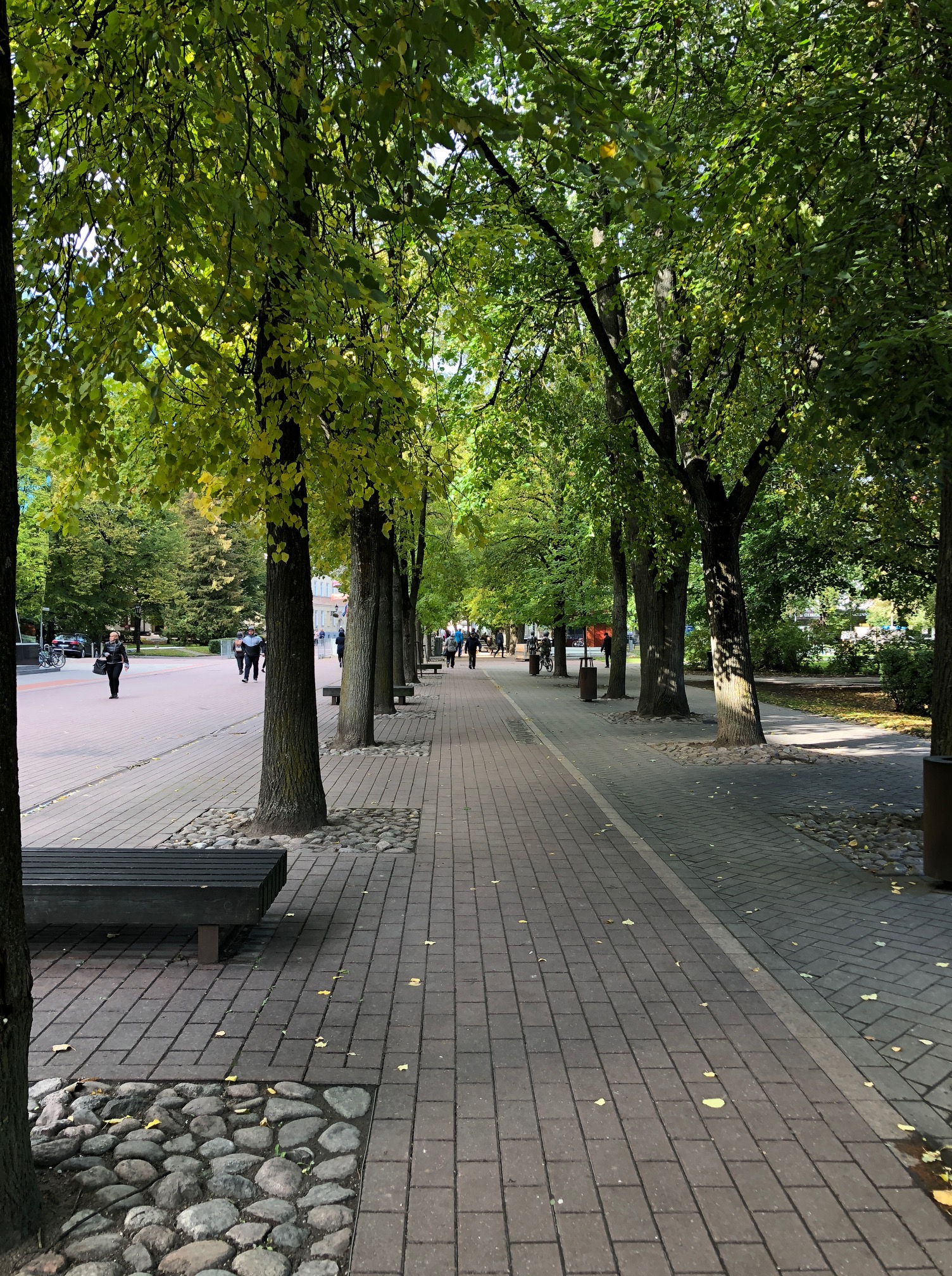
In downtown Tartu.

After the Workshop, Before the Fieldwork (12/12)

HK1A8497

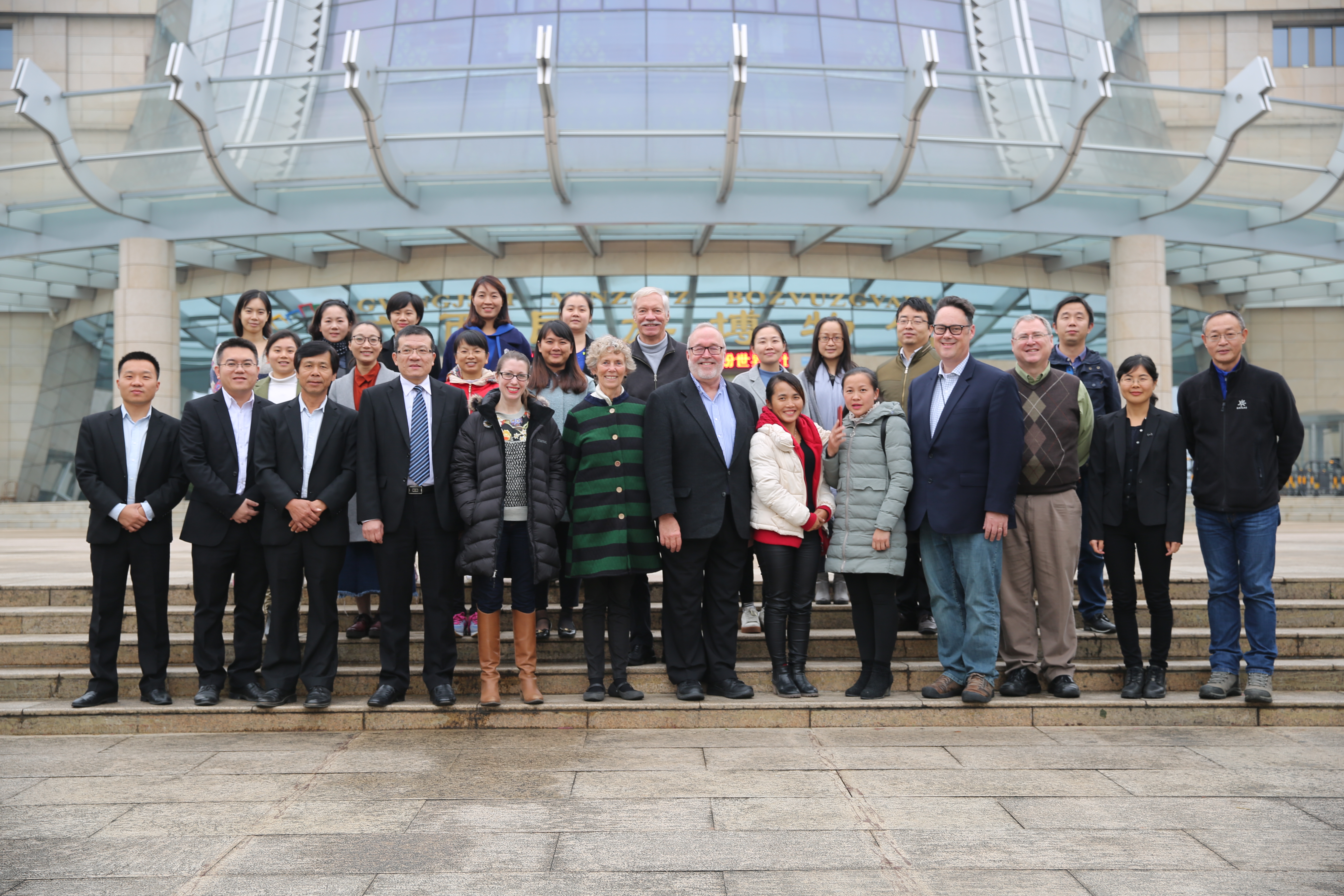
A photograph of the project team and special guests on the steps of the Anthropological Museum of Guangxi in Nanning. December 12, 2017. Photograph courtesy of the Anthropological Museum of Guangxi.

This is the seventh in my series of posts reporting on collaborative work and travel in China during December 2017. The first five posts (1, 2, 3, 4, 5) dealt with preliminary activities in Beijing, while the last (6) post focused on the Workshop on Ethnographic Methods in Museum Folklore and Ethnology held in Nanning at the Anthropological Museum of Guangxi (AMGX) on December 11-12, 2017.

As I noted previously, the workshop together with fieldwork (discussion forthcoming) in Nandan County, were the primary activities for this trip. When the workshop concluded, two small events took place before our departure for Nandan the next day. As I noted previously, the research team met in a smaller group format to discuss plans for the work. Those discussions involved participants from the AMGX, the Mathers Museum of World Cultures, the Museum of International Folk Art, the Michigan State University Museum and most-importantly, from our hosts in Nandan County, the Baiku Yao Eco-Museum.

Prior to these practical discussions, a small ceremony featuring remarks by Director Wang Wei of the AMGX and by American Folklore Society Executive Director Tim Lloyd (whose own trip intersected for the afternoon with ours). At this gathering, successful past projects were evoked and enthusiasm for the new projects that we were then beginning was conveyed. The three U.S. museums also bestowed gifts of handmade objects from New Mexico, Michigan, and Indiana upon the AMGX and received wonderful Zhuang brocade textiles from Guangxi to add to their own collections. The exchange of such gifts has become a meaningful moment in each gathering linking the American and Chinese partner museums since 2013.

As is also customary, a group photograph was taken. For the wider contexts for our work in China within the American Folklore Society and the China Folklore Society, see this overview story on the AFS website.

Workshop on Ethnographic Methods in Museum Folklore and Ethnology

This post is the next in my series of reports on the trip to China that American museum colleagues and I took in December 2017. The Beijing posts (1, 2, 3, 4, 5) were about the time that we spent in transit to Nanning, where the core of our work on the trip would begin. This is the first post to share a bit of what the trip was about, explaining what we were up to in Guangxi.

Central to the story of our time in the Guangxi Zhuang Autonomous Region is our friend and colleague Zhang Lijun. Lijun is researcher on the staff of the Anthropological Museum of Guangxi (广西民族博物馆) and she is also a research associate of the Mathers Museum of World Cultures. She is essential to the museum ethnography sub-project within the China-US Folklore and Intangible Cultural Heritage Project that has linked the China Folklore Society and the American Folklore Society for over ten years of exchanges and joint projects. As she notes in her recent contribution to Metafolklore: Stories of Sino-US Folkloristic Cooperation | 文化对话:中美非物质文化遗产论坛. (Guangzhou: Sun Yat-sen University Press, 2017), she served as a translator for the founding discussions between AFS and CFS while a masters student at Beijing Normal University. A decade later, and with a Ph.D. from Indiana behind her, she is now helping lead a key project in this flourishing partnership. (For an overview of these broader efforts, see this essay by AFS Executive Director Tim Lloyd.)

Our work in Guangxi is the reason for the trip and Lijun was crucial to the planning and the doing of both parts of that work. As called for in our proposal to the Henry Luce Foundation and planned for in our partnership discussions with the Anthropological Museum of Guangxi, this trip (the first of four during the current phase of our work) had two parts–a training workshop at the museum in Nanning and then a period of jointly pursued fieldwork in Nandan County among the Baiku (White Trouser) Yao people. This post is about the training workshop, an event for which Lijun’s bilingual skills and bi-national scholarly background were essential ingredients.

IMG_0311

Zhang Lijun facilitating discussion during the first day of the Workshop on Ethnographic Methods in Museum Folklore and Ethnology held at the Anthropological Museum of Guangxi, Nanning. December 11, 2017. Photograph by Jason Baird Jackson.

Wang Wei, the Director of the Anthropological Museum of Guangxi, is an leading scholar in paleoarchaeology with a deep history of participating in high-level international research collaborations and a strong record of publishing in international science journals. This experience has shaped his goals for the museum’s research staff. He is eager for them to also have international research experiences and opportunities to work jointly on publication as well as exhibition projects. Those goals are part of what we are up to in the current phase of cooperative research. They also motivate his providing generous support for our joint work. Those of us connected to the American museums share these aspirations.

Because the entire research and collections staff of the Anthropological Museum of Guangxi is too large to participate in the fieldwork phase of the project, the December 2017 workshop was developed as a means of broadening the professional development opportunities that the larger project offers. The workshop was held on December 11-12 and its focus was “Ethnographic Methods in Museum Folklore and Ethnology.”

During this event, American and Chinese participants, drawn from the partner museums, gave bilingual presentations on fieldwork methods as these pertain to work of museums of ethnography. About sixty attendees attended the workshop. Some were students affiliated with universities in the city of Nanning and, as initially anticipated, quite a few were members of the Anthropological Museum of Guangxi’s research and collections staff. There were also working ethnographers from various agencies in the city. A fourth group of attendees were staff members drawn from the ten local eco-museums with which the Anthropological Museum of Guangxi partners in its 1+10 eco-museum collaboration. These eco-museum representatives are members of the local minority groups that their institutions serve and they are active with impressive cultural documentation work in their home communities. The workshop sessions, which all took place at the museum, were well-attended and well-received.

The workshop program was comprised of seven presentations interspersed with questions and discussion. All were illustrated with bilingual slides and all were translated into the language (English or Mandarin) not spoken by the presenter. I presented an overview of ethnographic methods in the contexts of research design and the goals of museum work. My presentation introduced and connected the topics to be addressed by the other presentations. I was followed by Marsha MacDowell (Michigan State University Museum), whose presentation focused on interview methods. Jon Kay (Mathers Museum of World Cultures) focused on survey methods as well as on video documentation techniques. Carrie Hertz (Museum of International Folk Art) explored the uses of still photography in research, exhibitions, publication, and other museum activities. Kurt Dewhurst (Michigan State University Museum) presented on the use of existing collections in new field research and on the role that new ethnographic work can play in re-contextualizing such collections. Gong Shiyang (Anthropological Museum of Guangxi) presented on the role of eco-museums as research centers and on the partnership linking AMGX and its 10 partners in Guangxi. Fan Miao Miao (Anthropological Museum of Guangxi) presented on strategies for ethnographic research on dress and adornment practices.

At the conclusion of the workshop on December 12, research participants from the three U.S. partner museums, from the AMGX and from the Baiku Yao Eco-Museum in Nandan met to discuss the research plan for the joint fieldwork that would follow.

Here are some pictures from the first day of the workshop.

Here are some images from the second day of the workshop.

One of the temporary exhibitions on display at the museum is an exhibition produced in partnership with the Museum of Women and Children in Beijing (the museum we visited earlier in our trip). This exhibition is interesting because it deals with a classic ethnographic topic (“Brocade Made by Minority Nationalities in China”) in a kid-friendly way. Here are some pictures.

The Ethnic Costume Museum at the Beijing Institute of Fashion Technology (12/9)

In the previous post in this series, I described how my traveling companions and I visited Beijing’s 798 Art Zone. (For the series in order, see 1, 2, 3, and 4.) After that stop on December the 9th, we visited one more Beijing museum. This one was a new one for everyone. Carrie researched it and put it on our agenda—The Ethnic Costume Museum at the Beijing Institute of Fashion Technology (BIFT). We were uncertain what to expect, but we speculated that it would be a small university museum.

It won’t take many words to tell the story. We were extremely impressed. The museum is not richly contextualizing and interpretive in approach (as more and more university museums work to be) but its collections are outstanding and they are beautifully presented in large, comfortable galleries. For scholars interested in dress, adornment, and textile history in China, it is a definite must-see.

The museum is located on an upper floor of a multi-use academic building in the midst of the BIFT campus. Discovering this, one presumes further that the space will be small, as many similar university galleries in the United States often are. But on arrival up the stairs, this speculation is dispelled. The galleries go on and on. You can check out an English language web page for the museum here: http://english.bift.edu.cn/department/ethniccostumemuseum/index.htm It begins:

The Costume Museum at the Beijing Institute of Fashion Technology (BIFT), founded with the approval of Beijing Municipal Administration of Cultural Heritage, is the first museum specializing in ethnic costumes in China. The Museum is also a cultural research institute integrating collection, display, research, and teaching.

BIFT Costume Museum covers a floor space of 2,000 square meters, with several major exhibition halls: Han Nationality Costume Hall, Ethnic Minority Costume Hall, Miao Nationality Costume Hall, Metalworking Jewelry Hall, Brocade Embroidery and Wax-printing Hall, Olympic Uniform and Ceremony Costume Hall, Picture Hall, and Hands-on Workshop (for teaching and academic exchange).

As the top specialized costume museum in China, it has a fine collection of over 10,000 pieces of costume, accessories, fabric, wax printing, and embroidery. The collection is displayed in different categories, such as costumes of Miao nationality, metalworking jewelry, folk wax printing, and fabric. The museum also has a collection of nearly 1000 precious photographs taken during the 1920s and 1930s featuring the ethnic costumes of Yi, Zang, and Qiang nationalities.

That is all true. Here I share some of our photographs from the visit, which was the high point of our day and great preparation for the work we would begin in Guangxi the next day.

When we arrived, we noticed a sign that indicated that no photography was allowed. This left us crestfallen. We started taking in the exhibitions and noticed that all the other visitors were taking pictures and that the staff was completely aware of this. On investigation, it was flash photography that was prohibited. As a result of these factors, as well as the appropriately dark galleries (appropriate because textiles are being put on display for extended periods, raising the problem of light damage) our photographs are dark and rushed.

In honor of our generous hosts in Nandan County, I present the Baiku Yao men’s outfit on display at the museum before posting a sample of other images from the museum.

IMG_0209

The “Men’s attire of the white-pants Yao branch of the Yaozu people” at the Museum of Ethnic Costumes. December 9, 2017. Photograph by Jason Baird Jackson.

The Museum of Women and Children | 中国妇女儿童博物馆 (12/9)

This is the third 2017 China trip post. As in the two (1, 2) previous posts, it reports on adventures in Beijing with Jon Kay (my MMWC colleague) and Carrie Hertz (of the Museum of International Folk Art). On the second day in Beijing, we were thrilled to be joined by our friends and colleagues from the Michigan State University Museum—Marsha MacDowell and C. Kurt Dewhurst.

Our goals for December 9th were pretty ambitious. In the morning we went to The Museum of Women and Children, China’s “first state-level museum focusing on women and children.” Because the museum previously hosted the U.S. exhibition The Sum of Many Parts: 25 Quiltmakers from 21st-Century America (here and here), it was well known to Marsha (who was central to the earlier traveling exhibition—a project that Jon was also involved in). Marsha and Kurt told us of the extensive and detailed textile exhibitions they saw previously at the museum (and that are still announced on the English website…). Sadly the museum was rather deserted on our arrival. It soon became clear why. Most of the exhibitions were recently taken down, leaving the galleries rather empty. We saw where the great textile exhibitions had been and we quickly saw the remaining history exhibitions and then we kept moving. Later in the trip—when we got to Nanning—we would see an exhibition that gave us hope for the Museum of Women and Children, but at this stage, we just departed the museum a bit disappointed and looking ahead to our next stop—Beijing’s 798 Art Zone.

The Temple of Heaven | 天壇 (12/8)

This briefer note is the second on our recent trip to China. The context for this travel will come (I hope) a few posts down the road. For now, perhaps you can just go with it. For the first post in the series, see The IU Gateway Office and Tsinghua University Art Museum (12/8).

After our group’s visit to the Tsinghua University Art Museum we ended the day with a visit to the Temple of Heaven (天壇). Wikipedia’s account (or whatever you can access) is probably sufficient for those who are curious about what the Temple of Heaven is about. In a nutshell, it is an impressive temple complex dating back to the early 1400s and was a key site for imperial sacrificial rituals. It is comprised numerous surviving buildings and beautiful grounds. For our interest as museum-types, it is a UNESCO World Heritage Site (number 881, to be exact). While it clearly attracts a significant number of visitors, visiting it (late in the day, in winter?) was certainly different from visiting the Forbidden City, where one typically becomes one tiny fish in a single vast, densely packed school of fish swimming straight through the complex from one end to another.

As earlier in the day, the companions were Jon Kay, Carrie Hertz, and Jason Jackson. At the Temple of Heaven we arrived too late in the day to enter any buildings, but we were able to stroll the grounds and see some of the buildings from the outside. Like so many monumental sites in China, one rarely has enough time to see the whole destination properly. Visiting when we did though, we really enjoyed the quiet contemplative nature of the experience. Many of those at the site were, like us, having a park visit experience as much or more than they were having a historical buildings experience. Of course, our state of reverie did not keep us from attending to the buildings, which were great. (A bit more text follows the images.)

Carrie and I, on an earlier trip’s visit to the Forbidden City, had noticed the English language signs pleading for no scratching. At the time, this had not made full sense to us, although we of course understood the impulse to protect these ancient monuments. At the Temple of Heaven, we were able wander without rushing or bumping into other people and thereby got a close look at the problem these signs work to prevent. You can see both the signs and some scratches in the images here.

We figured it out with some smart phone help, but one of the reasons that we were late in the day getting to the Temple of Heaven is that our taxi driver delivered us to the Temple of Heaven Holiday Inn (not yet a UNESCO World Heritage site), which it turns out is not exactly right by the Temple of Heaven itself. This meant that what we lost in terms of time spent at the site, we gained in terms of a walk through a not particularly touristy but elder-rich Beijing neighborhood. Posted here are some pictures for our families, friends, and other interested folks.

Thanks as always to my great travel companions. For deciding on the Temple of Heaven, thanks go especially to Carrie.

The IU Gateway Office and Tsinghua University Art Museum (12/8)

This post is about a portion of my recent trip to China. The main focus of this trip was collaborative ethnographic research in Guangxi Zhuang Autonomous Region, but other activities happened along the way. This post about the morning of December 8, 2017 and my companions for the day were two friends and colleagues–Dr. Carrie Hertz, Curator of Textiles and Dress at the Museum of International Folk Art and Dr. Jon Kay, Director of Traditional Arts Indiana and Curator of Folklife and Cultural Heritage at the Mathers Museum of World Cultures, Indiana University.

After traveling from the U.S. to Beijing, our first morning in China was devoted to a visit to the Indiana University China Gateway Office, which is adjacent to Tsinghua University in Beijing. There we met with China Gateway Director Steven Yin and IUPUI Recruitment Coordinator and Assistant Office Manager Peter Wen. We spent some time at the Gateway discussing China-related projects (including our own) and then Peter walked us across the Tsinghua campus for our visit to the remarkable Tsinghua University Art Museum (TAM), where Steven had arranged for us to meet with colleagues and see the museum.


At TAM we met with Ge Xiuzhi from the research department and Wang Ying from the education and external relations department. They were generous hosts with whom we shared tea and luxurious visits to the museum’s spacious and beautiful galleries. Our interests gravitated to some of our favorite topics–textiles and dress, architecture, and furniture. Here are some images from “Architecture China,” an exhibition that tells the story of a group of vernacular architecture researchers while also introducing architecture students (and everyone else) to the key techniques in the national architectural tradition.


A key exhibition at TAM at present is a large overview exhibition titled “Tsinghua Treasures: Exhibition of Tsinghua University Art Museum Collection.” It is very large and presents a rich sample of the museum core collection. As reflected in this sample of our images, we devoted a lot of time to the textile section, which is rich in items of dress and adornment.


We could have spent more than one day just studying the various sections of Tsinghua Treasures. We regretted neglecting some wonderful sections, including those devoted to ceramics, painting, and calligraphy.


We focused intently on the furniture gallery. As with the architecture exhibition, there were excellent hands-on educational stations in this gallery that helped one better understand the techniques and woods used in Chinese furniture.


Staff from the Tsinghua University Art Museum visited Indiana University during May 2017. On that visit I attended a presentation at the Eskenazi Museum of Art at which the Eskenazi staff (and I) were given a exciting overview of this new museum’s work and collections. It was wonderful to be able to follow up on this presentation and to see the TAM itself in the company of very generous hosts and my wonderful colleagues.

Our visit to the Tsinghua University Art Museum

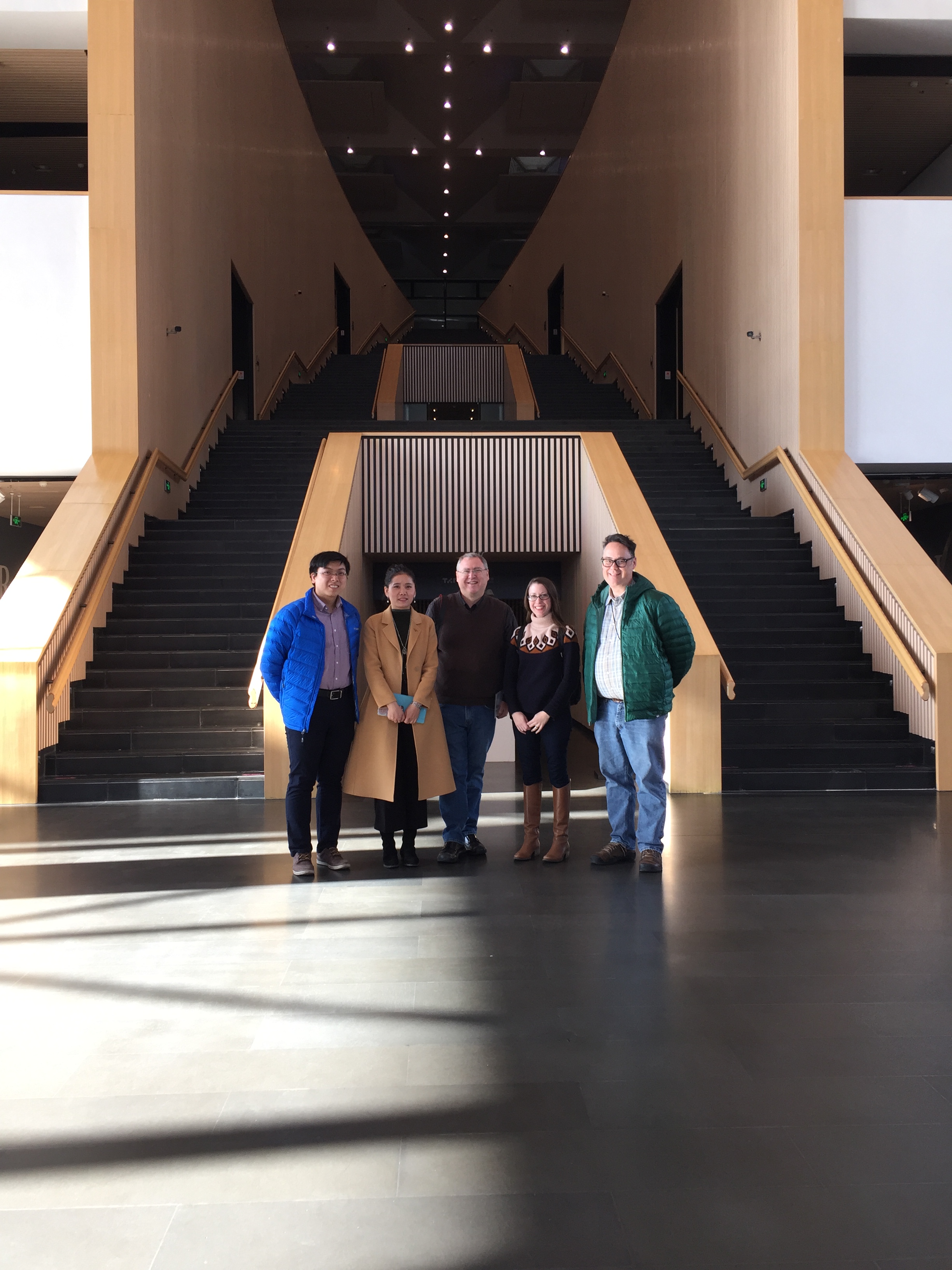
A view of our group and the grand staircase at the Tsinghua University Art Museum. (L-R) Peter Wen, Ge Xiuzhi, Jon Kay, Carrie Hertz, Jason Jackson. December 8, 2017. Photograph courtesy of Ge Xiuzhi.


Looking Ahead: University Anthropology Museums Matter

With notices going out from the Program Committee this week, the American Anthropological Association’s annual meeting (November 29-December 3, 2017) is coming into focus. Notes that I am seeing on Facebook and Twitter suggest that the program will feature a lot to like. I am pleased to note that a Executive Session that colleagues and I have organized has been accepted and scheduled. If you are interested in museum anthropology or the future of university museums, I invite you to hold the day and time. We would love to see you there. Here are the details.

Looking Ahead: University Anthropology Museums Matter
Friday, December 1, 2017
8:00 AM – 9:45 AM

Session Abstract: University-based museums of anthropology, including campus museums of natural history, history, and art with anthropological programs, play a vital role not just as hubs for the work of museum anthropology but for the research, teaching, professional training, and public outreach agendas of the field as a whole. While the historical contributions of university-based museum anthropology are decisive and worthy of continued investigation, this panel aims to characterize present work viewed in institutional terms and to anticipate new developments and emerging needs in the field more broadly. Numerous campus anthropology museums have experienced leadership changes in recent years. This collective shift, as well as dramatic changes happening in the publics with which campus museums engage, suggests that now is a particularly good moment to undertake an environmental scan and in which to consider a collective agenda that is cognizant of the vexing challenges—from anthropogenic climate change to rising inequality; from resurgent xenophobia to the transformation of higher education—that anthropology museums are positioned to address. As the leaders of six key university anthropology museums, the speakers will characterize the present work and emerging goals of their institutions. Considering the changing contexts—intellectual, economic, political, technological, educational, ethical—within which museum anthropology, and anthropology more generally, is being pursued, they will also propose topics and tactics for collective work in the period ahead. While rooting their reflections in the work of their institutions, the presenters will directly address the conference theme Anthropology Matters from the distinctive vantage point of campus anthropology museums in the United States, Canada, and the United Kingdom.

Thanks go to all who supported or endorsed the session proposal, including our sponsor, the Council for Museum Anthropology. See you in Washington.

cma-logo

Paid Internships for IU Students at the Mathers Museum of World Cultures

We have realized a big museum goal–establishing a paid internship program at MMWC. Please check out the announcement (below and here) and encourage bachelors and masters students to apply. (Application materials are on our website.)

ALLEN WHITEHILL CLOWES CHARITABLE FOUNDATION INTERNSHIP PROGRAM

The Allen Whitehill Clowes Charitable Foundation has awarded funding to support the establishment of a new internship program at the Mathers Museum of World Cultures, Indiana University Bloomington. This new program will be MMWC’s first offering of competitive, paid internship experiences, building on decades of practicum student programming, and significantly increasing the MMWC’s ability to cultivate dedicated museum professionals at the undergraduate and master’s level.

With a long-term goal of improving Indiana’s professional museum workforce, this program’s primary objective is to increase the quantity, quality, and accessibility of real-world professional development experiences available to IUB upper-level undergraduate and M.A. students seeking museum careers.

Beginning in Summer 2017 an inaugural class of interns will launch the program. Internship cohorts of three students per semester will participate in the program over a 1o-semester pilot (fall, spring, summer) through Summer 2020.

On-campus internships undertaken during fall and spring semesters will enable IUB students to gain valuable work experiences without interrupting their studies by relocating to distant locations or for Unrelated part-time work. The program will also advance a public service mission through the option of funding summer session work in off-campus museums as well. This option expands the range of professional opportunities available to museum-focused IUB students, while strengthening the work of these peer institutions.

The Allen Whitehill Clowes Charitable Foundation, Inc., a private foundation, was established by Allen W. Clowes. a leading philanthropist in Indianapolis. Indiana, who during his life made major contributions to various charitable organizations that promoted or preserved the fine arts, music, literature, education, science and history. Most of these organizations are located in Central Indiana.

The primary mission of the foundation is to support charitable organizations that promote or preserve the Arts and Humanities and to support charitable organizations that were supported by Mr. Clowes during his life or are similar to those supported by Mr. Clowes.

For information on applying for 2017 Summer and Fall internships, please see here.

An Interview with Jessica Richardson Smith, Museum Anthropologist and Research Services Librarian at the Historical Society of Washington, D.C.

Jessica Richardson Smith is the Research Services Librarian at the Historical Society of Washington, D.C. She pursued three majors—Anthropology, Latin and Greek, and Geology for her Indiana University BA degree from the College of Arts and Sciences. While at Indiana, she used the museum practicum course in the Department of Anthropology to gain a range of experiences working in the Midwest Archaeological Laboratory. That work resulted in a published paper—Tools of the Trade: Chipped Lithic Assemblages from the Hovey Lake (12Po10) and Ries-Hasting (12Po590) Archaeological Sites, Posey County, Indiana (with Cheryl Ann Munson, Meredith B. McCabe and Dean J. Reed). She earned a master’s degree from the Department of Anthropology at the George Washington University and leads the Wymer’s DC project.

Jason Baird Jackson (JJ): Before we circle back and discuss your experiences at Indiana University and George Washington University, I’d love to begin by finding out about the mission of the Historical Society of Washington and your role there. What are your core responsibilities as a Research Service Librarian?

Jessica Richardson Smith (JRS): Sure! The Historical Society of Washington, D.C. is a 122-year old educational and research institution that collects and shares the history of Washington, D.C., emphasizing the local community over the federal city. We are a team of seven who strive to produce diverse public programming and exhibitions, as well as public access to our collections. That’s where I come in as the Research Services Librarian. The core of the Historical Society is our research library which houses over 100,000 photographs, over 800 manuscript collections, and hundreds of maps, prints, and objects—all on D.C. history.

My day-to-day duties consist of working with researchers in our library to help them find the information they need. Whether they are writing a scholarly article or just bought a house and want to learn about its history and their new neighborhood, my job is to help facilitate their needs with what our library can offer. Another facet of my job is to know what the other repositories in the city have. If the Historical Society doesn’t have some piece of information, I want to know where I can direct them.

I love my job—I never do the same thing twice and each day I am learning more and more about this city, our collections, and our members. On any given day, I may meet members of our community and learn about their projects and passions, research a topic in our collection for a researcher working remotely, or help troubleshoot a long-shot research query that someone submits based on a decades-old memory. Every day is something new and every day is something interesting. The best part is when I can apply what I learn one day to a question we get the following week. That’s great. It makes you feel like you are making real headway into learning the complex history of a city like D.C.

Also, because we are a small institution with a big mission, my colleagues and I are expected to wear many hats. In addition to my librarian duties, I also participate in shaping our public programming and exhibitions; I conduct photo research for our publications; I digitize material and tackle rights assessment questions; and I track our library statistics. Each of these things are being juggled on a day-to-day basis, which can be demanding but also very fulfilling.

The Historical Society of Washington, D.C. is located in Washington's historic Carnegie Library, dedicated in 1903.

The Historical Society of Washington, D.C. is located in Washington’s historic Carnegie Library, dedicated in 1903.

JJ: It sounds like you are in a sweet-spot in terms of scale. Your institution is big enough to be doing important, interesting work but small enough that you have not gotten trapped in a specialist silo in which you do only one task over and over again.

Washington is such an incredible place for museums, libraries, and archives. What is it like to work in a small-but-old museum/library in a city of large-but-old museums/libraries? Do you feel connected with GLAM (Gallery, Library, Archives, and Museums) professionals around the city or, like many of our colleagues elsewhere, do the day-to-day demands of the job keep you from connecting to colleagues around the city?

JRS: I can’t speak for what it is like at other institutions, but I think we do a good job of collaborating with our fellow institutions in the city, particularly those with a local focus. The D.C. Public Library, National Archives, Library of Congress, National Building Museum, the newest Smithsonian, the National Museum of African American History and Culture—these are all institutions we work alongside and collaborate with in order to forward our mission of preserving local D.C. history.

As the Research Services Librarian, my daily duties are often intra-institution focused but I regularly refer our library patrons to other institutions around the city when we don’t have particular resources. While this means I don’t personally interact on a daily basis with my GLAM colleagues, there is mutual awareness of our work through referrals. At the Historical Society, our main collaboration with our GLAM colleagues is through joint public programming, from conference plenaries to archival fairs, workshops, exhibitions, etc.

JJ: I am especially glad to hear that you have not only pathways to connect with colleagues, but that your institution is well-situated enough to support, and to see the value in, outreach, research dissemination, and professional development activities like those you have just mentioned. One of my reasons for being interested in your connectedness to the cultural institutions of DC is that you were trained at the MA level there, at George Washington University. That institution has a unique advantage in that it trains students in a city with so many public collections and so many collections-oriented professionals. Before we turn to your undergraduate experiences at Indiana, could you describe your graduate studies? What did you study? What role did hands-on work play in your career? Read more