The Council for Museum Anthropology (CMA) invites applications for the next Co-editor of the section’s peer reviewed academic journal, Museum Anthropology. The three-year term runs from January 2026 through December 2028. Please contact journal co-editor Johanna Zetterstrom- Sharp (j.zetterstrom-sharp@ucl.ac.uk) or CMA President Christina J. Hodge (christina_hodge@brown.edu) to discuss this opportunity. Please submit a letter of interest indicating your experience and ideas for the journal, along with a recent CV, to Hodge by 31 December 2025. [RFP continues after the image]
The Journal: Over its 50-year history, Museum Anthropology (MA) has become a leading voice for scholarly research on the collection, interpretation, and representation of the material world and global cultures. Through critical articles, provocative commentaries, thoughtful book and exhibit reviews, and new publishing formats, this peer reviewed journal reflects the diverse, vibrant, global, and transdisciplinary work of museums. Situated at the intersection of practice and theory, MA advances our knowledge of the ways in which material objects are intertwined with living histories of cultural display, economics, socio-politics, law, memory, ethics, colonialism, heritage, conservation, and education.
MA is published by Wiley-Blackwell through the end of 2027. CMA is actively negotiating for a new press and contract, which will start in 2028.
The Role: MA editors have independent editorial responsibility for the journal. MA is produced by two co-editors with staggered three-year terms, ensuring continuity of knowledge and production and shared responsibilities. MA is supported by an editorial board of six international scholars in museum anthropology and allied disciplines.
The incoming MA Co-editor will contribute to the publication of a journal that enriches and diversifies scholarly and professional museum settings by: (1) soliciting and evaluating high-quality manuscripts and peer-reviews from a diversity of experts in relevant fields; (2) maintaining academically rigorous and ethical standards of publication, as well as timely management of review, submission, and publication processes; (3) constructively working with AAA and press staff, as well as the MA editorial board and CMA leadership.
The Co-editors serve as non-voting members of the CMA Board, participate in quarterly Board Meetings, and provide annual reports to CMA’s members at its annual Business Meeting (held at the AAA annual meeting). Co-editor is not a paid position, but financial support typically includes some travel expenses to the AAA meeting and some copyediting services.
Jon Kay with Jason Baird Jackson Indiana University Bloomington
Jon Kay is Director of Traditional Arts Indiana and an Associate Professor of Folklore at Indiana University Bloomington. In this exchange I pose questions to him about the new Smithsonian exhibition and catalogue State Fairs: Growing American Craft. Find details about the exhibition at the end of the interview.
Jason Baird Jackson (JBJ):Jon, you have just returned from a trip to Washington, DC for the opening of the exhibition State Fairs: Growing American Craft, which will run through September 7, 2026 at the Smithsonian American Art Museum’s Renwick Gallery. The Renwick is the part of the Smithsonian devoted to craft. Before I ask you about your role in the exhibition and the associated catalogue (Mary Savig, ed., State Fairs: Growing American Craft. Smithsonian Books, 2025), can you tell me about the opening? What did you see? What did you do? Who went with you? What was most memorable?
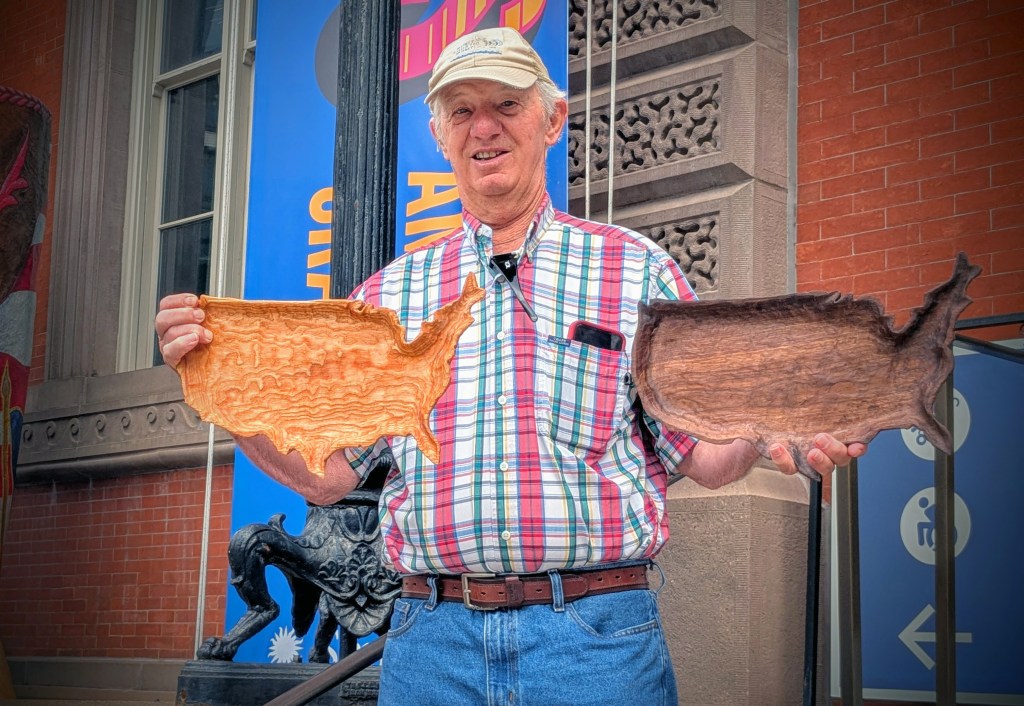
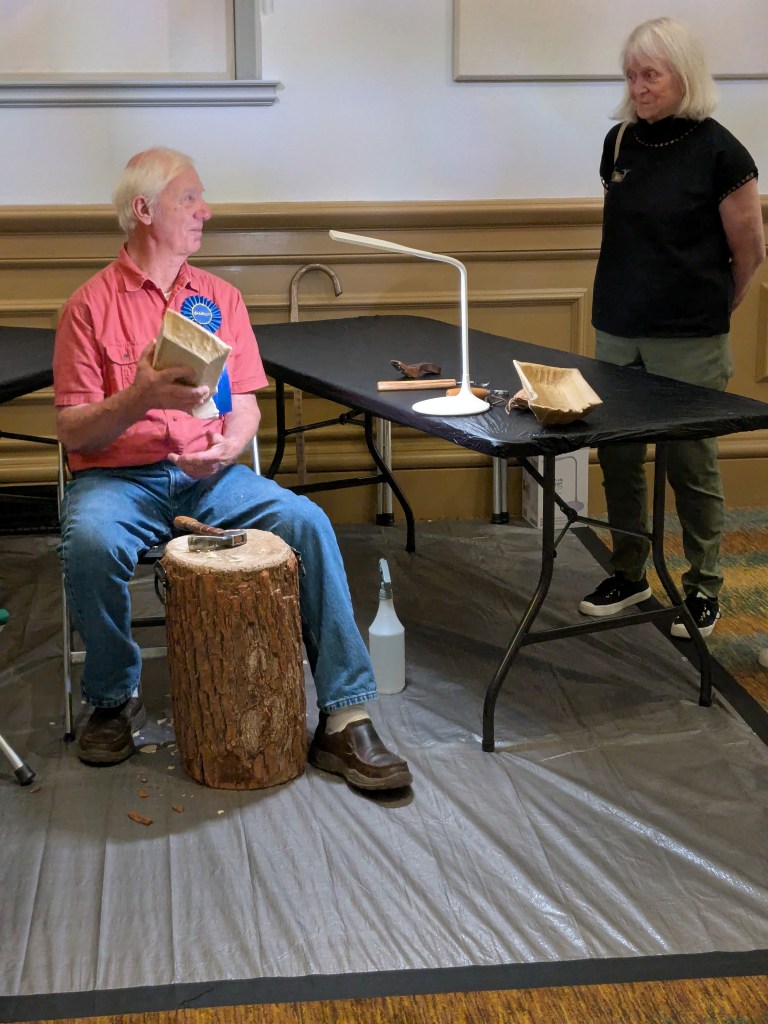
Jon Kay (JK): Thank you for the opportunity to reflect on my recent trip to Washington, DC, where I attended the Smithsonian American Art Museum (SAAM)’s after-hours celebration of the exhibition State Fairs: Growing American Craft at the Renwick Gallery. I participated in the event with Keith Ruble, a bowl hewer and longtime demonstrator in the Indiana State Fair’s Pioneer Village (Figure 1). Keith was named a State Fair Master in 2001—well before I became director of Traditional Arts Indiana (TAI)—a testament to the longstanding recognition of his work.
From 2001 to 2021, TAI partnered with the Indiana State Fair to honor its veteran participants through the State Fair Masters program. Each honoree was selected for their skill, excellence, and deep knowledge in their discipline, as well as for their commitment to passing on that knowledge within their communities. The program emerged in the years following the untimely death of Bill Day, an early Pioneer Village demonstrator and Keith Ruble’s bowl-hewing mentor. It was fitting, then, that both Keith’s and Bill’s bowls were featured in the Renwick’s exhibition (Figure 2).
Keith had been invited to demonstrate at the exhibition, but initially declined—he and his wife, Susie, don’t fly, and he didn’t feel up to driving to DC. When he told me this, I offered to take him. He agreed. So, the day before the celebration, Keith, Susie, my wife Mandy, and I made the twelve-hour trip to the Renwick.
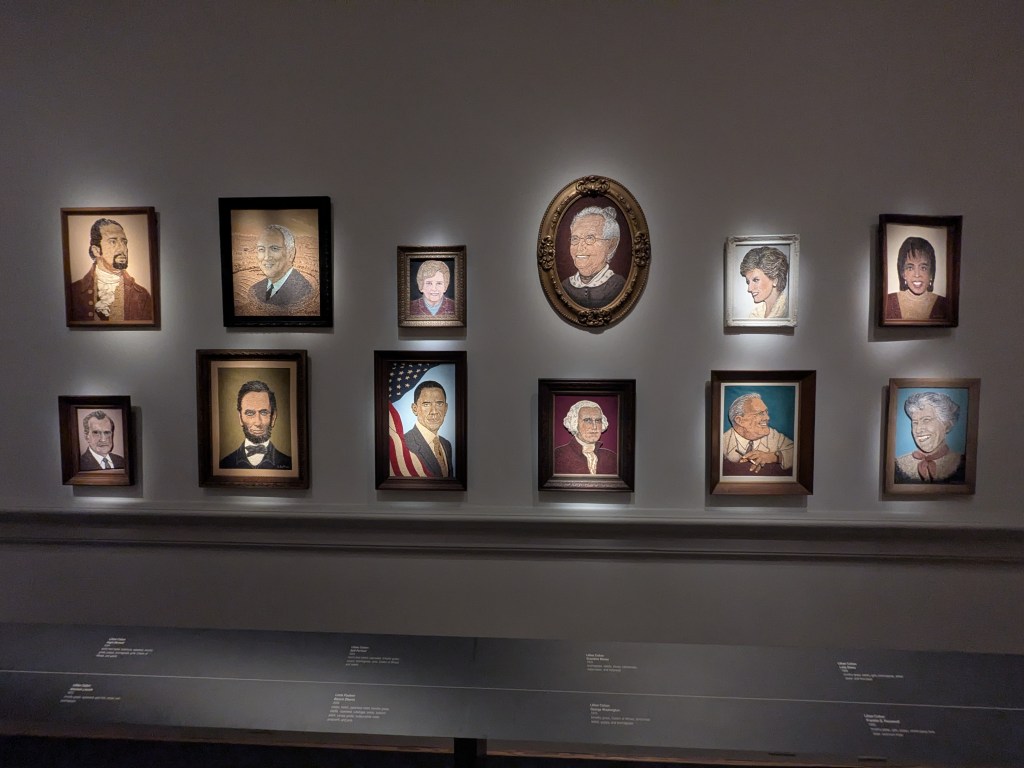
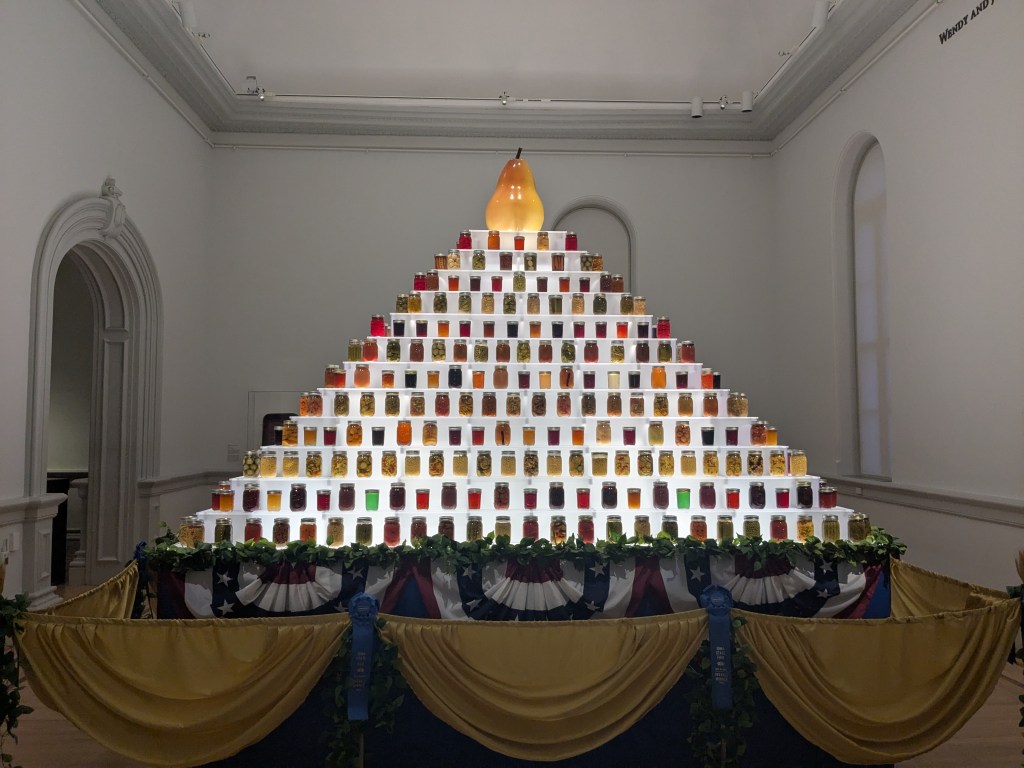
On our first morning in DC, we walked to the Renwick Gallery to view the exhibition and deliver several hand-hewn bowls that Keith had made for the museum’s gift shop (Figures 3 and 4). I imagine your future questions will explore the exhibition’s content in more detail, but for now, I’ll say it was a remarkable showcase of crafts by artists who have exhibited, competed, and demonstrated at state fairs—past and present. From pottery and crop art to canned goods and quilts, the exhibition underscored the central role of craft in state fairs since their inception in 1841 (Figures 5, 6, 7, and 8).
The celebration brought together many of the featured artists and their families, including saddle maker Bob Klenda from Kimball, Nebraska; canner Rod Zeitler from Coralville, Iowa; and basket maker Polly Adams Sutton from Seattle, Washington (Figures 9, 10, 11). While the artists enjoyed seeing their work on display, the event also created a meaningful space for state fair craftspeople from across the country to connect and share stories. The atmosphere was one of mutual appreciation. In a culinary nod to fair traditions, the Renwick served corndogs, cornbread, corn pudding, and other fair staples. It was a festive and memorable evening.
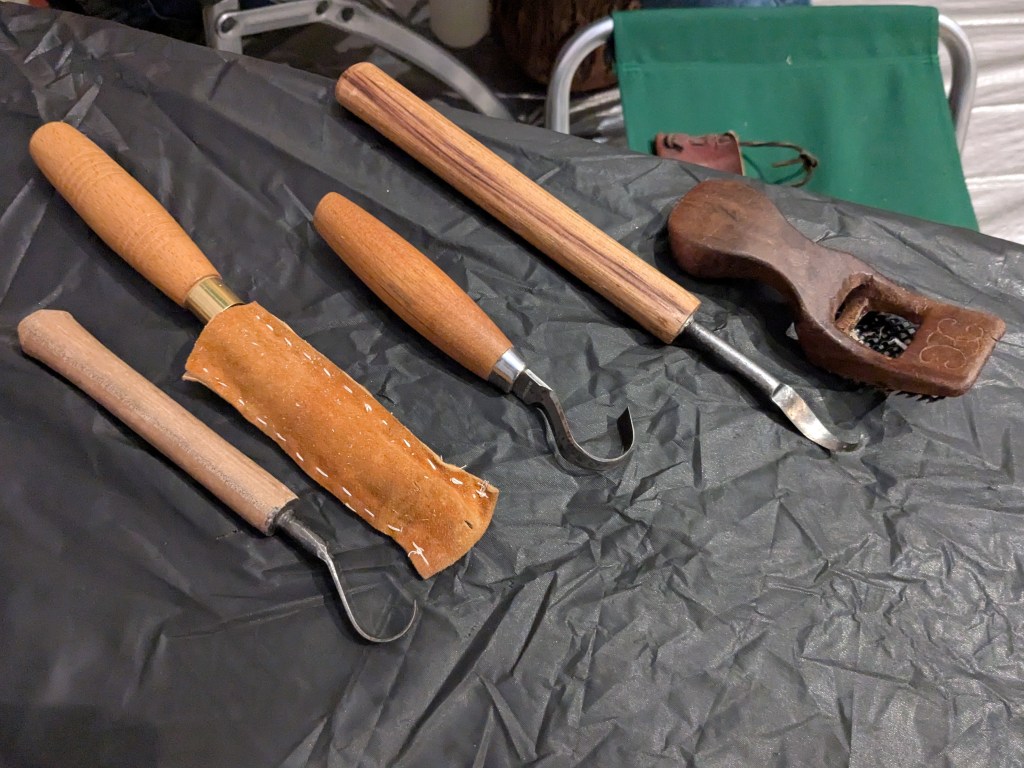
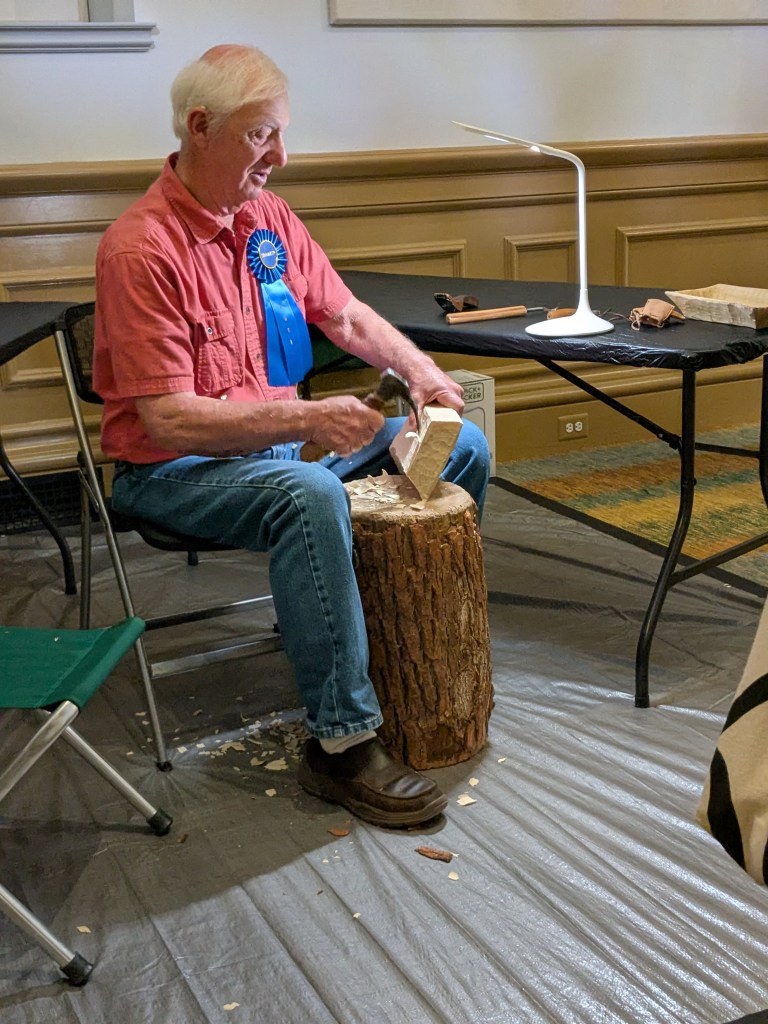
The following day, Keith demonstrated his craft at the Renwick. Concerned about wood chips, the events team taped down tarps and provided tables and chairs. Keith’s setup was minimal—just a few tools: a bowl adze fashioned from a ball-peen hammer, a bent gouge, a couple of spoon knives, and a hand-rasp scraper (Figure 12). But what really caught people’s attention was his sassafras stump with luggage handles, which he uses as a chopping block (Figure 13).
Throughout the day, Keith worked on an Indiana-shaped bowl, answered questions, and shared stories. He spoke about his mentor, Bill Day; his wife’s tolerance for him chopping in the living room; and his “mother-in-law” bowls—his name for the ones that crack (Figure 14).
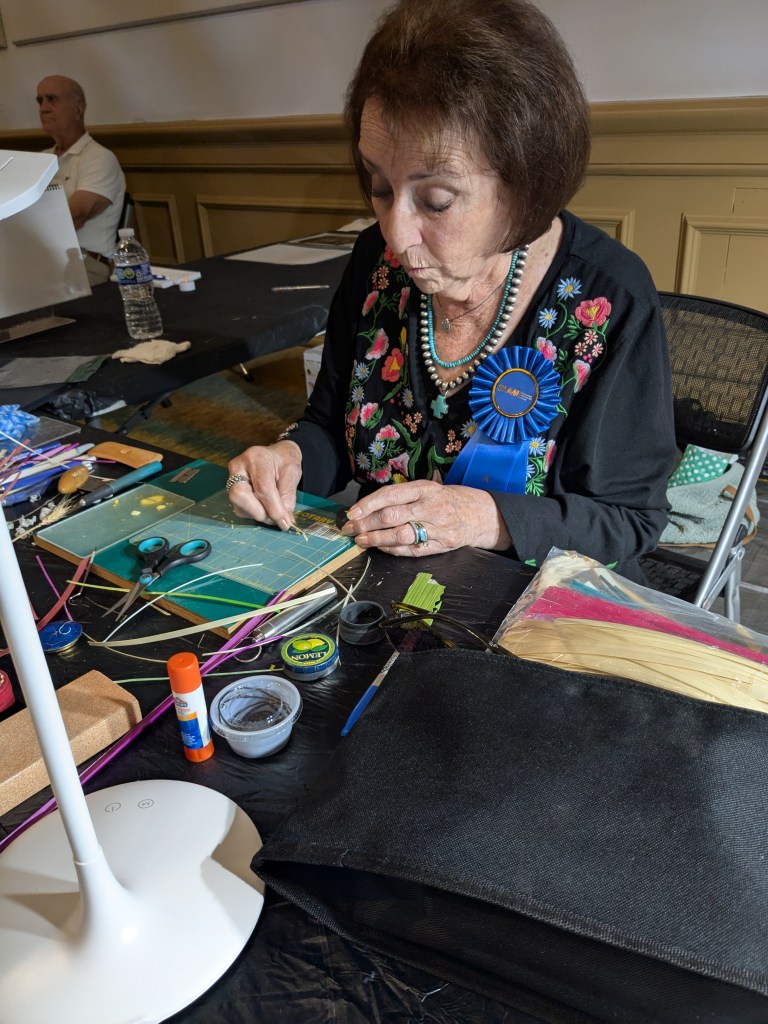
Alongside Keith were two other demonstrators: Martha Varoz Ewing from Santa Fe, New Mexico, who practices traditional straw appliqué, and Samuel Barsky from Baltimore, Maryland, known for knitting custom sweaters of his own design (Figure 15 and 16).
Soon after Keith began, the rhythmic chop, chop, chop of his adze echoed through the gallery, drawing visitors to the demonstration area. From 10 a.m. to 2 p.m., the artists worked and engaged with the public. Keith noted that he didn’t even finish the bowl he brought to work on. I assured him that the Smithsonian didn’t mind. There was a steady stream of visitors throughout the day, and the exhibition, as a whole, was very well attended.
JBJ: I am glad that you and Mandy, Keith and Susie had a great time at the exhibition and its opening events! With the scene set now, can you tell me about your role as one of the “contributing curators” working with lead curator Mary Savig?
JK: From 2004 to 2022, I coordinated the Indiana State Fair Masters Program as part of my work directing Traditional Arts Indiana. For this program, I conducted oral history interviews, created exhibition panels, and produced documentary films.* My friend Betty Belanus, a retired curator at the Smithsonian Institution’s Center for Folklife and Cultural Heritage and Indiana’s first state folklorist in the 1980s, was aware of my long-standing work with the Indiana State Fair. When Mary Savig, Chief Curator of the Renwick Gallery, began planning the exhibition State Fairs: Growing American Craft, Betty suggested that she reach out to me to help identify potential Indiana craftspeople to feature.
Mary and I met at the 2023 Indiana State Fair, where I gave her a tour of the fairgrounds. The State Fair Masters program, as I mentioned earlier, celebrated the work of longtime fair participants—from apple growers and hog breeders to pie bakers and weavers—highlighting the artistry embedded in fair traditions. While many of these practices have aesthetic dimensions, the Renwick is a craft gallery, so performance-based traditions, such as baton twirling, clogging, and washboard playing, were outside the scope. I joked that while I could make a case for seedstock swine breeding or miniature donkey husbandry as art forms, jars of jelly and pickles were probably as close as the exhibition would get to these more ephemeral crafts.
As we walked the fairgrounds, Mary and I discussed her vision for the exhibition and my nearly two decades of work with the Indiana State Fair. The State Fair Masters program had ended in 2023, so I was especially reflective during our visit.
Our first stop was the Indiana Arts Building, formerly known as the Home and Family Arts Building. In the basement, baked goods and canned items were exhibited; the main floor featured quilts, needlepoint, weaving, crochet, and knitting. The building also featured paintings, photographs, and other artworks that had been entered in various fair competitions. I introduced Mary to longtime building coordinator Nancy Leonard, and then we talked with Mary Schwartz, a 2013 State Fair Master who was recognized for her needlepoint artistry.
Next, we visited the Pioneer Village, located across the fairgrounds and surrounded by antique tractors and historic farm implements. The Village showcases farming practices, music, and crafts from Indiana’s Depression Era and earlier. I introduced Mary to the wheelwrights and blacksmiths, and Charlie Carson who trains oxen and makes yokes. In the Pioneer Village Building, Mary talked with quilters, weavers, and broom makers—but what truly captured her interest was the bowl hewing.
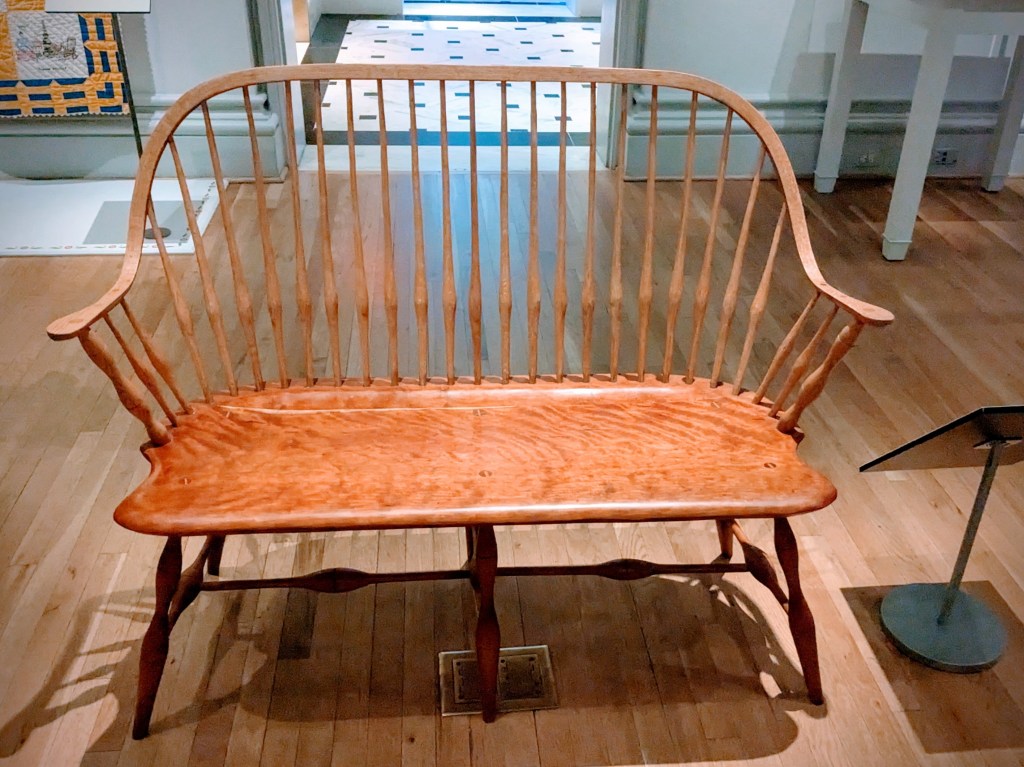
I had recently curated an exhibition at the Swope Art Museum in Terre Haute, Indiana that featured several bowl makers who demonstrated at the fair. I introduced Mary to Keith Ruble and Blaine Berry, both of whom would later be featured in the Renwick exhibition. I also secured a large sassafras bowl made by Bill Day for the exhibition. I loaned the gallery a tulip poplar bowl shaped like Indiana, which Keith had made for me for the 2016 Bicentennial of Indiana Statehood. In addition to recommending artists, I shared ideas for potential craft inclusions. Mary ultimately acquired a settee and two Windsor chairs from Blaine, which the Smithsonian purchased (Figure 17).
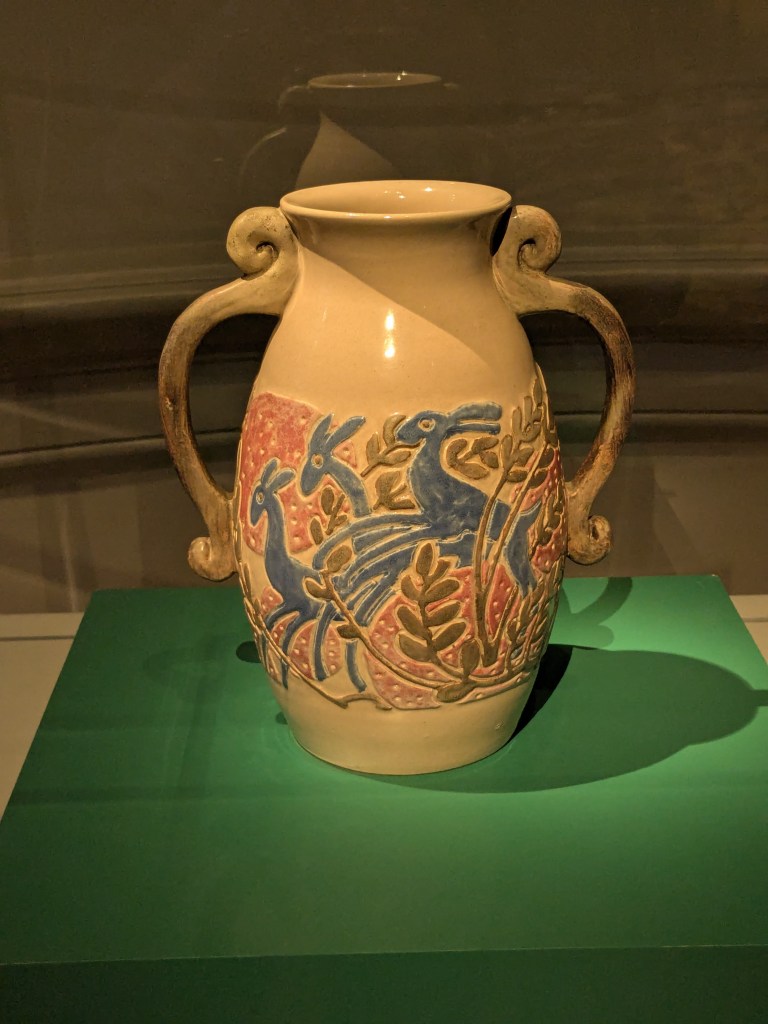
By the end of our visit, Mary had identified about ten potential Indiana artists for the exhibition. A few months later, she told me that she needed to pare down the list, because the exhibit included more craftspeople from Indiana than any other state. The final roster included bowl maker Keith Ruble, chairmaker Blaine Berry, basket weaver Viki Graber, woodturner Betty J. Scarpino, and potter Kelly Bohnenkamp, who loaned her whimsical “corndog vase” (Figures 18-20). The exhibition also included works by two historical Indiana craftspeople: a vase by Mary Overbeck (1878–1955) and the large bowl made by Bill Day (1915-1999) (Figure 21).
JBJ:I am glad that you could help the craftspeople of Indiana gain recognition from this major exhibition at a key world museum devoted to craft. I mentioned the catalogue for the exhibition at the start. Can you tell readers what they will find in that catalogue and what your contribution to it is?
JK: The exhibition catalog, State Fairs: Growing American Crafts, is a companion book published by Smithsonian Press (Savig 2025). It connects the narrative threads of the exhibition, as outlined by editor Mary Savig in the introduction. The chapters then highlight key themes, including “4-H and Youth Participation,” “Creative Arts Competitions and Women’s Collectivity,” “Indigenous Fashion Shows,” and “Studio Craft Competitions.” My chapter ended up being more focused than the others, centering on the Pioneer Village at the Indiana State Fair.
Mary and I initially discussed framing the essay around creative aging in heritage events, but ultimately, she felt a tighter focus on the Pioneer Village would serve the book better. For my chapter, I drew on decades of interviews with participants in the Pioneer Village. In fact, I had to work hard to stay within the word count. I hadn’t realized at the time that mine would be the only chapter focused on a specific event. While the other essays explore broader themes across multiple fairs, mine is grounded in my long-term work at the Indiana State Fair—and especially in the Pioneer Village.
I feel fortunate to have served as a contributing curator for the exhibition. Much of my role involved sharing nearly two decades of research into craft traditions at the Indiana State Fair. I’ll be returning to the Renwick Gallery this winter to participate in a panel discussion, where I’ll speak about my work in arts and aging, drawing on experiences with longtime fair participants, including those in the Indiana Arts Building and across the fairgrounds.
JBJ:The new exhibition, book and public program series at the Renwick Gallery is one of scores of projects that you have pursued related to craft and craftspeople in Indiana, in the United States, and overseas. Looking ahead, what is your next big project related to craft all about?
JK: As you know, I tend to keep several projects going at once, so questions like this always make my head spin a bit. I recently submitted a manuscript for a book on Indiana basketry, which is currently under review at the press. It examines the social function of craft in everyday life and the cultural changes that have undermined it.
In addition, I co-authored a new, public-facing book, Lifelong Arts: A Creative Aging Handbook, for the Indiana Arts Commission. The Indiana Arts Commission will publish it. I wrote it with Stephanie Haines and Anna Ross, and it explores creative aging practices. The book is based on a series of public workshops and trainings that we conducted across the state in 2022-23. Lifelong Arts will be my third public-facing creative aging guide. This one is a more general guide to arts and aging. In contrast, my other two projects were regional and based on traditional arts and everyday creative practices: Memory, Art & Aging (Kay 2020) and Everyday Arts in Later Life (Kay, Jackson, and Islam 2024).
So, I am in the starting phase of two larger projects. One explores bowl hewing in Indiana, which connects to Keith Ruble, Bill Day, and the State Fair. While this tradition is deeply rooted in Indiana, I’ve also discovered that bowl hewing is part of a broader international network of green woodworkers, toolmakers, and heritage events. Many of these makers speak about how the craft supports their emotional, physical, and social well-being, which aligns with my ongoing interest in craft and wellness. The second project, which may eventually merge with the bowl hewing project, is a scholarly study on “Folklife and Creative Aging” (Figure 22).
Of course, my academic research runs in parallel with (and within) my work directing Traditional Arts Indiana at Indiana University. TAI continues to operate the TAI Apprenticeship and the Indiana Heritage Fellowships. I am also exploring the development of an online version of TAI’s Community Scholar Training. It’s a lot to think about and seeing it all laid out like this feels a bit daunting.
In closing, Jason, thanks for your ongoing interest in craft, museums, and folklore. It was great to reflect on this moment and to think about my years at the fair and the exhibition at the Renwick. I know that the exhibition has helped me approach the fair with fresh eyes and to see the many crafts and communities that the fair has helped cultivate.
JBJ: Thanks Jon for sharing these valuable reflections and thanks for all that you do for Indiana and its peoples.
Notes *Twenty documentary videos profiling State Fair Masters are accessible via Indiana University’s Media Collections Online. See the “Traditional Arts Indiana’s State Fair Master Documentaries” collection via https://media.dlib.indiana.edu/.
References Cited
Kay, Jon, ed. 2020. Memory, Art, and Aging: A Resource and Activity Guide. Traditional Arts Indiana. https://hdl.handle.net/2022/33323
Kay, Jon, Joelle Jackson, and Touhidul Islam. 2024. Everyday Arts in Later Life. Traditional Arts Indiana. https://hdl.handle.net/2022/33322
Savig, Marty, ed. 2025. State Fairs: Growing American Craft. Smithsonian Books.
The Council for Museum Anthropology Book Award was created to recognize and promote excellence in museum anthropology. The award is awarded to a scholar within the field of museum anthropology for a solo, co- or multi-authored book published up to five years prior to the award date, and will be considered for the award 2 years after nomination. Edited books will not be considered.
Nomination Packets
To nominate a book, please send a signed letter of nomination to the Chair of the Book Award Committee. Only individuals, not organizations or publishers, are eligible to nominate books for the CMA Book Award. The letter of nomination should speak to the impact of the book on the field of museum anthropology and needs to be by a current CMA member. Self-nomination is not permitted, and works must have an accompanying letter of nomination to be considered. Please arrange to have the publisher send a copy of the book directly to each member of the Selection Committee. Books must be received by the deadline. Applicants will be notified in October as to the results.
Evaluation Criteria
The CMA Book Award will be given to the author(s) whose work is judged to be a significant and influential contribution to museum anthropology.
Books that did not receive the award but are considered exceptional will receive honorable mentions at the award ceremony at the AAA Annual Meeting.
The CMA Student Travel Awards are designed to support graduate student travel to the annual AAA meeting to present papers and/or posters. Students and recent graduate degree recipients (those who have defended within the year of the award) are eligible to apply. Each year, CMA will award two prizes of $1000 each.
Application Packets
Application packets (maximum 5 pages) must include: a brief letter indicating the applicant’s student status and explaining how this project reflects the student’s graduate work; a copy of the abstract for the proposed paper or poster (and for the session in which they will be presenting, if known); and a letter of endorsement from an academic advisor at the student’s most recent institution of study.
Evaluation Criteria
Creativity: Is the paper or poster a unique and novel contribution to museum anthropology?
Commitment: Does the student demonstrate a commitment to the field of museum anthropology?
Impact: Does the paper or poster have the potential to develop into a work that could more broadly impact the field of museum anthropology?
Student Travel Award recipients will be presented with a check for $1000 and a certificate of the award.
The Council for Museum Anthropology is seeking nominations for its Distinguished Service Award. The award recognizes CMA members whose careers demonstrate extraordinary achievements that have advanced museum anthropology. These achievements might include collections work, community collaborations, exhibitions, publications, public programming and outreach, teaching, policy development, etc. While many anthropologists distinguish themselves through their works, this award is meant to single out those who, over the course of their careers, have truly helped to define and or reshape the field of anthropology in and of museums. Nominees are expected to have spent at least 20 years working in the field of museum anthropology. Deadline for submissions is August 1, 2025.
We’re delighted to announce the winners of this year’s Council for Museum Anthropology awards!! We thank the CMA Awards Committee (Lijun Zhang (Chair), Jason Jackson, Amanda Guzman, Sowparnika Balaswaminathan), and the CMA Book Award Committee (Cara Krmpotich (Chair), Molli Pauliot, Lijun Zhang) for their dedicated work on this.
[CMA@AAA Award Ceremony Details Omitted]
CMA STUDENT TRAVEL AWARDS:
Congratulations to this year’s CMA Student Travel award recipients, Amanda Sorensen and Haley Bryant!
The CMA Student Travel Awards are awarded to students who are going to present papers or posters at AAA meeting that present novel contribution to museum anthropology and have the potential to develop into works that could more broadly impact the field.
Amanda Sorensen and Haley Bryant have co-organized a panel for the 2024 AAA meeting which explores software and technologies used in museum practice. In the panel, Sorensen and Bryant will present papers to discuss digital technologies, software development, human labor, anthropological archives, and museum practice.
CMA MICHAEL AMES AWARD FOR INNOVATIVE MUSEUM ANTHROPOLOGY:
We are excited to share the news that the 2024 CMA Michael M. Ames Prize for Innovative Museum Anthropology is awarded to the exhibition project Mnaajtood ge Mnaadendaan: Miigwewinan Michi Saagiig Kwewag Miinegoowin Gimaans Zhaganaash Aki 1860 / To Honour and Respect: Gifts from the Michi Saagiig Women to the Prince of Wales, 1860. The project researches on and displays baskets made by women at what is now Hiawatha First Nation (HFN) in Ontario and gifted to the Prince of Wales in 1860. The exhibition enables Michi Saagiig community members to reconnect with their ancestors and visit their creations.
Congratulations to the co-curators Lori Beavis and Laura Peers as well as the HFN community members who have been involved in the project. See their amazing work here: https://www.tohonourandrespect.ca/
CMA BOOK AWARD
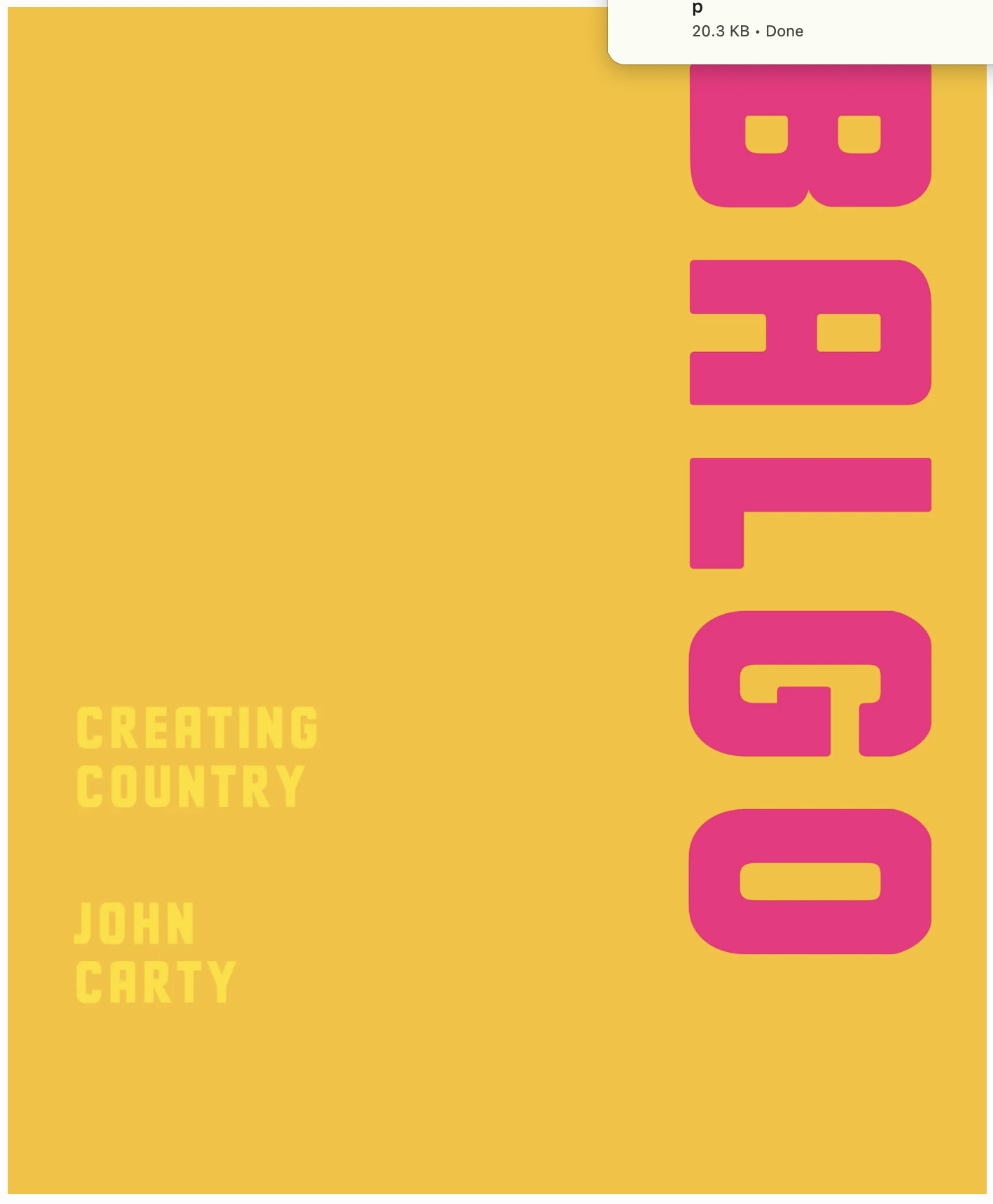
The CMA Book Award for 2024 is awarded to Balgo: Creating Country by John Carty, published by University of Western Australia Publishing in 2021.
The Nomination for Balgo: Creating Country highlights Carty’s skill in combining a rich ethnographic account with the methods of art history and an appreciation of the importance of collections and archives. Drawing on vast sources, Carty studies Balgo art from various perspectives, including art history, anthropology, economics, religious study, statistics, and gender studies. Balgo: Creating Country seamlessly integrates an art historical understanding cultivated through the study of changing forms over time with an understanding of the social processes represented in those changes, made known through sustained and ethical research relationships.
Balgo: Creating Country is the fruit of years of original research with close and insightful examination of Balgo art, history, individual experiences, community life, and the living world. It situates desert art and the creative process in complex historical, economic, and political dynamics. Balgo: Creating Country successfully navigates the scale of art practices, attending to over 15,000 artworks all the while being attentive to the artists at a very human scale. A distinguishing and innovative aspect of the book is Carty’s use of kinship relationships and kin diagrams to analyse and demonstrate the aesthetic and stylistic relationships between paintings over time.
CMA’s Book Award Committee wholeheartedly agreed with the Nomination that Balgo: Creating Country “exemplifies the unique contribution museum anthropology as a discipline is able to make to the understanding of world art, by challenging received Western categories yet at the same time bringing different art histories into dialogue with one another.”
Upon learning of the Award, Balgo artists shared this message with CMA:
“We are very proud of this book, and we are happy that other people can see its importance through this award. Our art is more than art, more than painting, it is our Country – who we are as people. It takes a lot to see what we are painting. This book tells that story: from the early days before whitefellas, to the mission days, and now today, where we are strong people who have built a new life for ourselves in Balgo. That’s what’s in our painting. It’s a big book, but it tells an even bigger story. (Warlayirti Artists, Balgo, Australia.)”
I am eager to share the following call for CMA award nominations. Check it out and nominate the wonderful colleagues in your world. –Jason
Michael M. Ames Award
The Council for Museum Anthropology is seeking nominations for the Michael M. Ames Award for Innovative Museum Anthropology. The award is given to individuals for an innovative project in museum anthropology. Examples include: outstanding single or multi-authored books or published catalogues; temporary or permanent exhibits; repatriation projects; collaborations with descendant communities; educational or outreach projects; multimedia works, and other endeavors. Individuals can be nominated by any member of CMA (self-nominations are not permitted). Deadline for submissions is August 1, 2024.
The Council for Museum Anthropology is seeking nominations for the Lifetime Achievement/Distinguished Service Award. The award recognizes CMA members whose careers demonstrate extraordinary achievements that have advanced museum anthropology. These achievements might include: collections work, community collaborations, exhibitions, publications, public programming and outreach, teaching, policy development, etc. While many anthropologists distinguish themselves through their works, this award is meant to single out those who, over the course of their careers, have truly helped to define and or reshape the field of anthropology in and of museums. Nominees are expected to have spent at least 20 years working in the field of museum anthropology. Deadline for submissions is August 1, 2024.
Please note that the Lifetime Achievement/Distinguished Service award was awarded in 2023 and is usually done on a biannual basis. Nominations may be carried over and considered for an award in 2025.
The Council for Museum Anthropology is seeking applications for the CMA Student Travel Award. The award is designed to support graduate student travel to the annual AAA meeting to present papers and/or posters. Students and recent graduate degree recipients (those who have defended within the year of the award) are eligible to apply. Each year, CMA will award two prizes of $1000 each. The deadline for submissions is August 1, 2024.
The Council for Museum Anthropology is seeking nominations for the CMA Book Award. The award was created to recognize and promote excellence in museum anthropology, and is awarded to a scholar within the field of museum anthropology for a solo, co- or multi-authored book published up to five years prior to the award date, and will be considered for the award 2 years after nomination. Edited books will not be considered. The CMA Book award will be given to the author(s) whose work is judged to be a significant and influential contribution to museum anthropology. Books that did not receive the award but are considered exceptional will receive honorable mentions at the award ceremony at the AAA Annual Meeting.
There are too many things needing to be written about. Many of them are grim. Here I want to begin the work week with positivity.
This past semester, I taught one wholly new graduate course and one substantively new undergraduate course. I do not yet have confirmation from course evaluations, but I think that they both turned out well. I will discuss the graduate course separately. The undergraduate course, which covered material that is very familiar to me, was FOLK-F 406 Museum Practice in Folklore Studies (a.k.a. ANTH-A 405 Museum Methods). ANTH-A 405 has been on the books for decades but has been very rarely offered. The parallel course in FOLK was created by me prior to the pandemic, but it was only this semester that I could offer first it. This course was thus substantively new, although I drew in presenting it on past museums courses that I have taught.
As I taught these two courses jointly, I was very pleased that the two sections (ANTH and FOLK) attracted equal numbers of students. Many the participants were major or minor students in both departments, thus they—like me—have a foot in both fields and an interest in their points of intersection. Museum ethnography is one of those points of intersection. This class met no general education requirements. Students were there because they wanted to learn the material and that made for a wonderful course. In twenty years on the Indiana University faculty, I have never taught a course that was comprised mainly of majors or minors in my fields. What a joy that was! Even the students distracted by the end of their senior year and their rapidly approaching graduation, were a pleasure to engage with each week. It is gratifying that a significant proportion of the students in the course were already gaining museum experiences in concurrent museum practicum and that many are now moving on to further work in museums or in museums-related graduate programs.
As I got acquainted with the students and rose to their level, the course changed as it went. As planned, the course included museum work basics and independent research with museum collections objects, but the final course session on critical practices in museum work and museum studies shifted considerably. The topics planned remained the same, but my method moved from lecture and lecture-discussion to freer discussion of key news stories about important or exemplary developments in the present-day museum work. Many of these came from the New York Times, which has been doing particularly good work related to museums in recent months. These were in areas such as repatriation and restoration, digital practices, heritage politics, museum censorship, the finances of museums, community consultation, museum audiences/visitorship, and museums and social change. It was a pleasure to discuss and debate the big issues with these students. They arrived in the course ready and able to engage and were nearly all eager to do so. I am proud of them and thankful for the opportunity to study and learn with them. I wish all of them well and I congratulate the graduating seniors among them.
A heuristic for assessing temporary exhibitions in museums relative to the place of museum collections within them, the relevance to institutional mission, and the role of research within the exhibition.
I am very happy to note a new co-authored article titled “A Survey of Contemporary Bai Craft Practices in the Dali Bai Autonomous Prefecture, Yunnan, China.” It was jointly written with Wuerxiya (first author), C. Kurt Dewhurst (third author) and Cuixia Zhang (fourth author) and it appears in Museum Anthropology Review volume 16, numbers 1-2. This is the special double issue published in honor of Daniel C. Swan, as noted in an earlier post on Shreds and Patches. The article is based on work undertaken by a much larger bi-national team within the “Collaborative Work in Museum Folklore and Heritage Studies” sub-project of the broader “China-US Folklore and Intangible Cultural Heritage Project,” a collaboration (2007-present) of the American Folklore Society and the China Folklore Society. In particular, it describes work undertaken through the auspices of, and in partnership with, The Institute of National Culture Research at Dali University. Special thanks go to the Institute and its leadership.
Presented as an image is the first page of the journal article “A Survey of Contemporary Bai Craft Practices in the Dali Bai Autonomous Prefecture, Yunnan, China.”
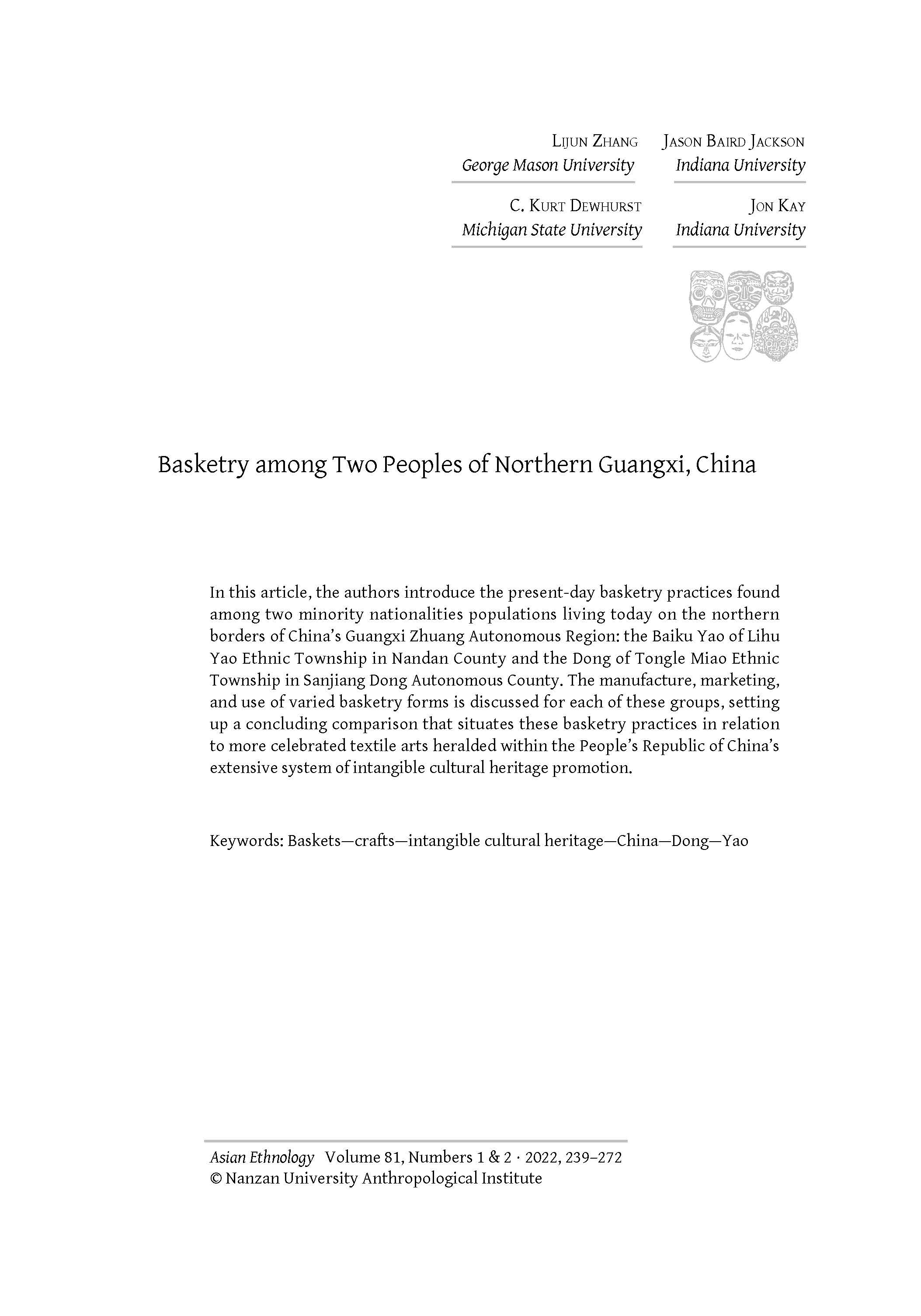
I am very happy to note the publication of “Basketry among Two Peoples of Northern Guangxi, China” in the latest double issue of Asian Ethnology. This article is one that I co-wrote with my friends and collaborators Lijun Zhang (first author), C. Kurt Dewhurst (third author), and Jon Kay (fourth author) and it is based on work undertaken by a much larger bi-national team within the “Collaborative Work in Museum Folklore and Heritage Studies” sub-project of the broader “China-US Folklore and Intangible Cultural Heritage Project,” a collaboration (2007-present) of the American Folklore Society and the China Folklore Society.
I am a huge fan of Asian Ethnology, a wonderful open access journal now in its 81st year. Check out the huge volume that our paper is a part of, Find Asian Ethnology online here: https://asianethnology.org/ and also in JSTOR
A image of page one of the typeset version of the scholarly article “Basketry among Tow Peoples of Northern Guangxi, China” published in Asian Ethnology.
















 Shreds and Patches