Skip to content

Posts from the ‘Museum’ Category

State Fairs: Growing American Craft: Four Questions for Exhibition Contributing Curator Jon Kay

Jon Kay with Jason Baird Jackson
Indiana University Bloomington

Jon Kay is Director of Traditional Arts Indiana and an Associate Professor of Folklore at Indiana University Bloomington. In this exchange I pose questions to him about the new Smithsonian exhibition and catalogue State Fairs: Growing American Craft. Find details about the exhibition at the end of the interview.

Jason Baird Jackson (JBJ):  Jon, you have just returned from a trip to Washington, DC for the opening of the exhibition State Fairs: Growing American Craft, which will run through September 7, 2026 at the Smithsonian American Art Museum’s Renwick Gallery. The Renwick is the part of the Smithsonian devoted to craft. Before I ask you about your role in the exhibition and the associated catalogue (Mary Savig, ed., State Fairs: Growing American Craft. Smithsonian Books, 2025), can you tell me about the opening? What did you see? What did you do? Who went with you? What was most memorable?

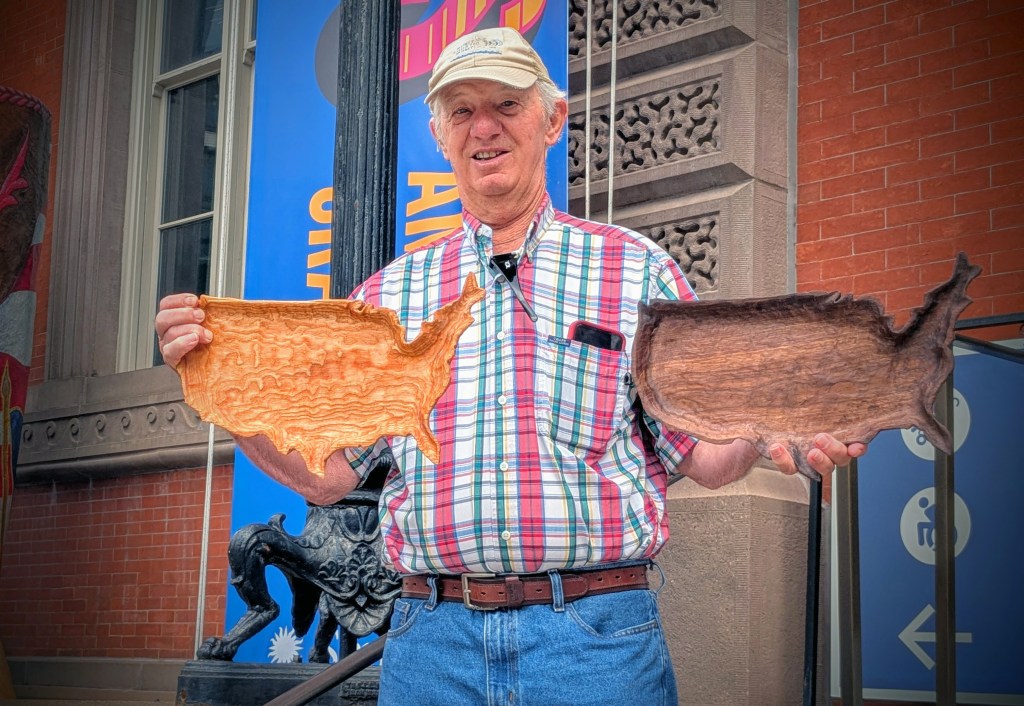
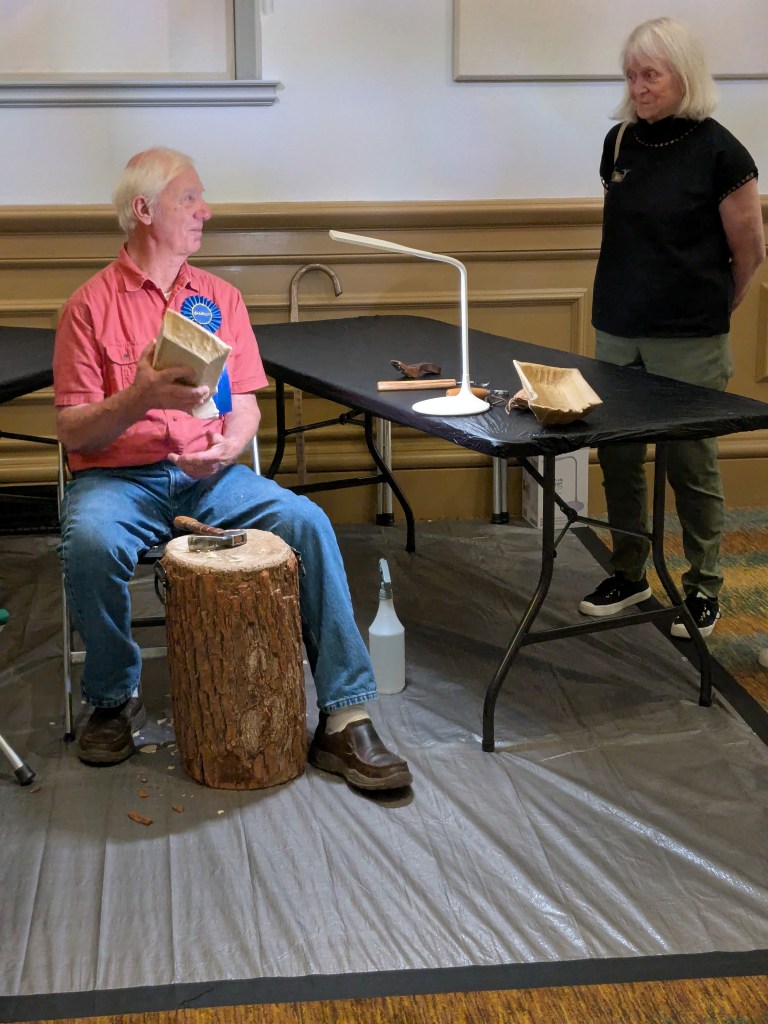
Jon Kay (JK): Thank you for the opportunity to reflect on my recent trip to Washington, DC, where I attended the Smithsonian American Art Museum (SAAM)’s after-hours celebration of the exhibition State Fairs: Growing American Craft at the Renwick Gallery. I participated in the event with Keith Ruble, a bowl hewer and longtime demonstrator in the Indiana State Fair’s Pioneer Village (Figure 1). Keith was named a State Fair Master in 2001—well before I became director of Traditional Arts Indiana (TAI)—a testament to the longstanding recognition of his work.

From 2001 to 2021, TAI partnered with the Indiana State Fair to honor its veteran participants through the State Fair Masters program. Each honoree was selected for their skill, excellence, and deep knowledge in their discipline, as well as for their commitment to passing on that knowledge within their communities. The program emerged in the years following the untimely death of Bill Day, an early Pioneer Village demonstrator and Keith Ruble’s bowl-hewing mentor. It was fitting, then, that both Keith’s and Bill’s bowls were featured in the Renwick’s exhibition (Figure 2).

Keith had been invited to demonstrate at the exhibition, but initially declined—he and his wife, Susie, don’t fly, and he didn’t feel up to driving to DC. When he told me this, I offered to take him. He agreed. So, the day before the celebration, Keith, Susie, my wife Mandy, and I made the twelve-hour trip to the Renwick.

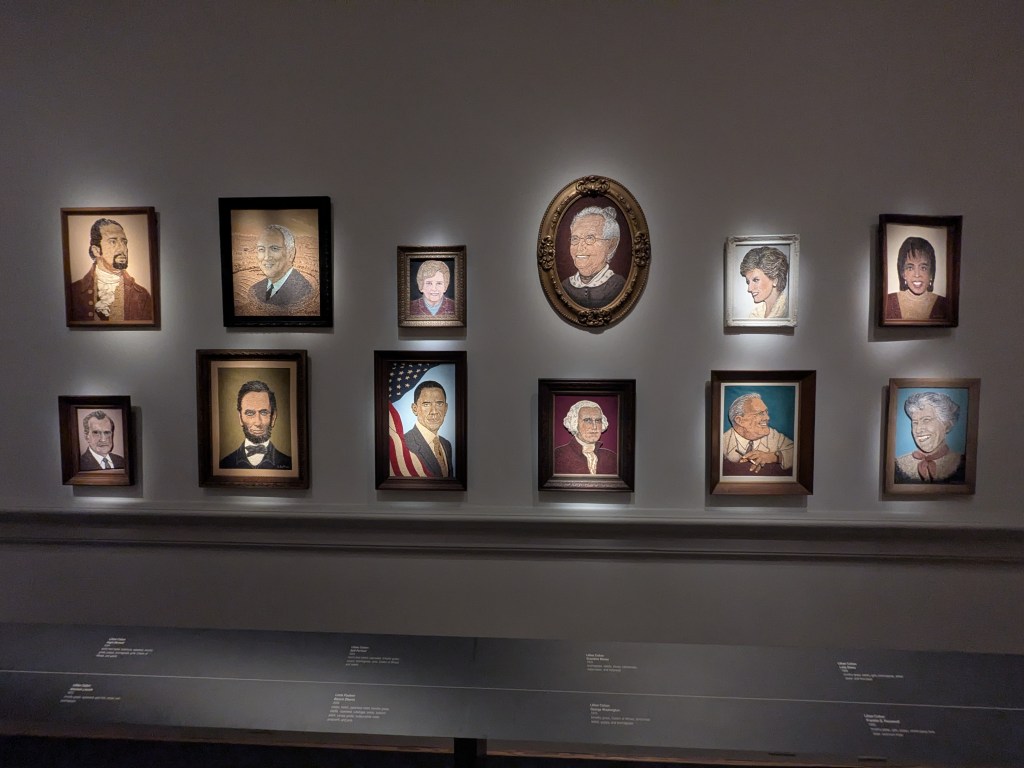
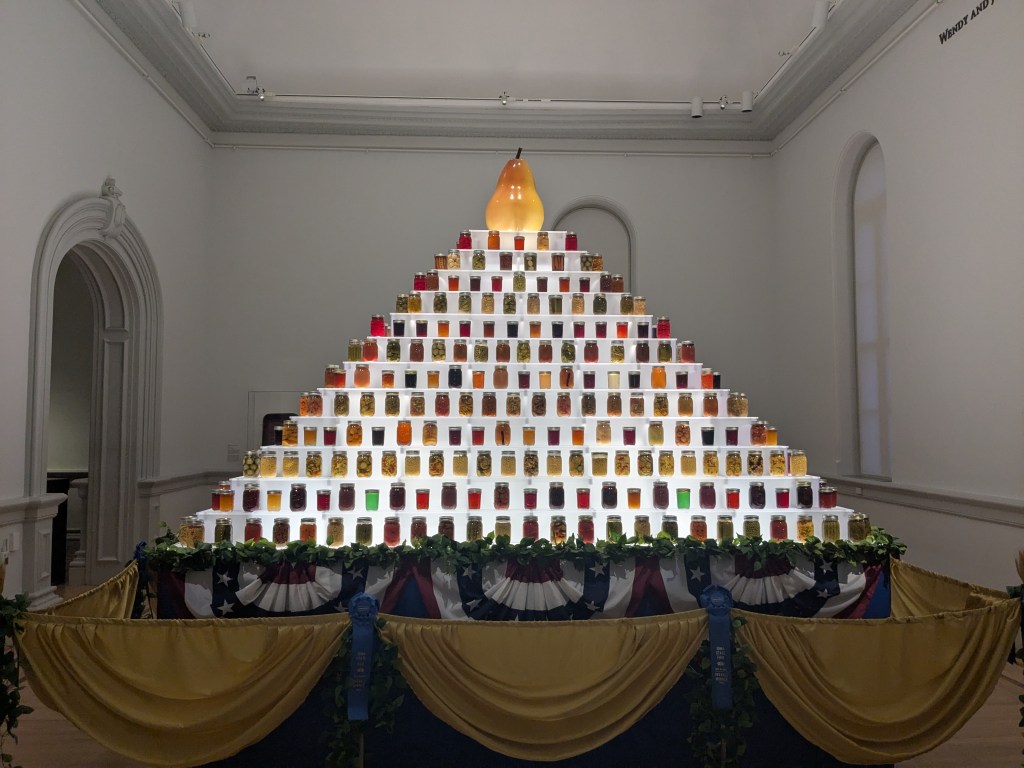
On our first morning in DC, we walked to the Renwick Gallery to view the exhibition and deliver several hand-hewn bowls that Keith had made for the museum’s gift shop (Figures 3 and 4). I imagine your future questions will explore the exhibition’s content in more detail, but for now, I’ll say it was a remarkable showcase of crafts by artists who have exhibited, competed, and demonstrated at state fairs—past and present. From pottery and crop art to canned goods and quilts, the exhibition underscored the central role of craft in state fairs since their inception in 1841 (Figures 5, 6, 7, and 8).

The celebration brought together many of the featured artists and their families, including saddle maker Bob Klenda from Kimball, Nebraska; canner Rod Zeitler from Coralville, Iowa; and basket maker Polly Adams Sutton from Seattle, Washington (Figures 9, 10, 11). While the artists enjoyed seeing their work on display, the event also created a meaningful space for state fair craftspeople from across the country to connect and share stories. The atmosphere was one of mutual appreciation. In a culinary nod to fair traditions, the Renwick served corndogs, cornbread, corn pudding, and other fair staples. It was a festive and memorable evening.

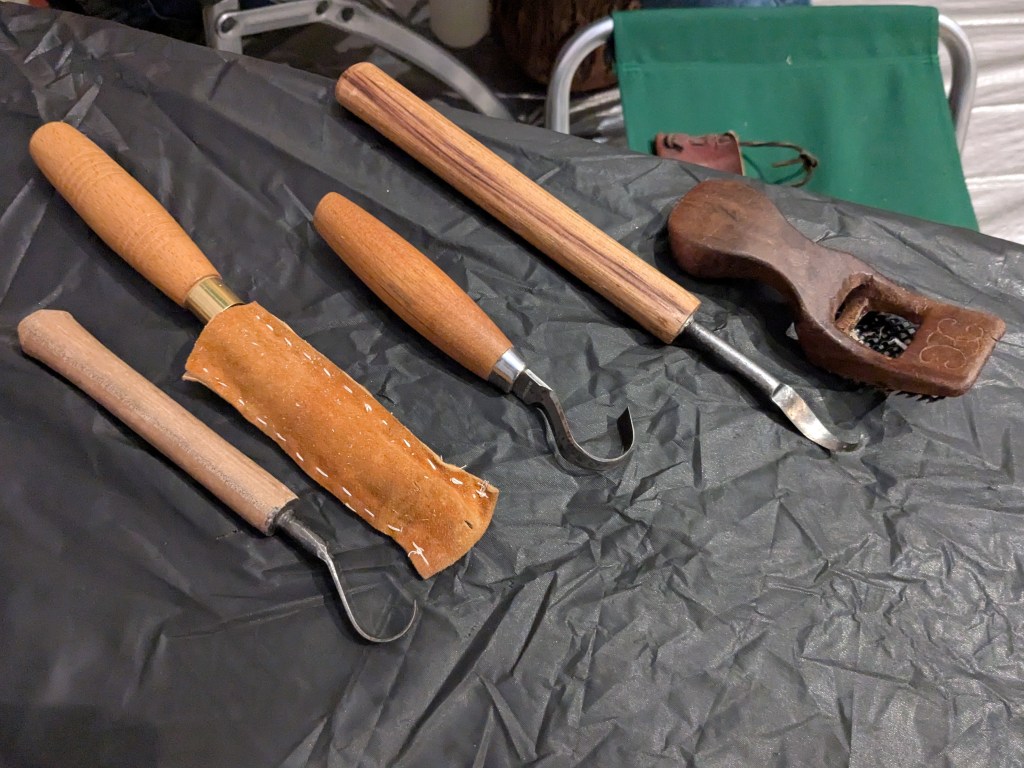
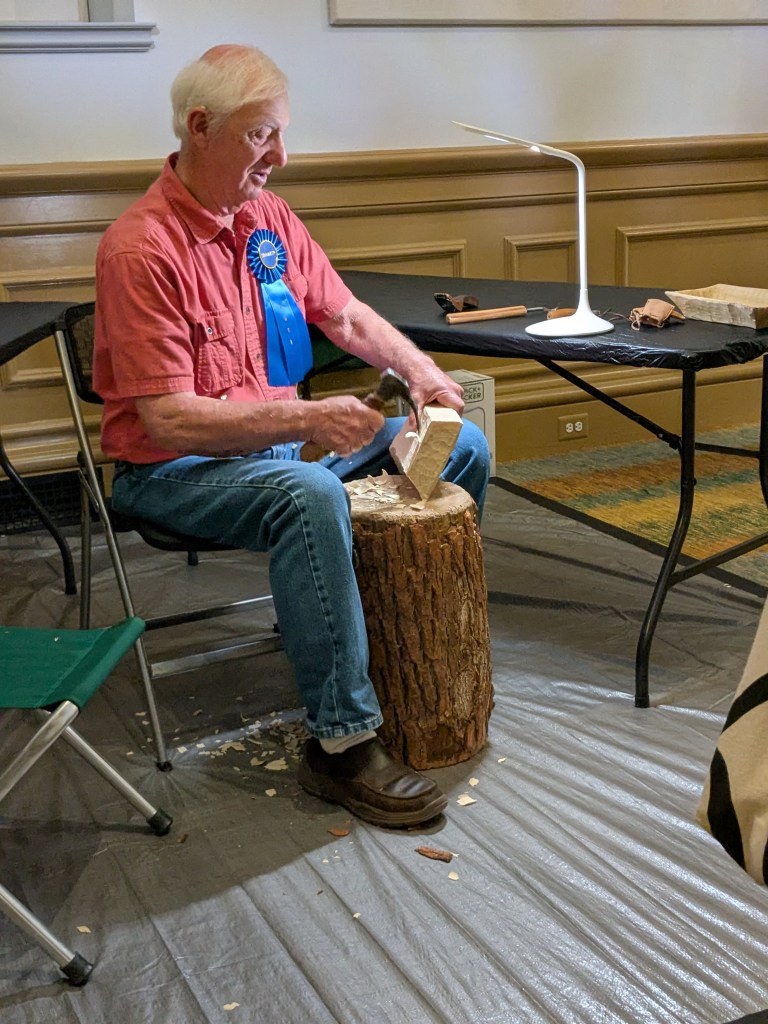
The following day, Keith demonstrated his craft at the Renwick. Concerned about wood chips, the events team taped down tarps and provided tables and chairs. Keith’s setup was minimal—just a few tools: a bowl adze fashioned from a ball-peen hammer, a bent gouge, a couple of spoon knives, and a hand-rasp scraper (Figure 12). But what really caught people’s attention was his sassafras stump with luggage handles, which he uses as a chopping block (Figure 13).

Throughout the day, Keith worked on an Indiana-shaped bowl, answered questions, and shared stories. He spoke about his mentor, Bill Day; his wife’s tolerance for him chopping in the living room; and his “mother-in-law” bowls—his name for the ones that crack (Figure 14).

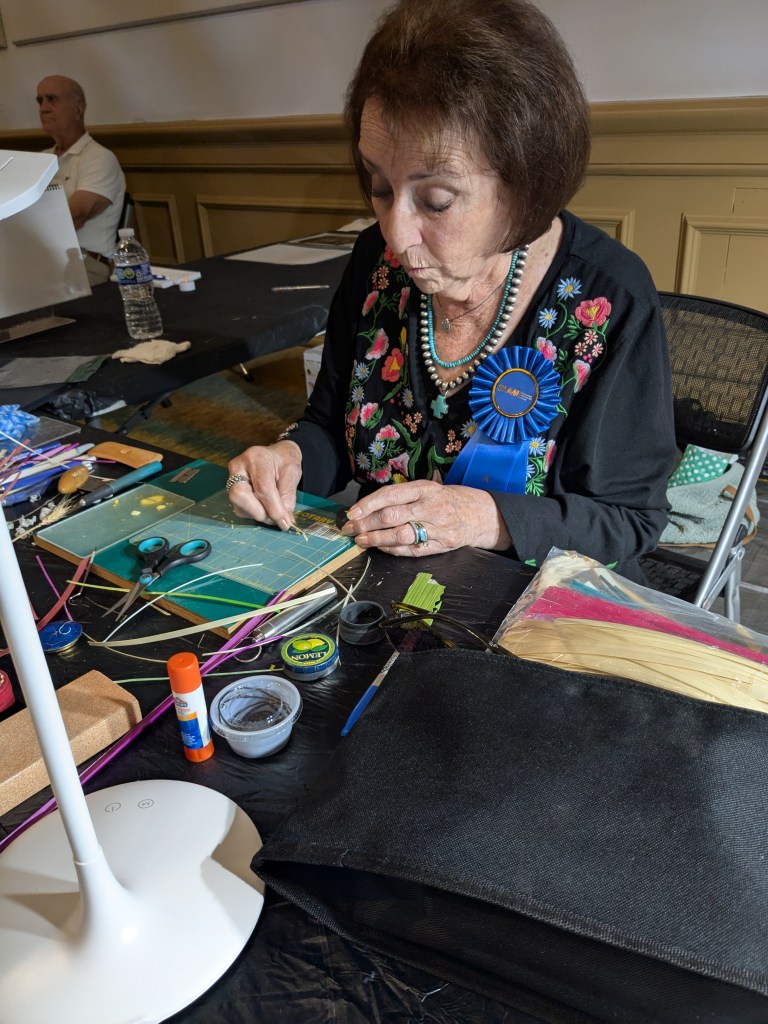
Alongside Keith were two other demonstrators: Martha Varoz Ewing from Santa Fe, New Mexico, who practices traditional straw appliqué, and Samuel Barsky from Baltimore, Maryland, known for knitting custom sweaters of his own design (Figure 15 and 16).

Soon after Keith began, the rhythmic chop, chop, chop of his adze echoed through the gallery, drawing visitors to the demonstration area. From 10 a.m. to 2 p.m., the artists worked and engaged with the public. Keith noted that he didn’t even finish the bowl he brought to work on. I assured him that the Smithsonian didn’t mind. There was a steady stream of visitors throughout the day, and the exhibition, as a whole, was very well attended.

JBJ:  I am glad that you and Mandy, Keith and Susie had a great time at the exhibition and its opening events! With the scene set now, can you tell me about your role as one of the “contributing curators” working with lead curator Mary Savig?

JK: From 2004 to 2022, I coordinated the Indiana State Fair Masters Program as part of my work directing Traditional Arts Indiana. For this program, I conducted oral history interviews, created exhibition panels, and produced documentary films.* My friend Betty Belanus, a retired curator at the Smithsonian Institution’s Center for Folklife and Cultural Heritage and Indiana’s first state folklorist in the 1980s, was aware of my long-standing work with the Indiana State Fair. When Mary Savig, Chief Curator of the Renwick Gallery, began planning the exhibition State Fairs: Growing American Craft, Betty suggested that she reach out to me to help identify potential Indiana craftspeople to feature.

Mary and I met at the 2023 Indiana State Fair, where I gave her a tour of the fairgrounds. The State Fair Masters program, as I mentioned earlier, celebrated the work of longtime fair participants—from apple growers and hog breeders to pie bakers and weavers—highlighting the artistry embedded in fair traditions. While many of these practices have aesthetic dimensions, the Renwick is a craft gallery, so performance-based traditions, such as baton twirling, clogging, and washboard playing, were outside the scope. I joked that while I could make a case for seedstock swine breeding or miniature donkey husbandry as art forms, jars of jelly and pickles were probably as close as the exhibition would get to these more ephemeral crafts.

As we walked the fairgrounds, Mary and I discussed her vision for the exhibition and my nearly two decades of work with the Indiana State Fair. The State Fair Masters program had ended in 2023, so I was especially reflective during our visit.

Our first stop was the Indiana Arts Building, formerly known as the Home and Family Arts Building. In the basement, baked goods and canned items were exhibited; the main floor featured quilts, needlepoint, weaving, crochet, and knitting. The building also featured paintings, photographs, and other artworks that had been entered in various fair competitions. I introduced Mary to longtime building coordinator Nancy Leonard, and then we talked with Mary Schwartz, a 2013 State Fair Master who was recognized for her needlepoint artistry.

Next, we visited the Pioneer Village, located across the fairgrounds and surrounded by antique tractors and historic farm implements. The Village showcases farming practices, music, and crafts from Indiana’s Depression Era and earlier. I introduced Mary to the wheelwrights and blacksmiths, and Charlie Carson who trains oxen and makes yokes. In the Pioneer Village Building, Mary talked with quilters, weavers, and broom makers—but what truly captured her interest was the bowl hewing.

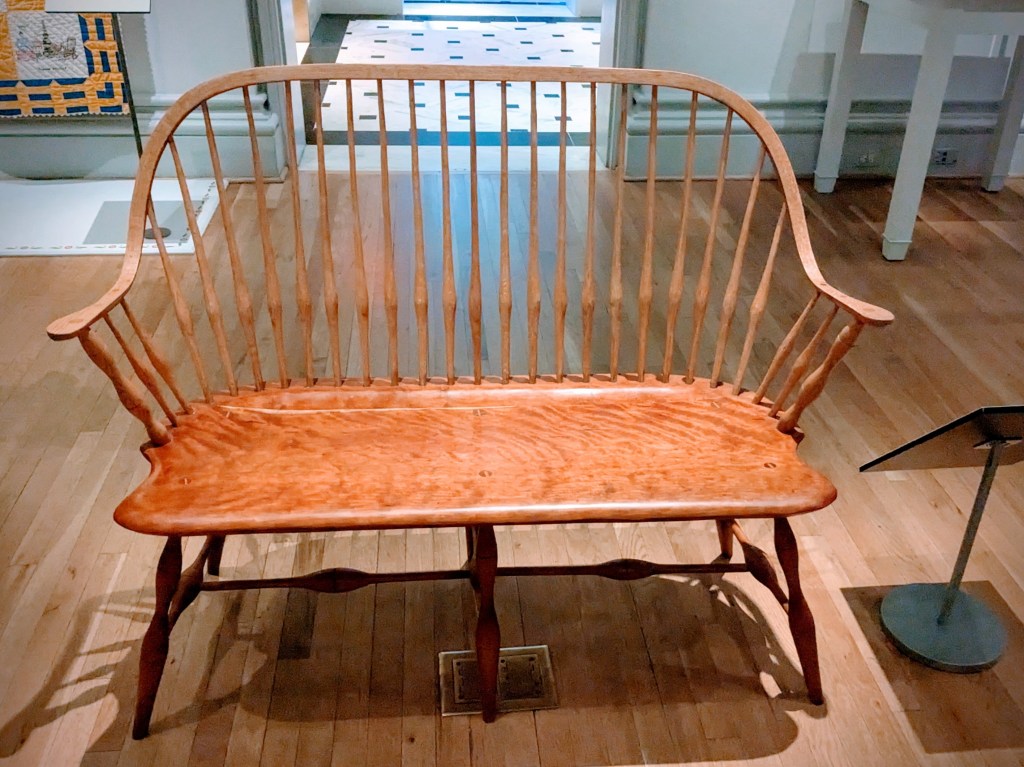
I had recently curated an exhibition at the Swope Art Museum in Terre Haute, Indiana that featured several bowl makers who demonstrated at the fair. I introduced Mary to Keith Ruble and Blaine Berry, both of whom would later be featured in the Renwick exhibition. I also secured a large sassafras bowl made by Bill Day for the exhibition. I loaned the gallery a tulip poplar bowl shaped like Indiana, which Keith had made for me for the 2016 Bicentennial of Indiana Statehood. In addition to recommending artists, I shared ideas for potential craft inclusions. Mary ultimately acquired a settee and two Windsor chairs from Blaine, which the Smithsonian purchased (Figure 17).

By the end of our visit, Mary had identified about ten potential Indiana artists for the exhibition. A few months later, she told me that she needed to pare down the list, because the exhibit included more craftspeople from Indiana than any other state. The final roster included bowl maker Keith Ruble, chairmaker Blaine Berry, basket weaver Viki Graber, woodturner Betty J. Scarpino, and potter Kelly Bohnenkamp, who loaned her whimsical “corndog vase” (Figures 18-20). The exhibition also included works by two historical Indiana craftspeople: a vase by Mary Overbeck (1878–1955) and the large bowl made by Bill Day (1915-1999) (Figure 21).

JBJ:  I am glad that you could help the craftspeople of Indiana gain recognition from this major exhibition at a key world museum devoted to craft. I mentioned the catalogue for the exhibition at the start. Can you tell readers what they will find in that catalogue and what your contribution to it is?

JK: The exhibition catalog, State Fairs: Growing American Crafts, is a companion book published by Smithsonian Press (Savig 2025). It connects the narrative threads of the exhibition, as outlined by editor Mary Savig in the introduction. The chapters then highlight key themes, including “4-H and Youth Participation,” “Creative Arts Competitions and Women’s Collectivity,” “Indigenous Fashion Shows,” and “Studio Craft Competitions.” My chapter ended up being more focused than the others, centering on the Pioneer Village at the Indiana State Fair.

Mary and I initially discussed framing the essay around creative aging in heritage events, but ultimately, she felt a tighter focus on the Pioneer Village would serve the book better. For my chapter, I drew on decades of interviews with participants in the Pioneer Village. In fact, I had to work hard to stay within the word count. I hadn’t realized at the time that mine would be the only chapter focused on a specific event. While the other essays explore broader themes across multiple fairs, mine is grounded in my long-term work at the Indiana State Fair—and especially in the Pioneer Village.

I feel fortunate to have served as a contributing curator for the exhibition. Much of my role involved sharing nearly two decades of research into craft traditions at the Indiana State Fair. I’ll be returning to the Renwick Gallery this winter to participate in a panel discussion, where I’ll speak about my work in arts and aging, drawing on experiences with longtime fair participants, including those in the Indiana Arts Building and across the fairgrounds.

JBJ: The new exhibition, book and public program series at the Renwick Gallery is one of scores of projects that you have pursued related to craft and craftspeople in Indiana, in the United States, and overseas. Looking ahead, what is your next big project related to craft all about?

JK: As you know, I tend to keep several projects going at once, so questions like this always make my head spin a bit. I recently submitted a manuscript for a book on Indiana basketry, which is currently under review at the press. It examines the social function of craft in everyday life and the cultural changes that have undermined it.

In addition, I co-authored a new, public-facing book, Lifelong Arts: A Creative Aging Handbook, for the Indiana Arts Commission. The Indiana Arts Commission will publish it. I wrote it with Stephanie Haines and Anna Ross, and it explores creative aging practices. The book is based on a series of public workshops and trainings that we conducted across the state in 2022-23. Lifelong Arts will be my third public-facing creative aging guide. This one is a more general guide to arts and aging. In contrast, my other two projects were regional and based on traditional arts and everyday creative practices: Memory, Art & Aging (Kay 2020) and Everyday Arts in Later Life (Kay, Jackson, and Islam 2024).

So, I am in the starting phase of two larger projects. One explores bowl hewing in Indiana, which connects to Keith Ruble, Bill Day, and the State Fair. While this tradition is deeply rooted in Indiana, I’ve also discovered that bowl hewing is part of a broader international network of green woodworkers, toolmakers, and heritage events. Many of these makers speak about how the craft supports their emotional, physical, and social well-being, which aligns with my ongoing interest in craft and wellness. The second project, which may eventually merge with the bowl hewing project, is a scholarly study on “Folklife and Creative Aging” (Figure 22).

Of course, my academic research runs in parallel with (and within) my work directing Traditional Arts Indiana at Indiana University. TAI continues to operate the TAI Apprenticeship and the Indiana Heritage Fellowships. I am also exploring the development of an online version of TAI’s Community Scholar Training. It’s a lot to think about and seeing it all laid out like this feels a bit daunting.

In closing, Jason, thanks for your ongoing interest in craft, museums, and folklore. It was great to reflect on this moment and to think about my years at the fair and the exhibition at the Renwick. I know that the exhibition has helped me approach the fair with fresh eyes and to see the many crafts and communities that the fair has helped cultivate.

JBJ: Thanks Jon for sharing these valuable reflections and thanks for all that you do for Indiana and its peoples.

Learn more about the exhibition State Fairs: Growing American Craft online at: https://americanart.si.edu/exhibitions/state-fairs 

A version of this post will be preserved in the Published Work and White Papers collection of the Material Culture and Heritage Studies Laboratory community in IUScholarWorks. [Update: See https://hdl.handle.net/2022/33755 for the archival version.]

Notes
*Twenty documentary videos profiling State Fair Masters are accessible via Indiana University’s Media Collections Online. See the “Traditional Arts Indiana’s State Fair Master Documentaries” collection via https://media.dlib.indiana.edu/.  

References Cited

Kay, Jon, ed. 2020. Memory, Art, and Aging: A Resource and Activity Guide. Traditional Arts Indiana. https://hdl.handle.net/2022/33323

Kay, Jon, Joelle Jackson, and Touhidul Islam. 2024. Everyday Arts in Later Life. Traditional Arts Indiana. https://hdl.handle.net/2022/33322

Savig, Marty, ed. 2025. State Fairs: Growing American Craft. Smithsonian Books.


Museum Practice in Folklore Studies (a.k.a. Museum Methods): Spring 2024

There are too many things needing to be written about. Many of them are grim. Here I want to begin the work week with positivity.

This past semester, I taught one wholly new graduate course and one substantively new undergraduate course. I do not yet have confirmation from course evaluations, but I think that they both turned out well. I will discuss the graduate course separately. The undergraduate course, which covered material that is very familiar to me, was FOLK-F 406 Museum Practice in Folklore Studies (a.k.a. ANTH-A 405 Museum Methods). ANTH-A 405 has been on the books for decades but has been very rarely offered. The parallel course in FOLK was created by me prior to the pandemic, but it was only this semester that I could offer first it. This course was thus substantively new, although I drew in presenting it on past museums courses that I have taught.

As I taught these two courses jointly, I was very pleased that the two sections (ANTH and FOLK) attracted equal numbers of students. Many the participants were major or minor students in both departments, thus they—like me—have a foot in both fields and an interest in their points of intersection. Museum ethnography is one of those points of intersection. This class met no general education requirements. Students were there because they wanted to learn the material and that made for a wonderful course. In twenty years on the Indiana University faculty, I have never taught a course that was comprised mainly of majors or minors in my fields. What a joy that was! Even the students distracted by the end of their senior year and their rapidly approaching graduation, were a pleasure to engage with each week. It is gratifying that a significant proportion of the students in the course were already gaining museum experiences in concurrent museum practicum and that many are now moving on to further work in museums or in museums-related graduate programs.

As I got acquainted with the students and rose to their level, the course changed as it went. As planned, the course included museum work basics and independent research with museum collections objects, but the final course session on critical practices in museum work and museum studies shifted considerably. The topics planned remained the same, but my method moved from lecture and lecture-discussion to freer discussion of key news stories about important or exemplary developments in the present-day museum work. Many of these came from the New York Times, which has been doing particularly good work related to museums in recent months. These were in areas such as repatriation and restoration, digital practices, heritage politics, museum censorship, the finances of museums, community consultation, museum audiences/visitorship, and museums and social change. It was a pleasure to discuss and debate the big issues with these students. They arrived in the course ready and able to engage and were nearly all eager to do so. I am proud of them and thankful for the opportunity to study and learn with them. I wish all of them well and I congratulate the graduating seniors among them.

A heuristic for assessing temporary exhibitions in museums relative to the place of museum collections within them, the relevance to institutional mission, and the role of research within the exhibition.

Article: “A Survey of Contemporary Bai Craft Practices in the Dali Bai Autonomous Prefecture, Yunnan, China” in Museum Anthropology Review 16(1-2)

I am very happy to note a new co-authored article titled “A Survey of Contemporary Bai Craft Practices in the Dali Bai Autonomous Prefecture, Yunnan, China.” It was jointly written with Wuerxiya (first author), C. Kurt Dewhurst (third author) and Cuixia Zhang (fourth author) and it appears in Museum Anthropology Review volume 16, numbers 1-2. This is the special double issue published in honor of Daniel C. Swan, as noted in an earlier post on Shreds and Patches. The article is based on work undertaken by a much larger bi-national team within the “Collaborative Work in Museum Folklore and Heritage Studies” sub-project of the broader “China-US Folklore and Intangible Cultural Heritage Project,” a collaboration (2007-present) of the American Folklore Society and the China Folklore Society. In particular, it describes work undertaken through the auspices of, and in partnership with, The Institute of National Culture Research at Dali University. Special thanks go to the Institute and its leadership.

Find the article online at Museum Anthropology Review: https://scholarworks.iu.edu/journals/index.php/mar/article/view/34101

In this image is the first page of a journal article as typeset. The article pictured is "A Survey of Contemporary Bai Craft Practices in the Dali Bai Autonomous Prefecture, Yunnan, China." Visible are the names of the authors, the abstract, the key words and the first paragraph of text.
Presented as an image is the first page of the journal article “A Survey of Contemporary Bai Craft Practices in the Dali Bai Autonomous Prefecture, Yunnan, China.”

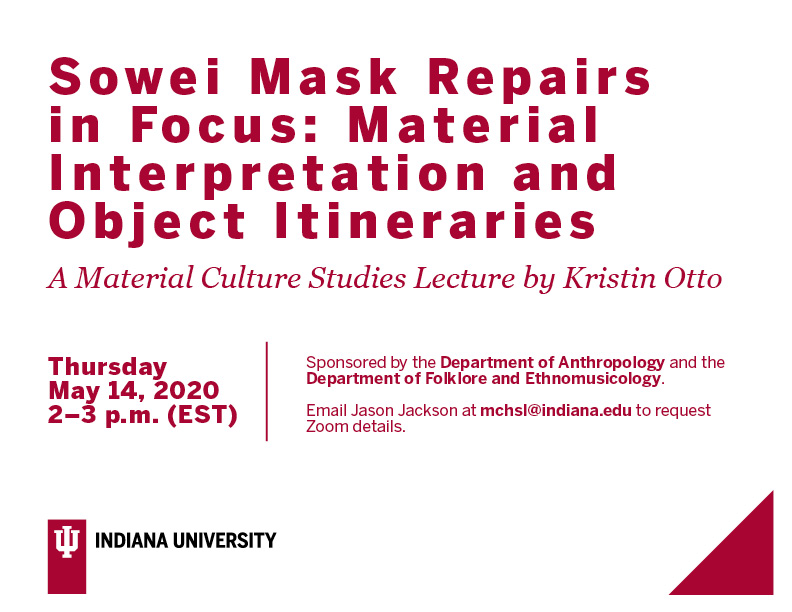
Sowei Mask Repairs in Focus: Material Interpretation and Object Itineraries (Lecture)

2020-05-14 Otto Lecture

Sowei Mask Repairs in Focus: Material Interpretation and Object Itineraries

A Material Culture Studies Lecture by Kristin Otto

Thursday May 14, 2020
2–3 p.m. (EST)

Email Jason Jackson at mchsl@indiana.edu to request Zoom details.

Following the emergence of repair as a topic of interest for material culture scholars, this talk examines the significance of repair for the “lives” / biographies / itineraries of ethnographic material culture in museum collections. Sowei masks (also known as Sande or Bundu masks) are among the most widely collected and easily recognizable objects from Africa in museum collections around the world. Repair proved to be a common experience for the masks as they circulated from performative contexts in West Africa into Western markets, collections, and institutions. Through in-depth case studies of five sowei masks in museum collections around the world, Otto examines how repair shapes the material and immaterial lives of the masks in new contexts and transactional spaces.

Kristin Otto is a Ph.D. candidate in Indiana University’s Department of Anthropology and a National Science Foundation Graduate Research Fellow. Her work as a museum anthropologist and curator focuses on how processes of making and repair impact our understandings of museum collections and material culture.

Sponsored by the Department of Anthropology and the Department of Folklore and Ethnomusicology.

Web Resources for Museum Job Seekers, Revisited

This semester I am teaching the undergraduate course Museums and Material Culture (FOLK-F440). The course combined an introduction to material culture studies with collections research projects at the Mathers Museum of World Cultures. It is an intensive writing course and later today the students will turn in the drafts of the major individual research papers. Tomorrow’s class meeting is slated to be a discussion of careers in this sector.

In the spring, I am teaching Curatorship. I have taught this graduate course many times previously. Before each run of the course, I update my older (2012!!!) post on “Web Resources for Museum Job Seekers.” As a resource for the undergraduate course, I have done the update about a month early.

All the of the links have been rechecked and are working. As in 2018, I note that general services such as Indeed and LinkedIn play a growing role in connecting people to positions. But the specialized sites, often with positions circulated on social media, remain important. Find the newest version of the list at the old post, here:

https://jasonbairdjackson.com/2012/12/04/web-resources-for-museum-job-seekers/

Workshop on Ethnographic Methods in Museum Folklore and Ethnology

This post is the next in my series of reports on the trip to China that American museum colleagues and I took in December 2017. The Beijing posts (1, 2, 3, 4, 5) were about the time that we spent in transit to Nanning, where the core of our work on the trip would begin. This is the first post to share a bit of what the trip was about, explaining what we were up to in Guangxi.

Central to the story of our time in the Guangxi Zhuang Autonomous Region is our friend and colleague Zhang Lijun. Lijun is researcher on the staff of the Anthropological Museum of Guangxi (广西民族博物馆) and she is also a research associate of the Mathers Museum of World Cultures. She is essential to the museum ethnography sub-project within the China-US Folklore and Intangible Cultural Heritage Project that has linked the China Folklore Society and the American Folklore Society for over ten years of exchanges and joint projects. As she notes in her recent contribution to Metafolklore: Stories of Sino-US Folkloristic Cooperation | 文化对话:中美非物质文化遗产论坛. (Guangzhou: Sun Yat-sen University Press, 2017), she served as a translator for the founding discussions between AFS and CFS while a masters student at Beijing Normal University. A decade later, and with a Ph.D. from Indiana behind her, she is now helping lead a key project in this flourishing partnership. (For an overview of these broader efforts, see this essay by AFS Executive Director Tim Lloyd.)

Our work in Guangxi is the reason for the trip and Lijun was crucial to the planning and the doing of both parts of that work. As called for in our proposal to the Henry Luce Foundation and planned for in our partnership discussions with the Anthropological Museum of Guangxi, this trip (the first of four during the current phase of our work) had two parts–a training workshop at the museum in Nanning and then a period of jointly pursued fieldwork in Nandan County among the Baiku (White Trouser) Yao people. This post is about the training workshop, an event for which Lijun’s bilingual skills and bi-national scholarly background were essential ingredients.

IMG_0311

Zhang Lijun facilitating discussion during the first day of the Workshop on Ethnographic Methods in Museum Folklore and Ethnology held at the Anthropological Museum of Guangxi, Nanning. December 11, 2017. Photograph by Jason Baird Jackson.

Wang Wei, the Director of the Anthropological Museum of Guangxi, is an leading scholar in paleoarchaeology with a deep history of participating in high-level international research collaborations and a strong record of publishing in international science journals. This experience has shaped his goals for the museum’s research staff. He is eager for them to also have international research experiences and opportunities to work jointly on publication as well as exhibition projects. Those goals are part of what we are up to in the current phase of cooperative research. They also motivate his providing generous support for our joint work. Those of us connected to the American museums share these aspirations.

Because the entire research and collections staff of the Anthropological Museum of Guangxi is too large to participate in the fieldwork phase of the project, the December 2017 workshop was developed as a means of broadening the professional development opportunities that the larger project offers. The workshop was held on December 11-12 and its focus was “Ethnographic Methods in Museum Folklore and Ethnology.”

During this event, American and Chinese participants, drawn from the partner museums, gave bilingual presentations on fieldwork methods as these pertain to work of museums of ethnography. About sixty attendees attended the workshop. Some were students affiliated with universities in the city of Nanning and, as initially anticipated, quite a few were members of the Anthropological Museum of Guangxi’s research and collections staff. There were also working ethnographers from various agencies in the city. A fourth group of attendees were staff members drawn from the ten local eco-museums with which the Anthropological Museum of Guangxi partners in its 1+10 eco-museum collaboration. These eco-museum representatives are members of the local minority groups that their institutions serve and they are active with impressive cultural documentation work in their home communities. The workshop sessions, which all took place at the museum, were well-attended and well-received.

The workshop program was comprised of seven presentations interspersed with questions and discussion. All were illustrated with bilingual slides and all were translated into the language (English or Mandarin) not spoken by the presenter. I presented an overview of ethnographic methods in the contexts of research design and the goals of museum work. My presentation introduced and connected the topics to be addressed by the other presentations. I was followed by Marsha MacDowell (Michigan State University Museum), whose presentation focused on interview methods. Jon Kay (Mathers Museum of World Cultures) focused on survey methods as well as on video documentation techniques. Carrie Hertz (Museum of International Folk Art) explored the uses of still photography in research, exhibitions, publication, and other museum activities. Kurt Dewhurst (Michigan State University Museum) presented on the use of existing collections in new field research and on the role that new ethnographic work can play in re-contextualizing such collections. Gong Shiyang (Anthropological Museum of Guangxi) presented on the role of eco-museums as research centers and on the partnership linking AMGX and its 10 partners in Guangxi. Fan Miao Miao (Anthropological Museum of Guangxi) presented on strategies for ethnographic research on dress and adornment practices.

At the conclusion of the workshop on December 12, research participants from the three U.S. partner museums, from the AMGX and from the Baiku Yao Eco-Museum in Nandan met to discuss the research plan for the joint fieldwork that would follow.

Here are some pictures from the first day of the workshop.

Here are some images from the second day of the workshop.

One of the temporary exhibitions on display at the museum is an exhibition produced in partnership with the Museum of Women and Children in Beijing (the museum we visited earlier in our trip). This exhibition is interesting because it deals with a classic ethnographic topic (“Brocade Made by Minority Nationalities in China”) in a kid-friendly way. Here are some pictures.

CFP: Museum Anthropology Futures

On behalf of the Council for Museum Anthropology, I am happy to pass along the call for proposals for the Museum Anthropology Futures conference in Montreal this May. Find details below. (Quoted material follows, contact the organizers with questions or concerns.)

Call for Session Proposals: “Museum Anthropology Futures” Conference (due March 1)
Council for Museum Anthropology Inaugural Conference

May 25-27, 2017 at Concordia University, Montreal, Quebec, Canada

The Council for Museum Anthropology is seeking submissions for its inaugural conference taking place in Montreal from May 25-27, 2017. This will not be your traditional conference experience! “Museum Anthropology Futures” seeks to spark critical reflection and discussion on (1) the state of museum anthropology as an academic discipline; (2) innovative methods for the use of collections; (3) exhibition experiments that engage with anthropological research; and (4) museums as significant sites for grappling with pressing social concerns such as immigration, inequality, racism, colonial legacies, heritage preservation, cultural identities, representation, and creativity as productive responses to these.

The conference will have several sessions each day that all participants will attend, as well as one period each day with breakout sessions like workshops and formats that would benefit from a more intimate setting for dialogue and collaboration.
We are seeking session proposals that are different than the usual call for papers – see session descriptions below. Feel free to email us with questions at museumfutures2017@gmail.com.

Updates available at our Facebook page, https://www.facebook.com/MuseumFutures/

Email your session proposal to museumfutures2017@gmail.com by March 1, 2017

Please provide the following information in your email text, no attachment:

1) Your name, title, home institution (if applicable), and email address
2) Your proposed session format (see below)
3) The title of your session
4) Additional session participants if a group submission (title and email address)
5) A description of your session (max 150 words) Specific requirements for each format below.
6) What you hope to achieve in presenting/participating in this session (1-3 sentences)
7) What you believe this session can contribute to museum futures (1-3 sentences)
***Please note: Some Workshops and Pre-circulated Paper sessions will be by registration only due to limited capacity. All other sessions are open to all conference participants. For example, Roundtable or PechaKucha sessions will have several presenters who discuss their work, and the audience attending the session is invited to listen and ask questions or give feedback.***

SESSION FORMATS
Read more

An Interview with Rachel Tavaras, Indiana University Graduate and Collections Manager at the Museum of Miniature Houses in Carmel, Indiana

Rachel Tavaras grew up in the Chicago area and earned undergraduate degrees in History and Anthropology, both in the College of Arts and Sciences at Indiana University (IU), where she was inducted into Phi Beta Kappa. At IU, museum work was a special focus for her and she undertook internships and practicum at the Mathers Museum of World Cultures, the Wylie House Museum, the Monroe County History Center, the Hinkle-Garton Farmstead, and the LaPorte County History Museum. After graduation in 2015, she joined the Historical Administration M.A. program at Eastern Illinois University (EIU). This highly regarded program is built around an on-campus year of coursework and hands-on training followed by a six-month supervised internship or job in a relevant museum or historical institution. While at EIU she was a graduate assistant at the Tarble Arts Center. Eager to catch-up with an outstanding undergraduate alumna who made a big difference during her time at Indiana University, I was pleased that Rachel agreed to an interview with me. In it we discuss her first job hunt, the Museum of Miniature Houses in Carmel, Indiana, where she now serves as Collections Manager, and her experience studying at Indiana and Eastern Illinois.

JJ: Thank you Rachel for being willing to do this interview.

Folk wisdom holds—and I think that it is often true—that one’s first full time job is often the hardest to find. We will come to your current work in a moment, but first could you tell us a bit about how you first got connected with the Museum of Miniature Houses?

RT: The initial job hunting process was quite daunting! My graduate program at Eastern Illinois University requires that we complete a six-month internship after coursework, unless we find a job. While I would not have had an issue with taking an internship, I sought something more permanent. When I saw an opening for the Collections Manager position at the Museum of Miniature Houses and Other Collections through the Association of Indiana Museums (AIM), I did not hesitate to apply.

Miniatures have always fascinated me, and, while I did not have a background in miniatures explicitly, I felt that my prior experiences with other types of collections could apply. From working with jewelry from the Middle East at Mathers, to working with Midwestern folk art dioramas at the Tarble Arts Center, I felt confident in my ability to work with a collection of objects made by less “formally trained” artisans. My theoretical training, both in class and in the museum field, also helped when it came to landing the job. I have been trained in methods of material culture, decorative arts, understanding folklife, and more. Such training is essential to understanding miniatures, whether it be a representation of an American Rococo living room or a Japanese farm house from Osaka.

IMG_1798[4]Rachel Tavaras shows off the “Yellow Georgian,” an assemblage of objects in the collections of the Museum of Miniature Houses in Carmel, Indiana.
JJ: Did you have any personal contacts with the museum beforehand or were you applying in response to the AIM advertisement? What did you learn from the application and selection process?

I did not have any personal contacts from the museum beforehand—I applied merely because of the online advertisement. Because I did not know anyone at the museum personally, every chance to leave an impression with the hiring committee was especially precious.

Because of this, through the hiring process I came to better understand the importance of the interview. I think that many recent graduates focus heavily on their resume and cover letter—and rightfully so. These are the first items that a potential employers looks over, and they will ultimately determine the applicant’s chance at an interview. For the interview, I was fully prepared and had anticipated many of the questions that the hiring committee asked. I had also researched the institution and miniatures in general beforehand, giving me the opportunity to explicitly express how my skills and experiences would make me a great asset. My efforts were worthwhile. Since being hired, I have been told that I “nailed” the interview. While my application materials got me the interview, it was my interview that go me the job.

I have since had to opportunity to be on the other end of the hiring process. Looking for a part-time Collections Assistant was an intimidating task, especially being so new to my own position. While sifting through applicants, I was reminded of the importance of first impressions. Many applicants sent vague and brief application materials. It was clear that they did not read the job description. On the other hand, one applicant both emailed and physically mailed me copies of her application. She was a high contender.

JJ: The name alone suggests that the Museum of Miniature Houses is a rather interesting institution. I won’t be alone in wanting to know more about it. Is the part-time Collections Assistant your only staff colleague or is the staff bigger than these two roles? Do volunteers play a big part in your museum? What can you tell us about the history of the museum and its current status? Who is the museum’s governance authority? Read more

AFS “Folklore and Museums Section” Founded, AFS Members (and Non-Members too) are Welcome to Join

I am happy to note here that the Executive Board of the American Folklore Society has endorsed a proposal put forward by the Folklore and Museum Policy and Practice Working Group to establish a Folklore and Museums section within the society. The section came into existence as of the Executive Board’s November 2014 meeting in Santa Fe. I am very pleased to serve as the new section’s first convener and to invite everyone with an interest in the intersection of museum practice and folklore (/folklife/ethnology) to join the new section.

As noted in the call for members on the AFS website:

the Folklore and Museums Section exists to foster communication and cooperation among museum-oriented folklorists, to advance the contribution of folklore studies scholarship and practice in museum settings, and to articulate museum-oriented folklorists with other colleagues, institutions, and organizations in the museum sector. The section aims, whenever possible, to cooperate with other sections of the American Folklore Society and with peer-organizations in the field.

The public web home for the new section can be found online here: http://www.afsnet.org/?page=MuseumSection and the member’s group space is accessible to members who are logged into the AFS website.

While I am very eager for all interested colleagues to join AFS, I want to note that the AFS has a free “Section Only” membership category by which non-AFS members can sign-up with sections such as the new Folklore and Museums section. This might be of particular value to non-folklorists who wish to keep up with the section’s work. Information on the Sections Only “membership” is available on the Membership Categories page of the AFS website. There is no cost to join the Folklore and Museums section.

The Santa Fe meetings were a great gathering for museum-minded folklorists. I am optimistic that the new section can help make the 2015 meetings even richer for our corner of the field. Thanks to all who have contributed to the momentum behind the new section and to the growth of folklore and museums work.

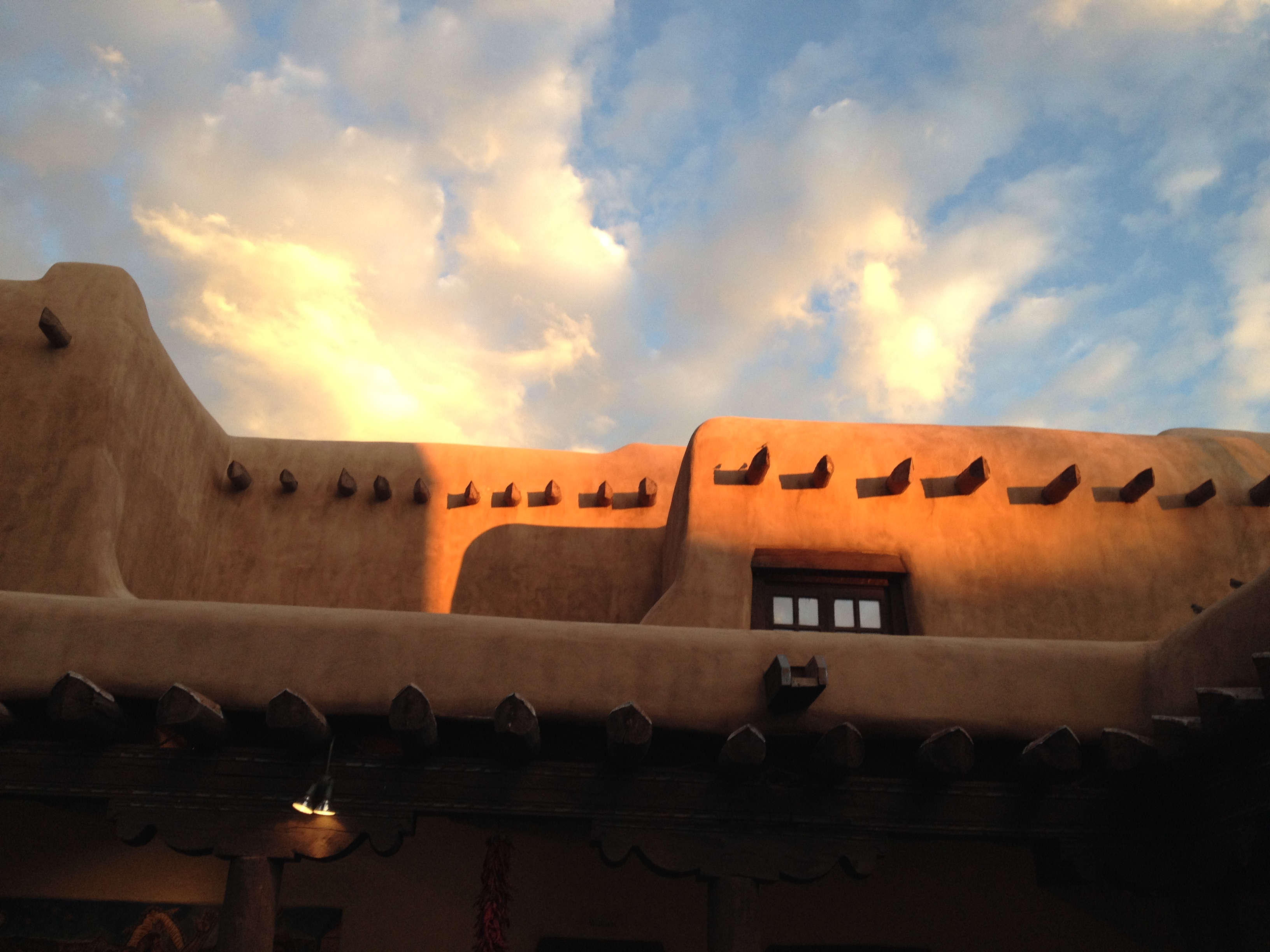
Sky Above New Mexico Museum of Art

Sky Above New Mexico Museum of Art, November 2014

The MMWC Newsletter and Other Infrastructure: Building our Bazaar

mmwc1_Page_1

The Mathers Museum of World Cultures (MMWC) has a new newsletter. The cover for MMWC #1 is shown above. Clicking on it should take you to the whole issue as it appears on the online publishing platform Issuu. To add the newsletter to your hoard of PDFs, you can download it from the MMWC website download it here. For the long haul, we will soon add the newsletter to the museum’s “community” in the IUScholarWorks Repository.

Before talking about the newsletter as infrastructure, I want to thank MMWC Assistant Director Judy Kirk for her great work getting it edited and launched. This is a small summer issue that recaps some recent MMWC developments. A forward-looking fall issue will follow it very soon. While thanking Judy, I want to also thank the whole MMWC community–staff, volunteers, students, researchers, advisory board members, donors–for the work that we begin reporting in this first issue of the newsletter.

One of the museum’s accomplishments of the first half of 2013 was the establishment of an ambitious strategic plan. One thread running through that plan is work aimed at putting into place a range of kinds of museum “infrastructure.” Some of this will be very visible to the museum’s friends and supporters, other kinds of infrastructure will help the museum do its behind-the-scenes work more effectively. As I can, I will try to tell the story of our infrastructure work here. I have found the public reporting of my colleagues and of peer-institutions extremely helpful and my aim here is to reciprocate in appreciation for what I have learned from them. (For a recent example, consider this great account of the building of a teaching lab at the Penn Museum.) Read more