Skip to content

Posts from the ‘Material Culture’ Category

Announcement: Dress to Express Museum Modules

An announcement posted here on behalf of Local Learning:

DRESS TO EXPRESS MUSEUM MODULES

In conjunction with Volume 1 of the Journal of Folklore and Education, “Dress to Express: Exploring Culture and Identity,” Local Learning proudly announces the launch of three museum modules that extend this theme in our new online Discovery Studio found at www.locallearningnetwork.org. Because dress and adornment carry such deep, complex meaning, they present exciting opportunities for learning across disciplines and age groups and in various settings. Dress and adornment create accessible portals to culture and community as well as to historical and contemporary identity.

The images and lesson plans made available by our museum partners connect to literacy, art, and social studies learning and make diverse collections accessible online. These modules offer new ways to think about history, identity, art, and culture as well as encourage close observation and interpretation. Activities suitable for grades 4-12, university, museum, and community settings accompany the images.

Exploring Dress, Culture, and Identity in Asian Art

by Joanna Pecore, Asian Arts & Culture Center, Towson University, Towson, Maryland

What do art objects from distant times and places express about the identity of the people and the cultures depicted in them?

Exploring Dress, Culture and Identity in American Indian Dress and Objects

by Lisa Falk, Arizona State Museum, University of Arizona, Tucson

How would you feel if someone (outside your identity group) used your identity design references in a clothing line? What might change how you feel about this use?

Lau Hala Weaving and Hawai’ian Cultural Identity

by Marsha MacDowell, Michigan State University Museum, East Lansing

How are the weaving and wearing of lau hala papale (hats) connected to Hawai’ian history, identity, natural resources, and culture?


Find the Dress to Express Museum Modules in the Discovery Studio of the Local Learning website. Explore more activities and context on this theme in Volume 1 of the Journal of Folklore and Education. This work is funded in part by the National Endowment for the Arts. Please publicize these free resources among your colleagues and networks.

Contact:

Paddy Bowman, Director, pbbowman@gmail.com

Lisa Rathje, Assistant Director, rathje.lisa@gmail.com

Local Learning: The National Network for Folk Arts in Education www.locallearningnetwork.org

###
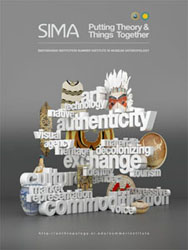
Time to Apply to the Summer Institute in Museum Anthropology

simaposter_medIts application season again for the Summer Institute in Museum Anthropology.

As noted recently on the American Folklore Society website:

“The Summer Institute in Museum Anthropology (SIMA), supported by the Smithsonian Institution and the National Science Foundation, is accepting applications for its 2015 program in Washington, DC to be held June 22-July 17. SIMA is an intensive museum research methods training program for graduate students, offered in residence at the Department of Anthropology in the Smithsonian Institution’s National Museum of Natural History. Graduate students at the masters or doctoral level who are preparing for research careers and are interested in using museum collections as a data source should apply. Although primarily oriented to cultural anthropology, students in related programs (Indigenous Studies, Folklore, etc.) are welcome to apply if the proposed project is anthropological in nature.”

Learn a lot more about SIMA on the program website: http://anthropology.si.edu/summerinstitute/

I am excited to be returning to SIMA 2015 as a visiting faculty member.

Thanks to the National Science Foundation and the Smithsonian Institution for its great support of the Institute.

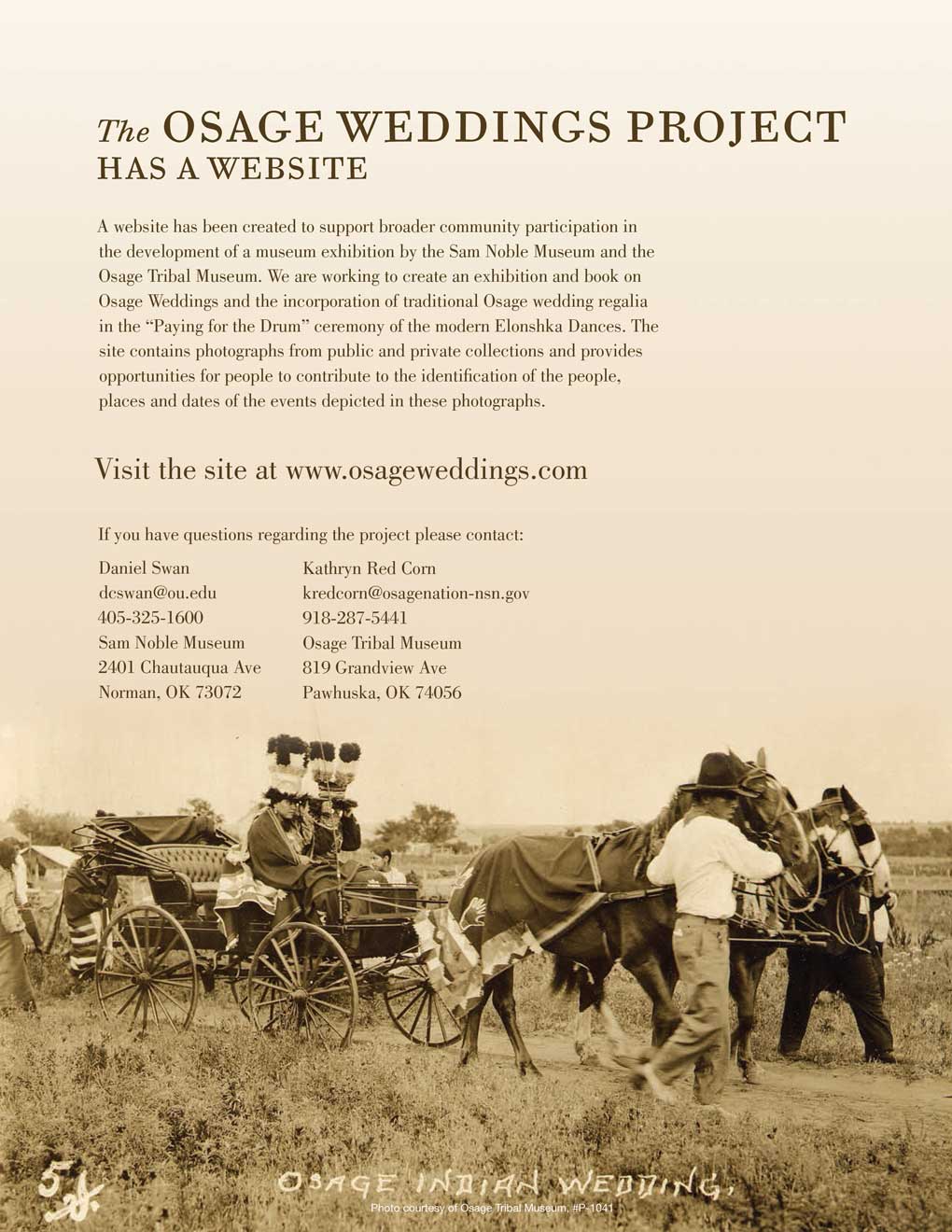
Osage Weddings Project Website Launched

EDU15_OsageFlierhttp://osageweddings.com/

Update: Archived here: https://web.archive.org/web/20181125013857/https://osageweddings.com/

AFS “Folklore and Museums Section” Founded, AFS Members (and Non-Members too) are Welcome to Join

I am happy to note here that the Executive Board of the American Folklore Society has endorsed a proposal put forward by the Folklore and Museum Policy and Practice Working Group to establish a Folklore and Museums section within the society. The section came into existence as of the Executive Board’s November 2014 meeting in Santa Fe. I am very pleased to serve as the new section’s first convener and to invite everyone with an interest in the intersection of museum practice and folklore (/folklife/ethnology) to join the new section.

As noted in the call for members on the AFS website:

the Folklore and Museums Section exists to foster communication and cooperation among museum-oriented folklorists, to advance the contribution of folklore studies scholarship and practice in museum settings, and to articulate museum-oriented folklorists with other colleagues, institutions, and organizations in the museum sector. The section aims, whenever possible, to cooperate with other sections of the American Folklore Society and with peer-organizations in the field.

The public web home for the new section can be found online here: http://www.afsnet.org/?page=MuseumSection and the member’s group space is accessible to members who are logged into the AFS website.

While I am very eager for all interested colleagues to join AFS, I want to note that the AFS has a free “Section Only” membership category by which non-AFS members can sign-up with sections such as the new Folklore and Museums section. This might be of particular value to non-folklorists who wish to keep up with the section’s work. Information on the Sections Only “membership” is available on the Membership Categories page of the AFS website. There is no cost to join the Folklore and Museums section.

The Santa Fe meetings were a great gathering for museum-minded folklorists. I am optimistic that the new section can help make the 2015 meetings even richer for our corner of the field. Thanks to all who have contributed to the momentum behind the new section and to the growth of folklore and museums work.

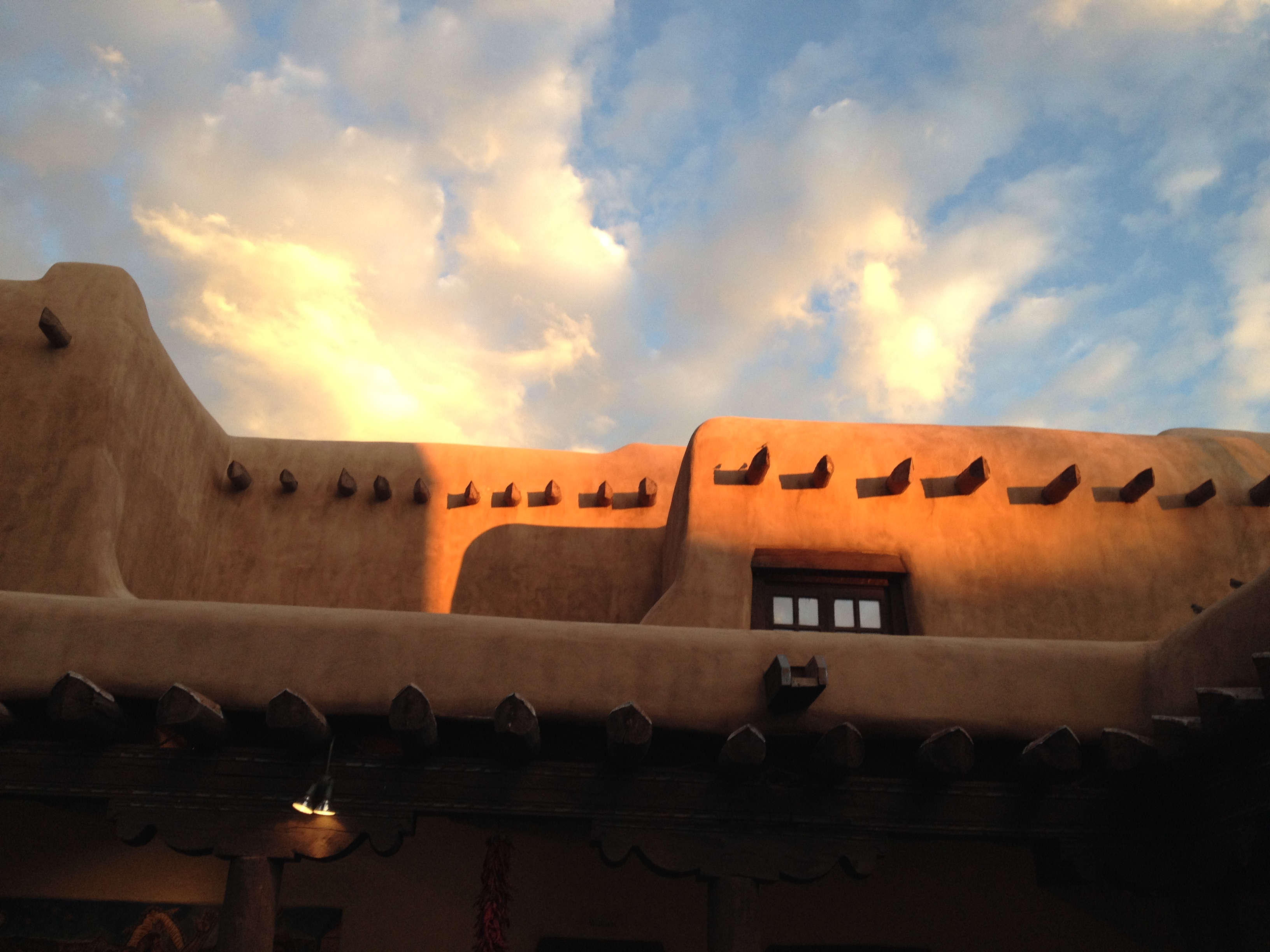
Sky Above New Mexico Museum of Art

Sky Above New Mexico Museum of Art, November 2014

Notes on an Eastern Cherokee Gathering Basket

For me, new light was just cast on a basket in the William C. Sturtevant Collection in the Department of Anthropology, National Museum of Natural History, Smithsonian Institution. In the mail, I just received a slew of basketry books. This is a topic on which I need to get caught up for a number of interconnected purposes, including for the analysis and publication of the Mathers Museum of World Cultures basketry collections (especially the Eastern Cherokee baskets, which will be the focus of an exhibition that I will co-curate).

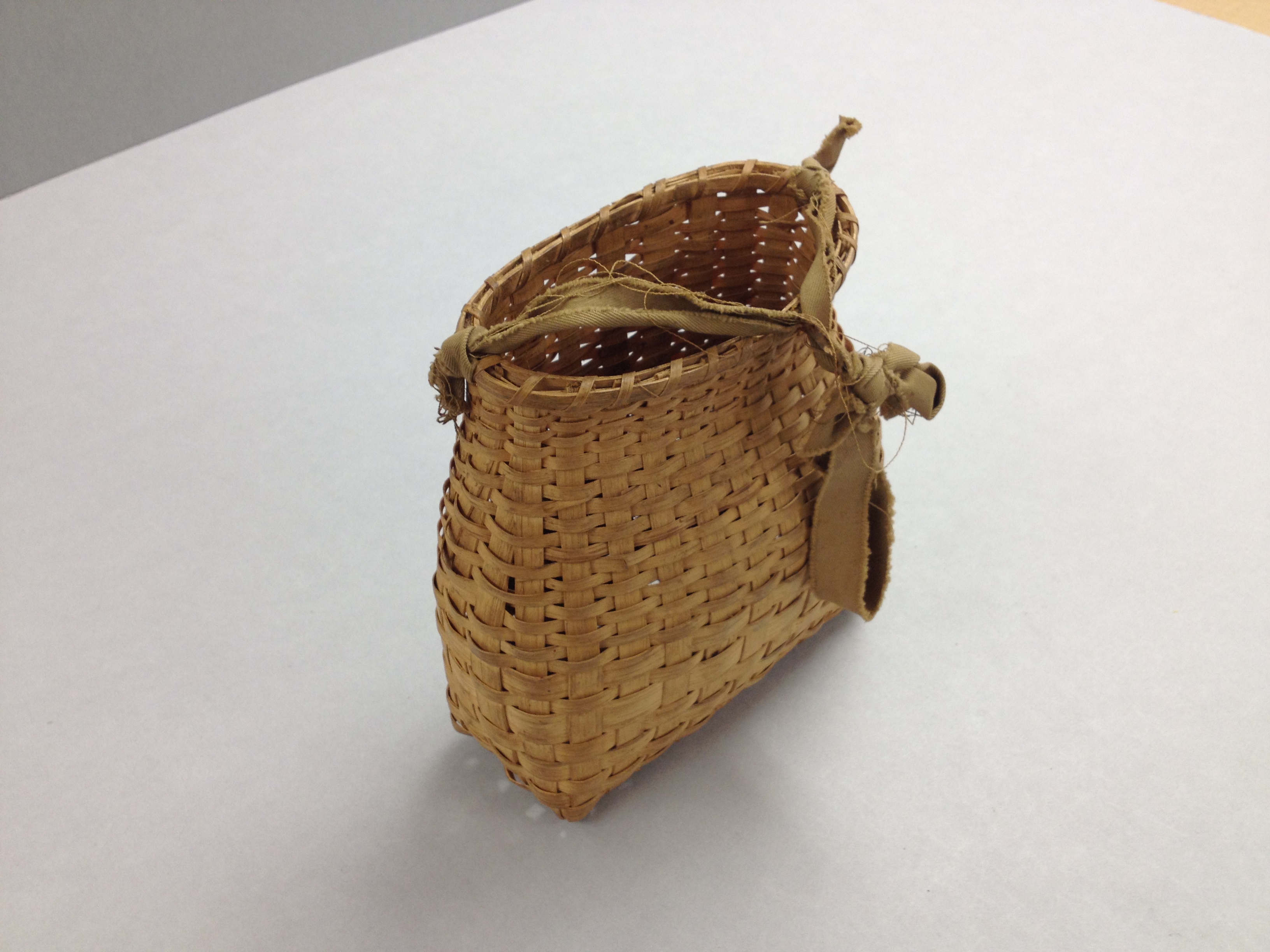
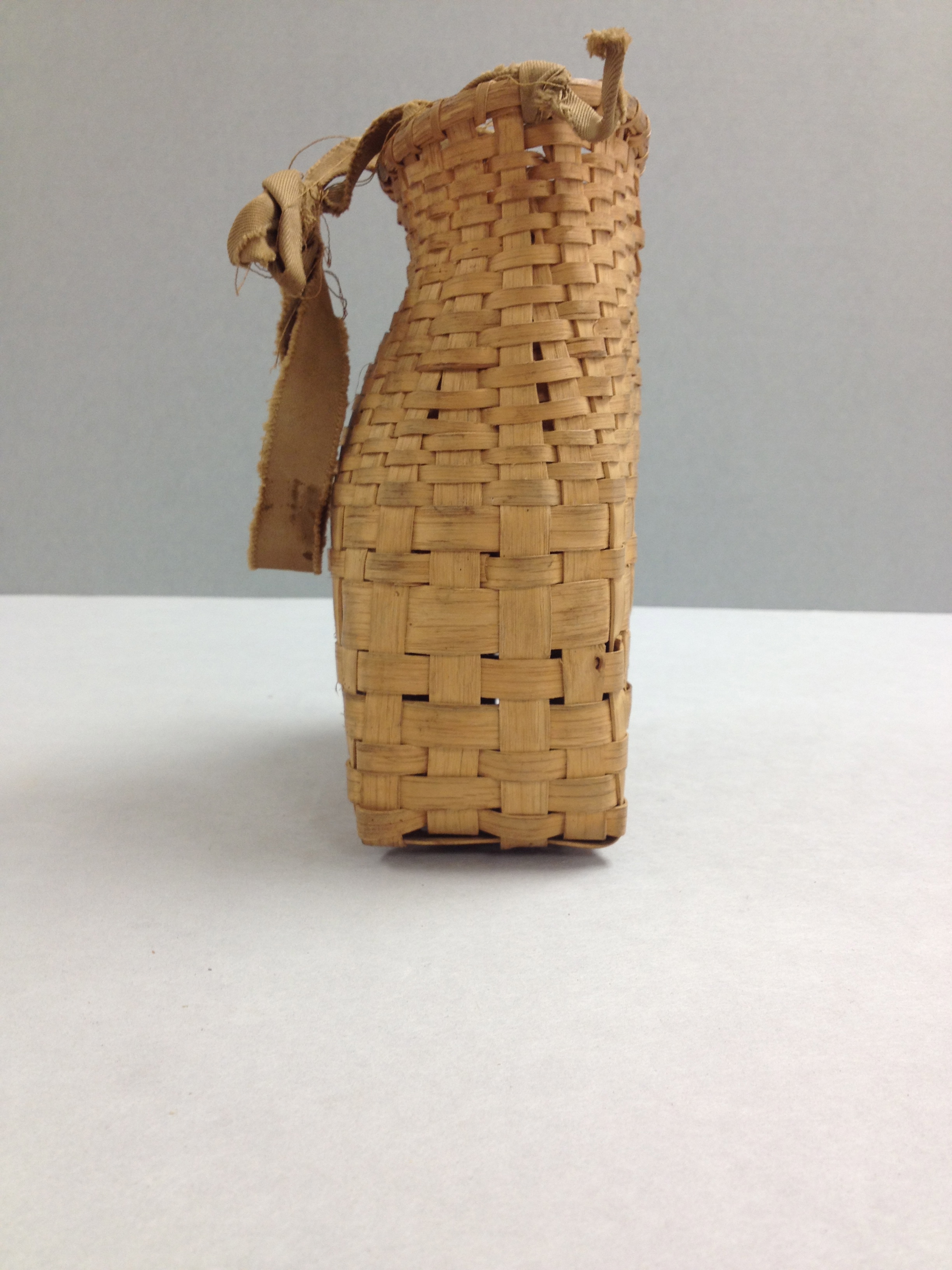
Among the used books that I just received is Baskets and Basket Makers in Southern Appalachia by John Rice Irwin (Exton, PA: Schiffer Publishing, 1982). In a chapter devoted to “The Indian Influence on Southern Appalachian Mountain Baskets” the author describes a relatively unfamiliar (to me, at this stage, at least) basket form on the basis of an example believed (to the author, at least) to be Cherokee and collected in Buncombe County, NC (p. 157). The basket discussed by Irwin is similarly shaped and similarly sized to a basket that I studied a few summers ago in the Sturtevant collection at NMNH. The splint basket that Sturtevant collected among the Eastern Cherokee is pictured here:

Eastern Cherokee Basket

Eastern Cherokee Basket, NMNH, Temporary Number WCS 322

Eastern Cherokee Gathering Basket

Eastern Cherokee Basket, NMNH, Temporary Number WCS 322

IMG_4760

Eastern Cherokee Basket, NMNH, Temporary Number WCS 322

It shares the same, flat on one side, curved on the other, shape as the basket pictured by Irwin. In a photo on p. 157, Irwin photographed a older boy holding the basket under his right arm, thereby illustrating how the shape of both baskets facilitates the collecting of berries, nuts, etc. with both hands. Prior to getting direct information from a Cherokee consultant who has made or used such a basket, this (that is, Irwin’s) is a much better account of this shape and its use that I had been speculating about.


Its Summer Institute in Museum Anthropology (SIMA) Applicaton Time Again

Its time for graduate students with material culture interests to think about, and follow through on, applying to participate in the 2014 Summer Institute in Museum Anthropology. This is a four-week training program focusing on the methods needed to incorporate museum collections into broader research efforts in cultural anthropology and in cognate ethnographic fields such as folklore studies.

Funded by the National Science Foundation and held at the Smithsonian Institution, the program covers students’ room, board, and tuition. Housing is provided as is a small stipend for food and other local expenses. Participants are individually responsible for the cost of travel to and from Washington, DC. This is an intensive residential program and the participants are expected to devote full time to the training. Anyone working with, or interested in working with, material culture collections in their research should check out the program. Details are on the SIMA website.

Applications are due on March 1, 2014.

For other NSF funded training programs in cultural anthropology, see the Methods Mall website.


The Textile Museum | Out of Southeast Asia: Art that Sustains

While in Washington, I had a chance to visit The Textile Museum in its historical location amid the city’s embassies. I say historical because the museum is now preparing to move to the George Washington University campus.* I had not been to the museum previously (although I follow its work at a distance) and was eager to see it as it has been before it becomes what it will be next. The logic of the move is apparent, but the “old” museum had many charms. It is obvious that the museum’s building–a beautiful and stately old home–has been taken as far as it can be taken as a museum site. It was warm (in the good sense) and comfortable and attractive, but it is surely a challenge to use as a site for research, collections care, and public programs and exhibitions. That said, the facility seemed optimized within the scope of its limitations and I am certain that longtime visitors will miss the old site, as it really was comfortable and nice for small groups of visitors coming and going on a weekend morning. (With the preparations for the move, only the first floor is being used for public visitation, so I cannot comment on the upstairs areas.)

A main first floor exhibition gallery was renovated at some point to make it into a typical art museum gallery, disguising its presence in a large historic home. This space hosted the last temporary exhibition to be staged at the old location–Out of Southeast Asia: Art that Sustains.

Also accessible on the first floor was a welcoming desk and a truly remarkable gift shop where a pair of very kind museum staff members were stationed. Further back on the first floor was a “family room” space where guests were treated to cookies and lemonade. This room led to the back garden–a beautiful green space from which one can see glimpses of the embassies surrounding the museum. (Returning to the subject of the shop, it is a real model of the genre–well stocked, beautifully arranged, well staffed. Sourced globally, the shop offered beautiful and diverse textiles and textile-related objects, along with books at many different price levels. Even a hardened museum professional with little interest in textiles would be impressed by the shop.)

The exhibition focused on Southeast Asian textile traditions as inspiration for contemporary textile design and construction in the work of batik artist Vernal Bogren Swift (whose work draws upon the example of Javanese batiks), weaver Carol Cassidy (whose work draws upon her engagements with Lao weavers and weaving), and a husband and wife team working in batik–Agus Ismoyo and Nia Fliam. Contemporary work by these artists were exhibited alongside historical pieces from the museum’s collection and private collectors.

The work was impressive and the interpretation sound, but I focused my attention on the display strategies used for the display of these attractive works. Textiles are challenging to exhibit and The Textile Museum clearly has cultivated skills needed for first rate display. I filled several pages of my notebook trying to record the techniques used in impressive, conservation-friendly, presentations of these often delicate textiles. Hopefully we can draw upon these inspirations in future textile projects at the MMWC.

The exhibition was accompanied by a gallery guide, which is available online. A family guide was also available, as is a general educational room with adult-level books on world textiles and a range of hands on displays explaining weaving and other textile-related topics to children.

I am glad that I was able to visit the museum in its old location. The current exhibition and the museum as a whole were impressive. This is what I expected on the basis of the museum’s past projects and publications.

*See The Textile Museum’s press release for details on the move and a recent Inside Higher Education story by Kevin Kiley on the subject of U.S. museums being incorporated into colleges and universities.

Excellent Symposium Concludes 2013 Summer Institute in Museum Anthropology

Many things have been happening lately–so many that keeping up with them here has been difficult. Many good things have gone unreported and some bad current events (global and national, not personal) have gone un-commented upon. I am pleased though to celebrate the conclusion of the 2013 Summer Institute in Museum Anthropology. I was invited to join the institute for its last week and a half and to participate in its concluding symposium at the National Museum of Natural History (NMNH) on the Mall in Washington. In the symposium, SIMA’s twelve graduate student participants presented the initial findings of their four-week research projects utilizing the (amazing) collections–both objects and archival materials–of the NMNH Department of Anthropology. The students came to SIMA from many different graduate programs and backgrounds and possessed a diversity of historical, ethnographic, topical, and theoretical interests. They did wonderful work and I learned a lot from their studies and from their careful and compelling reporting. While they have further to go, of course, with their projects, I think that it is pretty exciting to hear the results of four intensive weeks of research as the concluding act of that same four week process. Quite remarkable.

I am very appreciative of my continued association with this wonderful program. I am glad that I have been able to help it continue moving along so well.

SIMA will happen again next summer. Details will be posted here on the SIMA website in the months ahead.

UBIQUI-TEE: T-Shirts Design Culture

I was happy tonight to attend the opening for a great new exhibition organized by the Sage Collection and presented at the Indiana University Center for Art and Design Columbus (IUCA+D Columbus). Curated by Sage Assistant Curator Kelly Richardson, the exhibition is titled UBIQUI-TEE: T-Shirts Design Culture. It does a great job of framing the diversity of t-shirts and their many uses in global culture. The show was strikingly presented in a beautiful setting, the still relatively new design-focused center in beautiful downtown Columbus, Indiana.

Extensive Sage collections were supplemented by loans from a number of individuals and institutions, including the Mathers Museum of World Cultures, which lent shirts collected in Native American and African contexts as well as two wonderful, recently collected t-shirt quilts.

Congratulations to Kelly and everyone involved in the new show.

(Columbus had a great downtown. Go see the show.)

Mary Douglas Awards Available for Masters Work in Material, Visual, and Digital Culture Studies at UCL

Good news from the museums/material culture community at University College London:

The Anthropology department at UCL (University College London) is pleased to announce the Mary Douglas Awards, to students applying for Master’s programmes for entry in September 2013.  These fee waivers, worth between £2000 -£ 4000 pounds will be awarded based on the merit of individual applications.

There are three exciting and complementary Masters programmes for students interested in objects, art, museums, digital technologies and media. Please explore the links below for more information and details regarding how to apply:

At UCL Anthropology, we are proud of our critical approach to social life, our high academic standards and expectations, and our strong sense of community.  Study at UCL is demanding but rewarding.
Please circulate this to any of your students who are considering graduate studies with a focus on material, visual and digital culture.