Skip to content

Posts from the ‘indiana’ Category

State Fairs: Growing American Craft: Four Questions for Exhibition Contributing Curator Jon Kay

Jon Kay with Jason Baird Jackson
Indiana University Bloomington

Jon Kay is Director of Traditional Arts Indiana and an Associate Professor of Folklore at Indiana University Bloomington. In this exchange I pose questions to him about the new Smithsonian exhibition and catalogue State Fairs: Growing American Craft. Find details about the exhibition at the end of the interview.

Jason Baird Jackson (JBJ):  Jon, you have just returned from a trip to Washington, DC for the opening of the exhibition State Fairs: Growing American Craft, which will run through September 7, 2026 at the Smithsonian American Art Museum’s Renwick Gallery. The Renwick is the part of the Smithsonian devoted to craft. Before I ask you about your role in the exhibition and the associated catalogue (Mary Savig, ed., State Fairs: Growing American Craft. Smithsonian Books, 2025), can you tell me about the opening? What did you see? What did you do? Who went with you? What was most memorable?

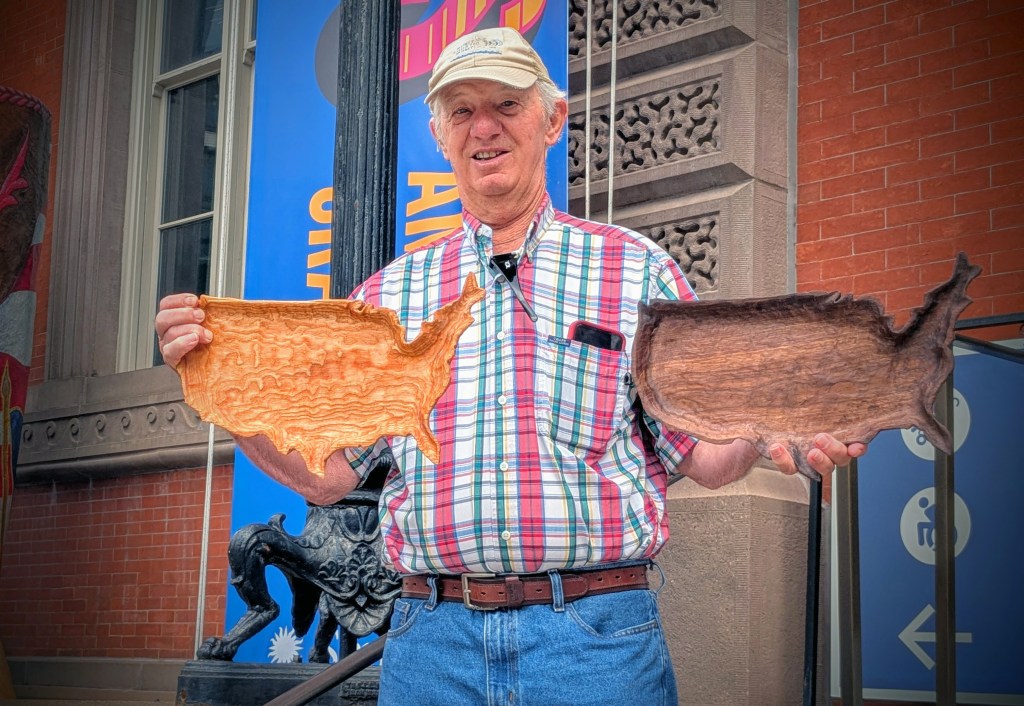
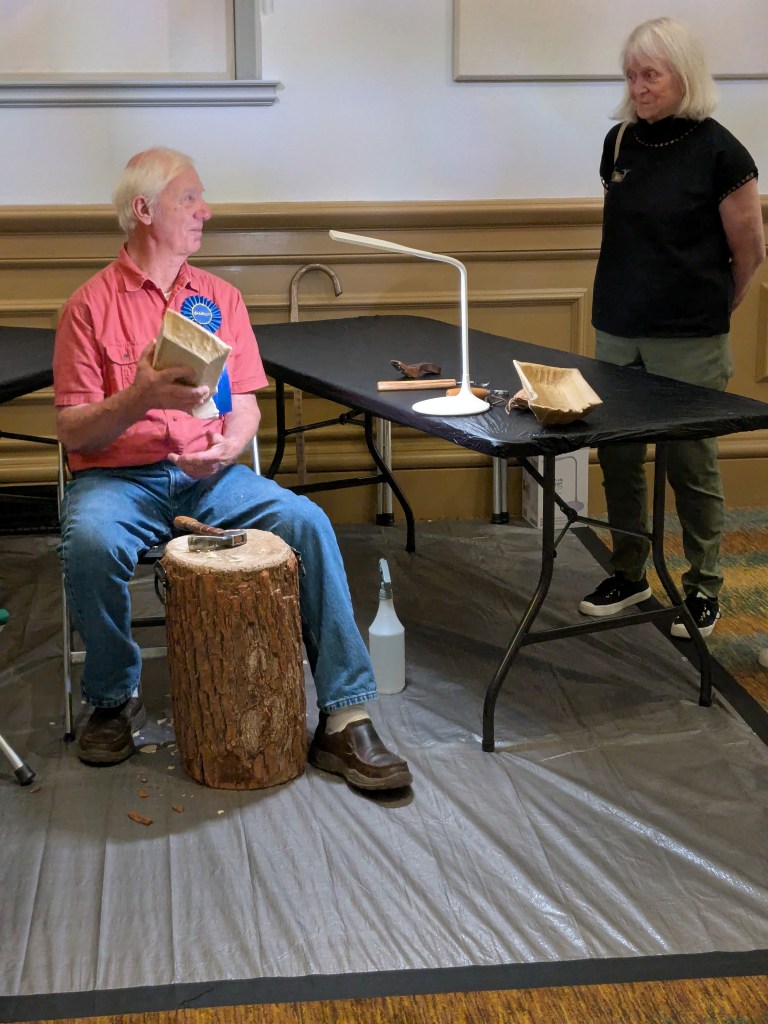
Jon Kay (JK): Thank you for the opportunity to reflect on my recent trip to Washington, DC, where I attended the Smithsonian American Art Museum (SAAM)’s after-hours celebration of the exhibition State Fairs: Growing American Craft at the Renwick Gallery. I participated in the event with Keith Ruble, a bowl hewer and longtime demonstrator in the Indiana State Fair’s Pioneer Village (Figure 1). Keith was named a State Fair Master in 2001—well before I became director of Traditional Arts Indiana (TAI)—a testament to the longstanding recognition of his work.

From 2001 to 2021, TAI partnered with the Indiana State Fair to honor its veteran participants through the State Fair Masters program. Each honoree was selected for their skill, excellence, and deep knowledge in their discipline, as well as for their commitment to passing on that knowledge within their communities. The program emerged in the years following the untimely death of Bill Day, an early Pioneer Village demonstrator and Keith Ruble’s bowl-hewing mentor. It was fitting, then, that both Keith’s and Bill’s bowls were featured in the Renwick’s exhibition (Figure 2).

Keith had been invited to demonstrate at the exhibition, but initially declined—he and his wife, Susie, don’t fly, and he didn’t feel up to driving to DC. When he told me this, I offered to take him. He agreed. So, the day before the celebration, Keith, Susie, my wife Mandy, and I made the twelve-hour trip to the Renwick.

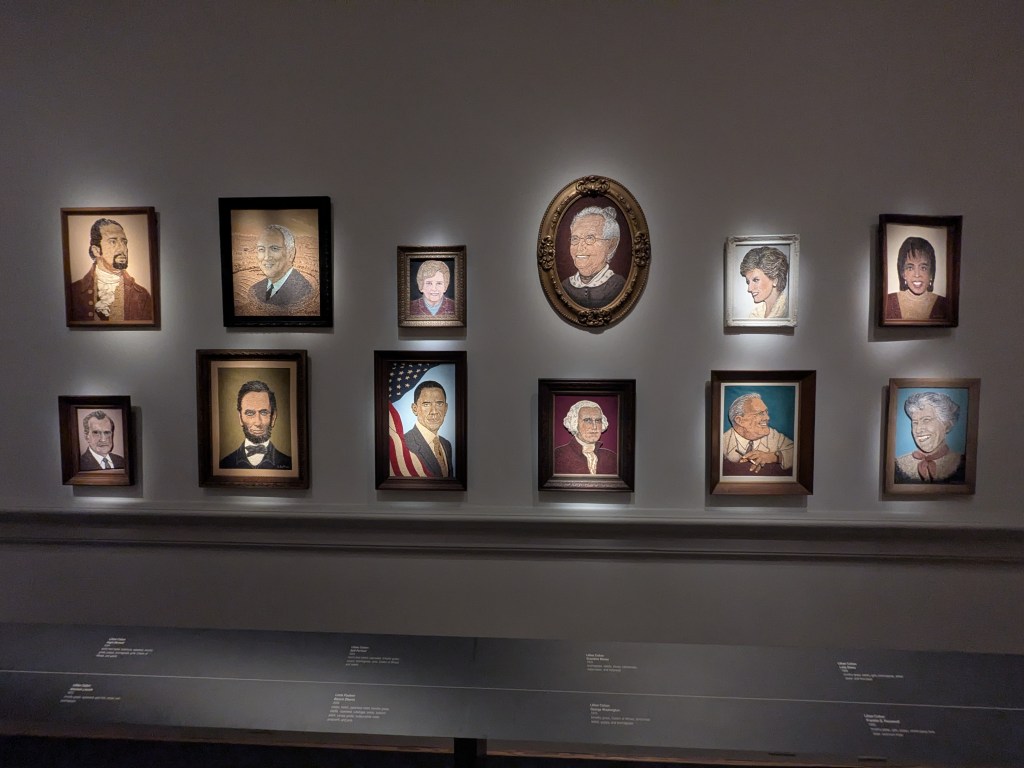
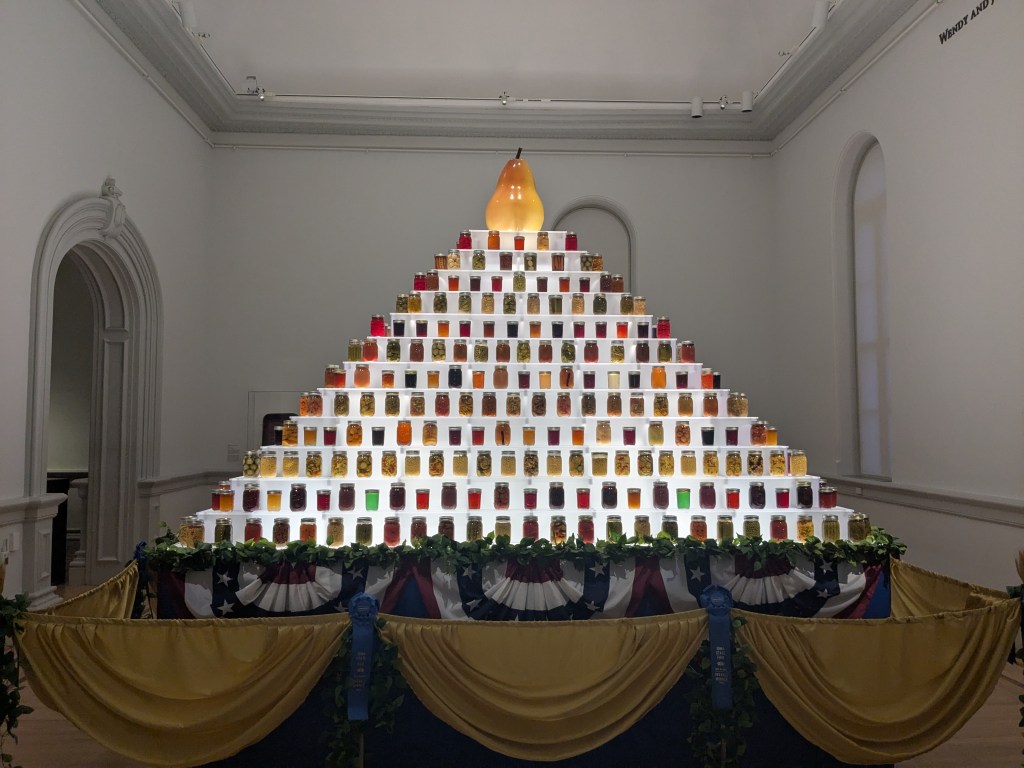
On our first morning in DC, we walked to the Renwick Gallery to view the exhibition and deliver several hand-hewn bowls that Keith had made for the museum’s gift shop (Figures 3 and 4). I imagine your future questions will explore the exhibition’s content in more detail, but for now, I’ll say it was a remarkable showcase of crafts by artists who have exhibited, competed, and demonstrated at state fairs—past and present. From pottery and crop art to canned goods and quilts, the exhibition underscored the central role of craft in state fairs since their inception in 1841 (Figures 5, 6, 7, and 8).

The celebration brought together many of the featured artists and their families, including saddle maker Bob Klenda from Kimball, Nebraska; canner Rod Zeitler from Coralville, Iowa; and basket maker Polly Adams Sutton from Seattle, Washington (Figures 9, 10, 11). While the artists enjoyed seeing their work on display, the event also created a meaningful space for state fair craftspeople from across the country to connect and share stories. The atmosphere was one of mutual appreciation. In a culinary nod to fair traditions, the Renwick served corndogs, cornbread, corn pudding, and other fair staples. It was a festive and memorable evening.

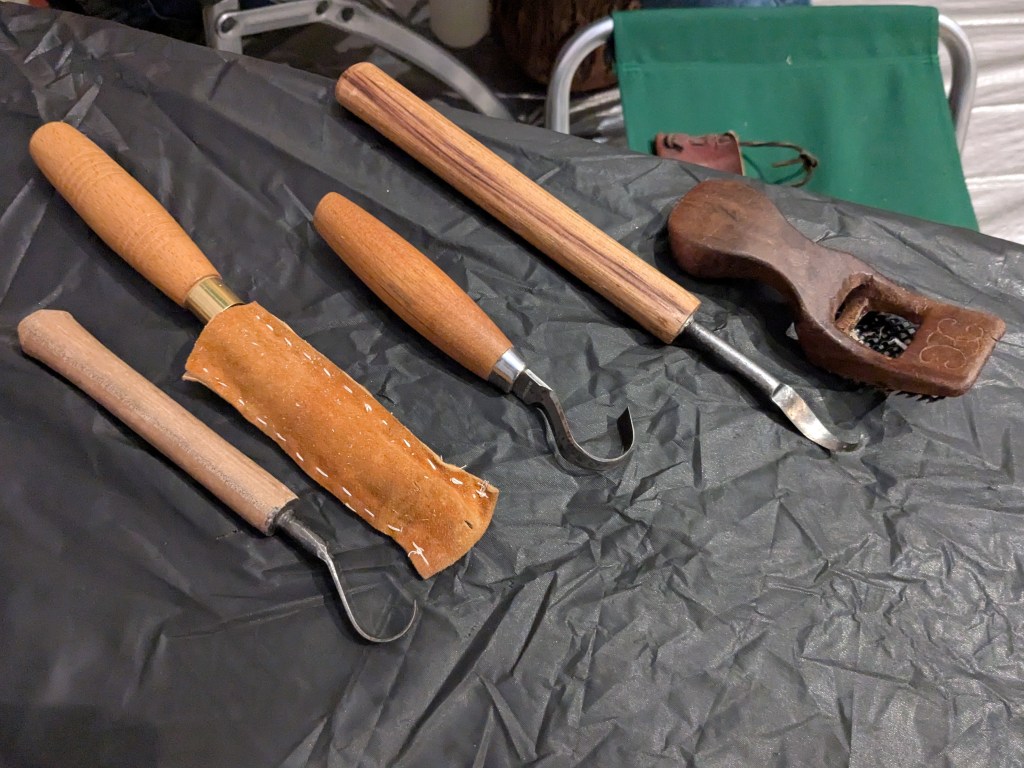
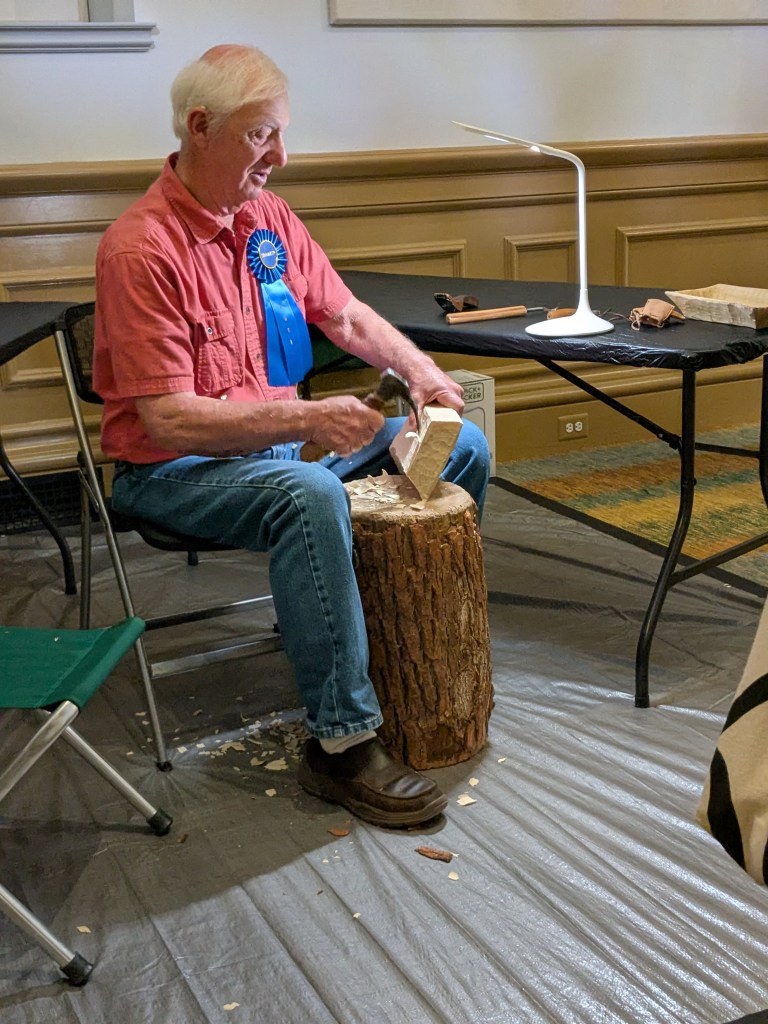
The following day, Keith demonstrated his craft at the Renwick. Concerned about wood chips, the events team taped down tarps and provided tables and chairs. Keith’s setup was minimal—just a few tools: a bowl adze fashioned from a ball-peen hammer, a bent gouge, a couple of spoon knives, and a hand-rasp scraper (Figure 12). But what really caught people’s attention was his sassafras stump with luggage handles, which he uses as a chopping block (Figure 13).

Throughout the day, Keith worked on an Indiana-shaped bowl, answered questions, and shared stories. He spoke about his mentor, Bill Day; his wife’s tolerance for him chopping in the living room; and his “mother-in-law” bowls—his name for the ones that crack (Figure 14).

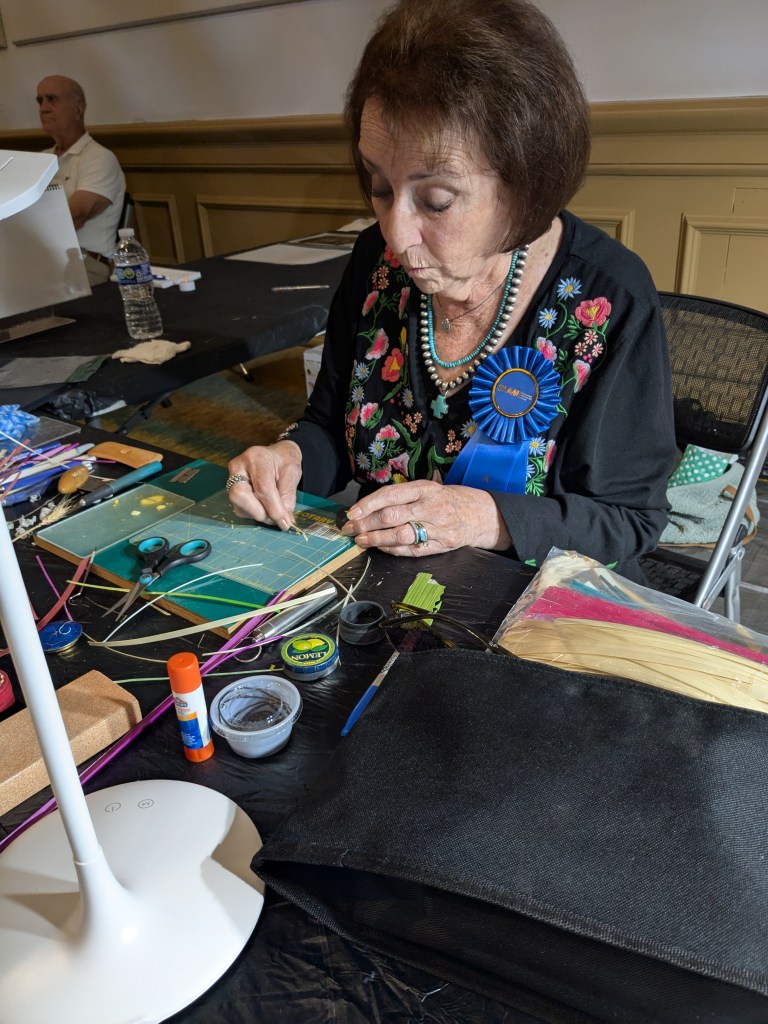
Alongside Keith were two other demonstrators: Martha Varoz Ewing from Santa Fe, New Mexico, who practices traditional straw appliqué, and Samuel Barsky from Baltimore, Maryland, known for knitting custom sweaters of his own design (Figure 15 and 16).

Soon after Keith began, the rhythmic chop, chop, chop of his adze echoed through the gallery, drawing visitors to the demonstration area. From 10 a.m. to 2 p.m., the artists worked and engaged with the public. Keith noted that he didn’t even finish the bowl he brought to work on. I assured him that the Smithsonian didn’t mind. There was a steady stream of visitors throughout the day, and the exhibition, as a whole, was very well attended.

JBJ:  I am glad that you and Mandy, Keith and Susie had a great time at the exhibition and its opening events! With the scene set now, can you tell me about your role as one of the “contributing curators” working with lead curator Mary Savig?

JK: From 2004 to 2022, I coordinated the Indiana State Fair Masters Program as part of my work directing Traditional Arts Indiana. For this program, I conducted oral history interviews, created exhibition panels, and produced documentary films.* My friend Betty Belanus, a retired curator at the Smithsonian Institution’s Center for Folklife and Cultural Heritage and Indiana’s first state folklorist in the 1980s, was aware of my long-standing work with the Indiana State Fair. When Mary Savig, Chief Curator of the Renwick Gallery, began planning the exhibition State Fairs: Growing American Craft, Betty suggested that she reach out to me to help identify potential Indiana craftspeople to feature.

Mary and I met at the 2023 Indiana State Fair, where I gave her a tour of the fairgrounds. The State Fair Masters program, as I mentioned earlier, celebrated the work of longtime fair participants—from apple growers and hog breeders to pie bakers and weavers—highlighting the artistry embedded in fair traditions. While many of these practices have aesthetic dimensions, the Renwick is a craft gallery, so performance-based traditions, such as baton twirling, clogging, and washboard playing, were outside the scope. I joked that while I could make a case for seedstock swine breeding or miniature donkey husbandry as art forms, jars of jelly and pickles were probably as close as the exhibition would get to these more ephemeral crafts.

As we walked the fairgrounds, Mary and I discussed her vision for the exhibition and my nearly two decades of work with the Indiana State Fair. The State Fair Masters program had ended in 2023, so I was especially reflective during our visit.

Our first stop was the Indiana Arts Building, formerly known as the Home and Family Arts Building. In the basement, baked goods and canned items were exhibited; the main floor featured quilts, needlepoint, weaving, crochet, and knitting. The building also featured paintings, photographs, and other artworks that had been entered in various fair competitions. I introduced Mary to longtime building coordinator Nancy Leonard, and then we talked with Mary Schwartz, a 2013 State Fair Master who was recognized for her needlepoint artistry.

Next, we visited the Pioneer Village, located across the fairgrounds and surrounded by antique tractors and historic farm implements. The Village showcases farming practices, music, and crafts from Indiana’s Depression Era and earlier. I introduced Mary to the wheelwrights and blacksmiths, and Charlie Carson who trains oxen and makes yokes. In the Pioneer Village Building, Mary talked with quilters, weavers, and broom makers—but what truly captured her interest was the bowl hewing.

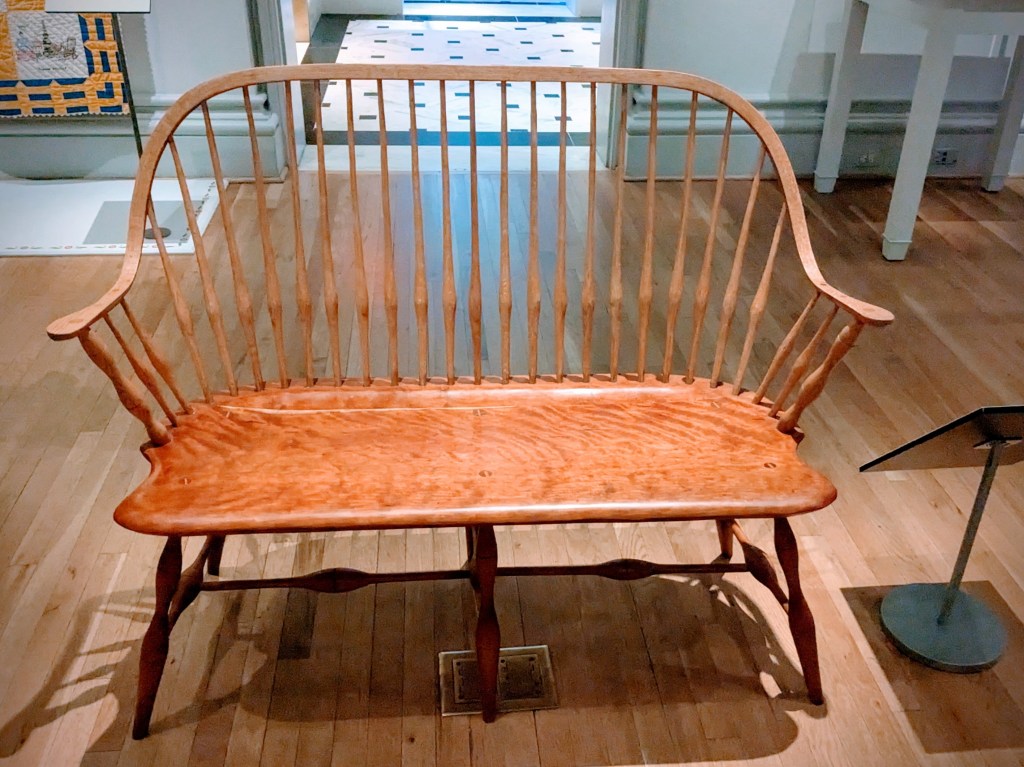
I had recently curated an exhibition at the Swope Art Museum in Terre Haute, Indiana that featured several bowl makers who demonstrated at the fair. I introduced Mary to Keith Ruble and Blaine Berry, both of whom would later be featured in the Renwick exhibition. I also secured a large sassafras bowl made by Bill Day for the exhibition. I loaned the gallery a tulip poplar bowl shaped like Indiana, which Keith had made for me for the 2016 Bicentennial of Indiana Statehood. In addition to recommending artists, I shared ideas for potential craft inclusions. Mary ultimately acquired a settee and two Windsor chairs from Blaine, which the Smithsonian purchased (Figure 17).

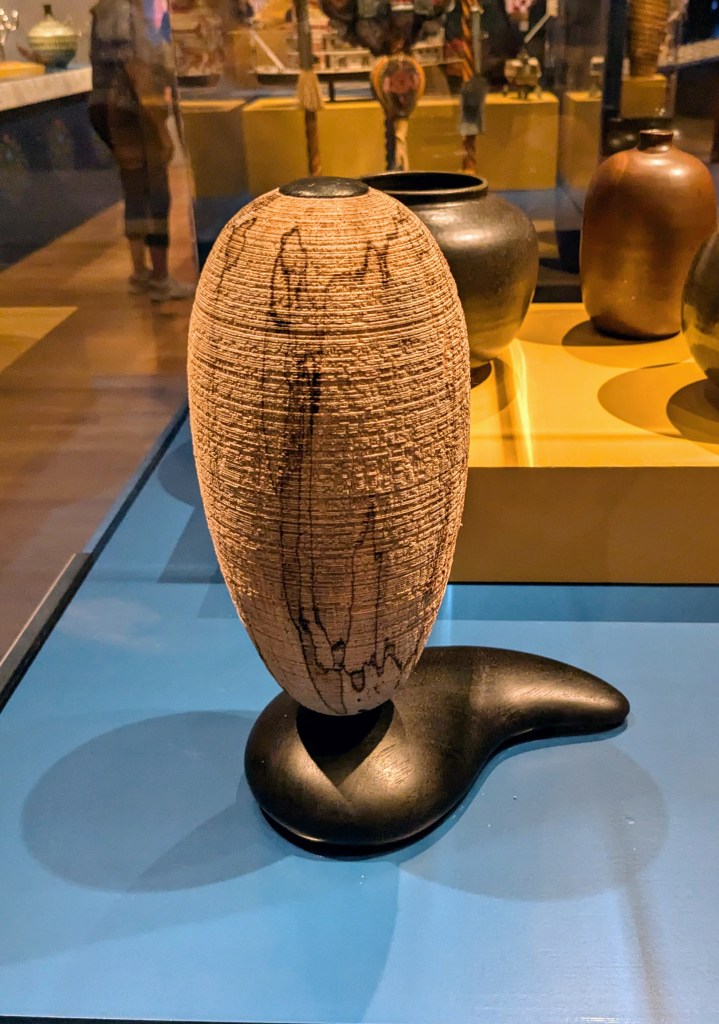
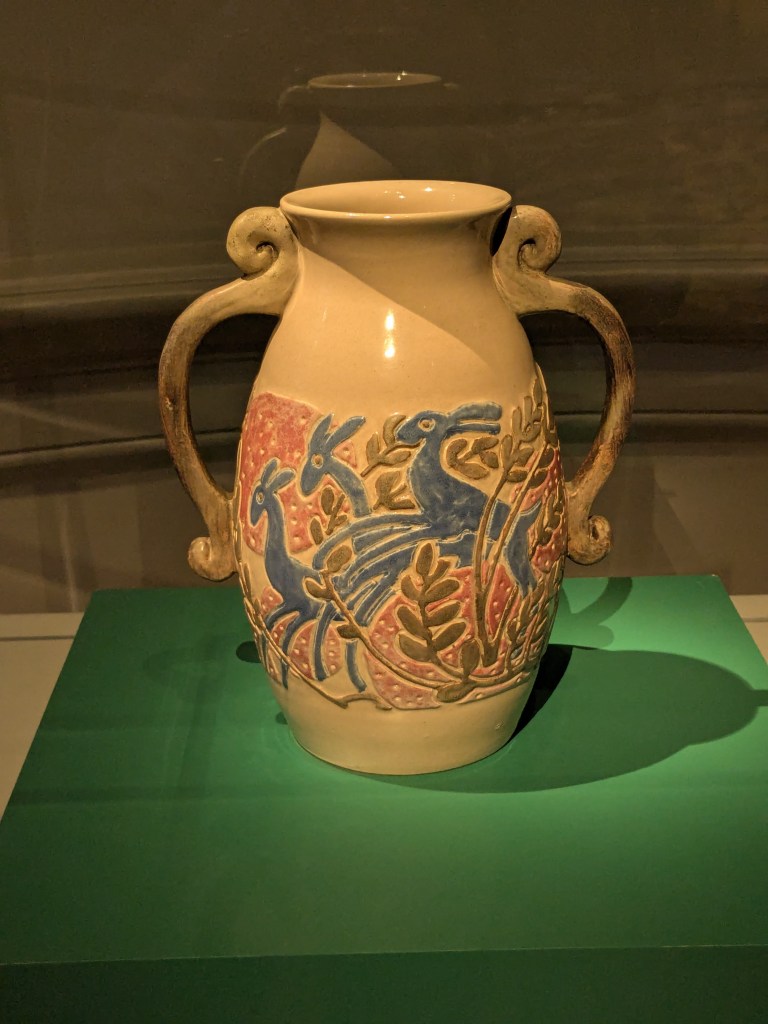
By the end of our visit, Mary had identified about ten potential Indiana artists for the exhibition. A few months later, she told me that she needed to pare down the list, because the exhibit included more craftspeople from Indiana than any other state. The final roster included bowl maker Keith Ruble, chairmaker Blaine Berry, basket weaver Viki Graber, woodturner Betty J. Scarpino, and potter Kelly Bohnenkamp, who loaned her whimsical “corndog vase” (Figures 18-20). The exhibition also included works by two historical Indiana craftspeople: a vase by Mary Overbeck (1878–1955) and the large bowl made by Bill Day (1915-1999) (Figure 21).

JBJ:  I am glad that you could help the craftspeople of Indiana gain recognition from this major exhibition at a key world museum devoted to craft. I mentioned the catalogue for the exhibition at the start. Can you tell readers what they will find in that catalogue and what your contribution to it is?

JK: The exhibition catalog, State Fairs: Growing American Crafts, is a companion book published by Smithsonian Press (Savig 2025). It connects the narrative threads of the exhibition, as outlined by editor Mary Savig in the introduction. The chapters then highlight key themes, including “4-H and Youth Participation,” “Creative Arts Competitions and Women’s Collectivity,” “Indigenous Fashion Shows,” and “Studio Craft Competitions.” My chapter ended up being more focused than the others, centering on the Pioneer Village at the Indiana State Fair.

Mary and I initially discussed framing the essay around creative aging in heritage events, but ultimately, she felt a tighter focus on the Pioneer Village would serve the book better. For my chapter, I drew on decades of interviews with participants in the Pioneer Village. In fact, I had to work hard to stay within the word count. I hadn’t realized at the time that mine would be the only chapter focused on a specific event. While the other essays explore broader themes across multiple fairs, mine is grounded in my long-term work at the Indiana State Fair—and especially in the Pioneer Village.

I feel fortunate to have served as a contributing curator for the exhibition. Much of my role involved sharing nearly two decades of research into craft traditions at the Indiana State Fair. I’ll be returning to the Renwick Gallery this winter to participate in a panel discussion, where I’ll speak about my work in arts and aging, drawing on experiences with longtime fair participants, including those in the Indiana Arts Building and across the fairgrounds.

JBJ: The new exhibition, book and public program series at the Renwick Gallery is one of scores of projects that you have pursued related to craft and craftspeople in Indiana, in the United States, and overseas. Looking ahead, what is your next big project related to craft all about?

JK: As you know, I tend to keep several projects going at once, so questions like this always make my head spin a bit. I recently submitted a manuscript for a book on Indiana basketry, which is currently under review at the press. It examines the social function of craft in everyday life and the cultural changes that have undermined it.

In addition, I co-authored a new, public-facing book, Lifelong Arts: A Creative Aging Handbook, for the Indiana Arts Commission. The Indiana Arts Commission will publish it. I wrote it with Stephanie Haines and Anna Ross, and it explores creative aging practices. The book is based on a series of public workshops and trainings that we conducted across the state in 2022-23. Lifelong Arts will be my third public-facing creative aging guide. This one is a more general guide to arts and aging. In contrast, my other two projects were regional and based on traditional arts and everyday creative practices: Memory, Art & Aging (Kay 2020) and Everyday Arts in Later Life (Kay, Jackson, and Islam 2024).

So, I am in the starting phase of two larger projects. One explores bowl hewing in Indiana, which connects to Keith Ruble, Bill Day, and the State Fair. While this tradition is deeply rooted in Indiana, I’ve also discovered that bowl hewing is part of a broader international network of green woodworkers, toolmakers, and heritage events. Many of these makers speak about how the craft supports their emotional, physical, and social well-being, which aligns with my ongoing interest in craft and wellness. The second project, which may eventually merge with the bowl hewing project, is a scholarly study on “Folklife and Creative Aging” (Figure 22).

Of course, my academic research runs in parallel with (and within) my work directing Traditional Arts Indiana at Indiana University. TAI continues to operate the TAI Apprenticeship and the Indiana Heritage Fellowships. I am also exploring the development of an online version of TAI’s Community Scholar Training. It’s a lot to think about and seeing it all laid out like this feels a bit daunting.

In closing, Jason, thanks for your ongoing interest in craft, museums, and folklore. It was great to reflect on this moment and to think about my years at the fair and the exhibition at the Renwick. I know that the exhibition has helped me approach the fair with fresh eyes and to see the many crafts and communities that the fair has helped cultivate.

JBJ: Thanks Jon for sharing these valuable reflections and thanks for all that you do for Indiana and its peoples.

Learn more about the exhibition State Fairs: Growing American Craft online at: https://americanart.si.edu/exhibitions/state-fairs 

A version of this post will be preserved in the Published Work and White Papers collection of the Material Culture and Heritage Studies Laboratory community in IUScholarWorks. [Update: See https://hdl.handle.net/2022/33755 for the archival version.]

Notes
*Twenty documentary videos profiling State Fair Masters are accessible via Indiana University’s Media Collections Online. See the “Traditional Arts Indiana’s State Fair Master Documentaries” collection via https://media.dlib.indiana.edu/.  

References Cited

Kay, Jon, ed. 2020. Memory, Art, and Aging: A Resource and Activity Guide. Traditional Arts Indiana. https://hdl.handle.net/2022/33323

Kay, Jon, Joelle Jackson, and Touhidul Islam. 2024. Everyday Arts in Later Life. Traditional Arts Indiana. https://hdl.handle.net/2022/33322

Savig, Marty, ed. 2025. State Fairs: Growing American Craft. Smithsonian Books.


An Endeavor Worth Explaining, Uplifting, Strengthening, and Defending

Miami tradition bearer and Allen County Resident Dani Tipman (center) being recognized by Jon Kay (left) and Scott Willard, NAGPRA Program Director for the Miami Tribe of Oklahoma. In addition to being an Indiana Heritage Fellow (2021), Dani was recently recognized with a national Taproot Fellowship.

My three most recent posts are probably dispiriting for those who have taken the time to read them (on the AEI-led attack on scholarly societies, on implications of the dismantling of general education, on the internal governance challenges the societies face in a time of polycrisis). I want to balance that coverage with a local-to-me glimpse of why such things matter so much. I want to balance that coverage with good news and positive vibes, albeit tempered by the moment.

On Friday evening on the Indiana University Bloomington campus in Maxwell Hall, Traditional Arts Indiana hosted a moving and inspiring celebration of the state’s grassroots arts and cultures. Specifically, the event celebrated the work of an impressive roster of masters and apprentice teams carrying forward a rich array of art, craft, and performance forms. At the same time, a wonderful cohort of Indiana Heritage Fellowship Awardees were acknowledged and given the spotlight. These days I am more likely to cry tears of grief when on my own campus, but this was an evening that, by the time it reached its zenith, had my tearing up with tears of thanksgiving. What I know is that scenes just like this take place around the United States year-round (but not often enough) and that this happens because academic folklore studies departments and programs like mine train students to do the good work to make such programs happen and that all of us are supported in this work by the American Folklore Society.

The event in Maxwell Hall was overflowing. I arrived a bit late and worried that I would have to stand for a few hours—as some wound up doing—but I (as is so often the case) was lucky and the amazing Jenny Yang, a fellow Bloomington resident and herself a marvel and a multi-tradition bearer, flagged me over to an empty seat next to her. Not having visited with her since the end of the Mathers Museum and the onset of COVID, it was such a treat to chat with her before the formal program began. Along with her late husband James, Jenny has been a stalwart supporter of, and participant in, the programs of TAI. They were valued supporters and friends of the MMWC too, featured in exhibitions and programs at the museum.

While Jenny and I visited and traded stories and I asked her questions about mahjong, the edges of the room bustled with craftspeople and artisans demonstrating and discussing their work. To the left at the front of the room, a who’s who of Indiana musicians, together with some of their apprentices, were seated in an oval, jamming and filling the room with beautiful music played on fiddles, guitars, banjos and mandolins.

At the appointed hour, Jon Kay (Director of Traditional Arts Indiana) went to the podium to begin the formal program. I won’t do justice to it all here, but I want to identify the honorees, as the diversity and excellence that they represent speak to what is best about the state of Indiana, and by extension, life in the United States.

While it may be open for a bit longer for logistical reasons, Friday was the official finale for the exhibition A Culture Carried: Chin Basketry in Central Indiana (also presented by TAI in Maxwell Hall). This exhibition was simply excellent—rich, detailed, beautiful, well-informed, surprising to the uninitiated. In this context, the program began with special recognition of the Chin tradition bearers in the room. The delegation from Chindianapolis included weavers and weaving learners from the Winding Wednesdays group, as well as the two basket makers featured in the A Culture Carried exhibition, Pu Ngai Chum and Reverend Ceu Hlei, with members of their families. (To get background on the exhibition and its contexts, see my earlier post where I pose five questions to Jon about it.)

For most of the individuals recognized, displays and demonstrations happening before the awards ceremony itself served to showcase them and their disciplines, but for the musicians recognized, there were brief opportunities to hear and see performances during the awards ceremony itself.

The 2023 and 2024 Apprentices and masters recognized were:

  • Sam Bartlett (of Monroe County) and his apprentice Patrick Blackstone, supported in the transmission of mandolin playing (they sounded great!) [2023]
  • Tony Dickerson (of Marion County) and her apprentice Verna Moore, supported in the transmission of quilting [2023]
  • Emily Guerrero (from Allen County) and her apprentice Avery Guerrero, supported for the transmission of ofrenda making [2023]
  • Pi Hniang Ki (from Marion County) and her apprentice Anna Biak, supported for the transmission of Chin weaving traditions [2023]
  • Natalie Kravchuk (from Monroe County) and her apprentice Gabriela Coolidge, supported in the transmission of Ukranian American pysanka making [2023]
  • Denzil McMim (from Harrison County) and his apprentice Rebekah Carrol, supported in the transmission of wood chain carving [2023]
  • Joe Rice (from Tipton County) and his apprentice Matt Kenyon, supported in the transmission of Indiana glass arts [2023]
  • Peggy Taylor (from Posey County) and her apprentice Taylor Burden, supported in the transmission of Indiana loom weaving practices [2023]
  • Jannie Wyatt (from Allen County) and her apprentice Dee Chambers, supported in the transmission of quilting [2023]
  • Marlene Gaither (from Floyd County) and her apprentice Danny Gaither, supported in the transmission of rag rug weaving [2024]
  • Larry Haycraft (from Pike County) and his apprentice Cameron Burkhart, supported in the transmission of net making [2024]
  • Kwan Hui (from Hamilton County) and his apprentices Kevin Quang and Quan Nguyen, supported in the transmission of Lion Dance performance [2024]
  • Shaomin Qian (from Hamilton County) and his apprentices Shaojuan Jia, Jin Lu, Sen Li and Yijun Wang, supported in the transmission of Chinese seal (stamp) carving [2024]
  • Jim Smoak (from Washington County) and his apprentice Graham Houchin, supported in the transmission of banjo playing (they sounded great!) [2024]
  • Becky Sprinkle (from Laurence County) and her apprentice Brittany Campbell, supported in the transmission of local music jam organizing (they sounded great!) [2024]
  • Pi Nah Sung (from Marion County) and her apprentice Awi Nung, supported in the transmission of Chin weaving traditions [2024]
  • Jena Visel (Spencer County) and her apprentice Donna House, supported in the transmission of Eastern Orthodox-tyle icon painting [2024]

Recognition of these masters and their apprentices was so moving and inspiring for me and for, I think, almost everyone in attendance. They represent the pursuit of excellence. They remind us that knowledge and value exist everywhere, not just on university campuses, big city galleries, and in corporate headquarters. Together with the Heritage Fellows to whom I turn next, they represent the true diversity and strength of my adopted home state and the United States as a whole.

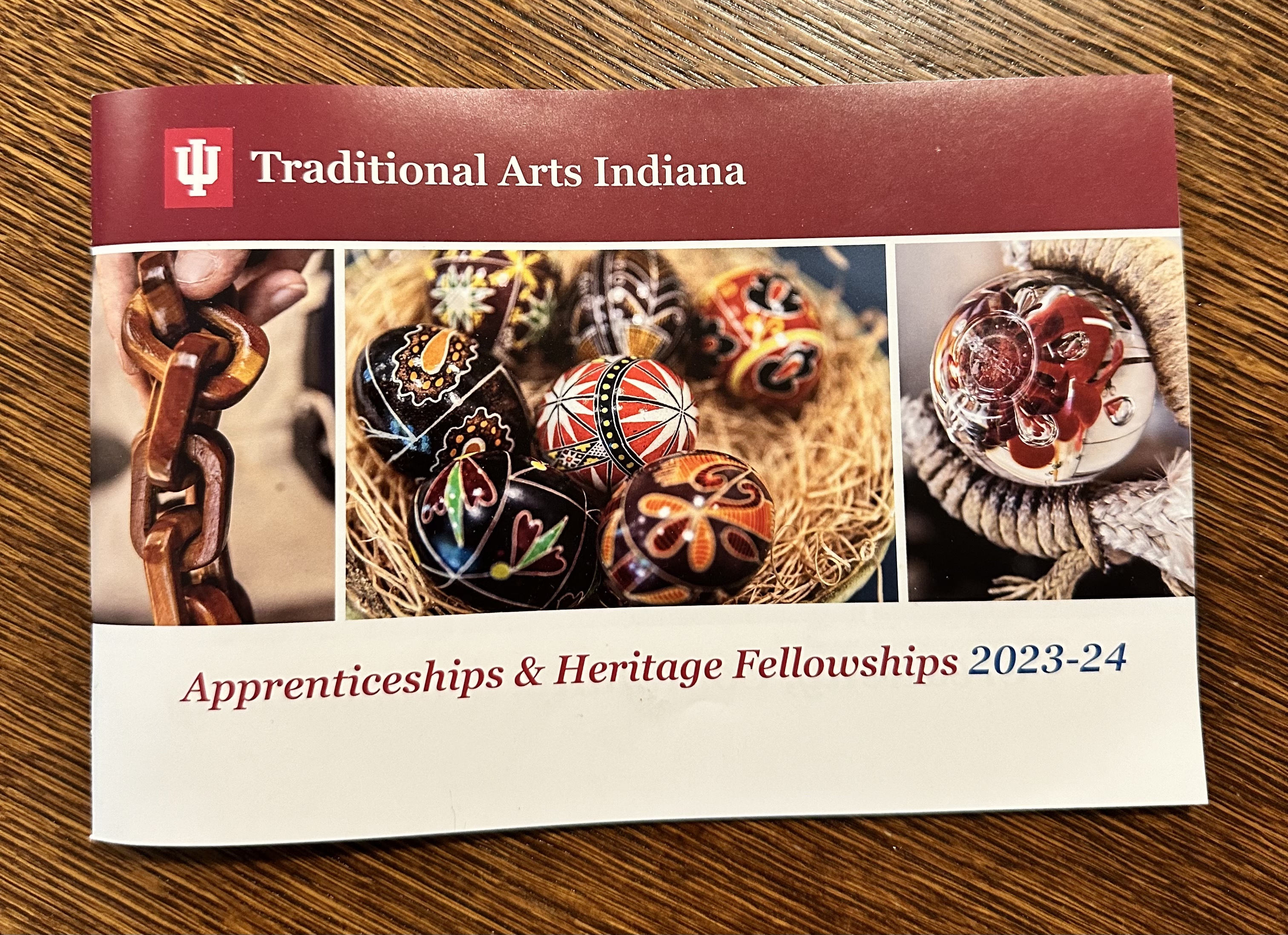
An image of the published book featuring the Indiana Heritage Fellowship recipients and Apprenticeship Teams for 2023 and 2024.

The 2023 and 2024 Indiana Heritage Fellows were recognized next, by Jon Kay, here with the help of Indiana Arts Commission Executive Director Miah Frazer Michaelsen. They honored the following Hoosiers:

  • Stephen and Nancy Dickey (from Orange County), in recognition of their excellence as fiddle and banjo musicians (This TAI event took place on Friday evening of the Lotus World Art and Music Festival, named after Stephen Dickey’s father Lotus Dickey.) [2023]
  • Helen Kiesel (from Vanderburg County), in recognition of her excellence as an accordion musician [2023]
  • Dick Lehman (from Elkhard County), in recognition of his excellence as a potter and for his role in building up Michiana pottery as a regional pottery tradition [2023]
  • Larry Haycraft (from Pike County), in recognition of his excellence as a net maker [2024]
  • Kwai Hui (from Marion County), in recognition for his excellence in lion dance and his role as a tradition bearer in the Central Indiana Chinese American and Asian American communities [2024]

A high point of the evening was when Jon announced that 2021 Indiana Heritage Fellow Dani Tippmann, who carries forward the traditional plant knowledge, and associated craft practices, of the Miami Nation was recently announced as a 2024 Taproot Fellow. This program—the Taproot Artists and Communities Trust is “dedicated to honoring and uplifting accomplished US-based traditional artists who serve as community leaders and catalysts for social change in the United States. This initiative is funded by the Mellon Foundation. It is a new national program of the Alliance for California Traditional Arts.” It provides $50,000 fellowships accompanied by $10,000 community project grants for tradition bearers such as Dani.

If you do not see the pattern here, let me call it out directly. Modest state-level master-apprentice programs such as those undertaken by TAI and its peers around the country not only help strengthen artistic and cultural life in local communities, they are also a small investment that pays dividends in the lives of both older and younger adults who are committed to their communities and to the cultural heritages that make those communities livable. Some of those involved will be further recognized in programs like the Indiana Heritage Fellowship program. That recognition, which means a tremendous amount for those so recognized, can also be a springboard for national awards, recognitions, and investments, as is the case with Dani Tippmann’s Taproot Fellowship or with those who go from being recognized on a state level to being recognized as National Heritage Fellows by the National Endowment for the Arts.

Per capita, Indiana and its state peers around the US invest microscopic amounts in the folk and traditional arts, but those investments, and especially the still tiny investments made at the state level by the National Endowment for the Arts, do an extraordinary amount of good. These investments help make life meaningful, make life bearable, in rural places, suburban places, and urban places around the U.S. They recognize and strengthen life in Indigenous communities and in the lives of diverse other communities—Latinx, African American, European American, Asian American, refugee, old settler, immigrant, etc. As reflected in the county shout-outs above, there is no corner of the state of Indiana that Traditional Arts Indiana (meaning just one half-time director and two half-time graduate assistants and some hourly and intern helpers) are not positively impacting.

The infrastructure and mutual support networks that make this possible have never been strong enough, but they are presently being weakened concurrently on many fronts. And they face still greater threats on the horizon. Organizations and activities that get rural good ole boys and refugee weavers, African American matrons and Mexican American kids in the same room and on the same page are getting fewer and fewer. In a society returning to bad habits of political violence and renormalizing xenophobia and other pathologies, joyful, plural spaces such as Maxwell Hall last Friday night are precious and all who see the value in them need to rally to defend them, and the academic programs, scholarly societies, funding agencies, and public humanities organizations that underpin them.

Helen Kiesel, pictured standing and playing an accordion, was recognized as a Indiana Heritage Fellow for 2023. Fellow Heritage Fellow Stephen Dickey can be seen joining her performance on fiddle. Helen Kiesel is from Vanderburgh County in far southwest Indiana and Stephen Dickey is Orange County in the center of far southern Indiana.

There was much to move me, but it was Stephen Dickey asking if he could join in on fiddle with Helen Kiesel’s accordion demonstration that brought tears to me. I knew they’d be great together, but I also knew what awaited me outside Maxwell Hall on my walk home—rock classics blasting from fraternity houses where the front-lawn beer pong* was going to be, and was, well underway. For a moment, Jon Kay and his students and the amazing people they support gave me the world I want rather than the world that, most of the time, I have.

*Yes, I know that beer pong is folklore and folklife too.

Chin weavers and weaving students being recognized during the awards ceremony hosted by Traditional Arts Indiana, October 4, 2024.

“A Culture Carried: Chin Basketry in Central Indiana”: Five Questions for Exhibition Curator Jon Kay

Jon Kay is Director of Traditional Arts Indiana, an Associate Professor of Folklore, and Interim Executive Director of Arts and Humanities, all at Indiana University Bloomington. In this exchange, I pose questions to him about his new exhibition A Culture Carried: Chin Basketry in Central Indiana. Find details about the exhibition and associated opening program at the end of the interview.

Jason Baird Jackson (JBJ): Thanks for taking time to field a few questions about the upcoming exhibition “A Culture Carried: Chin Basketry in Central Indiana.” For Shreds and Patches readers, I’ll share all the practical details about the show and the opening celebration below. Here, let’s jump right to an initial question about this exhibition and the work on which it is built. 

Who are the basket makers whose work centers the upcoming exhibition at the Cook Center for Public Arts and Humanities in Bloomington?

Jon Kay (JK): The exhibition features the work of Pu Ngai Chum and Reverend Ceu Hlei, lifelong friends from Chin State, Myanmar. Both are Zophei basket makers who now reside in Southport, Indiana, a suburb of Indianapolis with a large Chin refugee community. Pu Ngai Chum has lived in Indiana for over ten years, while Reverend Ceu Hlei came to visit his daughter in 2020 just before the pandemic began and ended up staying due to the ongoing turmoil in Myanmar. Following the military coup, civil unrest, and persistent violence against the Chin, he decided to remain in the United States with his family.

Pu Ngai Chum started making baskets for his Chin community after his children encouraged him to leave his job during the pandemic. Similarly, Reverend Ceu Hlei, feeling bored and depressed as a newcomer to Indiana and unable to leave the house, was encouraged by his son-in-law to start basket making. His son-in-law suggested he try using recycled polypropylene packing ribbon from local warehouses, just as Pu Ngai Chum was doing.

I met Pu Ngai Chum and Reverend Ceu Hlei about a year later while conducting a folklife survey on arts and aging in Central Indiana, funded by the Allen Whitehill Clowes Charitable Foundation. Since then, I have worked with them to coordinate basket classes, workshops, and demonstrations. All the while, I was buying baskets and documenting their craft, which led to this exhibition. 

JBJ: I know that visitors will enjoy seeing their work presented in the new exhibition. Hopefully there will be a good turnout for the opening event where they will be demonstrating their skills publicly. That will be a great opportunity.

It seems to me that many people take baskets for granted. They are a kind of thing that one sees readily available in a store like Target. We rarely know where such baskets came from or who the people were who made them. When discussing your work with talented basket makers in Indiana, how do you find ways to shake people out of this passive relationship to this venerable craft?

JK: Other than the molded plastic laundry baskets and hampers sold by big box retailers—which arguably are not baskets— every basket is handmade. Today, their making may include special jigs, tools and machinery, but to some degree all baskets require some handwork and specialized knowledge. In the United States, some discount stores sell inexpensive baskets that are made in distant places where labor costs are low and manual skill is high. So, it is easy to speculate why baskets are met with apathy or even disdain. 

When people want to invoke the idea that something is outmoded or simple, they may compare it to “underwater basket weaving” or call it “Basketmaking 101.” This position assumes that anyone can do it. While it is true that almost anyone could learn to weave basic baskets, few do.  But if you look deeper into these woven vessels you begin to see they hold so much more. The sheer diversity of materials, patterns, aesthetics, and uses is staggering. From carrying eggs and catching fish, storing grain or serving food, holding babies to burying the dead, baskets for millennia have held our most precious possessions. 

Moreover, the work that baskets and basketmaking does in the world is still needed. In many places baskets remain a part of everyday life. They are the perfect thing to carry to the market—no need for plastic bags. The feel of the twisted handle in my hand as I work in my garden each summer reminds me of how this old technology is perfectly designed for the work that baskets do in the world. But, more than the physical nature of baskets, basket making is needed now more than ever. In my arts and aging research, I see the value and power of creative pursuit in later life; something you can devote your time and attention to, a practice that gives you satisfaction and purposes, an activity that coaxes you into a state of flow. All of which support our wellbeing in later life…or for that matter throughout the life cycle.  Too many young folks and elders in the United States, for example, are struggling with feelings of depression, boredom, and loneliness. Many find it difficult to forge meaningful relationships. Some are perpetual distracted with social media and portable technologies, and struggle with the basic human skill of human interaction with the world around us. Basket making is just one craft that requires mind and hand to work in concert. In addition, basket making can connect generations. Makers learn when they are young, often from grandparents or nearby elders then, when they grow old, they return to the craft to fill their lives with purpose in meaning. Moreover, when an elder teaches a younger person to focus and make a basket, they are also demonstrating them how to age well. In this light, I think we need more baskets, and for sure we need more people making baskets. 

A glimpse of the exhibition, “A Culture Carried: Chin Basketry in Central Indiana”.

JBJ:  Well said! And I think that your arguments about making and meaning also help us understand the remarkable transformations underway now at the intersection of craft and making activities and social media, particularly how-to videos for would-be craftspeople and makers, but also making-videos-as-entertainment, especially very short format videos of the kind visible on platforms like TikToc and Instagram. We can explore those themes another time but, building on them, could you say something about how you yourself use video and photography as part of your studies with basket makers such as Pu Ngai Chum and Reverend Ceu Hlei?

JK: Yes, you are exactly right. I have witnessed over and over how the documentary impulse is one of the ways that intergenerational bonds are strengthened. We could talk for hours about that, for sure. In the exhibition I include two documentaries that my research assistant Touhidul Islam and I made featuring the work of the two makers. They are great ways for exhibition goers to see how a basket comes together. Both videos compress a half day of work into a few minutes.  And while I made them to share in the exhibition and online, that was just one of the reasons that I undertook those video making projects. First, the making of the video gave me a reason for engagement with the artists. I could tell them about my work, show them my publications, and visit with them, but when we collaborate in the making of the video, we learn about each other, and our trust grows. I have done five basket-making video projects all for the same reason. The first was with Viki Graber a Mennonite willow bask maker from Goshen, Indiana. The next was with Li Guicai a Baiku Yao basket maker who makes bamboo rice baskets in Southwest China. In addition to the two basket videos with the basket makers in the current exhibition, I recently produced a video that follows Myaamia artisan Dani Tippmann through the making of an elm bark basket. Each of these making projects (both the making of the basket and the making of the video) allowed the maker and the me to deepen our research relationship.  It gave us a reason to work together. It was valuable to the maker, but also to me as video producer. Whether it is hosting a craft workshop, curating an exhibition, or making a video, my public-facing folklore work is more than just doing public programs, each activity creates a context for deep learning with my interlocutors.

I focus on process-centered documentaries. When I began this approach, it was less common for an ethnographic video to concentrate on a creative process. Instead, films would use footage of making as a backdrop for telling the maker’s story. However, in recent years process-centered videos have become popular. My social media feed is full of them. These videos are also very popular in the home communities where these tradition bearers are from.

I prefer making process-centered videos in part because the researcher and maker roles are even— the maker makes, and the documentarian shoots and edits. While we are working together; the maker knows what I am doing and what they need to do for it to be successful. As we work together, the maker tries to make the best basket possible, and I try to capture the best footage I can.*

JBJ: It is great to gain this sense of your process and your priorities in the work. That the videos will have multiple uses, both now and in the future, is a key factor. A classic gallery exhibition is a unique and wonderful thing—I have devoted my life to making them—but they cannot reach all audiences and they are very time and place limited. Your videos will do varied work around the world and in the Indiana Chin community itself. I look forward to watching them!

Can you say something about how this project and exhibition intersects specifically with Indiana University Bloomington, above and beyond its relevance to the Chin community, to Indiana as a state, and to TAI as the state public folklore program? Put another way, what connections already exist between IU Bloomington and the Chin people in Indianapolis and around the state? This is not the first time IU is engaging with Chin people, is it?

Yes, exhibitions have a limited reach, but they can signal to a community or group that we see them and that their work and culture is valuable both in their community and beyond. I have successfully used campus venues to prototype exhibitions, that I later expand and tour to venues nearer to the makers’ home communities. I did this with an exhibition about oak-rod basketry that was at Indiana University’s Mathers Museum of World Cultures but that was later installed at the Historic Brown County Art Gallery in Nashville, Indiana. Similarly, I did a small proof of concept exhibition on bowl hewing in Indiana at the Herman B Wells Library’s Scholar’s Commons that then was expanded to tour to the Swope Museum of Art. Just as video making is a process for fostering creative collaborations with the artists that I work with, so are exhibitions. Developing an exhibition, growing the exhibition, touring and programming the exhibition—all contribute to my greater understanding of the art form and the makers with whom I collaborate. 

Back to your real question though… Back in 2010, Traditional Arts Indiana did its first project with the Chin community in Indiana. My graduate assistant at the time, Anna Mulé took the lead on that project, and we created a community exhibition and festival about Chin culture. Back then there were just a few thousand Chin living in Central Indiana. Today there are more than 30,000. I wish I could tell you that we continued to work with the Chin through the years, but we didn’t. In 2021, I received a grant to do work in Central Indiana focused on how everyday arts support elder wellbeing.  It was then that I met my collaborator Kelly Berkson, an IU linguistics professor and the director of the Chin Languages Research Project (CLRP). It was in working with her that I learned about how much larger the Chin Population had grown. CLRP is doing amazing work documenting the diverse languages being spoken by the Chin peoples living in Indiana. Through Kelly and CLRP, I discovered that there were dozens of Chin students studying at Indiana University. Kelly had enlisted a strong team of Chin students to support her linguistic research and to understand what Chin languages are being spoken in Indiana. After meeting Kelly and her team, we decided TAI and CLRP needed to work together. Kelly and I received campus funds to support a summer collaborative project, the Chin Folklife Survey.  The Chin students, Kelly, and Chin linguist Kenneth Van Bik, and I conducted interviews with elders in the Chin community. By recording their life stories, we developed a robust collection ethnographic interviews and linguistic data. The students loved the project. After that summer project, I began working one of Kelly’s students, Em Em, who graduated from IU with a degree in Public Health. She helped pilot a series of creative aging programs for Chin elders at the Chin Center of Indiana. From there, Em and community scholar Anna Biak helped start the Winding Wednesday group, a weekly gathering of Chin back-strap weavers living in Central Indiana. Pi Nah Sung has emerged as the lead teacher of that group. I say all of this to make clear that there is a network of students, community scholars, nonprofits, and university partners working with the greater Chin community in Indiana. 

This exhibition would not exist if it was not for that constellation of collaborators. Kelly and her students introduced me to the community, students assisted me with translations and helped me understand the significance of basketry in their community. Em organized and facilitated basket workshops with the two makers, and her insights and knowledge supported this exhibition throughout its creation. This exhibition is not an expression of my “great curatorial understanding of Chin basketry,” rather it is a humble offering of respect and appreciation to the Chin community in general and to Pu Ngai Chum and Reverend Ceu Hlei specifically. It is my scholarly way of thanking them for their time and talent. I also hope the exhibit captures the interest of Chin students and that they might be inspired to learn more about the traditional arts of their community.

 JBJ: It is super to get the wider Indiana University and Chin community contexts for the exhibition and for the larger project. That background really brings to life what is meant when we describe a research project as being a community collaboration.

You have been very patient with my questions at a busy time. You are not only finishing the exhibition and starting a new semester at Indiana University, but you are also working as Interim Executive Director for Arts and Humanities on the Bloomington campus. Take off your hat as Director of Traditional Arts Indiana and put on the A&H director’s hat. From the perspective of your new role, how does an exhibition like this one articulate with the larger body of work that faculty, staff and students at Indiana University Bloomington are now pursuing?

JK: The Arts and Humanities have long been one of Indiana University’s strengths. I feel very fortunate to be serving in this new role at this critical time.  While I have been on the faculty at IU for twenty years, I have always identified as a public folklorist/humanist. My work has always aimed to serve the state, communities, and tradition bearers with whom I collaborate. Our university has undertaken of a seven-year initiative called the IU 2030 plan, which has three priorities. “Student Success & Opportunity,” “Transformational Research and Creativity,” and “Service to Our State and Beyond.”  In some ways, this is just a rearticulation of the existing areas of review for university faculty: teaching, research, and service.  The exhibition and the work that surrounds it delivers on the IU 2030 promise. I outline this below, not as a way of championing IU’s initiative or my work but rather to present how public humanities can work in a university context.

Student Success and Opportunity

Students were involved on all levels with the research, curation, and programs associated with the Chin basket exhibition. Chin students helped identify the basket makers and served as translators and fieldwork assistants. They worked with the Chin Folklife Survey, and gained insight into the fieldwork process, oral history skills, and how to translate field research into accessible content for their community. Folklore students worked alongside me in drafting the exhibition script, editing fieldwork video to be shown in the gallery, and selecting photographs to be included. These “real-world” experiences foster community pride and help develop important professional skills. In addition, they develop a portfolio of career-ready competencies to add to their resume before they leave the academy.

Transformational Research and Creativity

The exhibition also is an example of transformative arts and humanities research. While much of IU’s emphasis is in the biomedical and technology sector, one of the priorities of the 2030 plan is to “Improve the health and well-being of older adults through expansion of IU’s nationally recognized programs in aging research.” Since 2013, Traditional Arts Indiana has worked to research and present the ways that older adults employ traditional arts to resist feelings of isolation, boredom, and helplessness that beset so many older adults.**

The exhibition tells the story of older Chin who make baskets to give their lives purpose and meaning. Through baskets, and by extension all traditional arts, the exhibition shows how community-based arts work to connect elders to their community, fill them with a sense of satisfaction and mastery, and offers them a positive and culturally validating way to devote their time and attention.  Over and over, my ethnographic projects focused on the expressive lives of elders reveal how traditional arts support elder wellbeing. Since “creative aging” is culturally situated and individually experienced, however, there needs to more research with and for the diverse communities we serve.

Service to Our State and Beyond

With recent changes at the National Endowment for the Arts, each U.S. state and territory is required to have a plan for supporting the folk and traditional arts practiced in their jurisdiction. In Indiana, Traditional Arts Indiana has done this work since 1998. This is one way that we serve the state. We host apprenticeships, award Heritage Fellowships, and produce exhibitions, recordings, and scholarship-based, public-facing works. The new exhibition is one of the ways Traditional Arts Indiana is serving our state. In addition to the service that our work provides to the state and for the Indiana Arts Commission, the state arts agency, the work that we do related to traditional arts and creative aging has helped shape arts and aging policies and programs across the United States. Moreover, our primary effort is always to serve the people of Indiana, including the Chin community in Central Indiana.

 I should say that these are the way that I am framing my work given the current priorities of our University, but as a public humanist, I really have not done anything different than what I have done in the dozens of exhibitions, videos, publications, and projects that I have undertaken in since joining the faculty—I research, I teach, I serve.

JBJ:  Jon, thank you so much for your time and for all that you do to support so many different communities and constituencies! As promised, I will now share the exhibition details. I look forward to seeing you at the opening events!

* Readers can learn more about Jon Kay’s approach to ethnographic video production with makers in his contribution to Asian Ethnology. See:

  • Kay, Jon. 2022. “Craft and Fieldwork: Making Baskets, Mallets, and Videos in Upland Southwest China.” Asian Ethnology 81 (1–2): 273–78.

** In addition to major lectures in venues such as the Library of Congress, sources related to Jon Kay’s work on creative aging include the following two books:

  • Kay, Jon. 2016. Folk Art and Aging: Life-Story Objects and Their Makers. Bloomington: Indiana University Press.
  • Kay, Jon, ed. 2018. The Expressive Lives of Elders: Folklore, Art, and Aging. Material Vernaculars. Bloomington: Indiana University Press.

It is Time to Check Out The Michiana Potters: Art, Community, and Collaboration in the Midwest

Hi everyone. Some of you already know that The Michiana Potters: Art, Community, and Collaboration in the Midwest by Meredith A. E. McGriff came out recently from Indiana University Press. It’s great. You should read it asap. This is an exciting milestone not only for Meredith and her collaborators, but also for the Material Vernaculars book series that I edit for the IU Press. The Michiana Potters is the sixth title in the series. I am really happy about the work that the series is doing and I really appreciate both the IU Press and everyone who has supported the series as readers, reviewers, authors, and especially purchasers.

Why do a single out purchasers? Well, as I have noted previously, the MV series is an unusual experiment in scholarly publishing. Because those of us involved in the series want to make sure that potential readers are not hindered from reading series titles because of lack of library access or the inability to purchase the book, MV titles are offered for sale in beautiful print editions and also offered in free-to-readers editions online. When you choose to purchase one of those beautiful print books (or a commercial ebook edition), you are helping subsidize the digital free-to-readers edition. The granddaughter of one of the potters profiled in Meredith’s book, for instance, can click here and get access to the book and carry it around on her phone, show it to her art teacher, and use it for a class project. When someone who can afford to buy the book–a pottery collector getting excited about Michiana ceramics or a professor working in material culture studies, to give two obvious examples–buys the book, they are helping fund the production of the book so that others can also read and enjoy and learn from it. In fields such a folklore studies and cultural anthropology, maximizing access, especially for members of those communities from which we learn, is a crucial ethical consideration.

I have basically told this same story every time an MV title has appeared. The good news is that the system seems to be working. I hope that you will keep it working by purchasing Meredith’s fine book if you can.

As I will describe below, things are actually more complicated than I have evoked above. It is not actually the case that a book is either in print form or in the free digital form. There are other versions in the world too. Some of you can help the cause by using those other versions. I will now reveal some of these other ways.

First, the buyers. You can get a handsome paperback or hardback version of The Michiana Potters from a wide range of booksellers. The IU Press links to some of them on its webpage for the book. Pretty much any brick and mortar or online bookseller should be able to get it for you. If you are an ebook reader, you can also get an ebook edition from the usual sources of ebooks. So, book buyers, get busy. Thank you for making the series possible.

If you need or want to check out the free-to-readers edition of The Michiana Potters, it is now posted to the MV section of the IUScholarWorks repository. You can find its repository page here. If you know someone who really needs to read this or another MV title, please help them find this page. The series page with all six books in IUScholarWorks is here.

Now, lets get fancy. If you teach at a university or college and you wanted to assign The Michiana Potters or another MV title to your students, you can probably do this in a way that saves them money while also contributing financially to the work of the IU Press as the series publisher. “How can that be?” you ask. Well, series titles are also published as part of services that are relatively common in college and university libraries. One colleague of mine, for example, is teaching the inaugural series volume Material Vernaculars: Objects, Images, and Their Social Worlds this fall. Students in that colleague’s class will be reading the book via a JSTOR, a key service making journal and book content available on in university and college libraries. Other libraries have purchased eBook access using other services. For professors and students, your university library may or may not have purchased any one MV title in this form, but some have and more could. Usually all you need to do is look it up in your college or university library catalog.

So, if you are a university person, you can use a JSTOR or a university library ebook version for yourself or for your students. When you do, you are contributing, just by that use, to supporting the publishing work of IU Press, including the MV series. If you can do so, please use such library provisioned versions. They save your students money but they still help support the press. Doing so is better than pointing your students to the IUScholarWorks version. But, if you cannot arrange other access for your students or yourself, go ahead, of course, and use the Free-to-Readers version. That is what it is there for.

You can find The Michiana Potters in JSTOR here: https://www.jstor.org/stable/j.ctv14npjxm

One source that I would really like to discourage you from using are the ever growing number of dubious file sharing sites. There really is no justification for getting The Michiana Potter from a Russian hacker when the IU Press and the IU Scholarly Communications Department, both at the IU Libraries, have worked to share a safe and easy version with you.

Happy reading to everyone! Congratulations to Meredith!

9780253049650-2

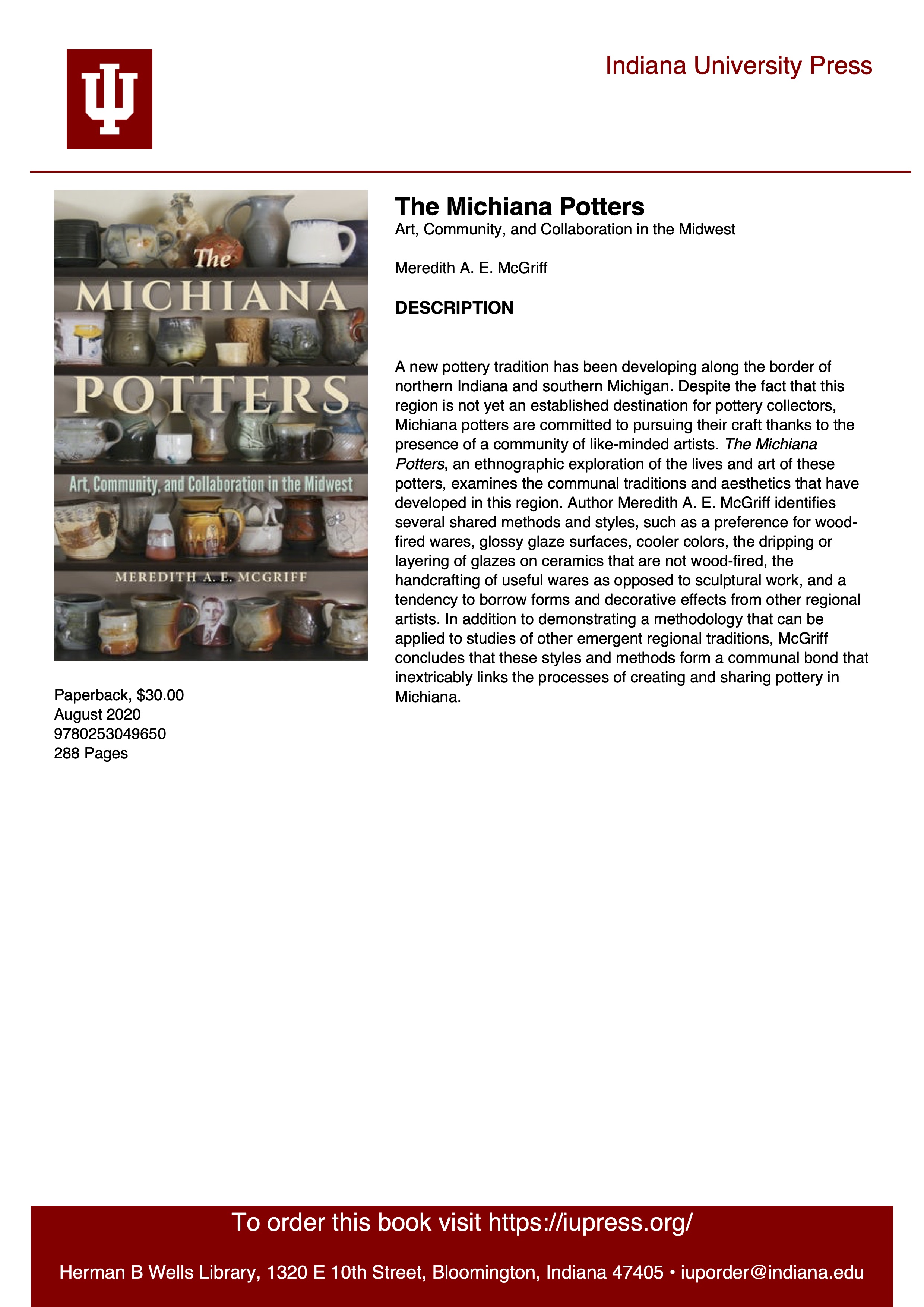
The IU Press flyer promoting The Michiana Potters.


Help! Really. The Mathers Museum of World Cultures Needs You!

An Indiana University event known as #IUDay is nearly here. Scheduled for Wednesday, April 10, 2019, #IUDay is a celebration of Indiana University. It is a day of special events, of sharing stories of the university, and for gathering together friends and supporters to work together to achieve special goals. Last year, in the days right before, and on, #IUDay, sixty-one friends donated to the Mathers Museum’s first #IUDay crowdfunding campaign. Working together, they contributed funds to enable us to launch Traditional Arts Indiana’s Indiana Heritage Fellowship program. Ours was a successful first effort. It was so successful that the Indiana University Foundation encouraged us to take on two campaigns this year, a fact that means that we are seeking to raise more than double the level of funding we received last year. This is an exciting prospect, but it is also daunting. I hope that everyone who reads this post can help us meet our goals. They are good goals. Let me describe them.

Building on the success of last year’s effort launching the Indiana Heritage Fellowship program, we are this year seeking support for its companion program, also new. This is the TAI Master-Apprentice program. The goal here is $2500 and, as of the moment that I am writing this, we have raised $567 from 11 generous donors. With two days to go, we really need your help. Please consider making a gift large or small. Last year 61 donors supported our efforts and we are eager to (=need to) increase this number this year. The good news is that, when successful, this effort will do great work across Indiana communities, providing resources and support for diverse tradition bearers to transmit their skills and knowledge to eager apprentices. This work benefits Indiana communities, the state and ultimately the whole country. If you would like to learn about the first class of TAI masters and apprentices, check out this year’s booklet and learn about the beadwork artists, netmakers, drummakers, ironsmiths, and ballet folklórico performers working together this year.

To learn more and to, if you chose, make a contribution, you can find this campaign site here: https://iufoundation.fundly.com/support-the-next-great-folk-artists

Our other campaign aims to fund K-12 field trips to visit the Mathers Museum on campus in Bloomington. Field trips are an impactful highlight for most school students, but they have become increasingly rare for most students, as budget cuts continue to take their toll. Visits to the Mathers Museum introduce students to cultural diversity worldwide and in Indiana and the US. Museum visits also introduce students to the commonalities of the human experience and to the disciplines–folklore studies, anthropology, ethnomusicology, history, etc.–that build up our understandings of human existence, past and present. As of the time of this writing, this campaign has gathered $1220 from 18 friends of the museum. Here too our goal is $2500, thus we need your help in this effort also. (This funding will enable us to provide the funds that schools need in order to come to the museum and engage with our programs and exhibitions.

To learn more and to, if you chose, make a contribution, you can find this campaign site here: https://iufoundation.fundly.com/mathers-museum-of-world-cultures

Thanks to all who have given so far. Thanks to all who will consider giving. Whether you give or do not give, please, please share these links online and urge others to support the museum’s work. When an #IUDay link is shared online it results in an average of $97 dollars in support, so even if you cannot give $10 or more dollars now, you can help the museum and these worthy projects by spreading the word.

ihfa

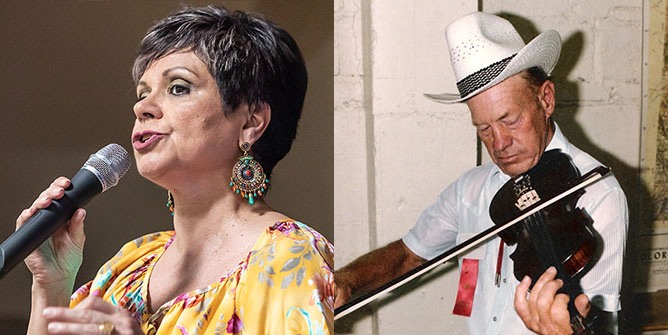
Debra Bolaños (left), a ballet folklórico dancer and instructor in East Chicago, Indiana, and Harold Klosterkemper (right), a fiddle player from Decatur County, Indiana, will soon be honored for their lifetime achievement as Indiana traditional artists. They will be recognized as Indiana Heritage Fellows in a special ceremony on April 27, 2019. Learn more about the event here.


#IUDay at the Mathers Museum!

(We need your help!)

Its almost #IUDay! What is #IUDay? As the #IUDay organizers explain:

IU Day is a 24-hour, binge-watching, social-sharing, IU-wearing, online celebration of Indiana University and the people who make IU possible (that’s you). Maybe you’re a student getting your start. Maybe you’re an alumnus well on your way. Maybe you’re a parent, friend, or fan with a special place in your heart for “old IU.” In any case, these IU connections are cause for celebration.

#IUDay is happening tomorrow (April 18, 2018)!

The museum is participating in #IUDay in a number of ways. Some are surprises for tomorrow. Some will be accessible online, while others–such as our participation in the #IUDay scavenger hunt, will happen in the museum’s galleries. One item that is not a surprise is our inaugural crowdfunding campaign. I hope that you will check it out. You can help us meet our #IUDay goal by sharing the link via email or social media (there are buttons to help you with this). You can definitely also help us meet our goal by making a gift. With one day to go 43 donors have gotten us to 83% of our $2000 goal. Please help us get all the way there before #IUDay ends.

What is our crowdfunding campaign for? Great question. To find out, I hope that you will take a minute and twenty seconds and watch our brief campaign video and learn about the Indiana Heritage Awards program that–with your support–we will be launching later this year.

https://iufoundation.fundly.com/celebrating-folk-artists-of-indiana#gallery/2

Thanks to everyone who has already supported this exciting effort. If you have not given yet, please consider joining these generous supporter.

Plethora of Patrons and Programs Prompts Parking Progress

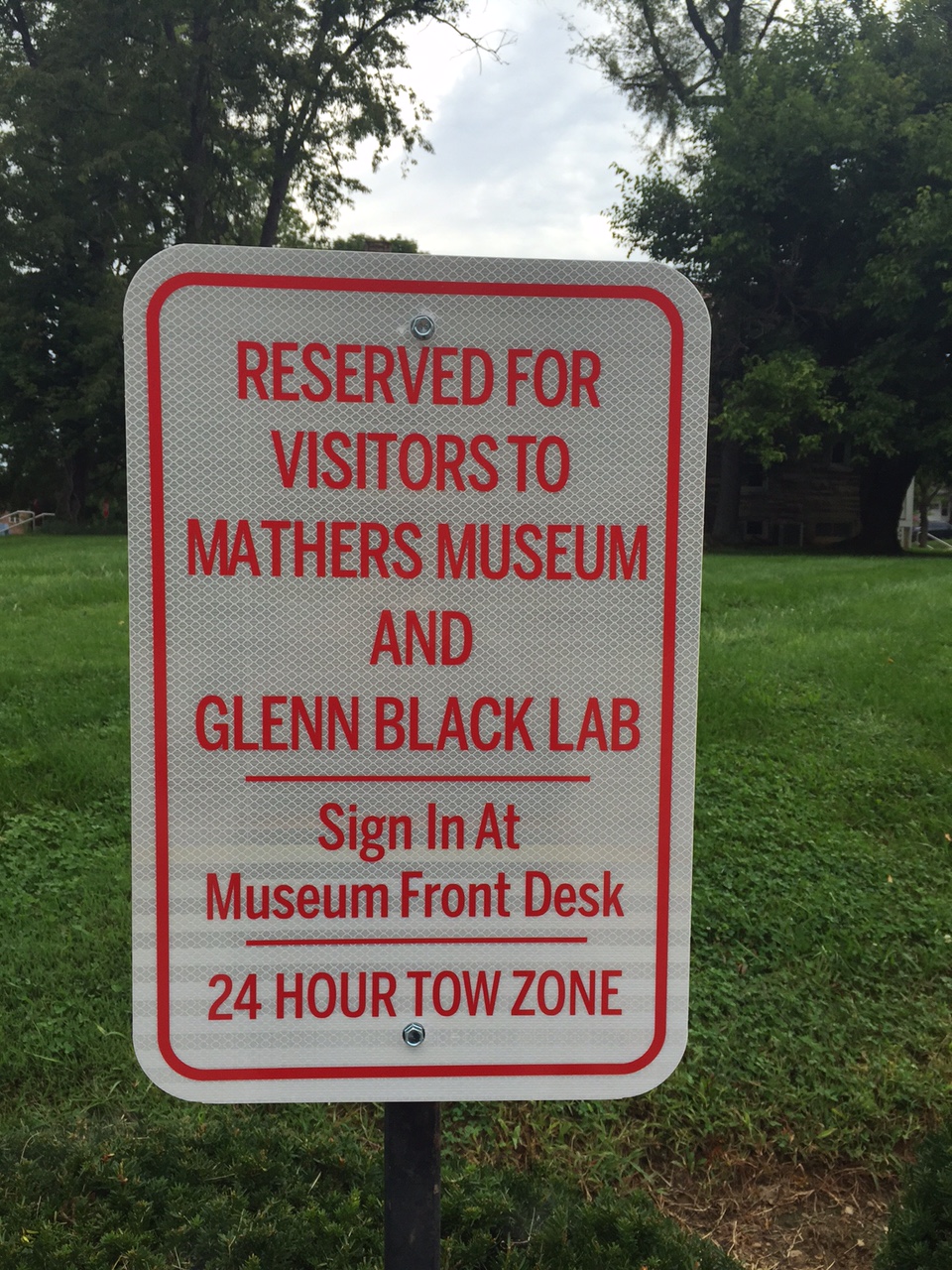
(Sorry about that headline. I could not control myself.) This fall there will be an extraordinary number of programs at the Mathers Museum of World Cultures. We hope to see you here for many of them. The wave begins in the week ahead. Before we get there, I want to reach out especially to Bloomington and Indiana friends who do not work at Indiana University and who sometimes find visiting the museum difficult for lack of close-to-the-museum parking. This is especially a concern for those with mobility issues. The museum has consistently advocated for increased near-museum visitor parking and I am happy to note that–with quite engaged support from the relevant university offices–we have recently made some solid progress forward.

IMG_2186

Until recently, the museum and the Glenn A. Black Laboratory of Archaeology shared five visitors spaces on the west side of the lab and museum, on the circular drive that is entered northbound on Indiana Avenue (and that one exits westbound on 9th Street). There were five IU staff spaces also located on this drive. Those staff spaces have been moved a bit north to the McCalla School lot (between 9th and 10th, off Indiana) and converted to five more Museum/Lab visitor spaces. In addition to doubling the near-museum parking, happily all of the metered visitor spaces at the McCalla School lot remain in service.

The number of events that we are hosting–especially since the move of Traditional Arts Indiana–to the museum and the increased numbers of people who are joining us (or who express a desire to join us, if they could just park more easily)–is a key factor in the addition of these spaces, but I note quickly here that work is underway to make the museum building more accessible and that the increased parking is part of a larger effort in that realm. More on that asap.

Of course, we would love for you to walk, bus, bike, skateboard, etc. to the museum. That is great for the earth and great for you and for the museum too. When you take a scooter to the museum instead of driving, you are freeing up one of those spaces for a person who can only get here by car. Even if they do not know to appreciate your effort, I appreciate it on their behalf. Carpooling helps too for the same reason. And if you are an IU person with an IU parking pass, you can help as well by parking in staff spaces around the museum rather than taking one of the visitor spots.

We are going to continue working to make the museum easier to visit. You can help us by spreading the word. It is sad when people say to me that they have never come to the museum because they just don’t want to fool with the parking issues. If you know someone who says such things, tell them the good news and encourage them to make their first visit. We’ll be glad to see them–and you.

Material Vernaculars Series Launches with Jon Kay’s Folk Art and Aging

This fall I will be talking a lot about the new book series that the Indiana University Press and the Mathers Museum of World Cultures are jointly publishing. I am the series’ editor and my friend and colleague Jon Kay is its first author. I will frame the series here, before I conclude this post, but I do not want to bury the lead, which is that there is a great new book in the world and you should buy and learn from it.

Jon Kay is Director of Traditional Arts Indiana, Curator of Folklife and Cultural Heritage at the Mathers Museum of World Cultures, and Professor of Practice in the Department of Folklore and Ethnomusicology, Indiana University. His book is Folk Art and Aging: Life-Story Objects and Their Makers. (Jon’s content rich book website is here.) It is the fruit of many years of work exploring the creative lives of older adults in Indiana and in other parts of the United States. Jon has much to say about the ways that material culture and narrative come together in social encounters and in unfolding lives, as well as about about the ways that more attentive scholarship on the verbal and material life, as well as the memory, work, of elders can shape more humane and sensible approaches to what is increasingly referred to as creative aging, as well as to social gerontology more generally. The book is a folklorist’s book, but it also speaks very generatively to a range of neighboring disciplines. Written in a very clear and engaging style, it is the kind of book that lots of people (not just scholars) can read and both enjoy and learn from. At its center are profiles of five incredibly interesting creators of objects, stories, and lives. Jon helps share their stories and their creations in a really engaging way. The book has many beautiful color images and at 133 pages, it never gets bogged down.

9780253022165_lrg

The hardback, paperback, and ebook editions are beautiful and they can be purchased from the Indiana University Press, from Amazon, from Google, and from many other retailers. I’ll tell you next time where to get the free PDF edition, but here I want to urge everyone who can to purchase one of the paper or ebook editions. Why? Paradoxically, because I believe in open access. If those who can do so purchase the modestly priced print or e-book editions, the IU Press will secure the revenue that it needs to produce more books such as Folk Art and Aging and to make them freely available to those who otherwise could not afford to purchase them. More on such questions next time.

Having introduced Folk Art and Aging to you, let me introduce the series quickly. The series précis reads:

The Material Vernaculars series presents ethnographic, historical, and comparative accounts of material and visual culture manifest in both the everyday and extraordinary lives of individuals and communities, nations and networks. While advancing a venerable scholarly tradition focused on the makers and users of hand-made objects, the series also addresses contemporary practices of mediation, refashioning, recycling, assemblage, and collecting in global and local contexts. Indiana University Press publishes the Material Vernaculars series in partnership with the Mathers Museum of World Cultures at Indiana University. The series accommodates a diversity of types of work, including catalogues and collections studies, monographs, edited volumes, and multimedia works. The series will pursue innovative publishing strategies intended to maximize access to published titles and will advance works that take fullest advantage of the affordances provided by digital technologies.

The series second title is an eponymous edited volume—Material Vernaculars: Objects, Images, and Their Social Worlds. That collection is due out in a few days (September 5, 2016). In its introduction, I characterize in more detail the goals of the series as well as situate its disciplinary (cultural anthropology, folklore studies, ethnology, culture history) engagements as well as its place in the larger research work of the MMWC. I look forward to sharing it with you.

Congratulations to Jon Kay on his second book of the summer (see Indiana Folk Art) and to all of our friends at the Indiana University Press.

WAWV Profiles Two Indiana Craftspeople; Draws Content and Inspiration from Indiana Folk Arts Catalogue

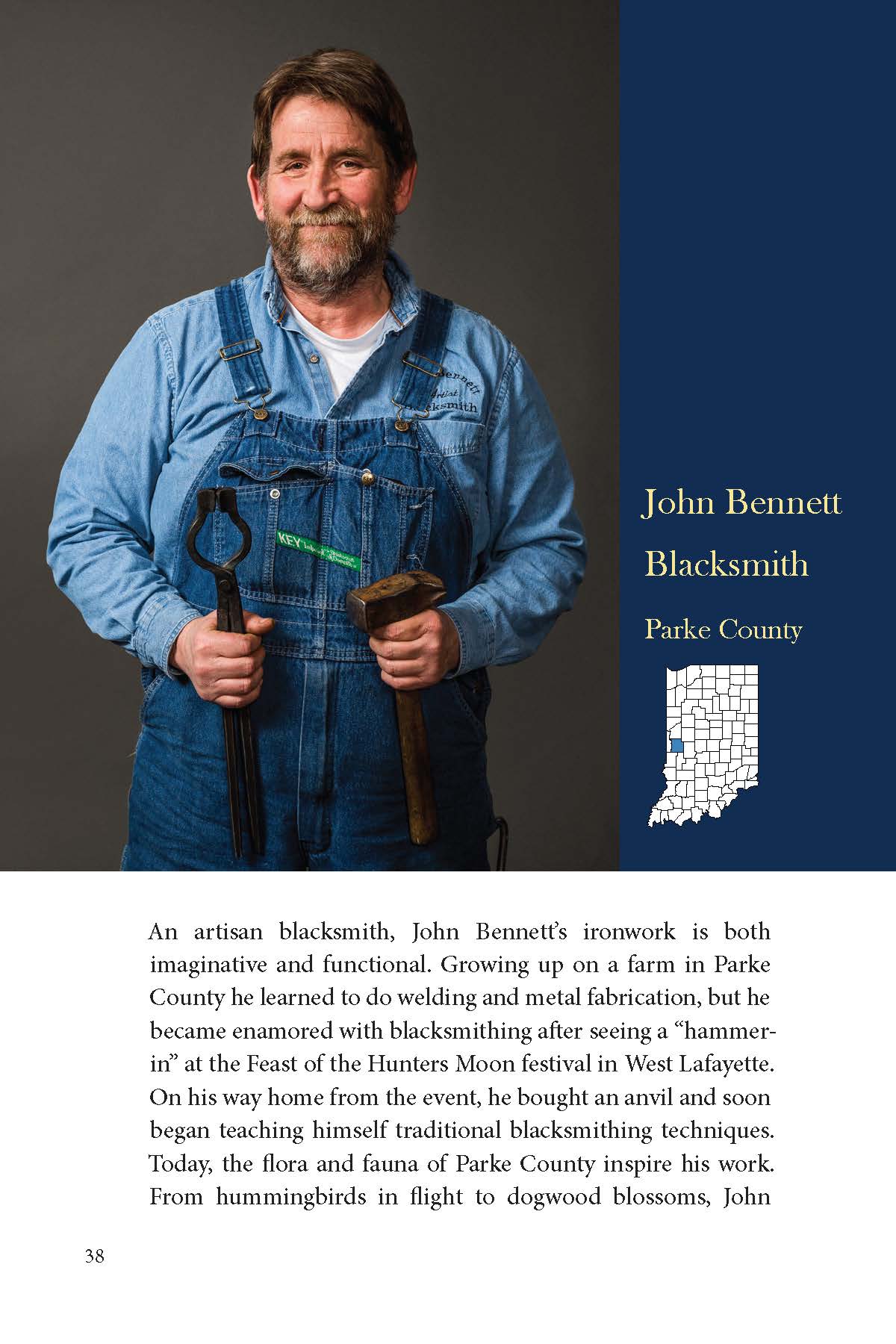
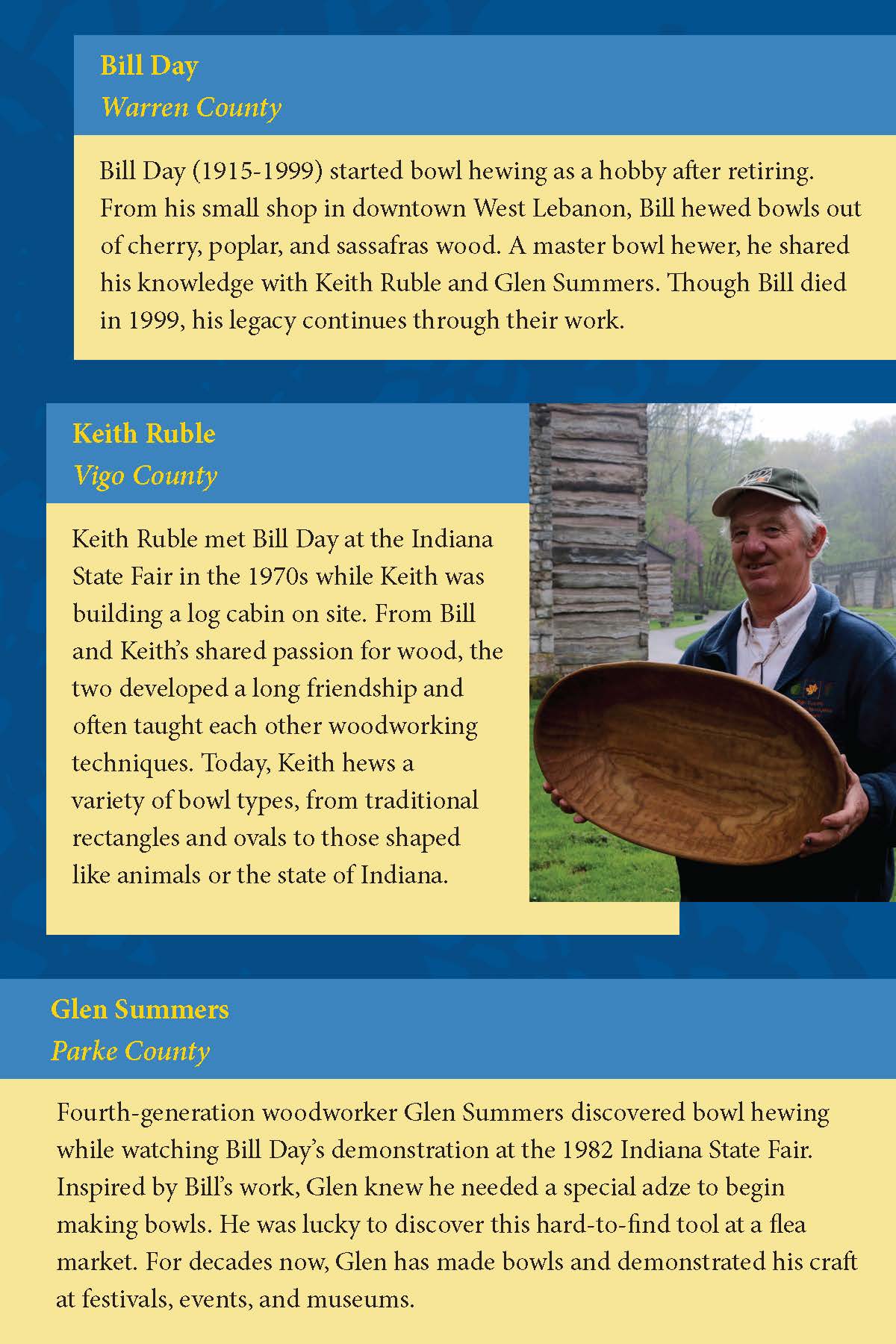
A local ABC affiliate profiled two Indiana craftspeople in a recent local news segment. These makers–blacksmith John Bennett and bowl hewer Keith Ruble–are featured in the exhibition and catalogue Indiana Folk Art: 200 Years of Tradition and Innovation. The WAWV story weaves together content from the catalogue with interviews with these two artists. The reporter also announces upcoming presentations of the exhibition around the state. It is great to see mainstream local media covering Indiana traditional artists/craftspeople and passing on news of the exhibition. See the video here and download and read the catalogue for yourself here.

Thanks to reporter Rebecca Brumfield for her story. (Excerpts from the catalogue for the two artists featured in the story are posted below.)

Bennett Page

Rubble Page

Open Access Book: Indiana Folk Arts

IFA CoverThis year is a big year for the Mathers Museum of World Cultures in a number of respects. Two of these weave together. Its the state bicentennial for Indiana and we are engaging with it in a big way through the exhibition Indiana Folk Arts: 200 Years of Tradition and Innovation. That exhibition is now traveling across Indiana along with with a deep roster of presenting artists and craftspeople. The exhibition and associated in-person demonstrations are happening at state parks and festivals around Indiana and the exhibition will also be presented at the Indiana State Fair, later this summer. The exhibition brings together more than a decade of research by Traditional Arts Indiana and was also an project worked on by the Laboratory in Public Folklore graduate course taught in the IU College of Arts and Sciences’ Department of Folklore and Ethnomusicology. Working with TAI Director and MMWC Curator of Folklife and Cultural Heritage Jon Kay, a large number of students have been involved in all aspects of the exhibition and associated programs, products, and events.

2016 is also slated to be a big year for book publishing at MMWC. We have a number of books in the cue for fall. The first to become available is the catalogue for Indiana Folk Arts. Edited by Jon Kay with chapters authored by a large and talented group of graduate students, the volume enriches the exhibition while also standing alone as a contribution to scholarship on Indiana craft and art. At exhibition events and here at the MMWC, the book is being distributed for free in a beautiful full-color print edition. In keeping with our institutional commitment to increased and open access to scholarship, the volume is also available electronically and permanently via the IUScholarWorks Respository. Licensed under a CC-BY license, it can be found online here: https://scholarworks.iu.edu/dspace/handle/2022/20893. Its the first MMWC publication for which we obtained an ISBN number (two actually, one for the print edition and one for the PDF edition), which is also pretty neat.IFA Front Page

Congratulations to Jon Kay, the volume’s editor, to all of its contributors, and to the talented artists, craftspeople, and tradition bearers featured in the book. Welcome readers–72 beautiful pages await you, wherever in the world you live. If you like the book and support the work behind it, spread it widely. Tell your friends and colleagues so that they can enjoy it too.