Skip to content

Posts from the ‘Good News’ Category

Open Folklore Goes to Nashville

Many folklorists in the United States have just returned from the annual meetings of the American Folklore Society, which were held in Nashville, Tennessee. The meetings were intellectually rich and diverse and they were characterized by a sizable quantity of good news for the field.  We learned about growing membership numbers, academic program enlargement, a new AFS website, numerous national projects and strengthened international collaborations. Quite inspiring!  While it seemed like I was in business meetings during every waking hour, everyone else seemed to have a healthy mix of work and play.  A good time seemed to be had by almost all.  The few papers and presentations that I got to hear and see were uniformly excellent.

One of the things that I was involved with was the launch of the Open Folklore portal site:  www.openfolklore.org

While we spoke of launching the site at the AFS board meeting on Wednesday morning, we actually flipped the switch (so to speak) on Tuesday afternoon.  We did this just in case there were technical problems to resolve, but everything worked great and by the middle of the afternoon on Tuesday the site was live.  Wednesday morning, Indiana University issued a press release announcing the launch.  You can find it at http://newsinfo.iu.edu/news/page/normal/15922.html

Wednesday morning, Moria Smith and Julie Bobay (both fellow Open Folklore project team members from Indiana University Bloomington Libraries) gave an overview of the OF project and the OF portal site to the AFS Executive Board (of which I am a member).  That went very well, I think.  In the afternoon, the gave a similar overview to the leaders of academic and public sector folklore programs. While few had a chance, by this point, to actually use the site, there was uniform enthusiasm for its purpose and promise. The project was mentioned by AFS President Kurt Dewhurst during the conference’s opening ceremonies Wednesday night. On Thursday at noon, the OF team had a very fruitful meeting with representatives of Utah State University Libraries (including the Utah State University Press and USU Special Collections) and the Utah State folklore program. Utah State is the Open Folklore project’s first strategic partner. On Thursday afternoon I presented a brief overview of OF in a panel of which I was a part and Moria Smith and I demonstrated the site to interested visitors to an Open Folklore table near the book room.  Thanks go to all of these interlocutors and audiences.

Open Folklore’s Facebook presence continued to get the “like” treatment from supporters and we reached and surpassed our goal of 250 Facebook supporters during the meeting.  Folklorists aren’t very big on Twitter yet, but the ranks of Open Folklore’s Twitter followers also grew during the meetings.  It was a tough week to launch in a sense because it was a week prior to Open Access Week and the AFS meetings co-occurred with the Association of Research Libraries meeting and the Educause meeting. Both of these meetings are of special relevance to audiences sympathetic to the goals of the Open Folklore project.

The first review of the Open Folklore site came in during the meetings. On his weblog Archivology, Creighton Barrett offered a very careful study of the architecture and functionality of the Open Folklore portal, one that extended his earlier pre-launch discussions. The Open Folklore team is very appreciative of the careful attention that he has given the project.  The portal site was also highlighted in an October 14 Library Journal essay by Barbara Fister. In addition, the portal site has also gotten a good bit of link love, for which we are also thankful.

Thanks go to everyone who has tried the site out, put it to actual use, or suggested either additional content for liberation or improvements to the portal itself. We look forward to following up on the suggestions that many made during our time in Nashville.  Thanks to all who spoke up so enthusiastically about the project and its potential. The project team is certainly more enthusiastic than ever.

Happy Open Access week!

Get Ready: Open Folklore Launch Wednesday

I am just back from a wonderful trip to Oklahoma for the 14th Annual Euchee Heritage Days Festival. It was really great.  Lots of people, lots of hard working volunteers, lots of good food and interesting activities. I will try to write about it properly soon.

Tonight I just want to note that the new week is almost here and that we are now counting down to the launch of the Open Folklore portal site on Wednesday–the first day of the American Folklore Society meetings. Please keep an eye out for more news of the site and its debut. I hope that everyone who reads this post will feel encouraged to give Open Folklore the “like” treatment at the new OF Facebook page and/or to “follow” “openfolklore” on Twitter.

If you were to tweet about Open Folklore, the hashtag is #openfolklore. The AFS meetings hashtag will probably be #AFS2010.

If you are already liking or following OF, thank you for helping us spread the word.

Congratulations to Curtis Ashton!

Congratulations go to Dr. Curtis Ashton who very successfully defended his Indiana University Ph.D. dissertation in folklore today. The title of his important and innovative study is: Interpretive Policy Analysis in Beijing’s Ethnographic Museums: Implementing Cultural Policy for the 2008 “People’s Olympics”. I hope that everyone will be reading it as a book very soon.  In addition to finalizing his dissertation, Curtis has been teaching a course in museum anthropology at Brigham Young University.

[New, Open Access] Culture Archives and the State: Between Nationalism, Socialism, and the Global Market

From a CFS News Release:

The Center for Folklore Studies at the Ohio State University is delighted to announce the online publication of

Culture Archives and the State: Between Nationalism, Socialism, and the Global Market

Proceedings of an international conference held May 3-5, 2007, at the Mershon Center for International Security Studies, The Ohio State University, Columbus. Ohio.

Columbus: The OSU Knowledge Bank, 2010. https://kb.osu.edu/dspace/handle/1811/46896

The papers address the political uses of ethnographic archives from the late nineteenth century to the present. Archives keep tabs on populations, define and discipline national identities, shape and censor public memories, but also shelter discredited alternative accounts for future recovery. Today their contents and uses are tensely negotiated between states, scholars, and citizens as folklore archives become key resources for the reconstruction of lifeworlds in transition.

Case studies and reports come from China, India (Bengal), Afghanistan, Spain, Finland, Estonia, Romania, Croatia, the US, and the German-speaking lands.

In a keynote address, Regina Bendix provides a general account of “property and propriety” in archival practice.

Klassen, Ingalsbe Awarded Research Support

Congratulation to Teri Klassen on being named the IU Department of Folklore and Ethnomusicology’s Harry M. and Alma Egan Hyatt Graduate Fellow for 2010-2011. Teri is completing work on her dissertation, a historical and material culture studies focused project that explores quilting by African American and European American members of a rural community in western Tennessee.

Congratulations to Suzanne Ingalsbe on being awarded a travel grant from the Council for Museum Anthropology. This CMA funding will help Suzanne attend the 2010 American Anthropological Association meetings in New Orleans in November. At these meetings she will present collections and archival research that she conducted at the National Museum of Natural History, Smithsonian Institution. The focus is on so-called “prayer rugs” in the NMNH Collection, particularly those collected for the museum by Ethel-Jane Westfeldt Bunting. Suzanne is a doctoral student in the IU Department of Folklore and Ethnomusicology focused on the architecture and material culture of religious spaces vis-a-vis museum spaces.

Great News: Traditional Arts Indiana Brings Bluegrass to DC

This is an IU Press release from here:

BLOOMINGTON, Ind. — The Not Too Bad Bluegrass Band has been selected to represent Indiana’s vibrant tradition of bluegrass music in the nation’s capital. Based in southern Indiana, the band will perform at the American Folklife Center at the Library of Congress in Washington, D.C., as part of the center’s 2010 Homegrown Concert Series.

Jon Kay, folklorist and director of Traditional Arts Indiana, will introduce the band to new audiences at their two D.C. performances. A nonprofit partnership between Indiana University and the Indiana Arts Commission, TAI’s mission is to document, preserve, and promote Indiana traditional arts.

TAI is a statewide folk arts program that exists to identify, document, preserve and present Indiana’s traditions. The organization and its supporters are pleased to see the Not Too Bad Bluegrass Band perform at these two high-profile venues, Kay said.

The band emerged out of a weekly jam session and has included some of the finest musicians in Indiana. Founding members Brian Lappin and Doug Harden lend their virtuoso banjo and mandolin picking to the solid bass-playing of Greg Norman, the sweet fiddling of Kent Todd, and the masterful guitar of Brady Stogdill.

Each band member traces a different path into bluegrass, through families, friends and festivals. The Not Too Bad Bluegrass Band continues to meld inspired instrumental and vocal harmonies. At performances they are always prepared to take audience requests, following in the tradition of Lester Flatt, Earl Scruggs and Bill Monroe.

Their 2010 CD, Head Full of Memories, pays tribute to classic bluegrass songs and includes original music invoking love, whiskey and memories of home. A copy of this recording, along with an interview with the band, will be deposited into the permanent collection of the Library of Congress.

The band’s concerts in D.C. will take place at noon on Wednesday, Oct. 13, at the Coolidge Auditorium at the American Folklife Center and at 6 p.m. the same day at the Kennedy Center Millennium Stage. Both events are free and open to the public.

There will be a welcome home celebration at 7 p.m. on Friday, Nov. 5. The event will be held at the IU Department of Folklore and Ethnomusicology’s Lecture and Performance Hall (formerly the Indiana Avenue Church of Christ) at 800 N. Indiana Ave. in Bloomington. All are welcome to attend this free event.

Mediterranean Treasures: Selections from the Classics Collection [at SNOMNH]

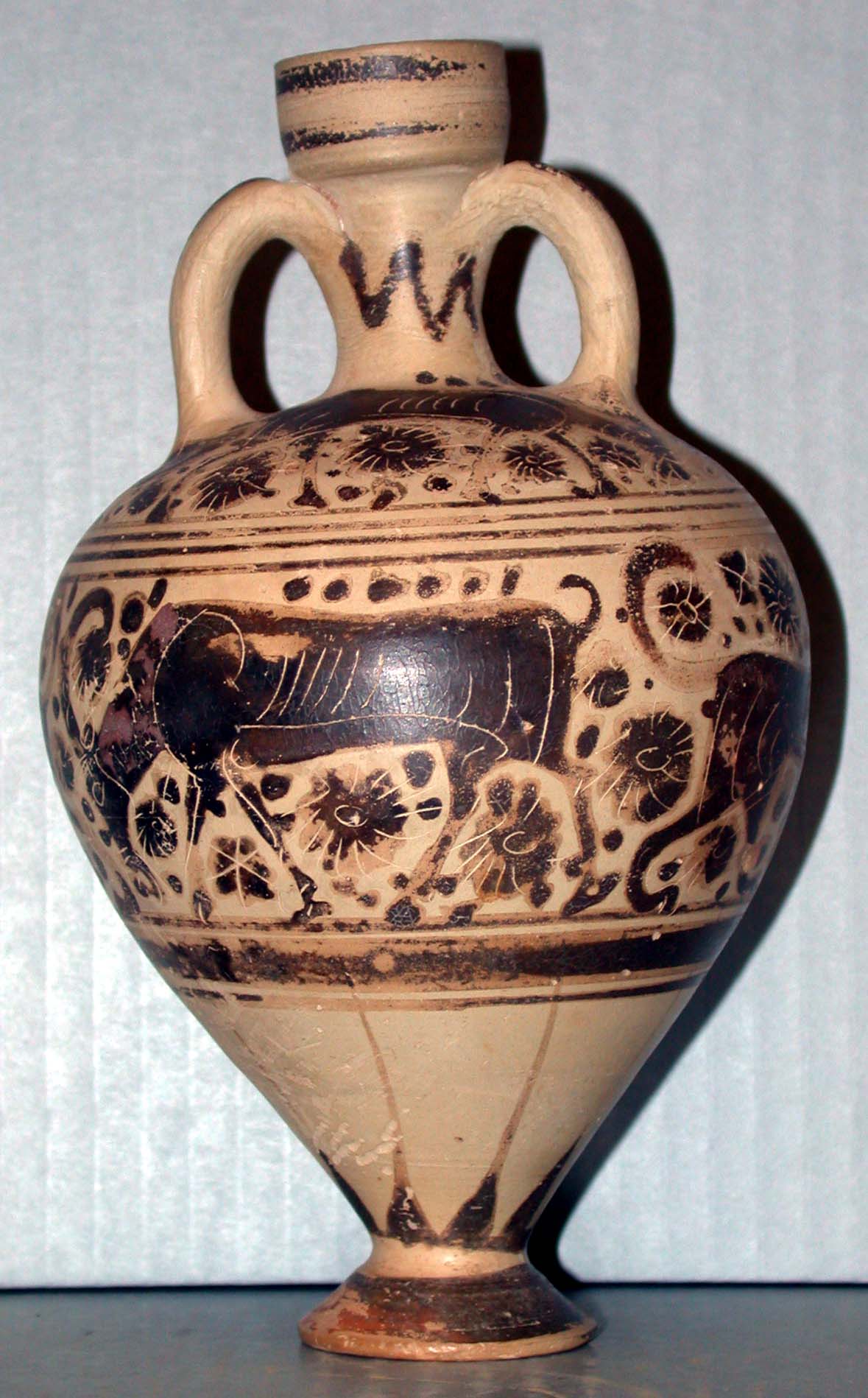
I am excited to share news of an upcoming exhibition at the Sam Noble Oklahoma Museum of Natural History. Opening October 2 and continuing through January 2, 2011 is Mediterranean Treasures: Selections from the Classics Collection.  At SNOMNH, the museum’s significant Classical Archaeology collections are steward by the Division of Ethnology (led by my friend and collaborator Daniel C. Swan). This new show has been curated by the division’s talented collections manager (and old world archaeology specialist) Kathryn Barr. Describing the exhibition’s orienting framework, the exhibition release quotes her noting:

“In developing this exhibit we faced a challenge on how to incorporate a number of different cultures and time periods,” explained Kathryn Barr, exhibit curator and manager of the ethnology collection at the museum. “Ultimately we decided that rather than focusing on the differences between these groups we would highlight their shared technologies. The Mediterranean Sea provided the perfect stage for this exhibit, as it was truly a focal point for the cultures we wanted to highlight. For centuries the region surrounding this body of water has been an area of great diversity, but it has also been an important melting pot as well. Many of the great civilizations of Africa, Asia, Europe and the Middle East developed along its shores and each one influenced the others.”

As discussed in the full release (available here), this will be the museum’s most ambitious exhibition from the Classics Collection and the first major exhibition of the collection staged in the museum’s impressive new facility.

While we are thinking about the SNOMNH Classics collections, I can also note the small digital exhibition that then-graduate assistant Rhonda S. Fair built during my time as SNOMNH Assistant Curator of Ethnology. Found here, it presents the museum’s Mark Allen Everett Collection of Ancient Greek, Etruscan, and Roman Pottery.

SNOMNH C-2001-1-7

What can the Open Folklore project help me do now? [3] (The Community Arts Network Edition)

This post is the third in a series [1] [2] discussing what the efforts bundled as the Open Folklore project can do for the community now, before the portal site that will live at http://www.openfolklore.org/ is finalized.

A part of the Open Folklore effort that has not been discussed here previously concerns the plan to durably archive content-rich websites of relevance to scholars and practitioners in the field of folklore studies. Recently a need arose to put these plans to a quick test. The Community Arts Network (CAN), a not-for-profit service organization that had built up a large and widely used website found itself needing to cease operation of its elaborate site. On August 31, Debora Kodish of the Philadelphia Folklore Project contacted the Open Folklore team at Indiana about the possibility that the project might be able to assist in the preservation of the CAN assets.  Discussions and investigations quickly followed and the IU Libraries decided to pursue archiving the site. This work was complete before the time of the scheduled shut down on Labor Day.  It all worked and now we can see what a website archived in the manner that we anticipate using looks and feels like.  The words of appreciation that have been offered from the community arts and public folklore communities have been most appreciated and are a major source of encouragement for what we are trying to get going with Open Folklore.

To help explicate a bit further, this is a re-posting of an announcement being circulated by the Community Arts Network (CAN). It was crafted with input from the librarians at Indiana who are central to the current early-phase work on the Open Folklore project. Thanks go to everyone who has been involved in these efforts.  (See the CAN Facebook page for additional discussion.)

The Community Arts Network (CAN), Indiana University Bloomington Libraries, and the American Folklore Society are pleased to announce that the CAN Web site has been archived as part of the Open Folklore project (http://www.openfolklore.org/). Open Folklore is intended to be an online portal to open-access digital folklore content and plans to launch a prototype in October at the American Folklore Society meeting in Nashville, Tenn.

After CAN announced it would be forced to immediately shut down its Web site due to lack of funds, the IU Bloomington Libraries offered to capture the CAN Web site using Archive-It, a subscription service from the Internet Archive that allows institutions to build and preserve collections of born-digital content. The Internet Archive is a 501(c)(3) non-profit that was founded in 1996 to build an “Internet library” with the purpose of offering permanent access for researchers, historians, and scholars to collections that exist in digital format. Because CAN is a content-rich Web site that is of great interest to folklorists, the IU Bloomington Libraries made use of their subscription to Archive-It to preserve the site without charge.

The archived CAN is static, but is fully text searchable, though some external links and some internal scripted functions may no longer work. It is, however, a unique and permanent record of the site as it existed at the time. Users may visit the archived site at http://wayback.archive-it.org/2077/20100906194747/http://www.communityarts.net/. The full text of the site may be searched at the Archive-It home site, http://www.archiveit.org/.

Art in the Public Interest, CAN’s non-profit, will continue to seek funding to develop the CAN materials into a sophisticated archive library.

Debora Kodish, founder of the Philadelphia Folklore Project first suggested that Open Folklore might have a role to play in preserving CAN, and this suggestion was enthusiastically and swiftly adopted. IU Bloomington Libraries Dean Brenda Johnson described this sequence of events as an excellent proof of concept for Open Folklore and for the value of collaboration between a research library and the scholarly community it serves. “This is a sterling example of why digital preservation efforts are so important. Without the active collaboration of the folklore community, and without IUB Libraries participation in Archive-It, a unique and valuable online resource would have vanished.”

I invite you to check out the archived CAN site.

Iñupiat Musical Heritage Repatriation Project

The first time that I taught the introductory folklore graduate course it was in the Department of Anthropology at the University of Oklahoma. Among the many nice and smart people in that class was Chie Sakakibara, then a doctoral student in geography preparing for dissertation research on the intersections of expressive culture and human-environment relations in the context of climate change. Chie has gone on the earn her doctorate and she is now an Assistant Professor of Geography at Appalachian State University. In addition to highlighting her work in general, I want to especially mention her work (with Aaron Fox and others) on a significant “musical heritage repatriation project” reconnecting recordings made by ethnomusicologist Laura Boulton (a big presence on my own campus as well as at Columbia University) with the Iñupiat community of Barrow, Alaska.  Learn about this important effort here.

Chie also discussed her work on NPRs Studio 360.  See: http://www.studio360.org/episodes/2009/10/09

Congratulations to Chie on her new post at Appalachian State and thank you for your collaborative work with the people of Barrow and our colleagues at Columbia.

DIY OA Superstar Laura Gibbs Making Stuff Happen for Lovers of Latin and Classical Folklore

And now for something else completely positive.

I got to know many nice and wonderful people during the time that I was on the faculty of the University of Oklahoma. One of them is Dr. Laura Gibbs. Laura is a classicist and a folklorist with an interest in new approaches to both university-level teaching and scholarly communications. Among the many things that illustrate how cool she is, I would point out that she is the most passionate language teacher I have ever seen. And the language that she is passionate about teaching is Latin.  How cool is that?  She goes all out for her students (and everyone is a potential student) whether or not those students happen to be enrolled in one of her classes.  When we were both actually on the OU campus, I would usually see her doing language tutorials with students in a campus coffee shop or someplace similar. (I am not at OU anymore and she mainly teaches online now.)

She is probably most famous for her new translation of Aesop’s Fables published by Oxford University Press, but I want to point to one of her newer book projects, a cool DIY OA book worth checking out even if (like me) you know nothing about Latin.

In a best of times, worst of times (for scholarly publishing) email discussion, she mentioned this project, telling me:

This summer I experimented with self-publishing a book at Lulu.com AND giving it away in PDF format. It’s the most fun I have ever had doing a book: Mille Fabulae et Una: 1001 Aesop’s Fables in Latin. The book is intended for Latin students and teachers; it’s a Latin language manual rather than a scholarly study, but it is based on a really serious survey of the whole scholarly and literary Latin Aesopic tradition, from ancient Rome up through the 19th century (including LOTS of Renaissance fables otherwise unavailable in any modern edition). It has worked out wonderfully, just as I had hoped. Some teachers have bought printed copies for themselves, but the main thing is this: thanks to teachers recommending the book as a free download for their students, there have been over 1600 downloads in just a few weeks. In the weird little world of post-classical Latin, that is a seriously large number. I am really happy! Plus, the fables look GREAT on handheld screens, so offering it as a PDF with the expectation that people might read the book on their iPhone or Android is something new and exciting for me.

The book itself is a celebration of public domain materials–basically me harvesting from GoogleBooks and other digital libraries–and now I am using my blog to link up the Latin texts to the hundreds of public domain images I have found at Internet Archive where the scans are good enough to justify reproducing the images for their own sake.

You can learn more about this project and see and get the book itself on her project website at http://millefabulae.blogspot.com/

When I asked Laura if I could share the story of her project, she replied enthusiastically and commented:

I love telling people about what I am doing because this is a time when people who love stories and music and art can learn and connect and share in ways that just were not easy to do even a few years ago. Now if somebody has a project they want to pursue, all they need is time and enthusiasm – that to me is why open access is important as a principle; if we can remove the access barriers, real education will take place, at last.

What more needs to be said?

In addition to the cool book and website, Laura has leveraged everyday blog features and other software to allow people to do such things as put a Latin fable of the day on their own blogs.  There is no end to what she has already created and tried to share with you (or at least with the vast world of budding classicists). Check out not only the 1001 Aesop’s Fable in Latin site, but also her main site where there are piles of stuff made just for you (and everybody else).

My elementary-age daughter and I have been systematically reading all of Andrew Lang’s so-called colored fairy books, thus I have to point to one more of Laura’s projects.  She has created a one-stop shop where you can go and not only get basic information on this series, but download (free) copies of all of the books in a very easy way.  Check that out at:  http://www.mythfolklore.net/andrewlang/

Thank you Laura for teaching in more ways than one! And thanks also to the folks at the University of Oklahoma who have supported Laura’s unusual and productive work as a teacher, technologist, and scholar.