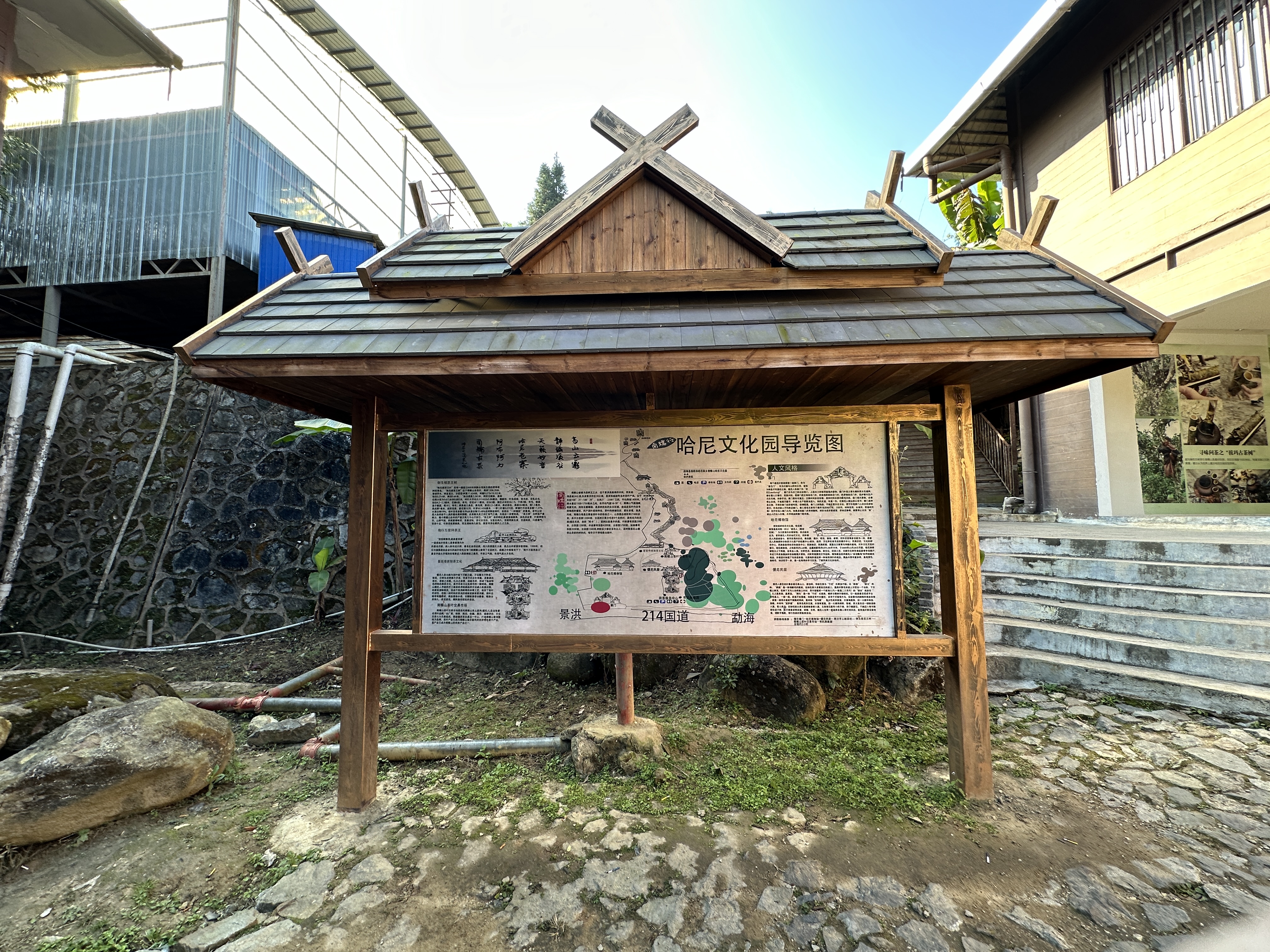
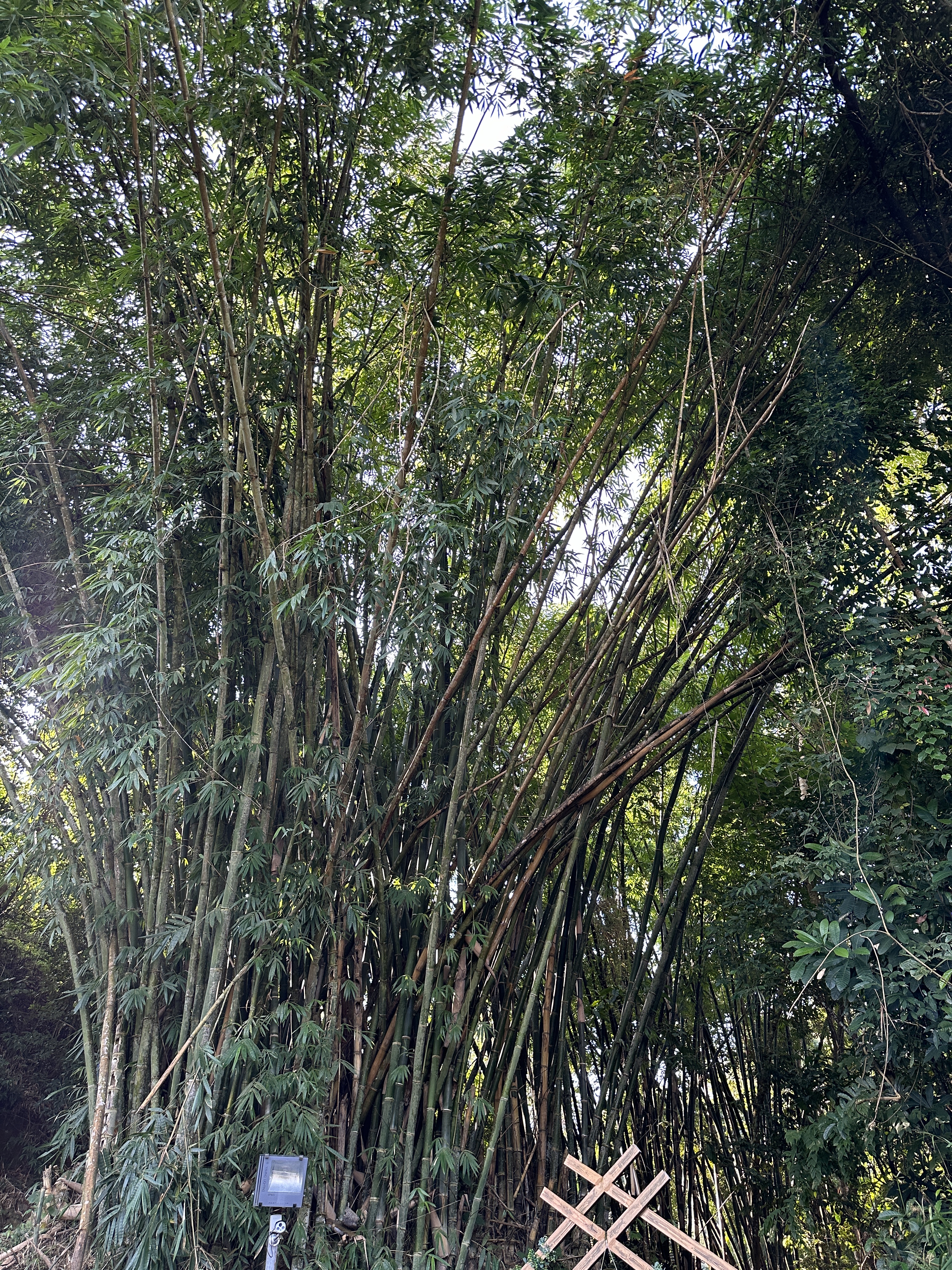
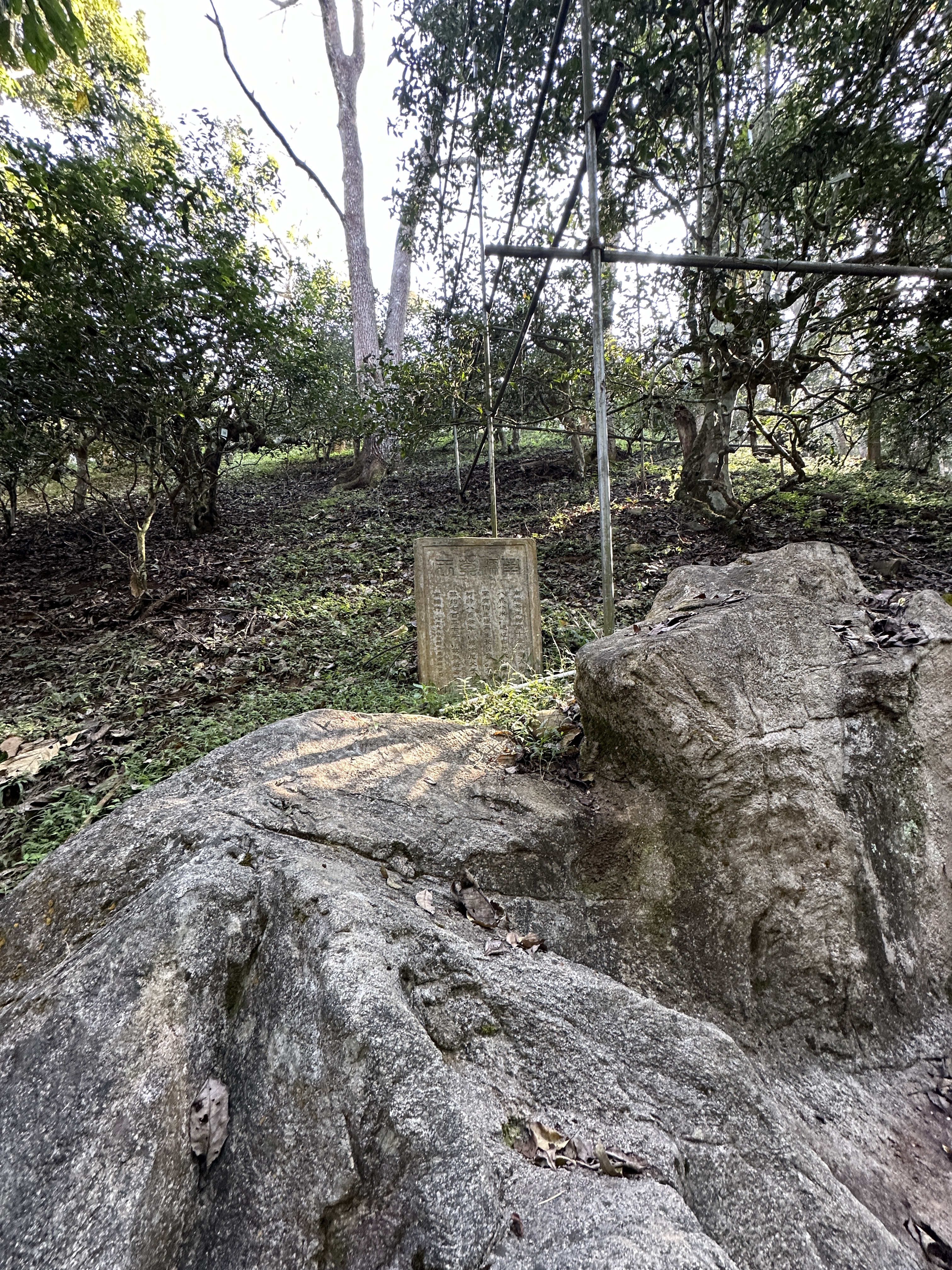
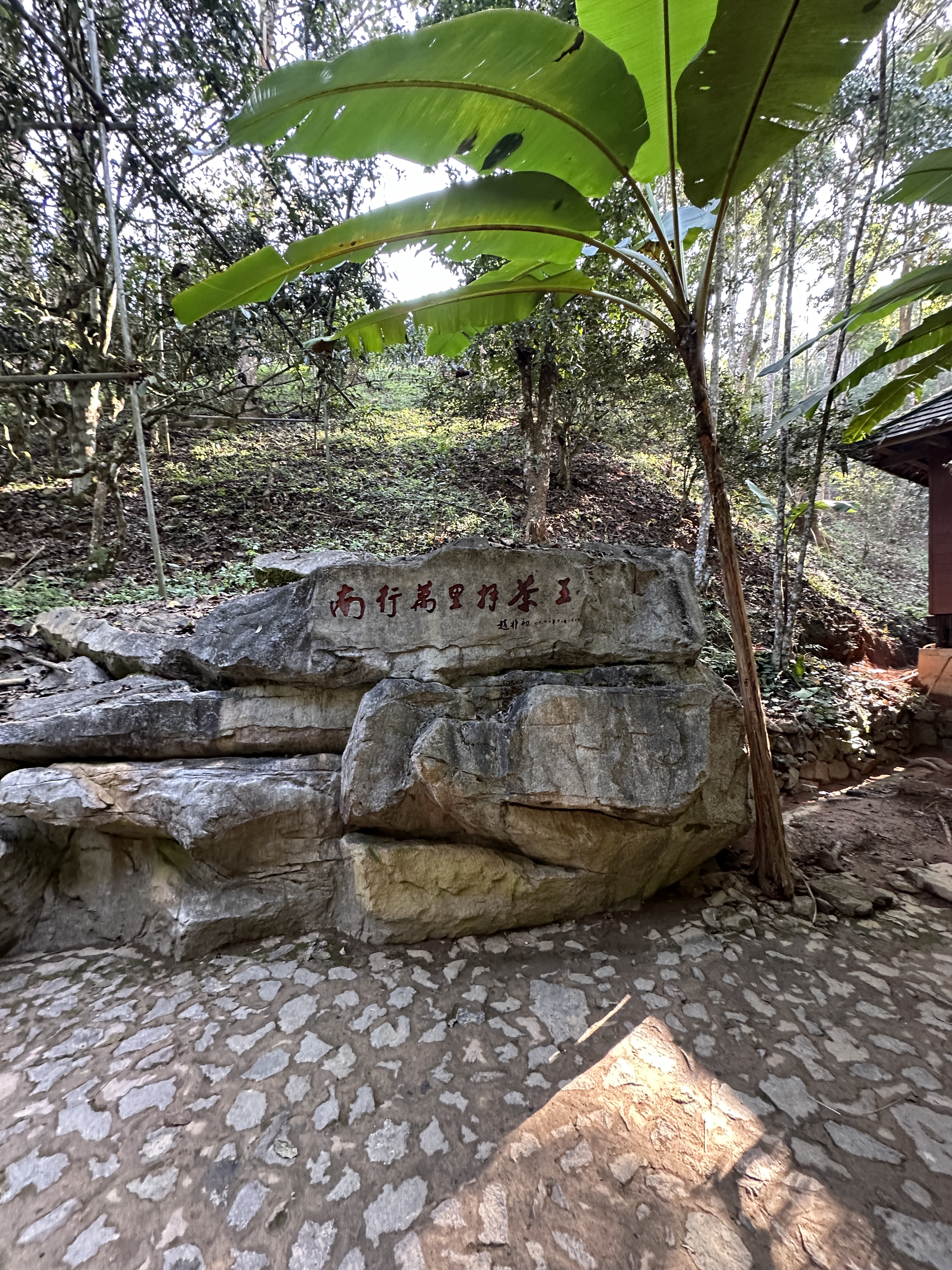
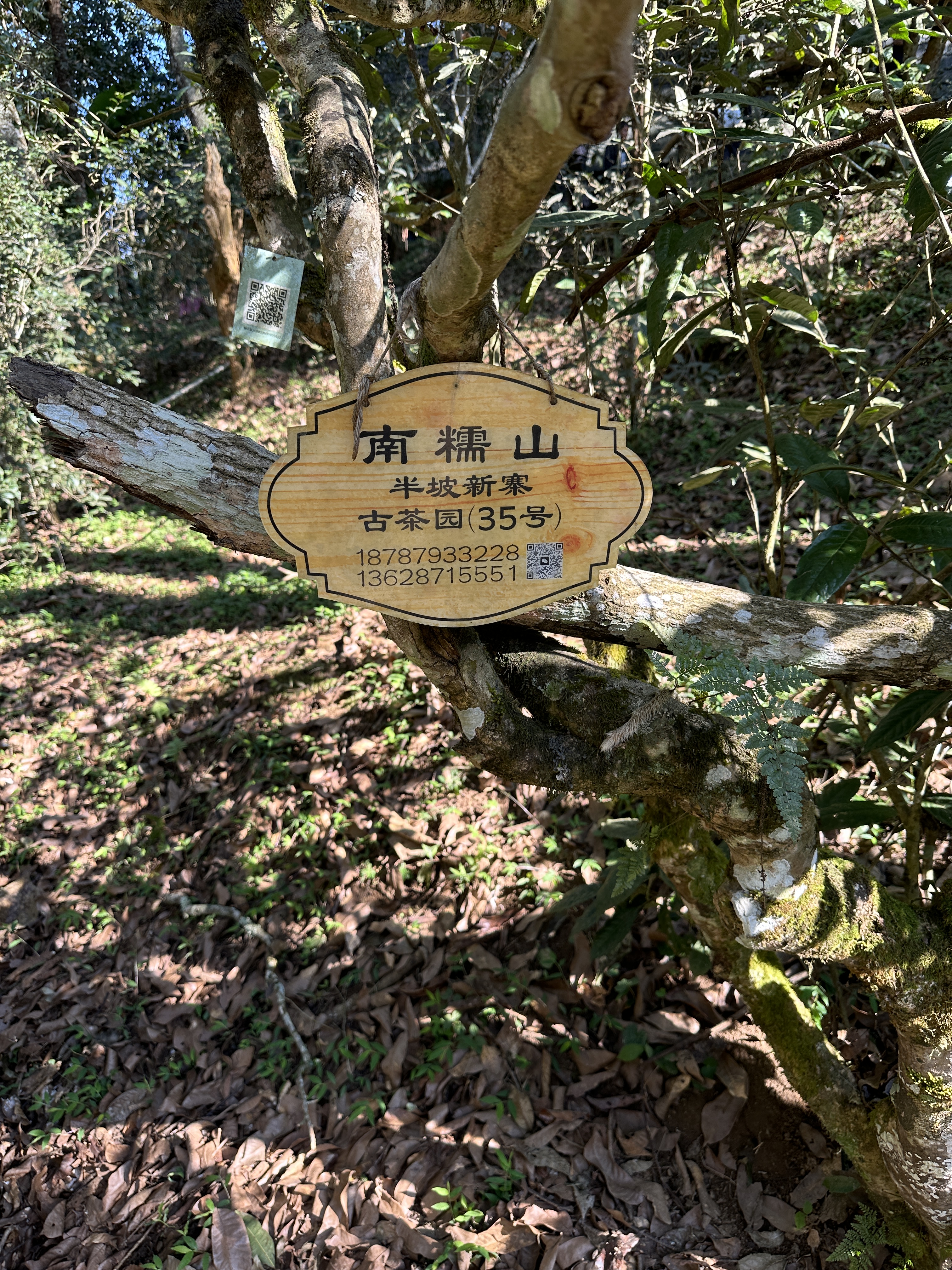
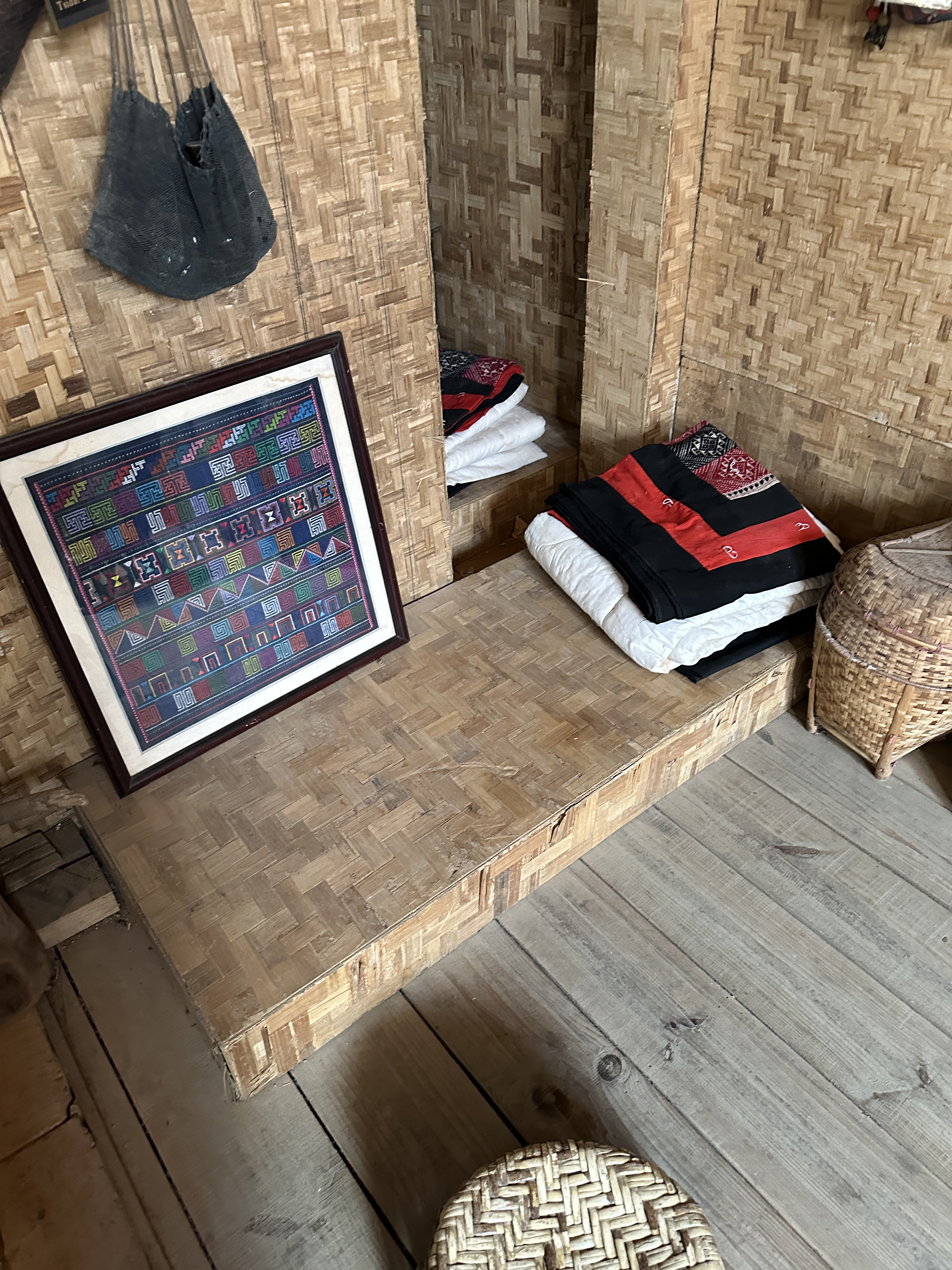
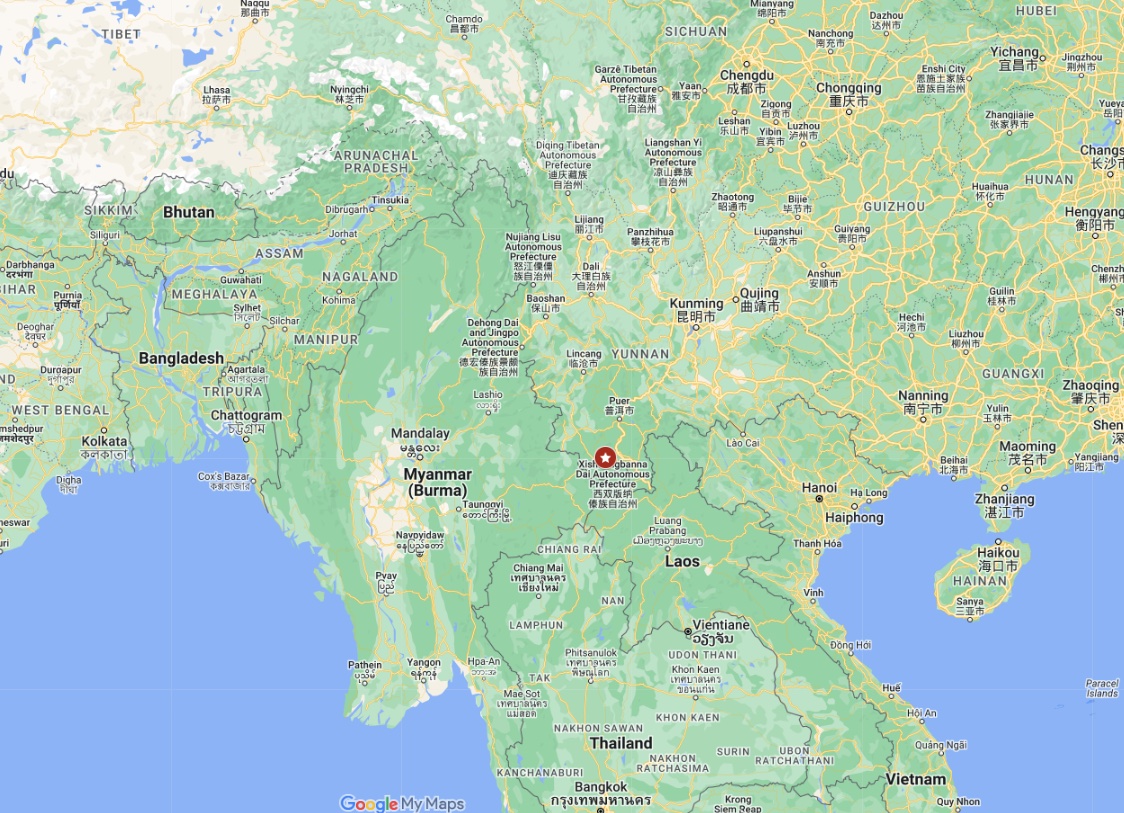
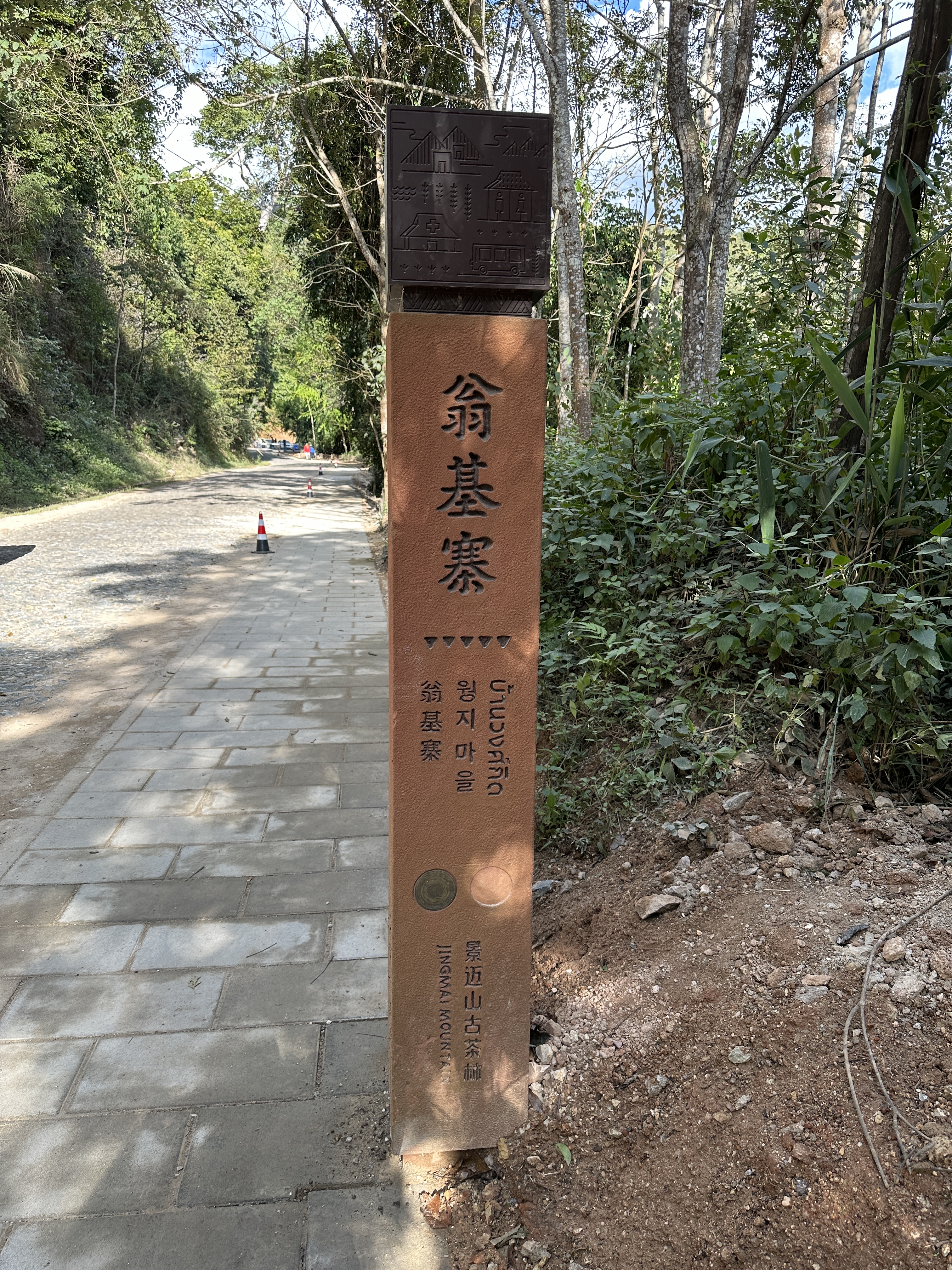
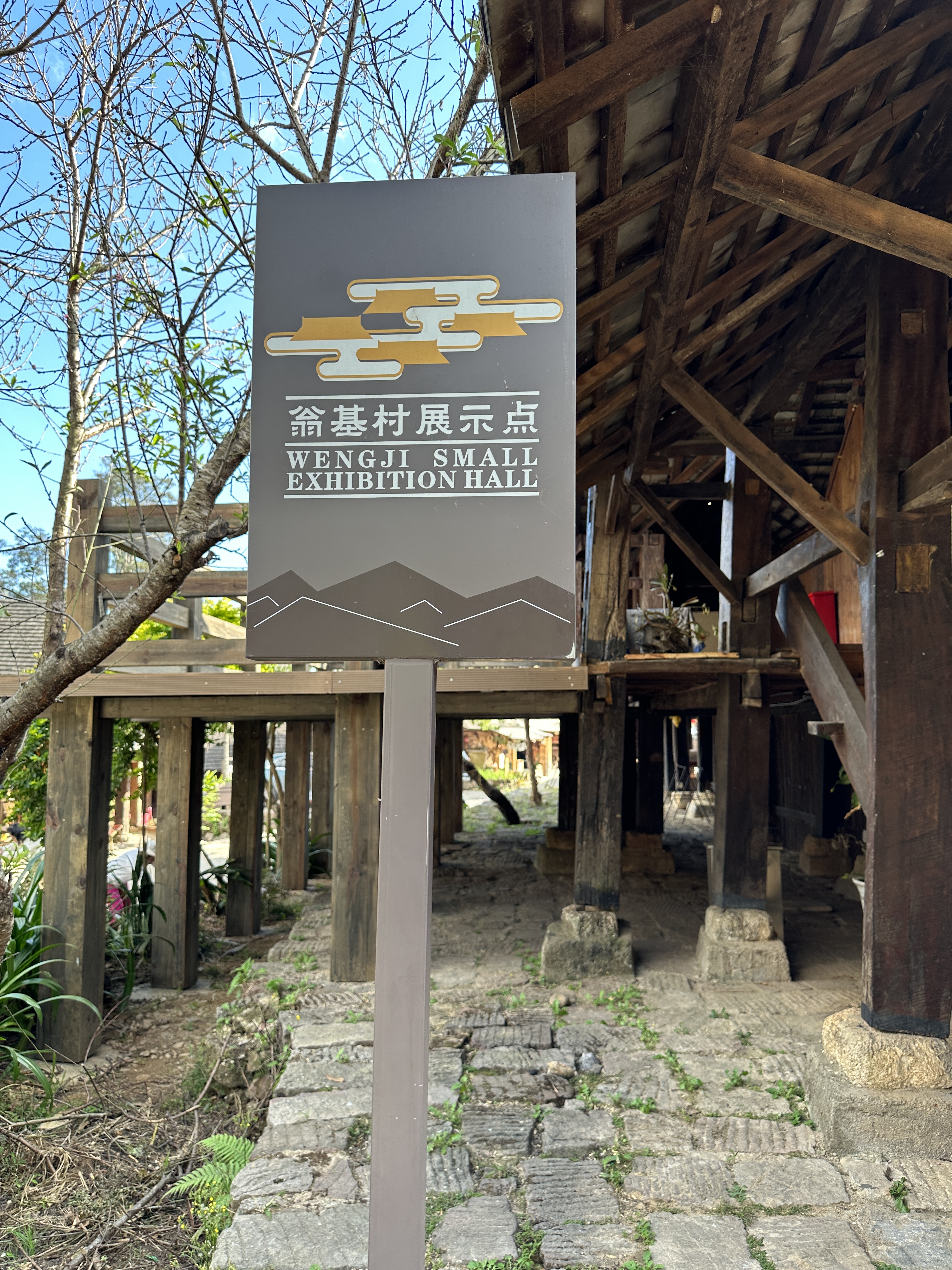
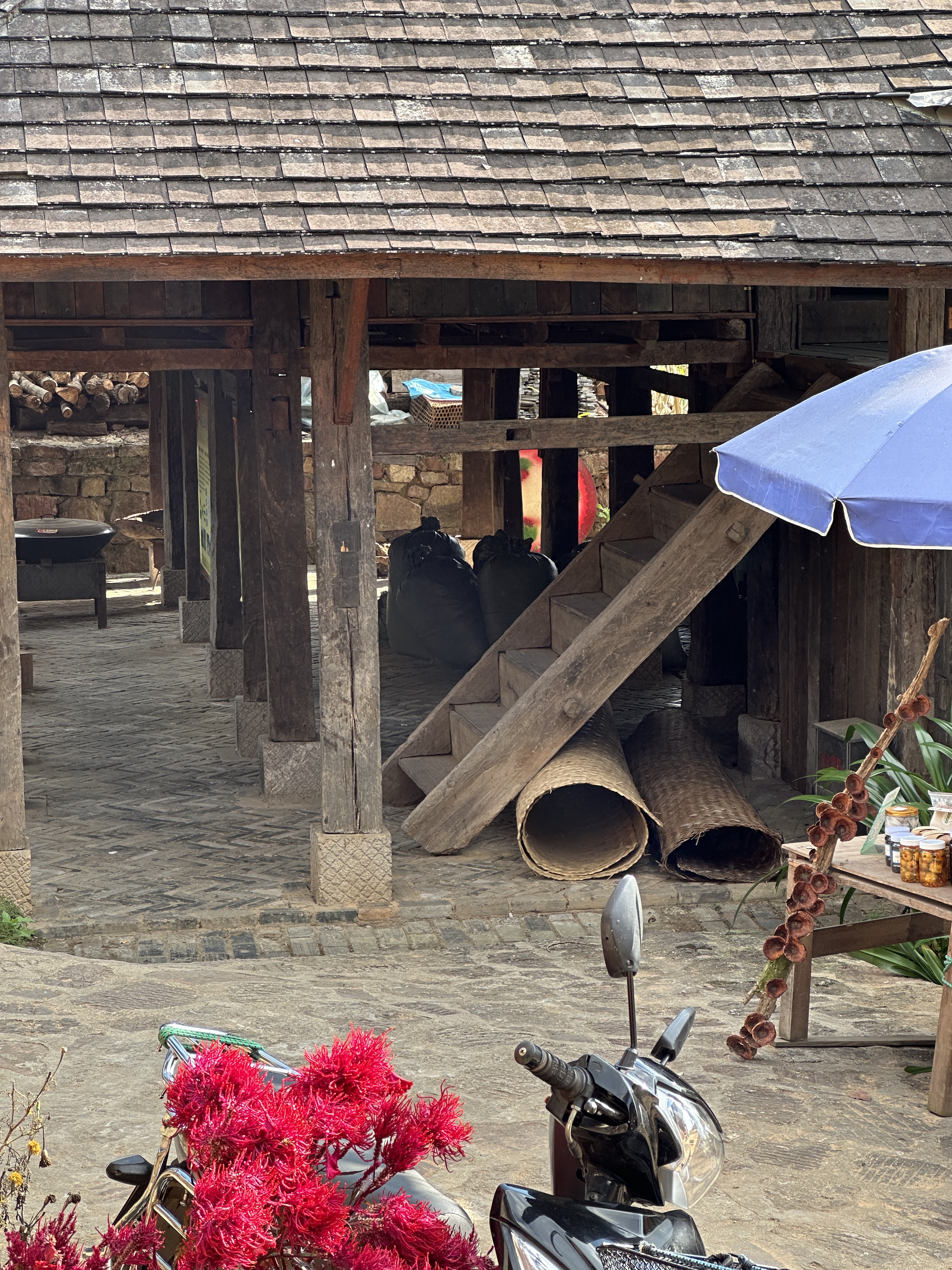
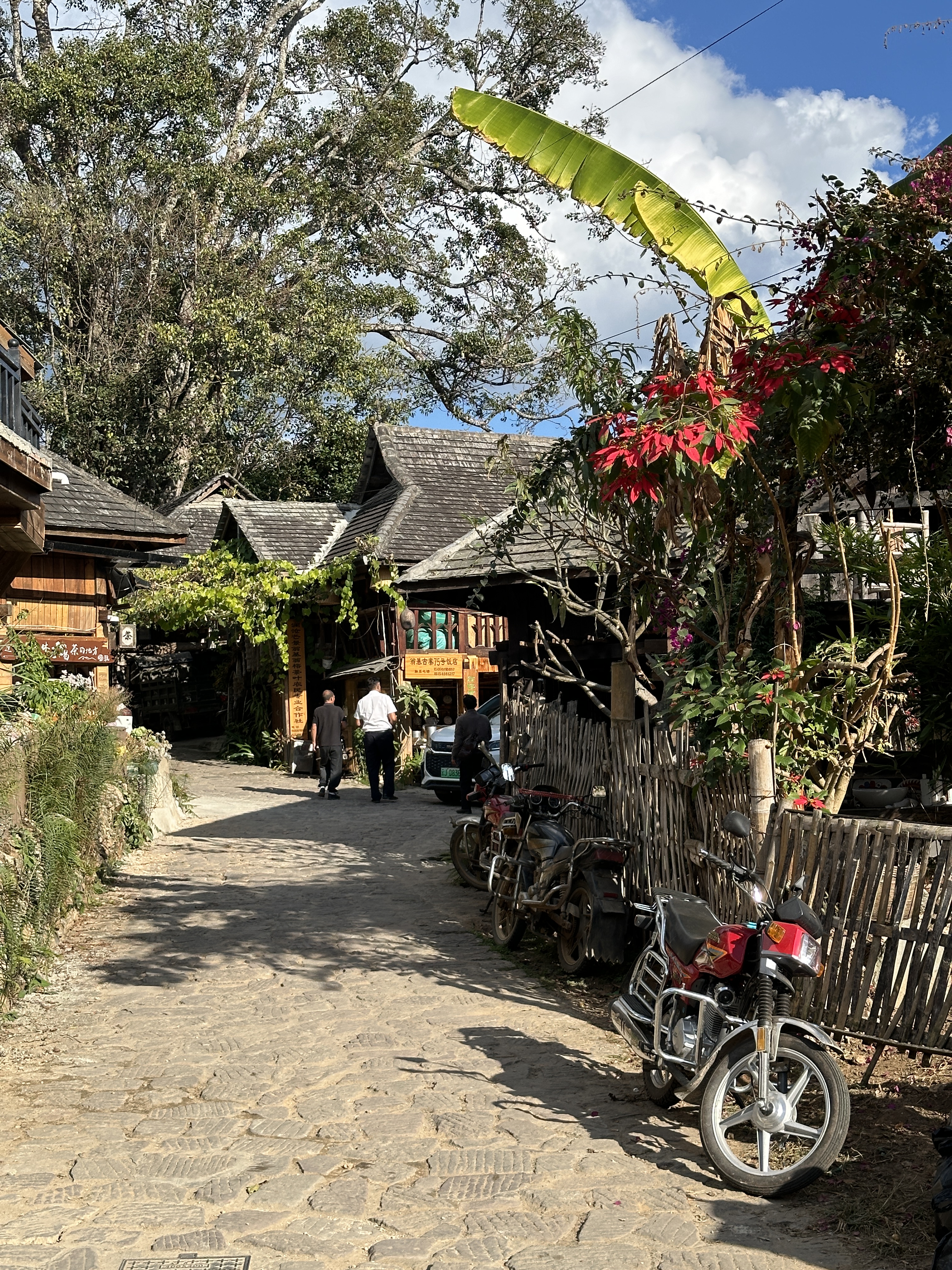
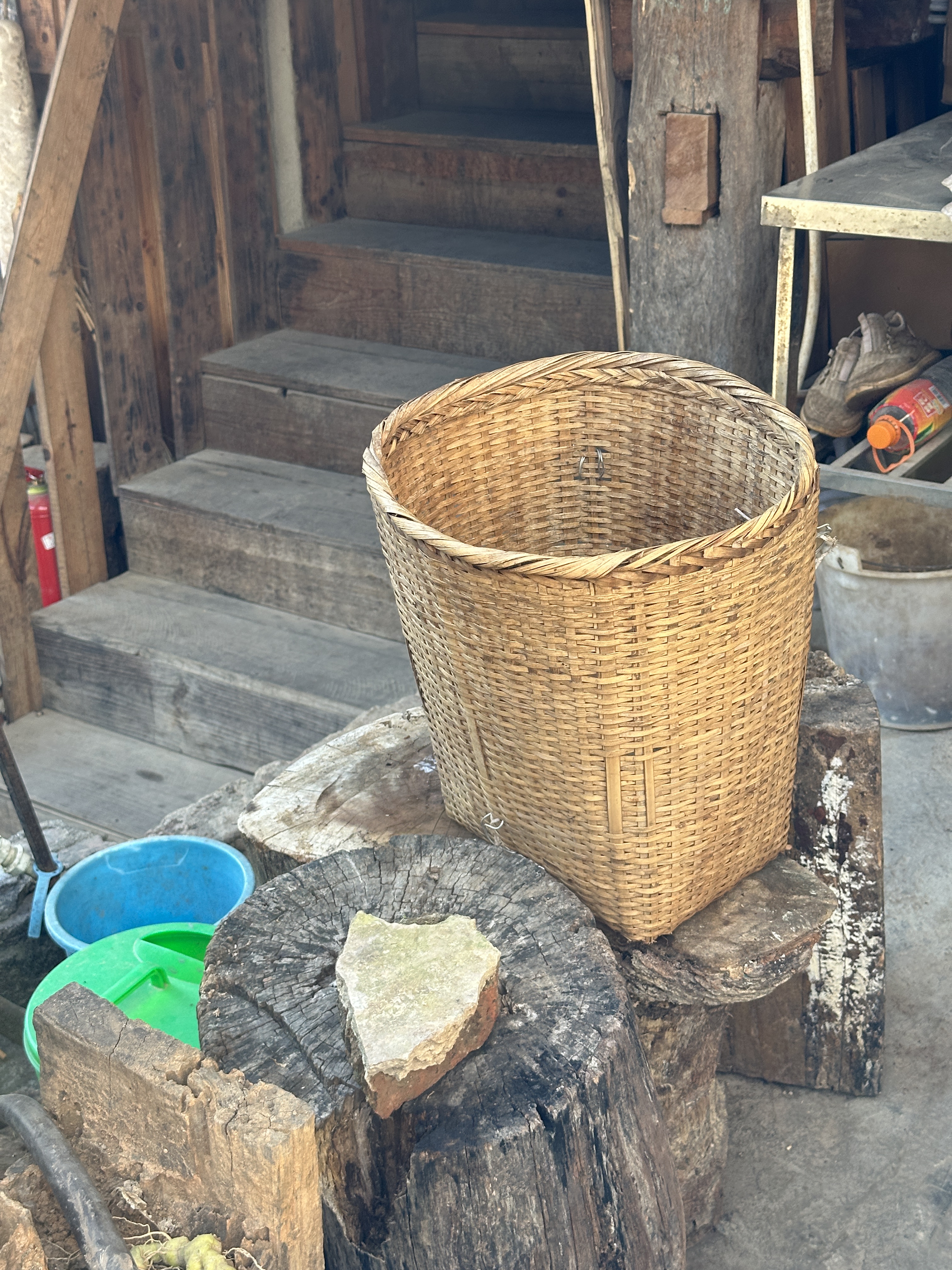
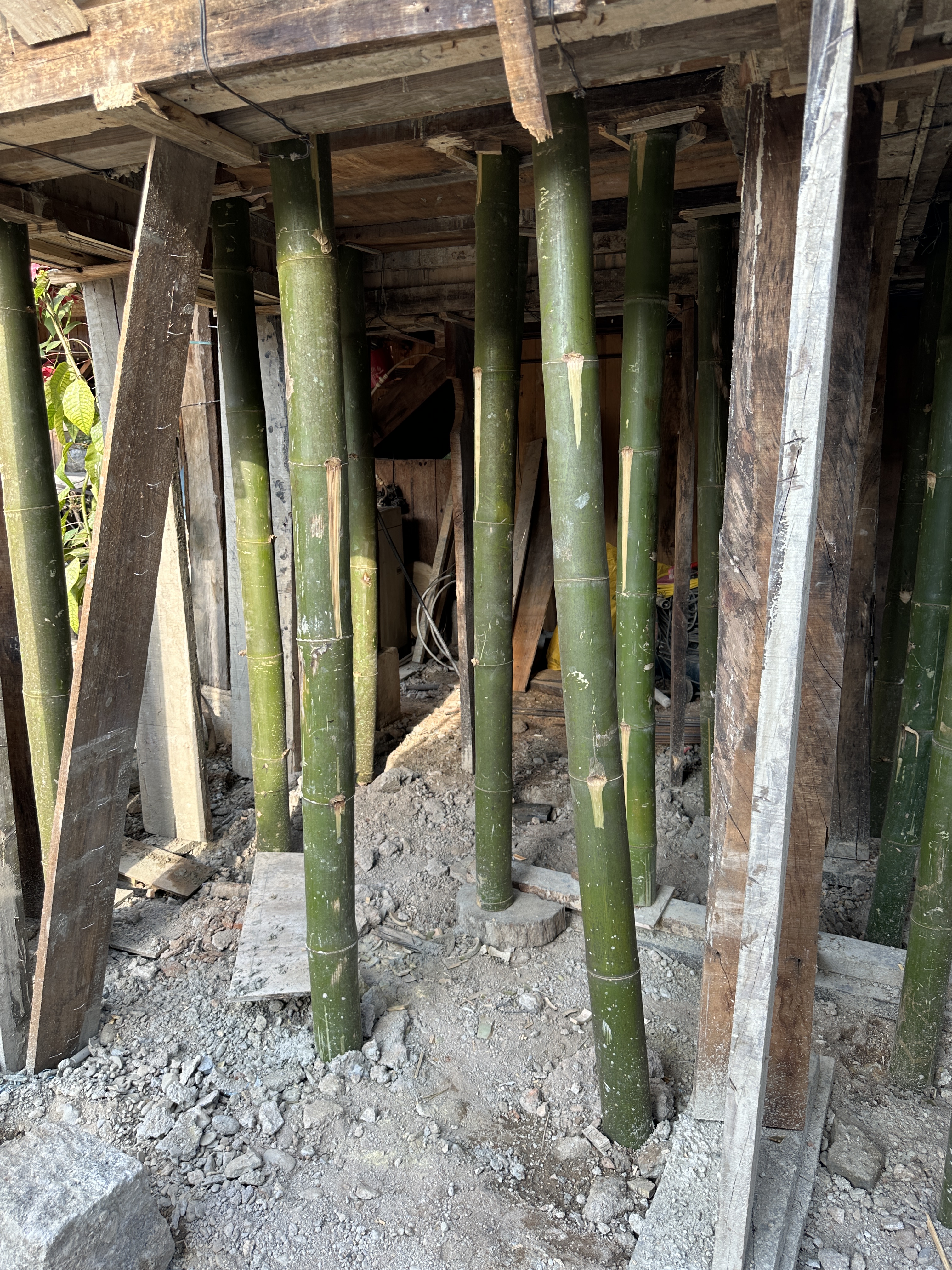
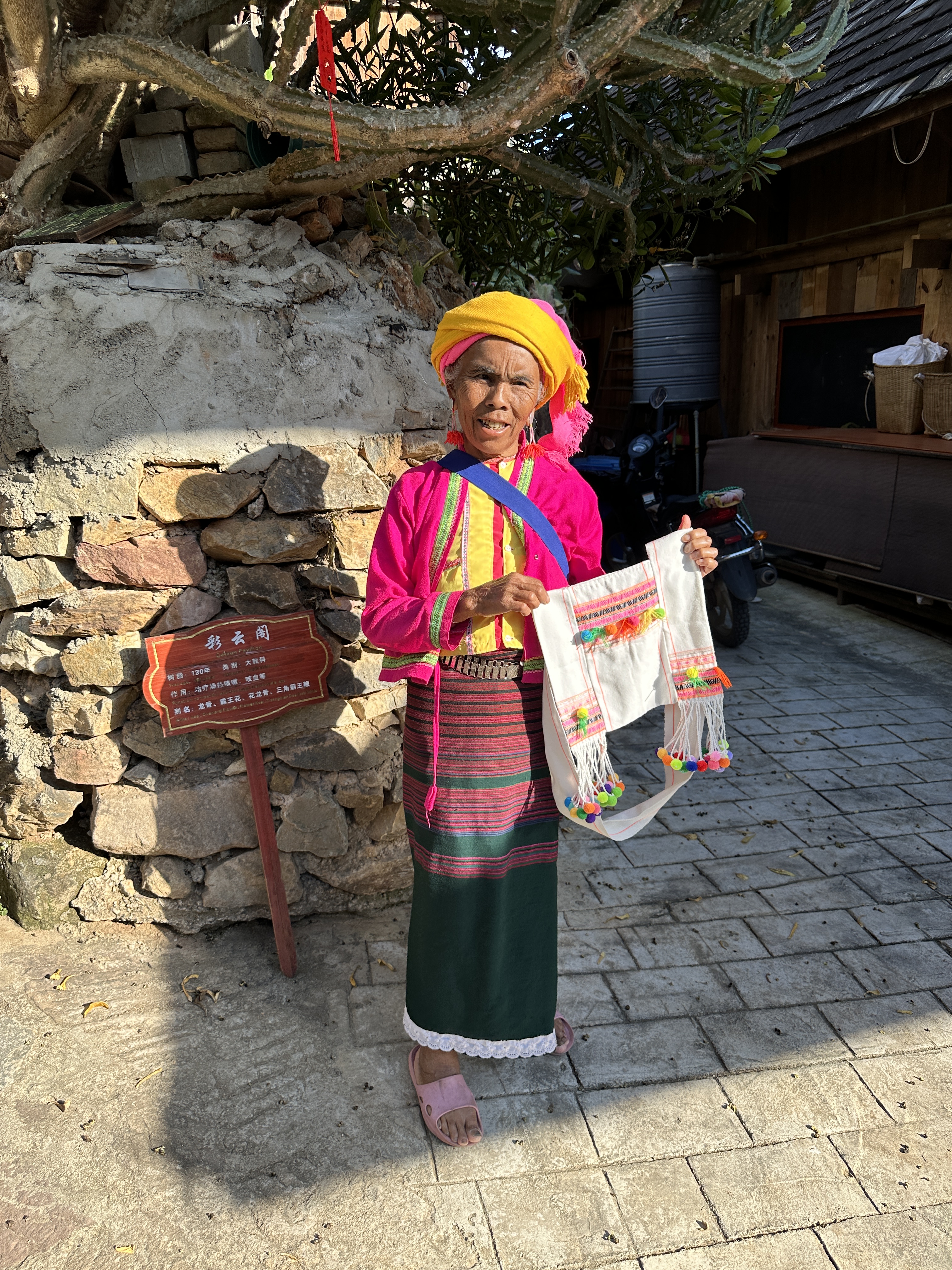
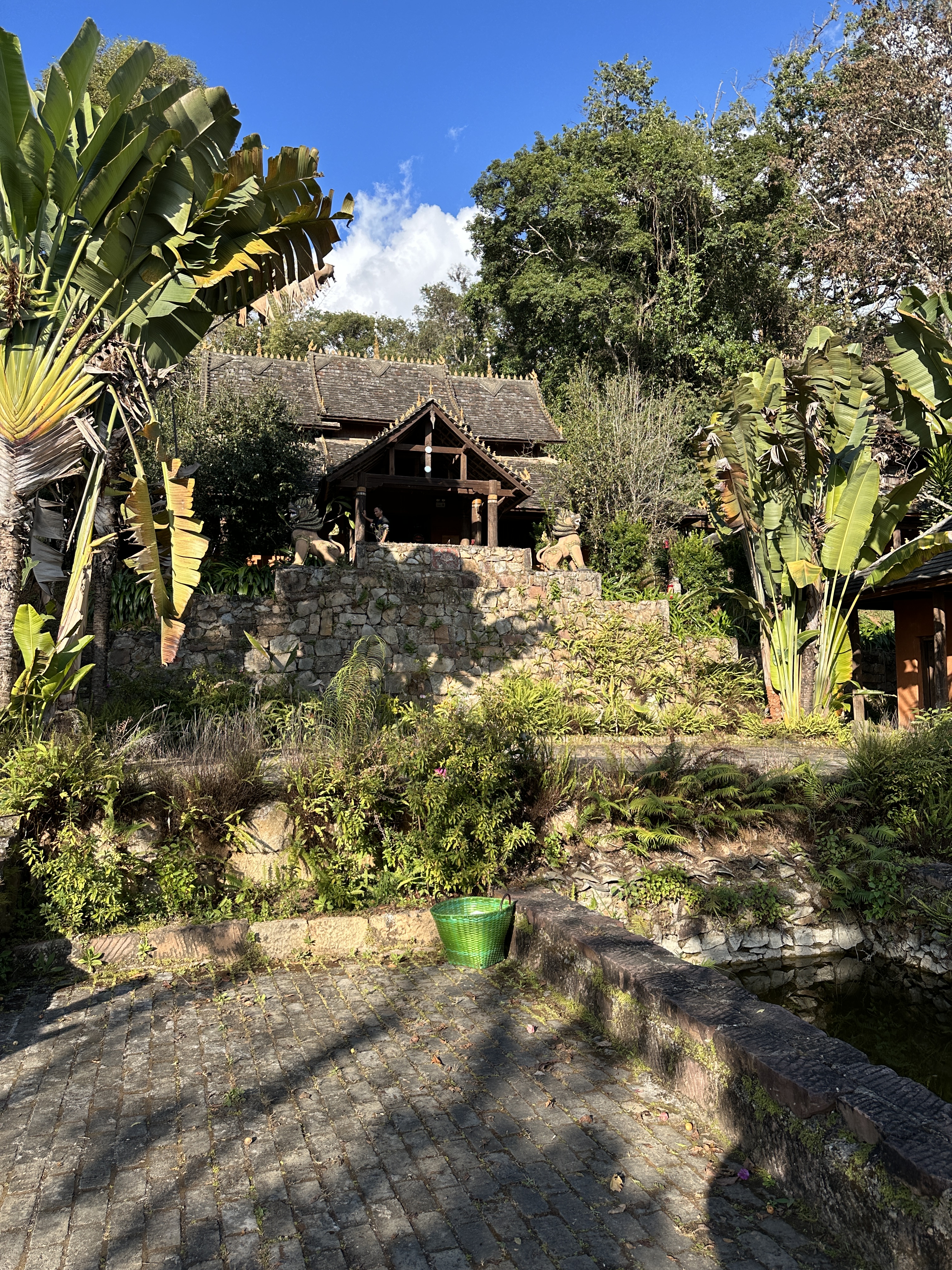
[Hani Culture Park,] Nannuoshan [Hani Administrative] Village, Gelanghe Hani Ethnic Township, Menghai County, Xishuangbanna Dai Autonomous Prefecture, Yunnan, China.
Visited December 26, 2023.
This is the sixth post in the series: Villages and Towns of the Southeast Asian Massif.
Approximately: 21° 57′ 34.77″ N, 100° 36′ 1.398″ E
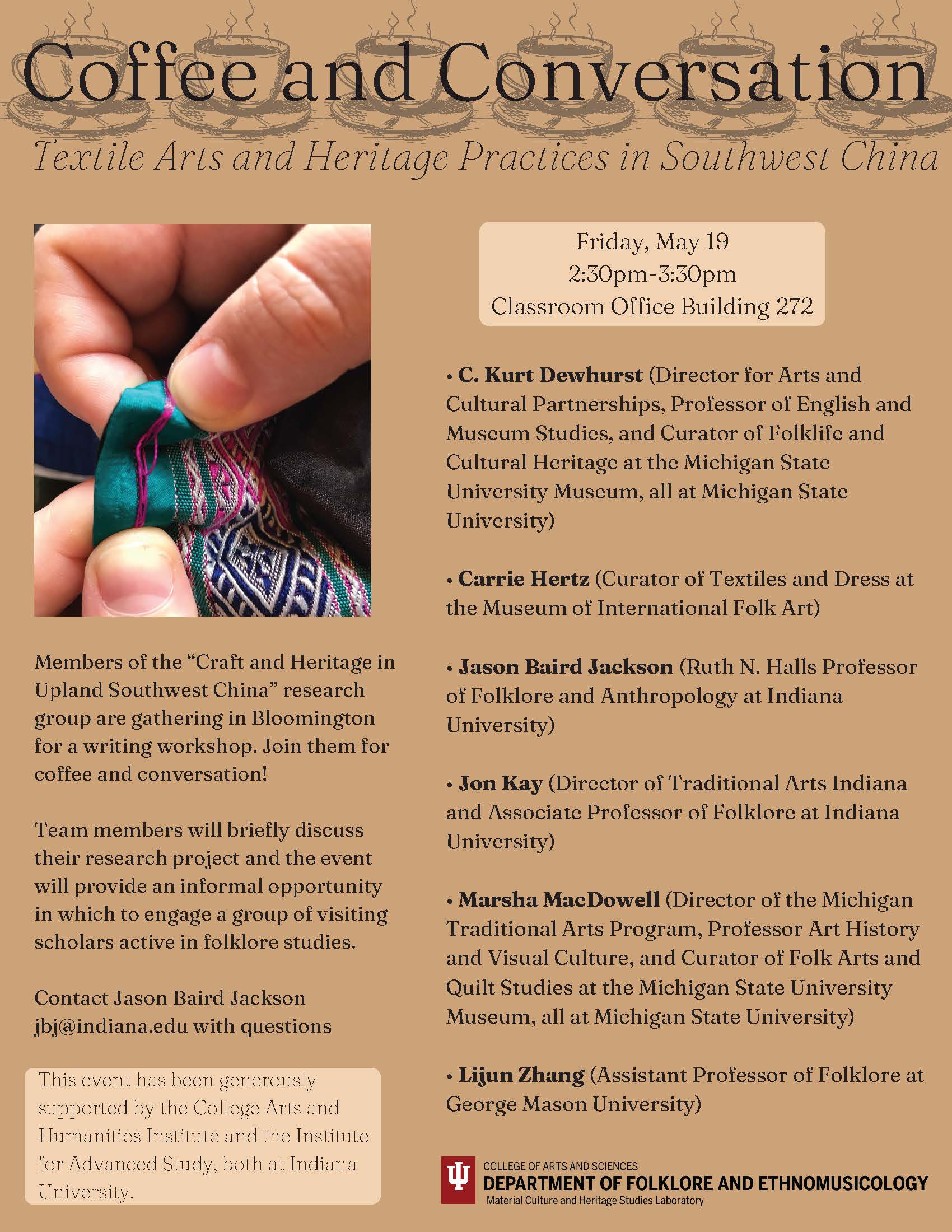
I am happy to be hosting a group of colleagues in Bloomington this week for a long-delayed (COVID…) writing workshop on “Textile Arts and Heritage Practices in Southwest China.” This grows out of the work of the “China-US Folklore and Intangible Cultural Heritage Project,” a joint project of the China Folklore Society and the American Folklore Society. Specifically, the effort arises from that project’s “Collaborative Work in Museum Folklore and Heritage Studies” sub-project (2017-2021), an effort now extended through the “Craft and Heritage in Upland Southwest China” project (2022-present) of the Material Culture and Heritage Studies Research Laboratory. The generous funders and partners for these various projects are discussed in Jackson 2023. This week’s workshop has been supported by the College Arts and Humanities Institute and the Institute for Advanced Study, both at Indiana University. Thank you to all of those who have supported these projects.
There will be a campus event associated with the workshop on Friday, May 19, 2023 at 2:30 pm. Read about it here at this calendar link and in the flyer posted below.
I am very pleased to share news of a new publication. It is an article appearing now in the Journal of American Folklore:
Jackson, Jason Baird. “Collaborative Work in Museum Folklore and Heritage Studies: An Initiative of the American Folklore Society and Its Partners in China and the United States.” Journal of American Folklore 136, no. 539 (2023): 48-74. muse.jhu.edu/article/877843.
The paper’s abstract is:
Since 2007, the American Folklore Society has pursued a partnership project with the China Folklore Society. Diverse in activities and extensively participated in, the endeavor is known as the China-US Folklore and Intangible Cultural Heritage Project. In this peer-reviewed report, one sub-project within this umbrella effort is reviewed. The Collaborative Work in Museum Folklore and Heritage Studies sub-project continued the project’s established exchange practices and added a program of material culture and heritage studies research.
Thanks to the generous terms of the American Folklore Society’s author agreement, a version of the article is now available in the Indiana University open access repository. Find that version online here: https://iu.tind.io/record/3333
I am very happy to note a new co-authored article titled “A Survey of Contemporary Bai Craft Practices in the Dali Bai Autonomous Prefecture, Yunnan, China.” It was jointly written with Wuerxiya (first author), C. Kurt Dewhurst (third author) and Cuixia Zhang (fourth author) and it appears in Museum Anthropology Review volume 16, numbers 1-2. This is the special double issue published in honor of Daniel C. Swan, as noted in an earlier post on Shreds and Patches. The article is based on work undertaken by a much larger bi-national team within the “Collaborative Work in Museum Folklore and Heritage Studies” sub-project of the broader “China-US Folklore and Intangible Cultural Heritage Project,” a collaboration (2007-present) of the American Folklore Society and the China Folklore Society. In particular, it describes work undertaken through the auspices of, and in partnership with, The Institute of National Culture Research at Dali University. Special thanks go to the Institute and its leadership.
Presented as an image is the first page of the journal article “A Survey of Contemporary Bai Craft Practices in the Dali Bai Autonomous Prefecture, Yunnan, China.”
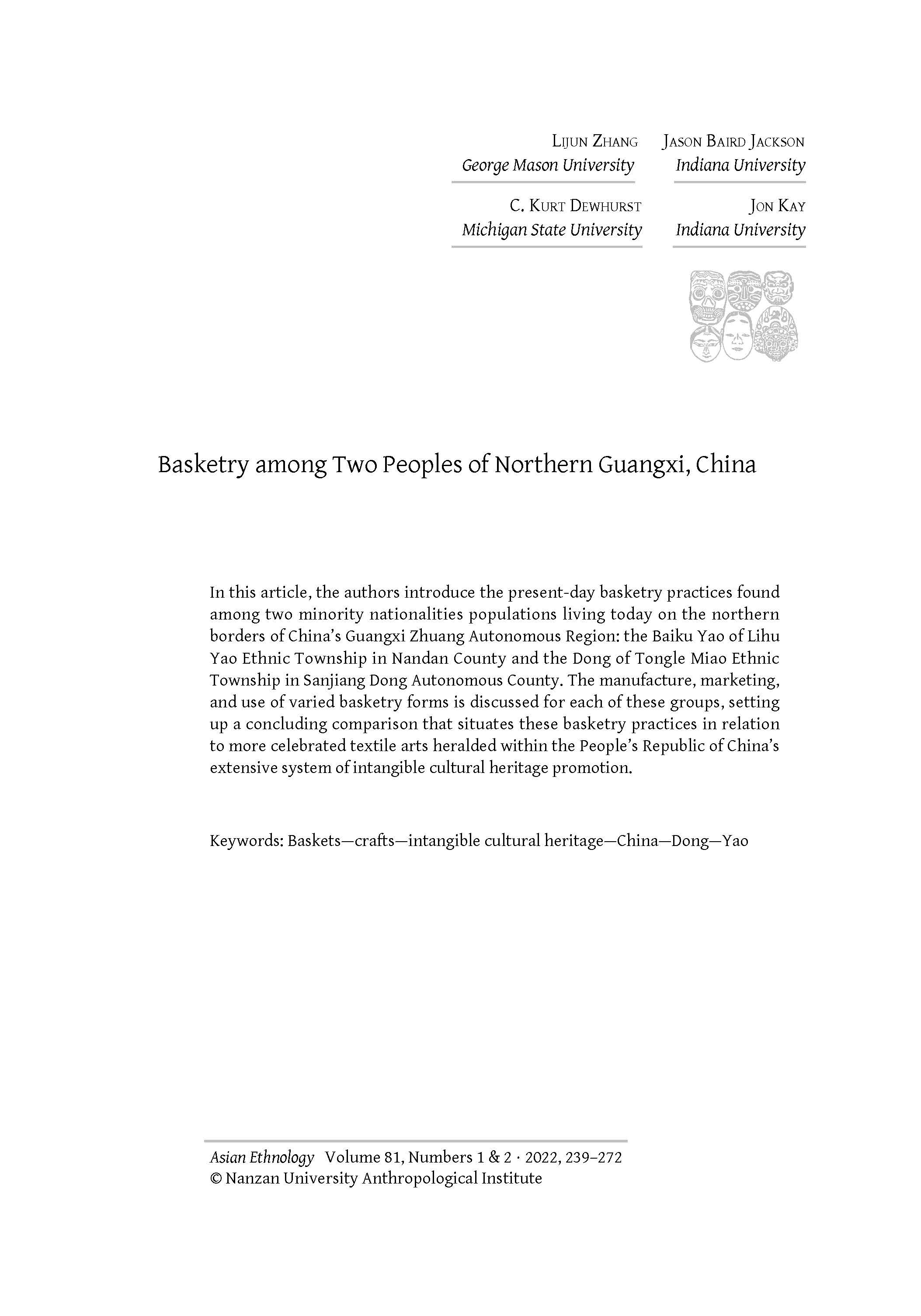
I am very happy to note the publication of “Basketry among Two Peoples of Northern Guangxi, China” in the latest double issue of Asian Ethnology. This article is one that I co-wrote with my friends and collaborators Lijun Zhang (first author), C. Kurt Dewhurst (third author), and Jon Kay (fourth author) and it is based on work undertaken by a much larger bi-national team within the “Collaborative Work in Museum Folklore and Heritage Studies” sub-project of the broader “China-US Folklore and Intangible Cultural Heritage Project,” a collaboration (2007-present) of the American Folklore Society and the China Folklore Society.
I am a huge fan of Asian Ethnology, a wonderful open access journal now in its 81st year. Check out the huge volume that our paper is a part of, Find Asian Ethnology online here: https://asianethnology.org/ and also in JSTOR
A image of page one of the typeset version of the scholarly article “Basketry among Tow Peoples of Northern Guangxi, China” published in Asian Ethnology.
While doing background work on FEI Xiaotong and ZHANG Zhiyi’s studies of the basketry industry(*) in Yunnan, China, my colleague W. discovered this webpage with a pair of images and a little bit of information on the production, sale, and use of large, oval-bottomed, oval-mouthed, open work bamboo tobacco hampers used by tobacco farmers to gather and transport mature tobacco leaves.
I will take down the screenshot below if called upon by the publisher to do so. Hopefully it is ok to share the page in its Google Translate version. The original Chinese text is available on the actual website, which is here: http://www.djcx.com/file_read.aspx?id=31810. The place pictured is Wudingshan town in Nanhua County, which is part of Chuxiong Yi Autonomous Prefecture, in Yunnan, China. During our team‘s travels in Yunnan, Guizhou, and Guangxi, we have not visited any tobacco producing regions and we have not ourselves documented this basket type, either in museum collections or in town or village settings.
*Fei, Hsiao-tung, and Tse-i Chang. Earthbound China: A Study of Rural Economy in Yunnan. Chicago: University of Chicago Press, 1945.

































































 Shreds and Patches