The Council for Museum Anthropology Book Award was created to recognize and promote excellence in museum anthropology. The award is awarded to a scholar within the field of museum anthropology for a solo, co- or multi-authored book published up to five years prior to the award date, and will be considered for the award 2 years after nomination. Edited books will not be considered.
Nomination Packets
To nominate a book, please send a signed letter of nomination to the Chair of the Book Award Committee. Only individuals, not organizations or publishers, are eligible to nominate books for the CMA Book Award. The letter of nomination should speak to the impact of the book on the field of museum anthropology and needs to be by a current CMA member. Self-nomination is not permitted, and works must have an accompanying letter of nomination to be considered. Please arrange to have the publisher send a copy of the book directly to each member of the Selection Committee. Books must be received by the deadline. Applicants will be notified in October as to the results.
Evaluation Criteria
The CMA Book Award will be given to the author(s) whose work is judged to be a significant and influential contribution to museum anthropology.
Books that did not receive the award but are considered exceptional will receive honorable mentions at the award ceremony at the AAA Annual Meeting.
We’re delighted to announce the winners of this year’s Council for Museum Anthropology awards!! We thank the CMA Awards Committee (Lijun Zhang (Chair), Jason Jackson, Amanda Guzman, Sowparnika Balaswaminathan), and the CMA Book Award Committee (Cara Krmpotich (Chair), Molli Pauliot, Lijun Zhang) for their dedicated work on this.
[CMA@AAA Award Ceremony Details Omitted]
CMA STUDENT TRAVEL AWARDS:
Congratulations to this year’s CMA Student Travel award recipients, Amanda Sorensen and Haley Bryant!
The CMA Student Travel Awards are awarded to students who are going to present papers or posters at AAA meeting that present novel contribution to museum anthropology and have the potential to develop into works that could more broadly impact the field.
Amanda Sorensen and Haley Bryant have co-organized a panel for the 2024 AAA meeting which explores software and technologies used in museum practice. In the panel, Sorensen and Bryant will present papers to discuss digital technologies, software development, human labor, anthropological archives, and museum practice.
CMA MICHAEL AMES AWARD FOR INNOVATIVE MUSEUM ANTHROPOLOGY:
We are excited to share the news that the 2024 CMA Michael M. Ames Prize for Innovative Museum Anthropology is awarded to the exhibition project Mnaajtood ge Mnaadendaan: Miigwewinan Michi Saagiig Kwewag Miinegoowin Gimaans Zhaganaash Aki 1860 / To Honour and Respect: Gifts from the Michi Saagiig Women to the Prince of Wales, 1860. The project researches on and displays baskets made by women at what is now Hiawatha First Nation (HFN) in Ontario and gifted to the Prince of Wales in 1860. The exhibition enables Michi Saagiig community members to reconnect with their ancestors and visit their creations.
Congratulations to the co-curators Lori Beavis and Laura Peers as well as the HFN community members who have been involved in the project. See their amazing work here: https://www.tohonourandrespect.ca/
CMA BOOK AWARD
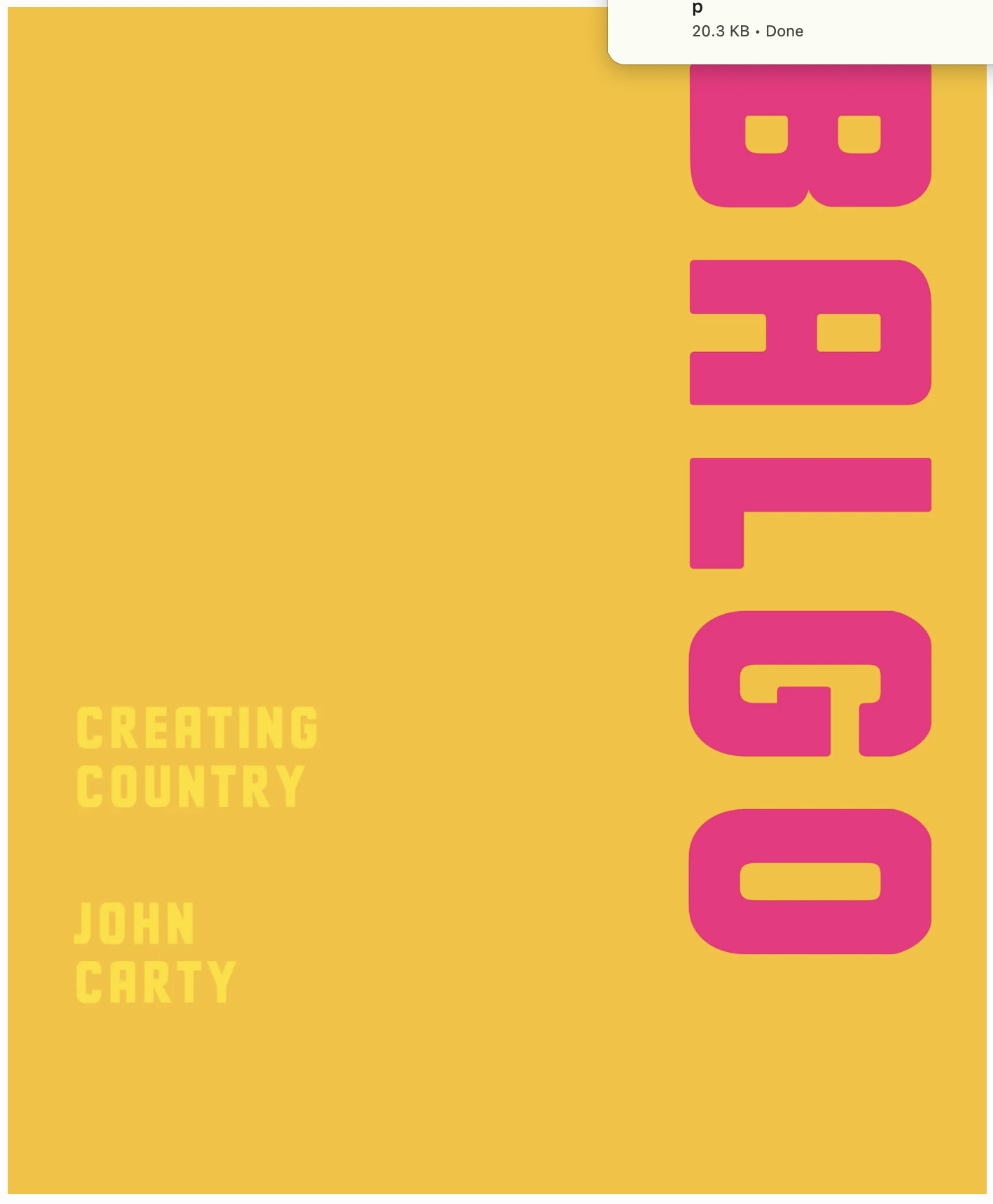
The CMA Book Award for 2024 is awarded to Balgo: Creating Country by John Carty, published by University of Western Australia Publishing in 2021.
The Nomination for Balgo: Creating Country highlights Carty’s skill in combining a rich ethnographic account with the methods of art history and an appreciation of the importance of collections and archives. Drawing on vast sources, Carty studies Balgo art from various perspectives, including art history, anthropology, economics, religious study, statistics, and gender studies. Balgo: Creating Country seamlessly integrates an art historical understanding cultivated through the study of changing forms over time with an understanding of the social processes represented in those changes, made known through sustained and ethical research relationships.
Balgo: Creating Country is the fruit of years of original research with close and insightful examination of Balgo art, history, individual experiences, community life, and the living world. It situates desert art and the creative process in complex historical, economic, and political dynamics. Balgo: Creating Country successfully navigates the scale of art practices, attending to over 15,000 artworks all the while being attentive to the artists at a very human scale. A distinguishing and innovative aspect of the book is Carty’s use of kinship relationships and kin diagrams to analyse and demonstrate the aesthetic and stylistic relationships between paintings over time.
CMA’s Book Award Committee wholeheartedly agreed with the Nomination that Balgo: Creating Country “exemplifies the unique contribution museum anthropology as a discipline is able to make to the understanding of world art, by challenging received Western categories yet at the same time bringing different art histories into dialogue with one another.”
Upon learning of the Award, Balgo artists shared this message with CMA:
“We are very proud of this book, and we are happy that other people can see its importance through this award. Our art is more than art, more than painting, it is our Country – who we are as people. It takes a lot to see what we are painting. This book tells that story: from the early days before whitefellas, to the mission days, and now today, where we are strong people who have built a new life for ourselves in Balgo. That’s what’s in our painting. It’s a big book, but it tells an even bigger story. (Warlayirti Artists, Balgo, Australia.)”
It is our pleasure to award the 2020 CMA book award to Daniel Swan and Jim Cooley for their 2019 book, “Wedding Clothes and the Osage Community” (Indiana University Press), and to give an honorable mention to Solen Roth for her 2018 book “Incorporating Culture” (UBC Press). Both books exemplify the range of work that the Council of Museum Anthropology promotes.
Swan, D. and Cooley, J. 2019. “Wedding Clothes and the Osage Community: A Giving Heritage.” Bloomington: Indiana University Press.
It is with great pleasure that we award the CMA book award to Daniel Swan and Jim Cooley. “Wedding Clothes and the Osage Community” is an exemplar of what museum anthropology can and should be. The book is the result of long-term collaborative work with the Osage Nation, and uses archival, ethnographic and ethnohistorical methods to reanimate museum collections of Osage heritage. Doing so, the book is a highly accessible multi-media examination of change and continuity in Osage wedding traditions and clothing. Through its attention to material culture the book demonstrates not only the rich vibrancy of the Osage wedding traditions but also demonstrates the sort of work that can only be done through what Ray Silverman termed “slow museology”, which is work built on mutual respect, collaboration, and trust. This is a book that transcends its subject matter and helps us all see the possibilities of museum anthropology.
Roth, S. 2018. “Incorporating Culture: How Indigenous People are Reshaping the Northwest Coast Art Industry.” Vancouver: UBC Press.
We are delighted to award honorable mention for the CMA book award to Solen Roth. “Incorporating Culture” is a unique ethnography of the “artware” industry. Solen coins the term artware to describe commodities decorated with Pacific Northwest coast images that circulate inside and outside of Indigenous and non-Indigenous communities. The book examines the array of values these objects accumulate as they transition between these sites. It is a sophisticated historical and multi-sited ethnographic look at the intercultural phenomena of the artware industry, which is an example of what she terms ‘culturally modified capitalism.’ The book helps shed light on a compelling and important feature and dynamic of the intercultural object-world and economy in the North West Coast.
In addition to the CMA Book Award, I am also happy to note that Wedding Clothes and the Osage Community: A Giving Heritage was recently recognized during the annual meeting of the American Folklore Society’s Folklore and History section, which bestows the annual Wayland D. Hand Prize given for the best book combining historical and folkloristic methods and materials. The biennial prize honors the eminent folklorist Wayland D. Hand (1907-1986). Wedding Clothes was given the honorable mention in the 2020 Hand Prize competition. The prize itself went to Forgetful Remembrance: Social Forgetting and Vernacular Historiography of a Rebellion in Ulster (Oxford University Press, 2018) by Guy Beiner. As reprinted on a Facebook post, the Hand Prize committee said the following about Wedding Clothes.
The beautifully illustrated volume explores through history and folklife research the ways that gift exchange, motivated by the values of generosity and hospitality serves as a critical component in the preservation and perpetuation of Osage society.
Congratulations to all of the Osage Nation citizens who worked on the larger Osage Weddings Project (which included a major traveling exhibition) and to Dan and Jim as authors. Special thanks go to the Indiana University Press for investing tremendous care in the making of an extraordinary book.
The Material Vernaculars book series, published by the Indiana University Press in partnership with the Mathers Museum of World Cultures, is maturing. Four titles have now appeared and one more (Wedding Clothes and the Osage Community) is in production. Additional potential titles are under consideration or being finalized. The works already published have now begun being reviewed. Here are some of those reviews. Thanks as always to the journals that seek reviews of scholarly books. It is hard work soliciting, securing, editing and publishing such reviews, but they are of great value and are appreciated.
Bronner, Simon. 2017. “Review of Folk Art and Aging: Life Story Objects and Their Makers by Jon Kay.” Journal of Folklore Research Reviews. http://www.jfr.indiana.edu/review.php?id=2104
Haymond, Raven. 2018. “Review of Folk Art and Aging: Life Story Objects and Their Makers by Jon Kay.” Western Folklore 77 (3-4): 350-352.
Mundell, Kathleen. 2018. “Review of Folk Art and Aging: Life Story Objects and Their Makers by Jon Kay.” Journal of American Folklore 131 (520): 222-223.
Carter, Thomas. 2018. “Review of Framing Sukkot: Tradition and Transformation in Jewish Vernacular Architecture by Gabrielle Berlinger.” Journal of Folklore Research Reviews. http://www.jfr.indiana.edu/review.php?id=2236
Deutsch, James I. 2018. “Review of Material Vernaculars: Objects, Images, and Their Social Worlds edited by Jason Baird Jackson.” Western Folklore 77 (1): 94-96.
Yohe, Jill Ahlberg. 2018. “Review of Material Vernaculars: Objects, Images, nd Their Social Worlds edited by Jason Baird Jackson.” Journal of Anthropological Research 74 (1): 132-133. https://doi.org/10.1086/696164
If you think that high quality open and/or free access editions of scholarly monographs are a good thing, and if you have the means to do so, I urge you to purchase copies of the companion print or ebook editions as a way of supporting the cause and subsidizing the access of others, including those who cannot otherwise afford to obtain the book. If you really want to make a difference, consider donating to the not-for-profit publishers and libraries behind such efforts. In our case, you can contribute to the Indiana University Press (co-publisher of the Material Vernaculars series with the Mathers Museum of World Cultures) here: http://www.iupress.indiana.edu/pages.php?CDpath=12
Here is a screen shot showing you where to click to download Material Vernaculars. The image should link to the page in IUScholarWorks where the book is found. (The link is given above as well.)
I am happy to share this note to report that the edited collection Material Vernaculars: Objects, Images, and Their Social Worlds has now been published. I am the editor of this volume, which includes contributions to material culture studies from Dan Swan and Jim Cooley, Jon Kay, Michael Paul Jordan, Danille Elise Christensen, and Gabrielle Berlinger. I love the work that my colleagues contributed to the book. In addition to sharing their scholarship, the volume serves to launch the Material Vernaculars book series of which it is a part. Also appearing in the new series, is Jon Kay’s Folk Art and Aging: Life-Story Objects and Their Makers (it was published last month).
The new series is published by the Indiana University Press in cooperation with the Mathers Museum of World Cultures. IU Press is to be commended for its hard work bringing Material Vernaculars to press. Most of the papers in the volume were presented last fall at the 2015 Annual Meetings of the American Folklore Society. The papers were presented, revised, peer-reviewed, revised again, copy edited, typeset, proof-read, corrected and processed for final publication (etc.) in less than a year, a scenario that is simply unprecedented in the world of academic book publishing. And the results are great–a well-designed, well-edited book that is rich with color images. Its all first rate.
IU Press has a big sale going through tomorrow (October 30). Its a perfect time to check out their list and perhaps purchase this new title. Paperback and Hardback editions are now available. Electronic editions are on their way. (More on that asap.)
The answer here is no, but as you might guess, the series is intended to be the go to place when the museum does have its own publishing projects. This answer prompts then a couple of more points needing to be made. Peer-review for the series is fully managed by the IU Press and editorial review is a joint matter, thus it is quite conceivable that a museum project might be passed on by the press either at the early editorial review stage or at the peer-review stage. (I note that the press has already passed on one possible project, to illustrate this point tangibly.) Thus the series will hopefully be the home for additional MMWC authors and projects, but this is not guaranteed—and should not be.
The other side of this is that the series will hopefully come to publish authors without ties to museum, including colleagues not yet known to me. As the series homepage presently notes, “Potential authors interested in the Material Vernaculars series should contact the series editor Jason Baird Jackson via mvseries [at] indiana.edu and Aquisitions Editor Janice Frisch at frischj [at] indiana.edu.” That phrase, and the series overview, are available here.
As noted there, a new series also poses genre questions. Here, my intentions as editor are broad. “The series accommodates a diversity of types of work, including catalogues and collections studies, monographs, edited volumes, and multimedia works.” To me, these are the key genres of relevance for research museum practice in ethnography, ethnology, and cultural history (our museum’s fields), but it could be that new, as yet not fully recognized genres could also find a home in the series. While the forthcoming edited volume is something of a sampler, future edited volumes will likely have a strong thematic focus. Stand alone essays will continue to find a home in the museum’s journal, Museum Anthropology Review.
I hope to hear from potential authors and editors interested in learning more about the series. Thanks to all who have supported this new effort.
First the take away, then the story. While produced in very nice and reasonably priced hardback, paperback, and ebook editions, works in the new Material Vernaculars series are also being made available in free-to-the-reader PDF versions. This is a great thing and, if you agree with me about that, and can afford to do so, I really hope that you will purchase the edition of your choice, thereby signaling your support for making such works freely accessible to those who cannot afford to purchase them. If this seems strange to you, its a lot like community and public radio in the United States. Those who can support these services help make them accessible to those who cannot afford to make their own donations. We all gently nudge those who use them and could, but don’t, support them. (Called free riders.) Its not utopia, but its what we have and its better than the vast majority of people being locked out of non-commercial arts and education programming (and scholarly books). Now you can skip to the end for the link if you are in a rush.
Those who know about my work know that I have been focused on promoting free and open access to scholarly work for a relatively long time. My advocacy efforts followed soon after I began work as a scholarly journal editor. At that time, I was drawn into a diverse range of problems, opportunities, and paradoxes that the transformation of scholarly communication was (and is still) engendering. Probably the best place to find the things that I have written on this theme is to look at the interview that I did with Ryan Anderson (published in Cultural Anthropology in 2014)
Books cost a lot of money to make. In a peer-reviewed article, based on our humanities book research studying publishing work of the Indiana University Press and University of Michigan Press, my colleagues report that the zero copy cost for a typical humanities book is about $27,000. Efforts to increase access to scholarship have to find ways to confront these costs from all sides—finding ways to lower prices but also new ways of funding the professional work that it takes to make a quality book.
For me, for the museum, and especially for the IU Press, the Material Vernaculars series is an experiment. If we get past talking about it and actually begin doing it, what can we learn that will, we hope, help us learn to do it more and better? This is part of what is at stake for IU Press and for the whole world of university press humanities book publishing. I am thrilled to be a part of a new series that has a secondary role (beyond its primarily scholarly one) of finding ways to make scholarly books more widely and openly accessible.
So paradoxically, if you believe (for example) that the communities about whom ethnographers write should have access to what they write, then I call on you, paradoxically, to purchase a copy of Folk Art and Aging and the other other books that are in the pipeline. Your purchase helps support the goals of the series and it demonstrates that paid-for print editions or e-book editions are not mutually exclusive of free-to-readers electronic editions. If it helps, think of the print edition as a thank you gift for your donation to this cause rather than as a commodity that you are purchasing in the marketplace. You can feel particularly good about it if you purchase it directly from the Indiana University Press, thereby cutting out one or more commercial intermediaries.
It (PDF) won’t always be the file format of choice, but for now the free editions of Material Vernaculars titles will be circulated in PDF form via the IUScholarWorks Repository. When people download the books from IUScholarWorks, there is a download count, which helps us learn how many people, over what time period, showed interest in the book(s). (So, send your friends to the link rather than passing around the PDF…)
If you are wondering how to download the book, see the picture above for the place to click.
Here is the link. Two actually. The first is durable but enigmatic. The second is more human readable, but potentially less permanent.
This fall I will be talking a lot about the new book series that the Indiana University Press and the Mathers Museum of World Cultures are jointly publishing. I am the series’ editor and my friend and colleague Jon Kay is its first author. I will frame the series here, before I conclude this post, but I do not want to bury the lead, which is that there is a great new book in the world and you should buy and learn from it.
Jon Kay is Director of Traditional Arts Indiana, Curator of Folklife and Cultural Heritage at the Mathers Museum of World Cultures, and Professor of Practice in the Department of Folklore and Ethnomusicology, Indiana University. His book is Folk Art and Aging: Life-Story Objects and Their Makers. (Jon’s content rich book website is here.) It is the fruit of many years of work exploring the creative lives of older adults in Indiana and in other parts of the United States. Jon has much to say about the ways that material culture and narrative come together in social encounters and in unfolding lives, as well as about about the ways that more attentive scholarship on the verbal and material life, as well as the memory, work, of elders can shape more humane and sensible approaches to what is increasingly referred to as creative aging, as well as to social gerontology more generally. The book is a folklorist’s book, but it also speaks very generatively to a range of neighboring disciplines. Written in a very clear and engaging style, it is the kind of book that lots of people (not just scholars) can read and both enjoy and learn from. At its center are profiles of five incredibly interesting creators of objects, stories, and lives. Jon helps share their stories and their creations in a really engaging way. The book has many beautiful color images and at 133 pages, it never gets bogged down.
The hardback, paperback, and ebook editions are beautiful and they can be purchased from the Indiana University Press, from Amazon, from Google, and from many other retailers. I’ll tell you next time where to get the free PDF edition, but here I want to urge everyone who can to purchase one of the paper or ebook editions. Why? Paradoxically, because I believe in open access. If those who can do so purchase the modestly priced print or e-book editions, the IU Press will secure the revenue that it needs to produce more books such as Folk Art and Aging and to make them freely available to those who otherwise could not afford to purchase them. More on such questions next time.
Having introduced Folk Art and Aging to you, let me introduce the series quickly. The series précis reads:
The Material Vernaculars series presents ethnographic, historical, and comparative accounts of material and visual culture manifest in both the everyday and extraordinary lives of individuals and communities, nations and networks. While advancing a venerable scholarly tradition focused on the makers and users of hand-made objects, the series also addresses contemporary practices of mediation, refashioning, recycling, assemblage, and collecting in global and local contexts. Indiana University Press publishes the Material Vernaculars series in partnership with the Mathers Museum of World Cultures at Indiana University. The series accommodates a diversity of types of work, including catalogues and collections studies, monographs, edited volumes, and multimedia works. The series will pursue innovative publishing strategies intended to maximize access to published titles and will advance works that take fullest advantage of the affordances provided by digital technologies.
The series second title is an eponymous edited volume—Material Vernaculars: Objects, Images, and Their Social Worlds. That collection is due out in a few days (September 5, 2016). In its introduction, I characterize in more detail the goals of the series as well as situate its disciplinary (cultural anthropology, folklore studies, ethnology, culture history) engagements as well as its place in the larger research work of the MMWC. I look forward to sharing it with you.
Congratulations to Jon Kay on his second book of the summer (see Indiana Folk Art) and to all of our friends at the Indiana University Press.
This year is a big year for the Mathers Museum of World Cultures in a number of respects. Two of these weave together. Its the state bicentennial for Indiana and we are engaging with it in a big way through the exhibition Indiana Folk Arts: 200 Years of Tradition and Innovation. That exhibition is now traveling across Indiana along with with a deep roster of presenting artists and craftspeople. The exhibition and associated in-person demonstrations are happening at state parks and festivals around Indiana and the exhibition will also be presented at the Indiana State Fair, later this summer. The exhibition brings together more than a decade of research by Traditional Arts Indiana and was also an project worked on by the Laboratory in Public Folklore graduate course taught in the IU College of Arts and Sciences’ Department of Folklore and Ethnomusicology. Working with TAI Director and MMWC Curator of Folklife and Cultural Heritage Jon Kay, a large number of students have been involved in all aspects of the exhibition and associated programs, products, and events.
2016 is also slated to be a big year for book publishing at MMWC. We have a number of books in the cue for fall. The first to become available is the catalogue for Indiana Folk Arts. Edited by Jon Kay with chapters authored by a large and talented group of graduate students, the volume enriches the exhibition while also standing alone as a contribution to scholarship on Indiana craft and art. At exhibition events and here at the MMWC, the book is being distributed for free in a beautiful full-color print edition. In keeping with our institutional commitment to increased and open access to scholarship, the volume is also available electronically and permanently via the IUScholarWorks Respository. Licensed under a CC-BY license, it can be found online here: https://scholarworks.iu.edu/dspace/handle/2022/20893. Its the first MMWC publication for which we obtained an ISBN number (two actually, one for the print edition and one for the PDF edition), which is also pretty neat.
Congratulations to Jon Kay, the volume’s editor, to all of its contributors, and to the talented artists, craftspeople, and tradition bearers featured in the book. Welcome readers–72 beautiful pages await you, wherever in the world you live. If you like the book and support the work behind it, spread it widely. Tell your friends and colleagues so that they can enjoy it too.



 Shreds and Patches