The Council for Museum Anthropology Book Award was created to recognize and promote excellence in museum anthropology. The award is awarded to a scholar within the field of museum anthropology for a solo, co- or multi-authored book published up to five years prior to the award date, and will be considered for the award 2 years after nomination. Edited books will not be considered.
Nomination Packets
To nominate a book, please send a signed letter of nomination to the Chair of the Book Award Committee. Only individuals, not organizations or publishers, are eligible to nominate books for the CMA Book Award. The letter of nomination should speak to the impact of the book on the field of museum anthropology and needs to be by a current CMA member. Self-nomination is not permitted, and works must have an accompanying letter of nomination to be considered. Please arrange to have the publisher send a copy of the book directly to each member of the Selection Committee. Books must be received by the deadline. Applicants will be notified in October as to the results.
Evaluation Criteria
The CMA Book Award will be given to the author(s) whose work is judged to be a significant and influential contribution to museum anthropology.
Books that did not receive the award but are considered exceptional will receive honorable mentions at the award ceremony at the AAA Annual Meeting.
The CMA Student Travel Awards are designed to support graduate student travel to the annual AAA meeting to present papers and/or posters. Students and recent graduate degree recipients (those who have defended within the year of the award) are eligible to apply. Each year, CMA will award two prizes of $1000 each.
Application Packets
Application packets (maximum 5 pages) must include: a brief letter indicating the applicant’s student status and explaining how this project reflects the student’s graduate work; a copy of the abstract for the proposed paper or poster (and for the session in which they will be presenting, if known); and a letter of endorsement from an academic advisor at the student’s most recent institution of study.
Evaluation Criteria
Creativity: Is the paper or poster a unique and novel contribution to museum anthropology?
Commitment: Does the student demonstrate a commitment to the field of museum anthropology?
Impact: Does the paper or poster have the potential to develop into a work that could more broadly impact the field of museum anthropology?
Student Travel Award recipients will be presented with a check for $1000 and a certificate of the award.
The Council for Museum Anthropology is seeking nominations for its Distinguished Service Award. The award recognizes CMA members whose careers demonstrate extraordinary achievements that have advanced museum anthropology. These achievements might include collections work, community collaborations, exhibitions, publications, public programming and outreach, teaching, policy development, etc. While many anthropologists distinguish themselves through their works, this award is meant to single out those who, over the course of their careers, have truly helped to define and or reshape the field of anthropology in and of museums. Nominees are expected to have spent at least 20 years working in the field of museum anthropology. Deadline for submissions is August 1, 2025.
We’re delighted to announce the winners of this year’s Council for Museum Anthropology awards!! We thank the CMA Awards Committee (Lijun Zhang (Chair), Jason Jackson, Amanda Guzman, Sowparnika Balaswaminathan), and the CMA Book Award Committee (Cara Krmpotich (Chair), Molli Pauliot, Lijun Zhang) for their dedicated work on this.
[CMA@AAA Award Ceremony Details Omitted]
CMA STUDENT TRAVEL AWARDS:
Congratulations to this year’s CMA Student Travel award recipients, Amanda Sorensen and Haley Bryant!
The CMA Student Travel Awards are awarded to students who are going to present papers or posters at AAA meeting that present novel contribution to museum anthropology and have the potential to develop into works that could more broadly impact the field.
Amanda Sorensen and Haley Bryant have co-organized a panel for the 2024 AAA meeting which explores software and technologies used in museum practice. In the panel, Sorensen and Bryant will present papers to discuss digital technologies, software development, human labor, anthropological archives, and museum practice.
CMA MICHAEL AMES AWARD FOR INNOVATIVE MUSEUM ANTHROPOLOGY:
We are excited to share the news that the 2024 CMA Michael M. Ames Prize for Innovative Museum Anthropology is awarded to the exhibition project Mnaajtood ge Mnaadendaan: Miigwewinan Michi Saagiig Kwewag Miinegoowin Gimaans Zhaganaash Aki 1860 / To Honour and Respect: Gifts from the Michi Saagiig Women to the Prince of Wales, 1860. The project researches on and displays baskets made by women at what is now Hiawatha First Nation (HFN) in Ontario and gifted to the Prince of Wales in 1860. The exhibition enables Michi Saagiig community members to reconnect with their ancestors and visit their creations.
Congratulations to the co-curators Lori Beavis and Laura Peers as well as the HFN community members who have been involved in the project. See their amazing work here: https://www.tohonourandrespect.ca/
CMA BOOK AWARD
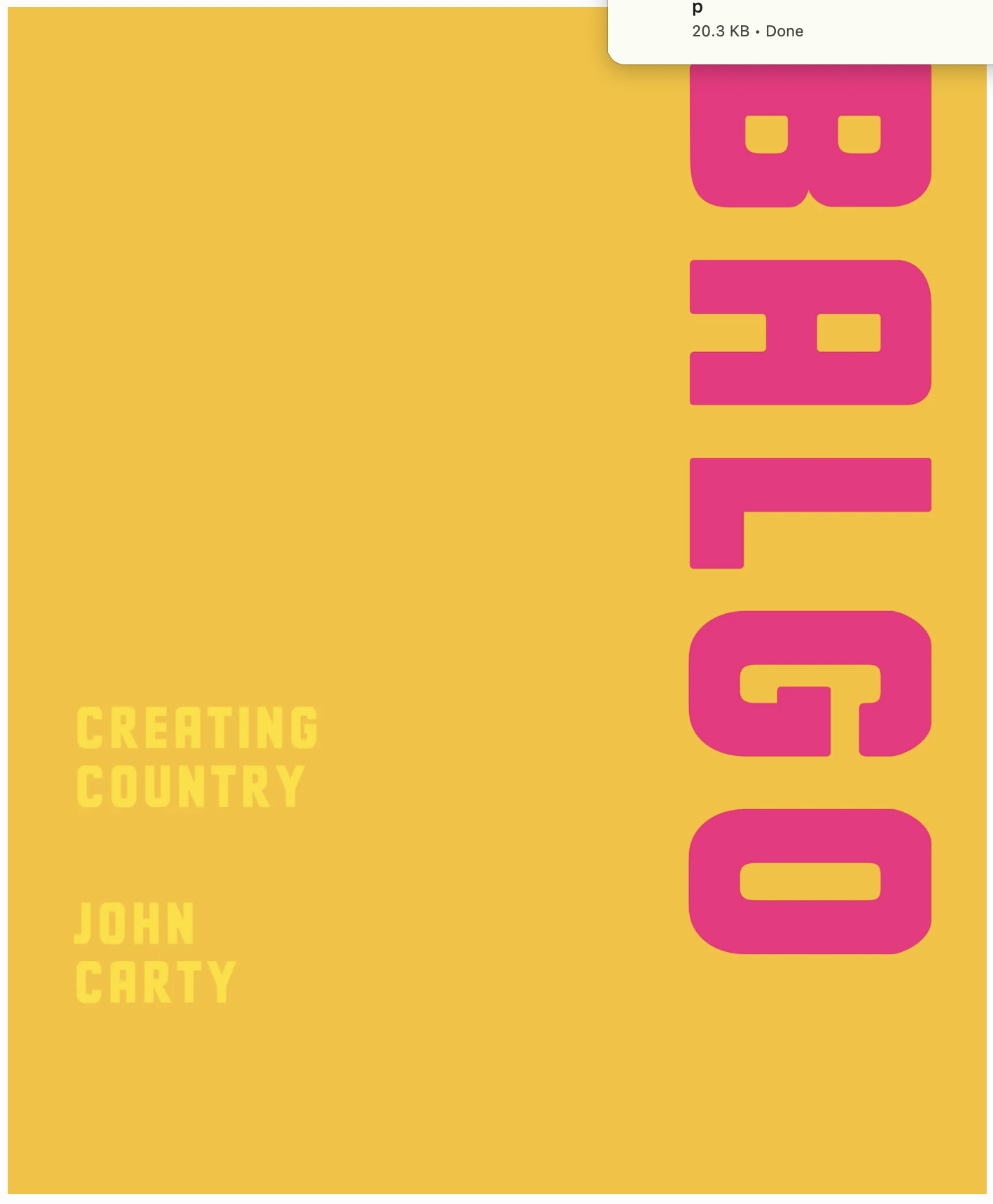
The CMA Book Award for 2024 is awarded to Balgo: Creating Country by John Carty, published by University of Western Australia Publishing in 2021.
The Nomination for Balgo: Creating Country highlights Carty’s skill in combining a rich ethnographic account with the methods of art history and an appreciation of the importance of collections and archives. Drawing on vast sources, Carty studies Balgo art from various perspectives, including art history, anthropology, economics, religious study, statistics, and gender studies. Balgo: Creating Country seamlessly integrates an art historical understanding cultivated through the study of changing forms over time with an understanding of the social processes represented in those changes, made known through sustained and ethical research relationships.
Balgo: Creating Country is the fruit of years of original research with close and insightful examination of Balgo art, history, individual experiences, community life, and the living world. It situates desert art and the creative process in complex historical, economic, and political dynamics. Balgo: Creating Country successfully navigates the scale of art practices, attending to over 15,000 artworks all the while being attentive to the artists at a very human scale. A distinguishing and innovative aspect of the book is Carty’s use of kinship relationships and kin diagrams to analyse and demonstrate the aesthetic and stylistic relationships between paintings over time.
CMA’s Book Award Committee wholeheartedly agreed with the Nomination that Balgo: Creating Country “exemplifies the unique contribution museum anthropology as a discipline is able to make to the understanding of world art, by challenging received Western categories yet at the same time bringing different art histories into dialogue with one another.”
Upon learning of the Award, Balgo artists shared this message with CMA:
“We are very proud of this book, and we are happy that other people can see its importance through this award. Our art is more than art, more than painting, it is our Country – who we are as people. It takes a lot to see what we are painting. This book tells that story: from the early days before whitefellas, to the mission days, and now today, where we are strong people who have built a new life for ourselves in Balgo. That’s what’s in our painting. It’s a big book, but it tells an even bigger story. (Warlayirti Artists, Balgo, Australia.)”
Miami tradition bearer and Allen County Resident Dani Tipman (center) being recognized by Jon Kay (left) and Scott Willard, NAGPRA Program Director for the Miami Tribe of Oklahoma. In addition to being an Indiana Heritage Fellow (2021), Dani was recently recognized with a national Taproot Fellowship.
On Friday evening on the Indiana University Bloomington campus in Maxwell Hall, Traditional Arts Indiana hosted a moving and inspiring celebration of the state’s grassroots arts and cultures. Specifically, the event celebrated the work of an impressive roster of masters and apprentice teams carrying forward a rich array of art, craft, and performance forms. At the same time, a wonderful cohort of Indiana Heritage Fellowship Awardees were acknowledged and given the spotlight. These days I am more likely to cry tears of grief when on my own campus, but this was an evening that, by the time it reached its zenith, had my tearing up with tears of thanksgiving. What I know is that scenes just like this take place around the United States year-round (but not often enough) and that this happens because academic folklore studies departments and programs like mine train students to do the good work to make such programs happen and that all of us are supported in this work by the American Folklore Society.
The event in Maxwell Hall was overflowing. I arrived a bit late and worried that I would have to stand for a few hours—as some wound up doing—but I (as is so often the case) was lucky and the amazing Jenny Yang, a fellow Bloomington resident and herself a marvel and a multi-tradition bearer, flagged me over to an empty seat next to her. Not having visited with her since the end of the Mathers Museum and the onset of COVID, it was such a treat to chat with her before the formal program began. Along with her late husband James, Jenny has been a stalwart supporter of, and participant in, the programs of TAI. They were valued supporters and friends of the MMWC too, featured in exhibitions and programs at the museum.
While Jenny and I visited and traded stories and I asked her questions about mahjong, the edges of the room bustled with craftspeople and artisans demonstrating and discussing their work. To the left at the front of the room, a who’s who of Indiana musicians, together with some of their apprentices, were seated in an oval, jamming and filling the room with beautiful music played on fiddles, guitars, banjos and mandolins.
At the appointed hour, Jon Kay (Director of Traditional Arts Indiana) went to the podium to begin the formal program. I won’t do justice to it all here, but I want to identify the honorees, as the diversity and excellence that they represent speak to what is best about the state of Indiana, and by extension, life in the United States.
While it may be open for a bit longer for logistical reasons, Friday was the official finale for the exhibition A Culture Carried: Chin Basketry in Central Indiana (also presented by TAI in Maxwell Hall). This exhibition was simply excellent—rich, detailed, beautiful, well-informed, surprising to the uninitiated. In this context, the program began with special recognition of the Chin tradition bearers in the room. The delegation from Chindianapolis included weavers and weaving learners from the Winding Wednesdays group, as well as the two basket makers featured in the A Culture Carried exhibition, Pu Ngai Chum and Reverend Ceu Hlei, with members of their families. (To get background on the exhibition and its contexts, see my earlier post where I pose five questions to Jon about it.)
For most of the individuals recognized, displays and demonstrations happening before the awards ceremony itself served to showcase them and their disciplines, but for the musicians recognized, there were brief opportunities to hear and see performances during the awards ceremony itself.
The 2023 and 2024 Apprentices and masters recognized were:
Sam Bartlett (of Monroe County) and his apprentice Patrick Blackstone, supported in the transmission of mandolin playing (they sounded great!) [2023]
Tony Dickerson (of Marion County) and her apprentice Verna Moore, supported in the transmission of quilting [2023]
Emily Guerrero (from Allen County) and her apprentice Avery Guerrero, supported for the transmission of ofrenda making [2023]
Pi Hniang Ki (from Marion County) and her apprentice Anna Biak, supported for the transmission of Chin weaving traditions [2023]
Natalie Kravchuk (from Monroe County) and her apprentice Gabriela Coolidge, supported in the transmission of Ukranian American pysanka making [2023]
Denzil McMim (from Harrison County) and his apprentice Rebekah Carrol, supported in the transmission of wood chain carving [2023]
Joe Rice (from Tipton County) and his apprentice Matt Kenyon, supported in the transmission of Indiana glass arts [2023]
Peggy Taylor (from Posey County) and her apprentice Taylor Burden, supported in the transmission of Indiana loom weaving practices [2023]
Jannie Wyatt (from Allen County) and her apprentice Dee Chambers, supported in the transmission of quilting [2023]
Marlene Gaither (from Floyd County) and her apprentice Danny Gaither, supported in the transmission of rag rug weaving [2024]
Larry Haycraft (from Pike County) and his apprentice Cameron Burkhart, supported in the transmission of net making [2024]
Kwan Hui (from Hamilton County) and his apprentices Kevin Quang and Quan Nguyen, supported in the transmission of Lion Dance performance [2024]
Shaomin Qian (from Hamilton County) and his apprentices Shaojuan Jia, Jin Lu, Sen Li and Yijun Wang, supported in the transmission of Chinese seal (stamp) carving [2024]
Jim Smoak (from Washington County) and his apprentice Graham Houchin, supported in the transmission of banjo playing (they sounded great!) [2024]
Becky Sprinkle (from Laurence County) and her apprentice Brittany Campbell, supported in the transmission of local music jam organizing (they sounded great!) [2024]
Pi Nah Sung (from Marion County) and her apprentice Awi Nung, supported in the transmission of Chin weaving traditions [2024]
Jena Visel (Spencer County) and her apprentice Donna House, supported in the transmission of Eastern Orthodox-tyle icon painting [2024]
Recognition of these masters and their apprentices was so moving and inspiring for me and for, I think, almost everyone in attendance. They represent the pursuit of excellence. They remind us that knowledge and value exist everywhere, not just on university campuses, big city galleries, and in corporate headquarters. Together with the Heritage Fellows to whom I turn next, they represent the true diversity and strength of my adopted home state and the United States as a whole.
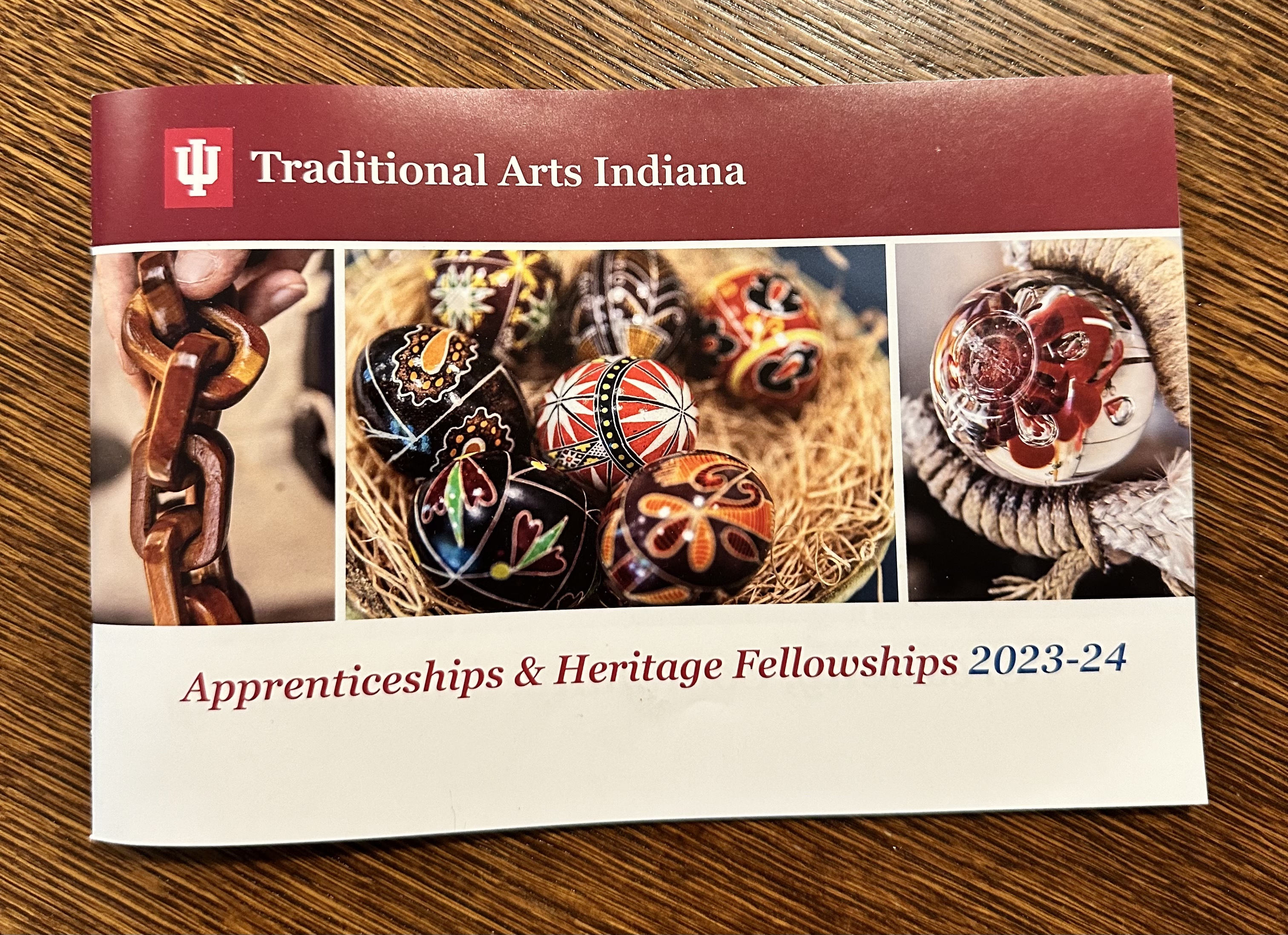
An image of the published book featuring the Indiana Heritage Fellowship recipients and Apprenticeship Teams for 2023 and 2024.
The 2023 and 2024 Indiana Heritage Fellows were recognized next, by Jon Kay, here with the help of Indiana Arts Commission Executive Director Miah Frazer Michaelsen. They honored the following Hoosiers:
Stephen and Nancy Dickey (from Orange County), in recognition of their excellence as fiddle and banjo musicians (This TAI event took place on Friday evening of the Lotus World Art and Music Festival, named after Stephen Dickey’s father Lotus Dickey.) [2023]
Helen Kiesel (from Vanderburg County), in recognition of her excellence as an accordion musician [2023]
Dick Lehman (from Elkhard County), in recognition of his excellence as a potter and for his role in building up Michiana pottery as a regional pottery tradition [2023]
Larry Haycraft (from Pike County), in recognition of his excellence as a net maker [2024]
Kwai Hui (from Marion County), in recognition for his excellence in lion dance and his role as a tradition bearer in the Central Indiana Chinese American and Asian American communities [2024]
A high point of the evening was when Jon announced that 2021 Indiana Heritage Fellow Dani Tippmann, who carries forward the traditional plant knowledge, and associated craft practices, of the Miami Nation was recently announced as a 2024 Taproot Fellow. This program—the Taproot Artists and Communities Trust is “dedicated to honoring and uplifting accomplished US-based traditional artists who serve as community leaders and catalysts for social change in the United States. This initiative is funded by the Mellon Foundation. It is a new national program of the Alliance for California Traditional Arts.” It provides $50,000 fellowships accompanied by $10,000 community project grants for tradition bearers such as Dani.
If you do not see the pattern here, let me call it out directly. Modest state-level master-apprentice programs such as those undertaken by TAI and its peers around the country not only help strengthen artistic and cultural life in local communities, they are also a small investment that pays dividends in the lives of both older and younger adults who are committed to their communities and to the cultural heritages that make those communities livable. Some of those involved will be further recognized in programs like the Indiana Heritage Fellowship program. That recognition, which means a tremendous amount for those so recognized, can also be a springboard for national awards, recognitions, and investments, as is the case with Dani Tippmann’s Taproot Fellowship or with those who go from being recognized on a state level to being recognized as National Heritage Fellows by the National Endowment for the Arts.
Per capita, Indiana and its state peers around the US invest microscopic amounts in the folk and traditional arts, but those investments, and especially the still tiny investments made at the state level by the National Endowment for the Arts, do an extraordinary amount of good. These investments help make life meaningful, make life bearable, in rural places, suburban places, and urban places around the U.S. They recognize and strengthen life in Indigenous communities and in the lives of diverse other communities—Latinx, African American, European American, Asian American, refugee, old settler, immigrant, etc. As reflected in the county shout-outs above, there is no corner of the state of Indiana that Traditional Arts Indiana (meaning just one half-time director and two half-time graduate assistants and some hourly and intern helpers) are not positively impacting.
The infrastructure and mutual support networks that make this possible have never been strong enough, but they are presently being weakened concurrently on many fronts. And they face still greater threats on the horizon. Organizations and activities that get rural good ole boys and refugee weavers, African American matrons and Mexican American kids in the same room and on the same page are getting fewer and fewer. In a society returning to bad habits of political violence and renormalizing xenophobia and other pathologies, joyful, plural spaces such as Maxwell Hall last Friday night are precious and all who see the value in them need to rally to defend them, and the academic programs, scholarly societies, funding agencies, and public humanities organizations that underpin them.
Helen Kiesel, pictured standing and playing an accordion, was recognized as a Indiana Heritage Fellow for 2023. Fellow Heritage Fellow Stephen Dickey can be seen joining her performance on fiddle. Helen Kiesel is from Vanderburgh County in far southwest Indiana and Stephen Dickey is Orange County in the center of far southern Indiana.
There was much to move me, but it was Stephen Dickey asking if he could join in on fiddle with Helen Kiesel’s accordion demonstration that brought tears to me. I knew they’d be great together, but I also knew what awaited me outside Maxwell Hall on my walk home—rock classics blasting from fraternity houses where the front-lawn beer pong* was going to be, and was, well underway. For a moment, Jon Kay and his students and the amazing people they support gave me the world I want rather than the world that, most of the time, I have.
*Yes, I know that beer pong is folklore and folklife too.
Chin weavers and weaving students being recognized during the awards ceremony hosted by Traditional Arts Indiana, October 4, 2024.
I am eager to share the following call for CMA award nominations. Check it out and nominate the wonderful colleagues in your world. –Jason
Michael M. Ames Award
The Council for Museum Anthropology is seeking nominations for the Michael M. Ames Award for Innovative Museum Anthropology. The award is given to individuals for an innovative project in museum anthropology. Examples include: outstanding single or multi-authored books or published catalogues; temporary or permanent exhibits; repatriation projects; collaborations with descendant communities; educational or outreach projects; multimedia works, and other endeavors. Individuals can be nominated by any member of CMA (self-nominations are not permitted). Deadline for submissions is August 1, 2024.
The Council for Museum Anthropology is seeking nominations for the Lifetime Achievement/Distinguished Service Award. The award recognizes CMA members whose careers demonstrate extraordinary achievements that have advanced museum anthropology. These achievements might include: collections work, community collaborations, exhibitions, publications, public programming and outreach, teaching, policy development, etc. While many anthropologists distinguish themselves through their works, this award is meant to single out those who, over the course of their careers, have truly helped to define and or reshape the field of anthropology in and of museums. Nominees are expected to have spent at least 20 years working in the field of museum anthropology. Deadline for submissions is August 1, 2024.
Please note that the Lifetime Achievement/Distinguished Service award was awarded in 2023 and is usually done on a biannual basis. Nominations may be carried over and considered for an award in 2025.
The Council for Museum Anthropology is seeking applications for the CMA Student Travel Award. The award is designed to support graduate student travel to the annual AAA meeting to present papers and/or posters. Students and recent graduate degree recipients (those who have defended within the year of the award) are eligible to apply. Each year, CMA will award two prizes of $1000 each. The deadline for submissions is August 1, 2024.
The Council for Museum Anthropology is seeking nominations for the CMA Book Award. The award was created to recognize and promote excellence in museum anthropology, and is awarded to a scholar within the field of museum anthropology for a solo, co- or multi-authored book published up to five years prior to the award date, and will be considered for the award 2 years after nomination. Edited books will not be considered. The CMA Book award will be given to the author(s) whose work is judged to be a significant and influential contribution to museum anthropology. Books that did not receive the award but are considered exceptional will receive honorable mentions at the award ceremony at the AAA Annual Meeting.
An Indiana University event known as #IUDay is nearly here. Scheduled for Wednesday, April 10, 2019, #IUDay is a celebration of Indiana University. It is a day of special events, of sharing stories of the university, and for gathering together friends and supporters to work together to achieve special goals. Last year, in the days right before, and on, #IUDay, sixty-one friends donated to the Mathers Museum’s first #IUDay crowdfunding campaign. Working together, they contributed funds to enable us to launch Traditional Arts Indiana’s Indiana Heritage Fellowship program. Ours was a successful first effort. It was so successful that the Indiana University Foundation encouraged us to take on two campaigns this year, a fact that means that we are seeking to raise more than double the level of funding we received last year. This is an exciting prospect, but it is also daunting. I hope that everyone who reads this post can help us meet our goals. They are good goals. Let me describe them.
Building on the success of last year’s effort launching the Indiana Heritage Fellowship program, we are this year seeking support for its companion program, also new. This is the TAI Master-Apprentice program. The goal here is $2500 and, as of the moment that I am writing this, we have raised $567 from 11 generous donors. With two days to go, we really need your help. Please consider making a gift large or small. Last year 61 donors supported our efforts and we are eager to (=need to) increase this number this year. The good news is that, when successful, this effort will do great work across Indiana communities, providing resources and support for diverse tradition bearers to transmit their skills and knowledge to eager apprentices. This work benefits Indiana communities, the state and ultimately the whole country. If you would like to learn about the first class of TAI masters and apprentices, check out this year’s booklet and learn about the beadwork artists, netmakers, drummakers, ironsmiths, and ballet folklórico performers working together this year.
Our other campaign aims to fund K-12 field trips to visit the Mathers Museum on campus in Bloomington. Field trips are an impactful highlight for most school students, but they have become increasingly rare for most students, as budget cuts continue to take their toll. Visits to the Mathers Museum introduce students to cultural diversity worldwide and in Indiana and the US. Museum visits also introduce students to the commonalities of the human experience and to the disciplines–folklore studies, anthropology, ethnomusicology, history, etc.–that build up our understandings of human existence, past and present. As of the time of this writing, this campaign has gathered $1220 from 18 friends of the museum. Here too our goal is $2500, thus we need your help in this effort also. (This funding will enable us to provide the funds that schools need in order to come to the museum and engage with our programs and exhibitions.
Thanks to all who have given so far. Thanks to all who will consider giving. Whether you give or do not give, please, please share these links online and urge others to support the museum’s work. When an #IUDay link is shared online it results in an average of $97 dollars in support, so even if you cannot give $10 or more dollars now, you can help the museum and these worthy projects by spreading the word.
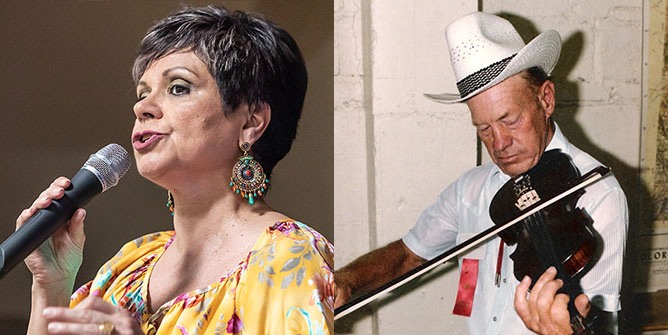
Debra Bolaños (left), a ballet folklórico dancer and instructor in East Chicago, Indiana, and Harold Klosterkemper (right), a fiddle player from Decatur County, Indiana, will soon be honored for their lifetime achievement as Indiana traditional artists. They will be recognized as Indiana Heritage Fellows in a special ceremony on April 27, 2019. Learn more about the event here.
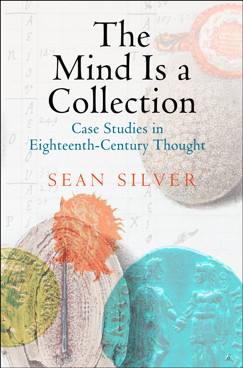
On September 22, 2016 Indiana University’s Center for Eighteenth Century Studies held the 2016 Kenshur Prize celebration at the Mathers Museum of World Cultures. The museum was an especially appropriate setting because the prize winning book was The Mind is a Collection: Case Studies in Eighteenth Century Thought(University of Pennsylvania Press, 2015) by Sean Silver (English, University of Michigan). It was an honor to be asked by Center Director Rebecca Spang to join a panel of discussants of Silver’s book. What follows here are the remarks that I prepared for this occasion. Those paragraphs preceded by XX were not read in oral presentation but are noted here. Silver’s book, and companion digital exhibition, are an important contribution to material culture and museum studies, in addition to being significant in the fields of Eighteenth Century Studies and the history of ideas. My notes here presume a context present at the event but absent here–a general introduction to the author’s work and project, relevant commentary by the author, and commentary by my colleagues on the panel (who were chosen to represent a diversity of relevant perspectives on the book and project). I preceded my own remarks by welcoming the students and faculty of the Center to the museum and congratulating Sean on this important recognition for his book and exhibition.
***
I lack sufficient knowledge of the science, history, culture, and literature of this period, as well as of the relevant parts of cognitive science, to knowledgeably engage the heart of Sean’s remarkable work. Reflecting it central organizing device and thematic concern though, the project’s literal and conceptual organization as a museum-minded exhibition of museum mindedness does offer me a way in. I fear though that I have proven to be one of those rushed museum visitors trying to squeeze in a stop at the big city museum while in route to the airport, roller bag in tow. Passionately interested and markedly impressed, but also nervous and feeling pressed for time, here are a few reflections on my hurried visit. They address smaller vitrines and displays around the edges rather than the main exhibition hall with the core of the story. In the end, such sites of engagement are, of course, a specialty of my own field of folklore studies.
I was struck by the degree to which this is a book and digital exhibition (among the most sophisticated that I have encountered) of our moment. This is not in itself a complete surprise, of course (all of our writings would similarly qualify in degrees), but it does warrant closer acknowledgement. Those who work in museums have a love/not-love relationship with the museum-ification of everything that western societies (and others as well) are in the midst of right now. This is easiest to see in the proliferation of settings in which the word curator is made to apply. TED talks are curated as are meals, fashion shows, and car insurance options. What Barbara Kishenblatt-Gimblett speaks of as the curation of the life world is manifest in the extreme when we speak of curating’s one’s own person brand through, for instance, one’s social media engagements. When it comes to more-than-just-museums curating, there are many very cool things happening on this front in The Mind is a Collection—both the book and the digital exhibition. Like I am, Sean is a part of the zeitgeist. He has interests and passions that are socio-culturally and historically conditioned and he knows the mood of the present so as to anticipate the interests of his readers; but at the same time, his book is fundamentally about the curation of the life world and is a valuable reminder that there is much more to this than a present-day sensibility. I loved learning about the degree to which the curatorial style was a past-day sensibility for learned London, if not for the mass of the city’s residents. Something special happens when a well conceived, well executed project is perfectly calibrated between the ethos of its present and the ethos of the other time or place or context with which it is concerned. Such dynamics could be investigated in any scholarly project, but here they just ring clear as a bell for me.
XX Another instance of this calibration of then and now ethoses concerns what here at IU we call—as reflected in our strategic plan, for instance—“a culture of making.” Even when Sean is discussing unfamiliar matters, I sense that nearly any practicing museum curator would swoon in response to his manifest love of objects, particularly in their status as manifestations of craft. This is a book and digital exhibition for material culture specialists, even if it deals with materials and concerns not uniformly familiar to the most established material culture disciplines. But outside the scholarly realm, ours is a moment of craft in countless guises, from molecular baskets concocted in materials engineering laboratories to yarn bombing on the streets of Bloomington. I have a friend who crafts artisanal reproductions of the earliest telescopes—the kinds of objects that would seemingly belong in the cabinets of Sean’s subjects. As my own students are documenting ethnographically in a wide range of domains and as the programs of the Mathers Museum reveal, a significant portion of our fellows of the present are in love with the hand made thing and, sometimes, with making things by hand. Such enthusiasms surely persist in a core of actors in each period and place, but they also go in and out of wider fashion. Ours is a maker-minded moment and this is an engaging book and digital exhibition written about the maker-minded living in another maker minded-moment by a maker-minded author. My pleasure again arises in part from the parallelisms found here. I also look forward to learning more about Sean’s in-progress work The Crafts of Enlightenment.
Figure: The landing page for Silver’s digital exhibition The Mind is a Collection.
XX For the social scientific reader, I also think that this book and digital exhibition participates in the contemporary conversation in the human sciences in a novel and interesting way. Like other particularly noteworthy works of our moment, it is a book about the recursive entanglement and co-constitution of humans (as individuals and in groups), objects, and ideas occurring together in particular environments. (For instance, consider Anna Tsing’s The Mushroom at the End of the World.) Its central concepts are shared keywords of our moment: design, complexity, network, embodiment, scale… Such matters interest many of us broadly, but in Sean’s project I find that they are being approached in fresh and new ways that I can happily begin carrying back into my own disciplinary conversations. His website and book are just the kinds of works that I could recommend to the graduate students with whom I work, as an anecdote to conventional approaches to conventional topics addressed with the help of canonical works. Put another way, the book and website engage shared interests in fresh ways. I say this from the perspective of someone who teaches a graduate course on Theories of Material Culture. I would welcome the challenge of working with students in that course in study of The Mind is a Collection.
XX The term material culture arose in the disciplinary context of anthropology. It fits and doesn’t fit in that field in a number of different ways in different times and places. In one now moribund American formulation, material culture was part of a triumvirate that also included mental culture and social culture. The phrase material culture persists despite our shedding of these two companion terms. During the height of ideas and symbols-centric anthropology, material culture studies faced hard times in social and cultural anthropology. Folklore studies became a key contributor to the study of material culture during the time of its neglect in cultural anthropology. Today, matters have changed again and material culture is front and center in anthropology and anthropologists face a changed landscape outside their field. The English Department at the University of Michigan has a nice website. When looking at the department’s faculty, one can sort them easily by research interests. In the past, but even today, many cultural anthropologists would be surprised to see that material culture is one of these departmental research foci. They would be even more surprised to see that twelve core faculty members in English—Sean among them—identify with this interest. The same dynamic is now active in many fields lacking deep histories of work in this area. Those who long studied material culture alone in a tiny disciplinary node now operate in a field that is broad and deep. Sean’s book arrives in this new context, one that is driven home each day when my editorial assistant and I open envelopes containing books sent to Museum Anthropology Review for review. If a skeptic asked me for an illustration of what a scholar of English could contribute to the material culture studies commons, The Mind is a Collection offers an incredible answer. But it also reveals the newer challenge for anyone working in material culture studies—this interdisciplinary field is now vast and sophisticated beyond the practical ability of most practitioners to keep up. Material culture studies has entered a new era.
Figure: The cover of The Mind is a Collection (Penn Press, 2015).
Let me close with a reflection on “thinkering” this is a great word prominent in a great project. In the contexts in which it comes up here, this neologism caused me to think of a pronouncement that I always make when discussing the pleasures of being a curator. It comes up sometimes when I am discussing careers with graduate students. It always comes up in my graduate course in Curatorship, and it certainly has popped out when a non-museum friend or colleague finds me at work cleaning a vitrine with Windex or measuring a gallery wall with a tape measure. What I have said countless times is that the special pleasure of being a curator is that it is the perfect mix of brain work and of hand work—hammering one minute, studying in next. Now this dualism participates in exactly the problematic conceptualizations that are at issue in Sean’s study, but he is generous and, in my reading, he gives our folk psychology back to us and lets us get on with the work. While he holds a professorship and not, to my knowledge, a curatorship, it is a pleasure to have engaged with the work of someone whose brain work and hand work are so well integrated and so well executed. I hope that soon Sean will get the chance to build a physical exhibition to go along with his book-as-catalogue and his digital exhibition.
Award Committee Chair Nora Pat Small recently noted for me the Paul E. Buchanan Award from the Vernacular Architecture Forum (VAF). What is so cool about this award is that it recognizes outstanding work in vernacular architecture studies that takes one of many forms that are NOT books or articles. Check out the award information page and the list of past winners. Then send your nomination materials to Professor Small at Eastern Illinois University.
There is way too much stuff going on in my life and work these days. Most of it is really good stuff, but it is hard to keep up. Before moving on to new reporting, here are some good news highlights from recent weeks.
Colleagues and I shepherded into print the 50th volume (=golden anniversary) of the Journal of Folklore Research, for which I serve as Interim Editor. JFR 50(1-3), a triple issue (!), is a special one titled Ethnopoetics, Narrative Inequality, and Voice: The Legacy of Dell Hymes and is guest edited by Paul V. Kroskrity (UCLA) and Anthony Webster (Texas). The guest editors contributed a post about the issue for the IU Press Journals Blog and the triple issue itself is can be found on the Project Muse and JSTOR digital platforms. Thanks to all who have supported JFR over its first five decades.
The Open Folklore project recently released a new version of the OF portal site. The new site incorporates a range of new features and is built upon the latest version of Drupal. I hope that it is already helping you with your own research efforts. If you have not seen it yet, check it out at http://openfolklore.org/
The new issue of Ethnohistory is out and it includes a generous and positive review of Yuchi Indian Histories Before the Removal Era. The reviewer is Marvin T. Smith, author of several key works on the archaeology and ethnohistory of the Native South. Find it (behind a paywall) here: http://ethnohistory.dukejournals.org/content/60/4.toc
A while back, the Mathers Museum of World Cultures opened a fine exhibition curated by IU Folklore graduate student Meredith McGriff. It is Melted Ash: Michiana Wood Fired Pottery and it is a sight to behold. If you have not seen it, stop by the museum and check it out.
Open Access week just kicked off and there are a lot of activities planned for the IUB campus. To get things started my friend and collaborator Jennifer Laherty did an interview with WFHB. It is about 8 minutes long and it can be found on the station’s website: http://wfhb.org/news/open-access-week/
The very talented Bethany Nolan was kind enough to talk to me about Yuchi Folklore and to write about our discussion for her Art at IU blog.
The Euchee (Yuchi) Tribe of Indians just held its 17th (!!!!) annual Heritage Days festival. A few years ago a Miss Yuchi/Euchee was added to the festivities and the young women chosen have been great representatives of their nation. This year another awesome young woman was selected. Congratulations to A.S. on being selected for this big honor and big responsibility.








 Shreds and Patches