During a semester (and a year, and a period) filled with woe, my graduate course was one of the most meaningful and rich educational experiences of my career. I jumped with my students into a deep and unfamiliar pool. Thankfully they were excellent swimmers, and everything turned out better-than-well.
For the past ten years I have been trying to learn the scholarly literature related to the mountain-dwelling peoples of Southwest China. More recently, that quest has expanded into concern for the peoples living in similar geographic and social circumstances in the uplands of Southeast Asia, Northeast India, and (not reflected in my course title), upland Bangladesh. I was not trained for work related to this large and complex region and I will never be a specialist, but my knowledge is growing, and the study is very meaningful and gratifying. Working with students—who are becoming specialists in this region—I took the plunge and offered a course to help them and to help myself grow in our knowledge. I am happy to note that that choice was richly rewarding.
The course, offered under the variable title “Highland Peoples of Southwest China/Southeast Asia/Northeast India” (FOLK-F 600 Asian Folklore / ANTH-E 600 Seminar in Cultural and Social Anthropology), gathered in more students that I had expected. I knew that there were enough students eager from the Department of Folklore and Ethnomusicology, but the students from other departments, whom I did not previously know, contributed greatly to the success of the course, just as the folklore studies students whom I knew did.
The main reason that the course succeeded was the knowledge and enthusiasm brought to the course by the students, but a few other factors were also key. One of these was the participation of outstanding guest visitors: Jessica Anderson Turner (American Folklore Society), Mark Bender (The Ohio State University), Patawee Promsen (Naresuan University), Lijun Zhang (George Mason University), and Suvi Rautio (University of Helsinki). I greatly appreciate the contributions that these wonderful specialist colleagues made to our discussions and growth in the course. Another factor that worked well and that I highlight is the series workshops that I sprinkled across the course. In these, the course participants (myself usually included), researched and presented on new-to-us ideas, issues, and research writings of relevance to the course. These presentations were consistently excellent and greatly expanded my (/our) understanding of this vast region, including its peoples and their circumstances. Finally, and this is more familiar, but none-the-less relevant, the readings that we engaged with were excellent.
I will always remember this course. It now sits alongside the first instance of my graduate course on cultural heritage and cultural property (then [2004] variably titled Contesting Culture as Property). Like that course in that moment, this one taught me so much and approached what I think of as the ideal for a graduate seminar. As I research and write, and as I advise and collaborate, I will be constantly drawing upon the work that these students and I pursued together. I am profoundly thankful for their participation in a joint learning effort.
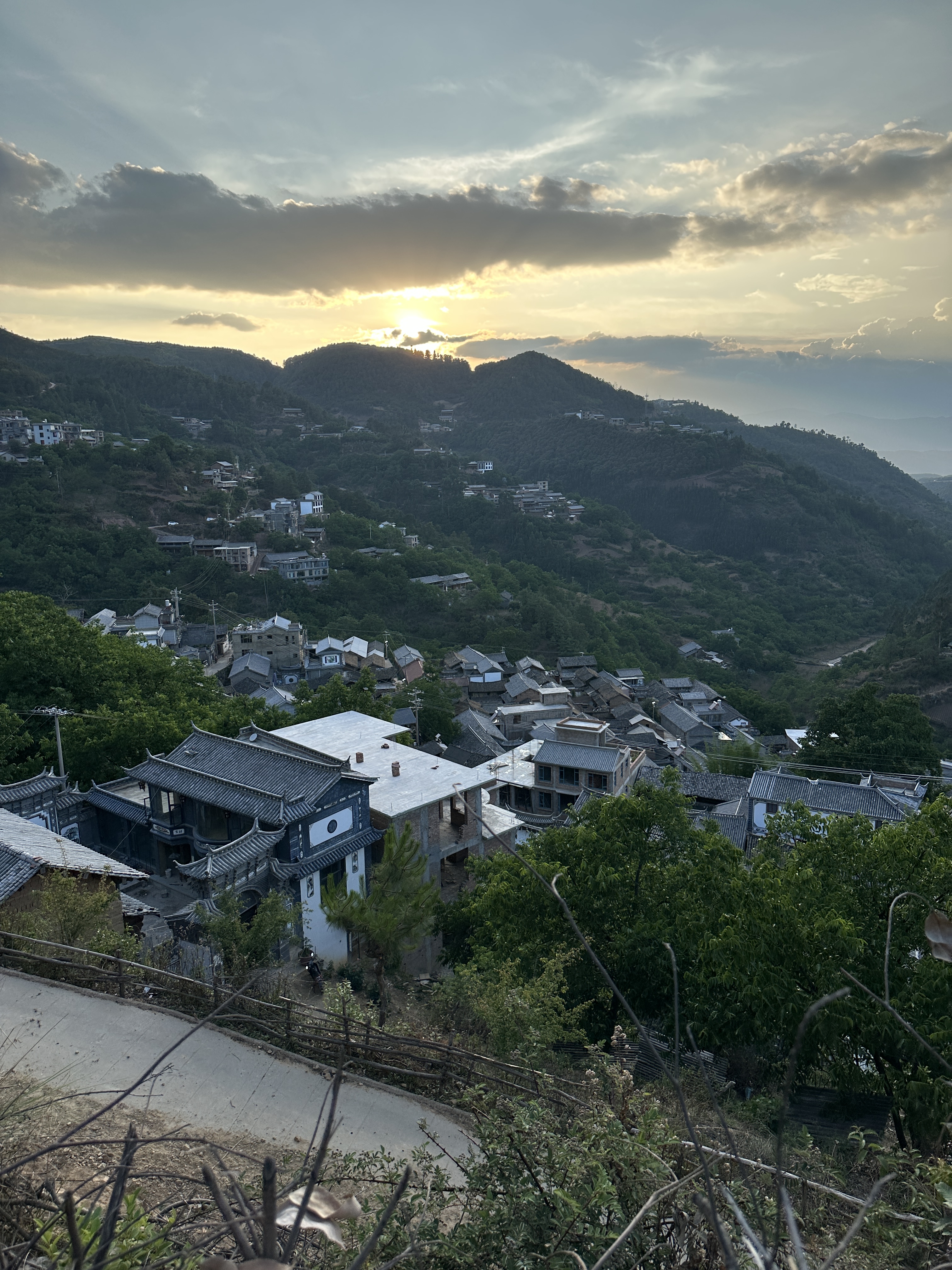
A sunset in Weishan Yi and Hui Autonomous County, China.
Today I published my final editorial as founding editor ofMuseum Anthropology Review. It may be that Museum Anthropology Review thus concludes with volume 17(1-2), now just published. Perhaps instead it will be revived someday by a new editorial team in partnership with the wonderful folks at the Indiana University Press and the IUScholarWorks Program at the IU Libraries. As of now, the search for a new editor or editorial team can be considered concluded unsuccessfully and the journal is either ceasing or pausing publication. I do not need to write a new version of the editorial here. I invite everyone interested in the journal and the fields that it serves to read it (always open access!) for a contextualized back story.
Here I just want to reiterate my thanks to all who contributed to, supported, and encouraged the journal as a project and who supported me as its editor. I also want to reiterate my thanks to the Indiana University Press for supporting my fields—folklore studies and cultural anthropology, including material culture studies—so well. Even though the journal—by design—was not a money making endeavor, the press stood by it and invested in its improvement and its success. Equal thanks go to the extraordinary IUScholarWorks program (now broadened as Open Scholarship) that helped launch the journal and supported it vigorously for its full run.
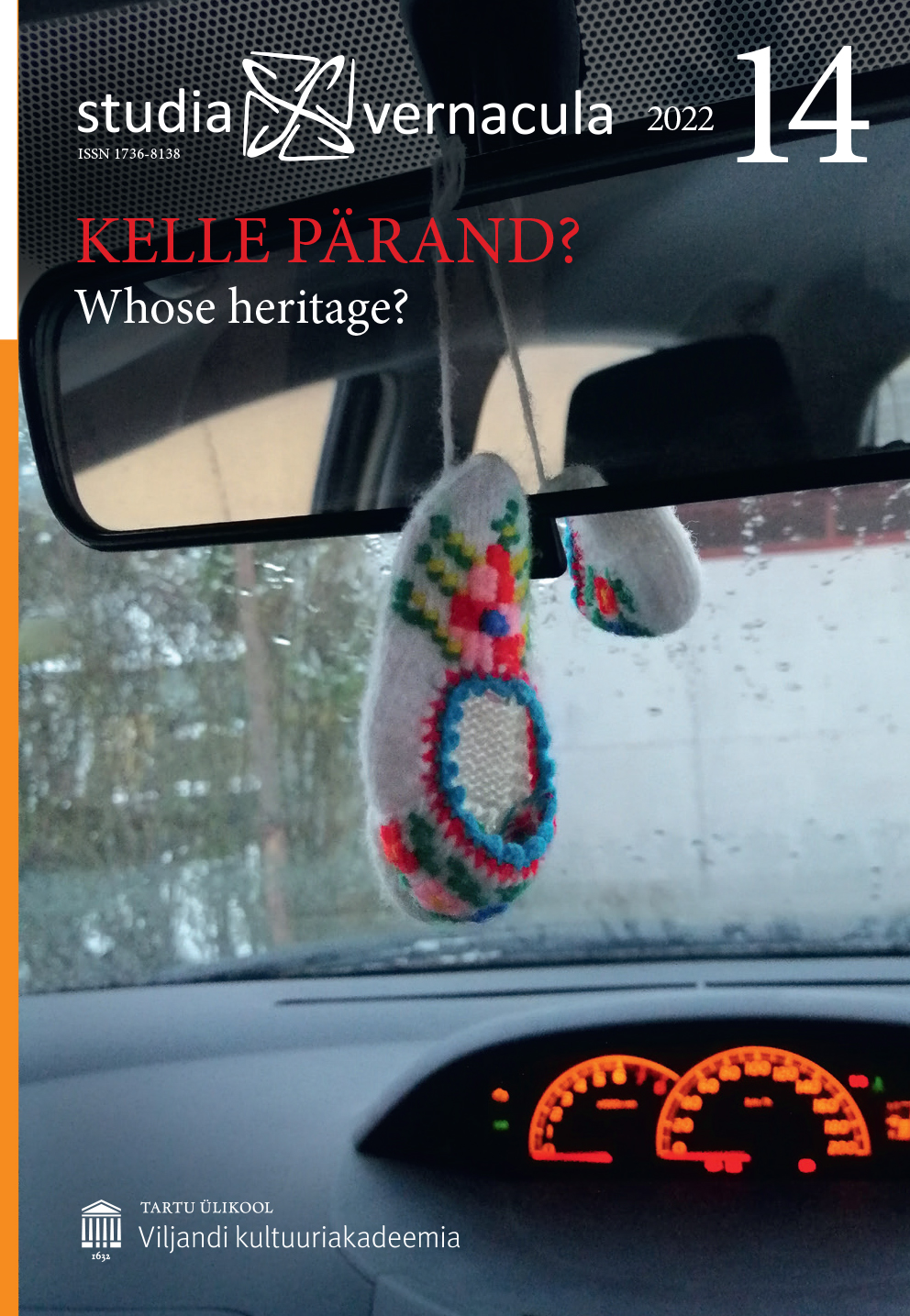
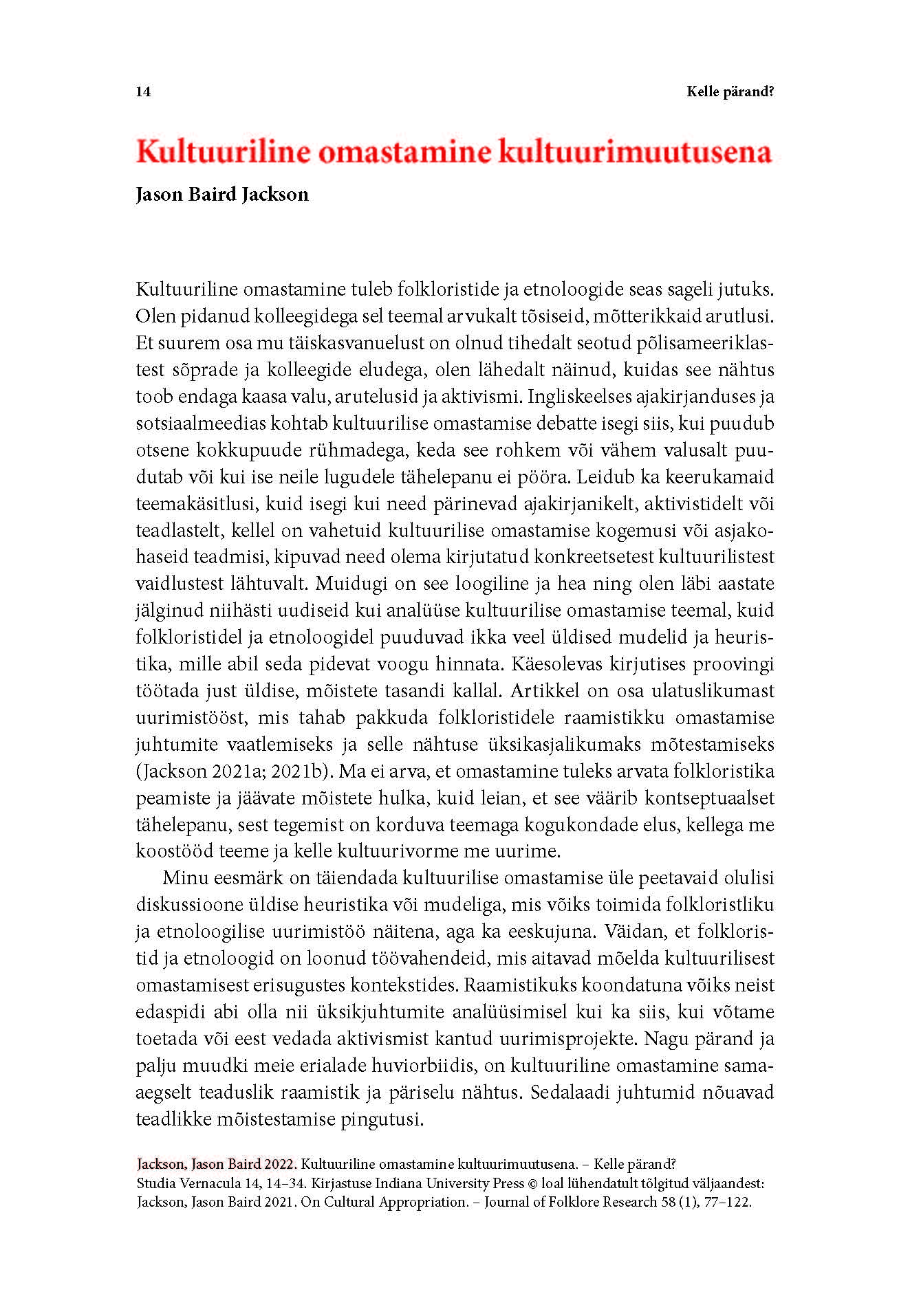
More good news in terms of publication work. I am pleased to share that my article “Kultuuriline omastamine kultuurimuutusena” is now published in Estonian in the wonderful journal Studia Vernacula (see volume 14). This is a translation (minus the case studies) of my earlier paper “On Cultural Appropriation,” which appeared in English in the Journal of Folklore Research (volume 51, number 1 in 2021). Special thanks go to Elo-Hanna Seljamma for work translating the paper, to Kristi Jõeste for inviting me to contribute the paper, and to Madis Arukask for discussing my contribution in an editorial appearing in the new issue. Studia Vernacula is a wonderful open access journal beautifully produced in digital and print form. Even if you do not read Estonian, I urge you check it out with the help of Google Translate or a similar service. So much wonderful material culture studies work appears therein year after year.
I am very happy to note a new co-authored article titled “A Survey of Contemporary Bai Craft Practices in the Dali Bai Autonomous Prefecture, Yunnan, China.” It was jointly written with Wuerxiya (first author), C. Kurt Dewhurst (third author) and Cuixia Zhang (fourth author) and it appears in Museum Anthropology Review volume 16, numbers 1-2. This is the special double issue published in honor of Daniel C. Swan, as noted in an earlier post on Shreds and Patches. The article is based on work undertaken by a much larger bi-national team within the “Collaborative Work in Museum Folklore and Heritage Studies” sub-project of the broader “China-US Folklore and Intangible Cultural Heritage Project,” a collaboration (2007-present) of the American Folklore Society and the China Folklore Society. In particular, it describes work undertaken through the auspices of, and in partnership with, The Institute of National Culture Research at Dali University. Special thanks go to the Institute and its leadership.
Presented as an image is the first page of the journal article “A Survey of Contemporary Bai Craft Practices in the Dali Bai Autonomous Prefecture, Yunnan, China.”
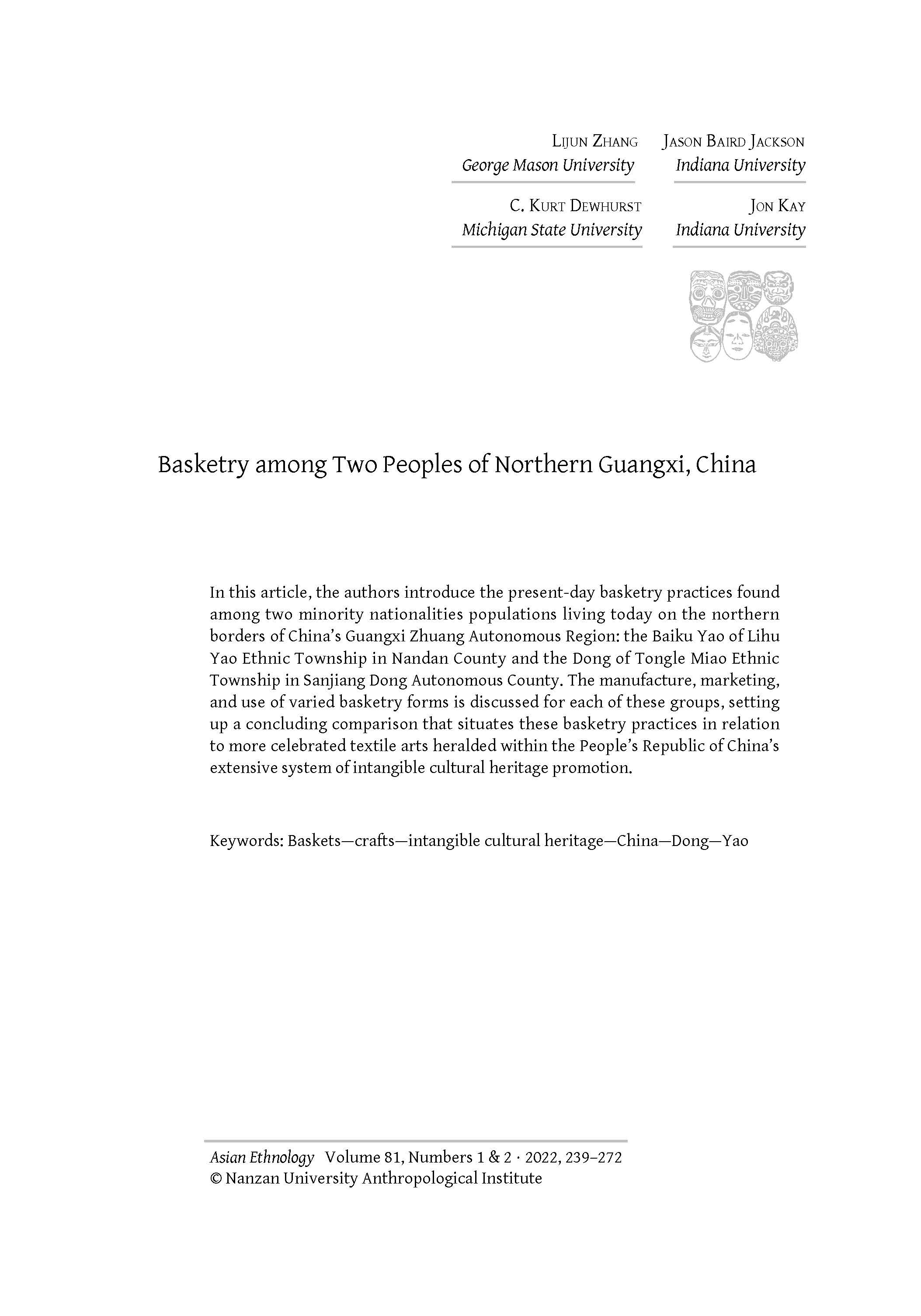
I am very happy to note the publication of “Basketry among Two Peoples of Northern Guangxi, China” in the latest double issue of Asian Ethnology. This article is one that I co-wrote with my friends and collaborators Lijun Zhang (first author), C. Kurt Dewhurst (third author), and Jon Kay (fourth author) and it is based on work undertaken by a much larger bi-national team within the “Collaborative Work in Museum Folklore and Heritage Studies” sub-project of the broader “China-US Folklore and Intangible Cultural Heritage Project,” a collaboration (2007-present) of the American Folklore Society and the China Folklore Society.
I am a huge fan of Asian Ethnology, a wonderful open access journal now in its 81st year. Check out the huge volume that our paper is a part of, Find Asian Ethnology online here: https://asianethnology.org/ and also in JSTOR
A image of page one of the typeset version of the scholarly article “Basketry among Tow Peoples of Northern Guangxi, China” published in Asian Ethnology.
Page one of the article “Towards Wider Framings” as typeset for the Journal of Ethnology and Folkloristics.
I am happy to report that my article “Towards Wider Framings: World-Systems Analysis and Folklore Studies” was published in the Journal of Ethnology and Folkloristics earlier this year. Readers will have the judge the article for itself, but I can’t say enough good things about JEF. Its a wonderful open access journal doing wonderful work in, and at the intersection of, my two fields. Thanks to everyone at the Estonian Literary Museum, the Estonian National Museum, and the University of Tartu who work to make the journal a success.
Social media is changing again and it seems like a good time to give Shreds and Patches more love and attention.
My collaborator and special issue co-editor Michael Paul Jordan and I are very pleased to announce the publication of a new double-issue of Museum Anthropology Review titled Studies in Museum Ethnography in Honor of Daniel C. Swan
Find the new collection in honor of Dan in Museum Anthropology Review online here: https://scholarworks.iu.edu/journals/index.php/mar/issue/view/2153 Thanks to all of the authors, production staff, publishers, peer-reviewers, and helpers who made this collection possible.
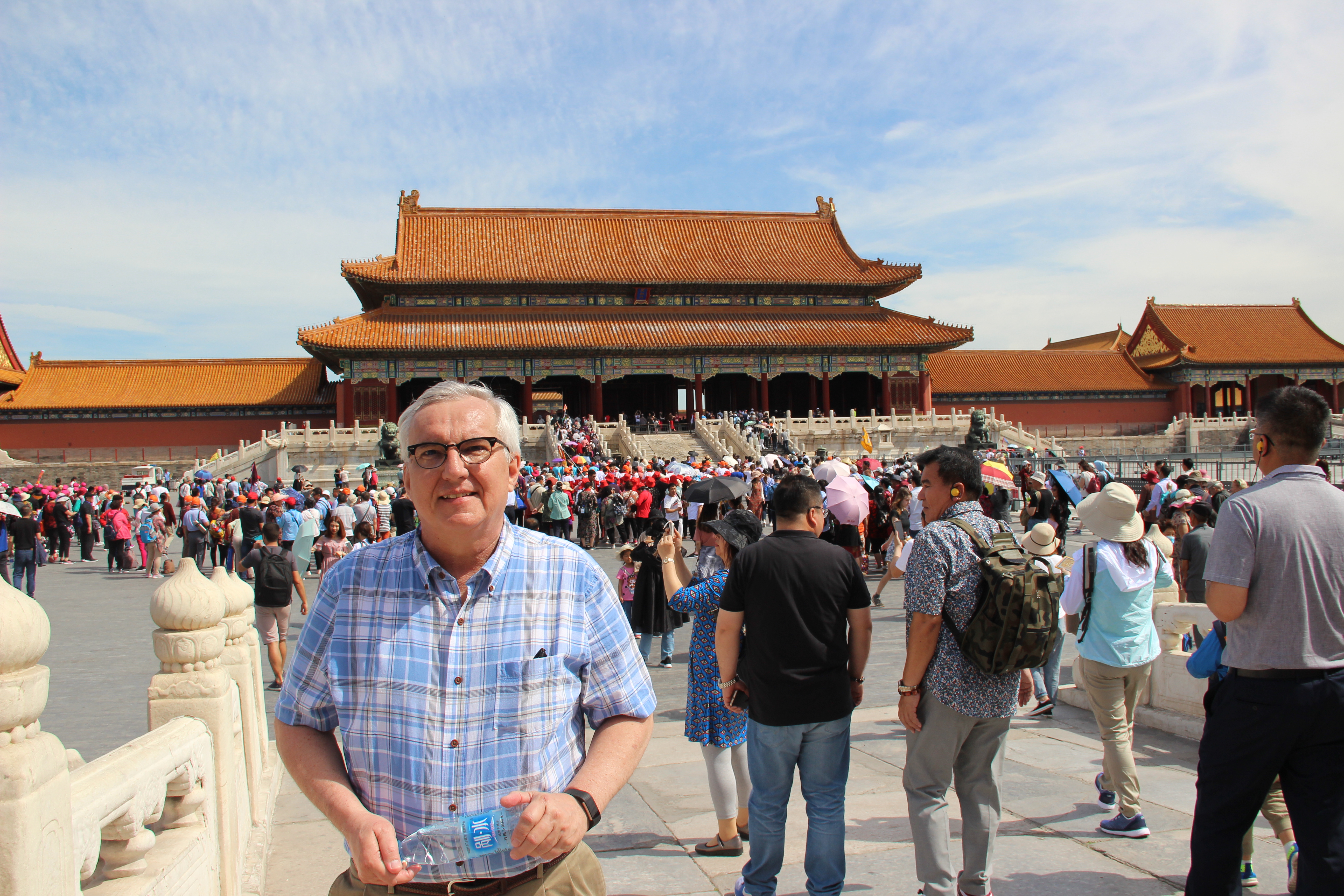
The above image appears in the introduction to the special collection “Studies in Museum Ethnography in Honor of Daniel C. Swan” with the following camption. “In the days following the Seventh Forum on China-US Folklore and Intangible Cultural Heritage and on the eve of the global COVID pandemic, Daniel C. Swan was one of 19.3 million reported visitors to the Forbidden City (a.k.a Palace Museum) in 2019. May 21, 2019. Photograph by Michael Paul Jordan.”
In a fourth series post on the presence and absence of Native American and First Nations studies within the life of the American Folklore Society, I pick up with the meetings of the 1960s. The first post focused meeting presentations during the 1950s. The second post focused on meeting presentations during the 1940s. The third post considered the founding cohort of AFS Fellows and their relative placement among anthropological and literary folklore studies and their relationships to Native American studies.
For AFS members of my own generation, the 1960s is the period in which the present state of the society and of the field as it has been practiced in recent decades in present-day “North America” starts to look familiar. After discussing my narrower by primary interest in the presence and absence of Native American and First Nations work, I will make some general comments arising from study of the conference programs of the 1960s.
I can get the reoccurring observation out of the way at the start. None of the ten (out of 397) presenters sharing studies related to Native North America at the meetings of the 1960s are known to me to have been citizens of Native American or Canadian First Nations. If you know me to be wrong about this, please let me know. (Joann Kealiinohomoku [née Wheeler] is among the presenters in this group of ten, but my understanding is that the [Hawaiian] last name by which she was widely known was a married name.)
Relative to the main topic, I make some observations sequentially and then in a more summary mode. The decade began not only with the start of the Fellows of the American Folklore Society, as noted previously, but with the presidency of William N. Fenton. At the 1960 meeting, there were nineteen regular papers, all on topics outside of Native American studies. The exception was Fenton’s presidential address, which considered Haudenosaunee cosmology and that was published in the Journal of American Folklore (JAF) afterwards. The key thing is that, while he continued to be active as a scholar for many decades to come, he does not again appear on the meeting programs of the 1960s. It is my impression that, like fellow President Erminie Wheeler-Voegelin, he shifted his attention to the American Society for Ethnohistory meetings. (I met him once at the 1993 ASE meetings in Bloomington.)
Gertrude Kurath, who was a regular presenter on Native American-related topics in the 1950s returned to the program in 1963 and two key figures who would remain associated with folklore studies, inclusive of Native American studies, appear for the first time on the programs of the 1960s. Dell Hymes presented once on Native American narrative in 1965 and once on the contributions of folklore studies to sociolinguistics in 1969. Both of these presentations went on to become widely discussed publications. Also emerging in the 1960s is Barre Toelken, who presented variously on non-Native topics and who gave a paper related to Navajo narrative in 1967–the only paper on a Native North American studies topic (out of 57) at that transformational meeting. A fourth leading figure in this cluster is Alan Dundes, who presented one Native North America-related paper in 1964.
There continued to be scholars at the meetings of the 1960s whose work, outside their program participation, sometimes touched on Native American studies topics and who clearly kept up with the field in a general way. Examples include Fred Kniffen, Richard Bauman, and Weston LaBarre.
A noteworthy story for this investigation is the case of (very anthropological) Melvile Jacobs and the 1964 meeting in New York. His presidential address is listed on the program without a title. I could not remember the specifics of it and I looked it up in JAF, presuming that he would have incorporated some of his ethnographic work within it. While he devoted a great proportion of his career to Native North American studies, his presidential paper (unlike Fenton’s) does not touch on this. It is a theoretical assessment of verbal art studies in general, inclusive of, but not limited to, those of folklorists. It will not venture a summary of it, but I think that it can be characterized as quite critical of the field and very anthropological in orientation. It feels like a another key marker in a story of transition to something else. It feels like the end of an era in a way that I cannot put my finger on.
Almost every history of the discipline as practiced in the present-day United States locates key shifts–intellectual and organizational–in the 1960s. I think that that reading is true in general. As related to Native American studies, the 1960s represents a special case. As a concern of members-at-large as represented on meeting programs (and I think also in general) Native American studies topics continued to wane. The 1960s show explosive growth in program participation (concurrent sessions were born in Toronto in 1967), but this sector continues its decline, both proportionally and in terms of total papers. I will leave the Native American and First Nations studies story there, but below the table, I touch on some of the general trends revealed in the programs. These general trends shape the specific ones that I have just noted.
Year
Presentations on Non-Native American Topics
Presentations on Native American Topics
Percentage on Native American Topics
1960
19
1
5%
1961
21
0
0%
1962
15
0
0%
1963 (Emancipation Centennial)
27
1
4%
1963 Special Summer Meeting at Utah State (The West)
21
2
9%
1964
31
2
6%
1964 Special Spring Meeting at Duke
31
0
0%
1965
21
2
9%
1966
38
0
0%
1967
57
1
2%
1968
46
1
2%
1969
70
0
0%
Totals
397
10
2%
Presentations on Non-Native American- and Native American-Related Topics at the Annual Meetings of the American Folklore Society During the 1960s
The preserved program available in IUScholarWorks show two bonus meetings during the 1960s, one held in the spring at Duke University in 1964 and one held at Utah State University in the summer of 1963. Those two meetings were large by the standards of the 1950s and early 1960s and they were a prelude to the growth that becomes obvious in the second half of the 1960s. As noted above, this is when the concurrent panel era opened up. There were two concurrent sessions for most of the meetings of 1967 (Toronto) and 1968 (Bloomington) and 1969 (Atlanta) saw the move to three concurrent sessions.
The 1960s saw other developments. Thematic panels focused on material culture (not just individual papers) become normal in the 1960s. Panel discussions also become common in this decade. (Where panelists had a set title for their assigned discussion topic, I treated these as papers. When a group of names were gathered together under an theme, but without a specific assignment, I did not count them in the totals above.) Students-as-students appear in the 1960s in panels concerned with student topics, although it is clear that students presented classic papers at an earlier point. Perhaps this was not just an outgrowth of the growth of folklore graduate programs but of the student movements of the later 1960s.
For anyone involved in AFS now, the 1960s programs produce a host of debuts for people central to the field in recent decades. For example, Barbara Kirshenblatt-Gimblett, Richard Bauman, Michael Owen Jones, and Henry Glassie are among those who begin appearing in the 1960s. Others, such as Américo Paredes, move from presence in the 1950s to prominence in this decade.
The old AAA/MLA dynamic seems to fully disappear in this decade, although, as today, clearly there were AAA and MLA attendees among those also gathering at AFS meetings. In is place is the stronger and growing presence of people trained in folklore programs who lacked an identities as something other than as a folklorist. The programs of the 1960s are also full of people with complicated and plural professional identities to be sure, but increasingly these diversities were being shaped by complex alignments with fields and interdisciplinary areas such as history, geography, American Studies, sociolinguistics, and semiotics and they were not a clean inheritance of the literature/anthropology binary of the founding decades. In the later 1960s, the AFS meetings (from my point of view) got a lot more interesting but at the same time, and for interconnected reasons, they got a lot less relevant for those whose studies were concerned with the Indigenous societies of the colonized U.S. and Canada.
For the broader issue of actual involvement in the field by Native American and First Nations scholars, the 1960s continued the dismal record already underway in the 1940s and 1950s. As Native American studies went from small to smaller as an AFS concern, the prospects of attracting the interests of those Indigenous scholars in the humanities and social sciences who would, or could have, become folklore scholars and public humanists in the 1970s also shrank.
Emerging folklore studies stars such as Dell Hymes and Barre Toelken may have done particularly prominent work in Native American studies and, in doing so, kept the concern within the canon, but there was no longer a critical mass of scholars involved in such work. I will be considering this lack of critical mass–and its effects–in later posts. Here it is enough to reflect that an AFS meeting in the 1960s, while more lively than one of the 1940s or 1950s, was not likely to offer much to an Indigenous scholar eager to connect with at least some other scholars (Native or not) also working in Native American studies.
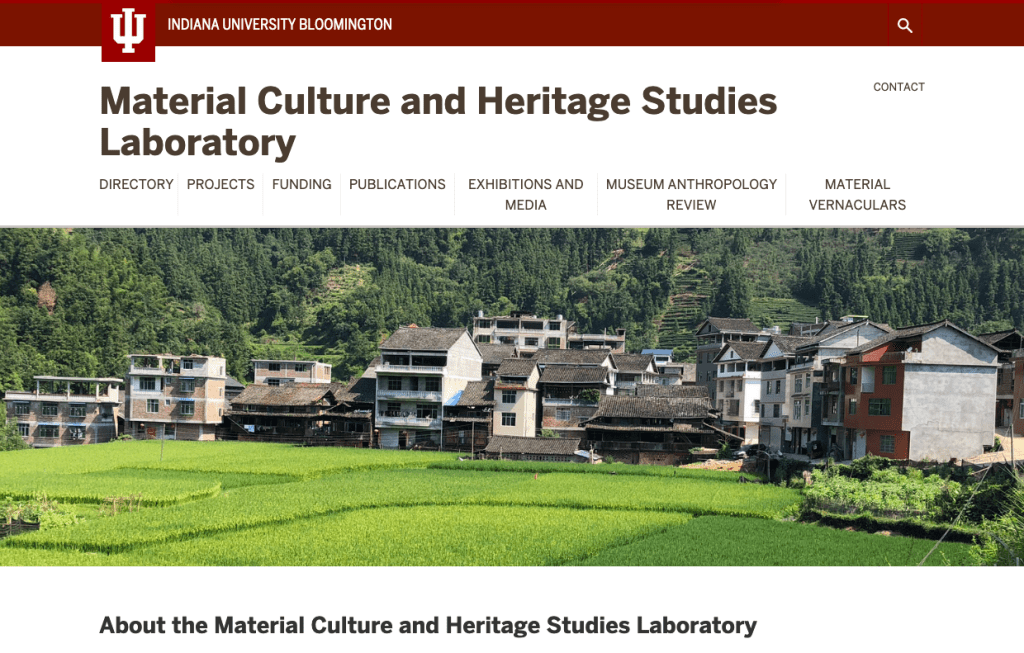
The pandemic slows all work beyond bare necessity, but good things can happen amid the difficulties of the present. Over the summer, with a small but mighty crew and some generous grants-in-hand, I did what the sailors call a shakedown cruise for the new Material Culture and Heritage Studies Laboratory that I founded at summer’s start. With great helpers, it was fun to return to research that had been set aside in 2012 when my MMWC era began. I am thankful for those organizations investing in this new work and for those colleagues and friends encouraging and participating in it. Last Friday the lab’s website launched bringing the quiet phase to an end. Check out the new website here: https://mchslab.folklore.indiana.edu/index.html
A screenshot from the MSHSL website. The image is of Tongle as viewed across a rice paddy from Zhiacong Village in Guangxi Zhuang Autonomous Region.
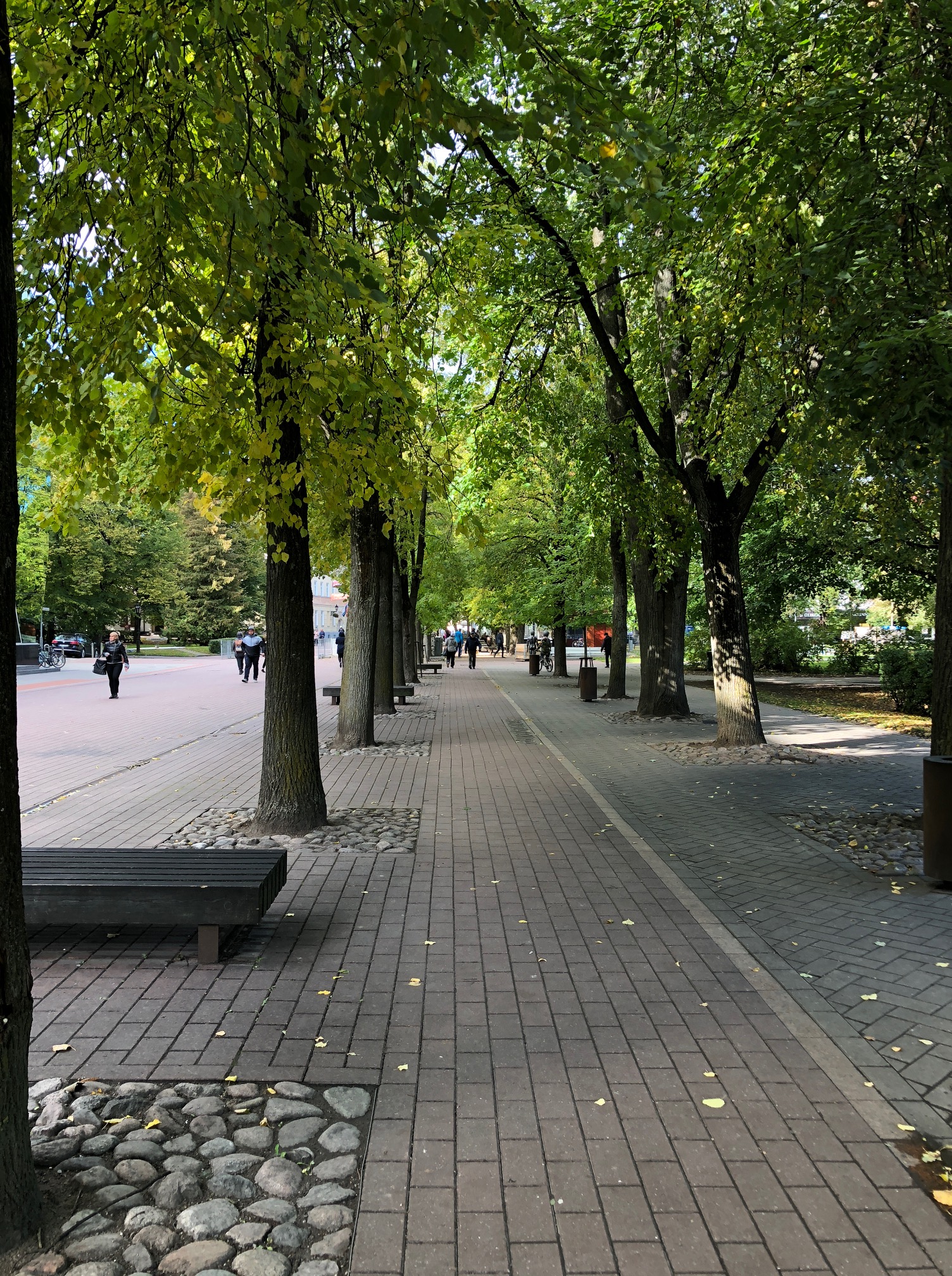
I recently spent an extended time in Tartu, Estonia. I had the wonderful opportunity to be a Fulbright Specialist visiting the Departments of: (1) Estonian and Comparative Folklore, (2) Ethnology, and (3) Estonian Native Craft at the University of Tartu. My visit also provided rich opportunities to learn about the work of the Estonian National Museum, with which these departments collaborate closely. Visiting Estonia was a transformational experience for me and I am very grateful for my generous hosts in Estonia and for the continued work of the [U.S. Department of State’s] Fulbright Program. Here I reflect briefly on the work of my fields at the University of Tartu. In a later post, I will evoke the courses that I taught and the students I met while in Tartu. In a final post, I will touch on the Estonian National Museum and the rich International Committee for Museums and Collections of Ethnography (ICME) conference that it recently hosted.
On the left, with the mural on its end, is Ülikooli 16 in Tartu on the University of Tartu campus. It is today home to the Institute for Cultural Research, which includes the Departments of Ethnology and of Estonian and Comparative Folklore.
The twinned disciplines in which I work–folkloristics (folklore studies) and ethnology–have a deep and important history in Estonia. So too do the practice of, and the study of, the nation’s rich craft traditions. For my interests, it would really be difficult to think of a richer and more rewarding place to make an in-depth, scholarly visit. The University of Tartu is almost two centuries older than Indiana University where I work. It was founded in 1632 under the auspices of King Gustavus Adolphus of Sweden. Through Swedish, Russian, and Soviet rule as well as in independent Estonia, the University of Tartu has been a major world academic center. This is reflected in the fame and impact of its academic programs and in the scholars and students who continue to gather there from around the world. (For those interested in Indiana University connections, the university is strong not only in folklore studies and ethnology, but in the neighboring field of semiotics, another field of special interest to Indiana University scholars. Semiotician and IU Distinguished Professor Thomas Sebeok’s library can be found there (See: Thomas A. Sebeok Memorial Library. As noted here, Sebeok was a Fellow of the IU Folklore Institute and a Professor of Anthropology among his many IU roles.)
The Departments that hosted me have longstanding and strong undergraduate and graduate programs, but a new joint MA program was one catalyst for my visit. Having just welcomed its second cohort of students, the Folkloristics and Applied Heritage Studies program is an English-language masters degree program attracting strong students from around the world (including the United States). It is taught and managed in partnership between these units.
I taught two short-term courses while visiting campus (see later post) and met with colleagues and students both in Tartu and in the city of Viljandi, where the Department of Estonian Native Craft is based. It and other arts programs are located in the Viljandi Culture Academy. Viljandi–about an hour east of Tartu–is a strong hub for the arts in general and for Estonian vernacular and folk arts in particular. For example, near Viljandi is a great satellite museum of the Estonian National Museum that is focused on handicraft and rural life (Heimtali Museum of Domestic Life) and Viljandi is home to the major Viljandi Folk Music Festival.
Both in Viljandi and in Tartu, UT faculty were very generous and taught me much about their work and its contexts. As someone who teaches the history (and present status) of folklore studies, anthropology, and ethnology, it was extremely valuable to have a close encounter with the past and present of these fields in a national context that is inflected in both Northern European ways and in the Russian, Soviet, Post-Soviet ways. As throughout the region, issues of nationalism and national identity are a central theme, but colonialisms and their afterlives are also woven throughout the disciplinary histories. Estonia offers much to think about.
This is not just a historical matter, as changes and innovations in Estonia society also offer many lessons. For instance, life at the University of Tartu is now heavily impacted by programs and initiatives of the European Union and technological mediation is a constantly present dynamic in the university’s educational work. While I am quite accustomed now with online and distance education, I was struck by the extensive role that these techniques play not only word-heavy curriculums such as in ethnology and folklore studies, but in the university’s native craft curriculum. Most students in this later department are older students (older, that is, than recent high school graduates) and they are learning advanced textile, metalwork, and building techniques as well as heritage studies methods and theories through a combination of intense-but-brief in-person work on campus and online education activities.
My course on “Getting the Most Out of Peer-Review” was generously supported by the European Union, thus this sign was posted during class sessions.
From colleagues in these departments, I also gained a deeper understanding of their impressive publishing work. Highlights include the Journal of Ethnology and Folkloristics (which I have long admired) and Studia Vernacula and a great diversity of monographs and edited volumes. Publication work in my fields is very advanced in the UT departments. The well-researched and beautiful books being produced related to Estonian craft techniques and histories are a marvel–little work of this quality is found in the United States.
I could continue at near endless length, but this is enough for now. I close for the moment with warm appreciation for all of the staff, faculty, and students who worked hard to make my visit possible and who shared so much of their work and passion with me. Thanks also go to the Fulbright Specialist Program and to the European Union, the University of Tartu, and other funding agencies that supported my activities.







 Shreds and Patches